- English
- French
- German
- Portuguese
- Spanish
- Russian
- Japanese
- Korean
- Arabic
- Greek
- German
- Turkish
- Italian
- Danish
- Romanian
- Indonesian
- Czech
- Afrikaans
- Swedish
- Polish
- Basque
- Catalan
- Esperanto
- Hindi
- Lao
- Albanian
- Amharic
- Armenian
- Azerbaijani
- Belarusian
- Bengali
- Bosnian
- Bulgarian
- Cebuano
- Chichewa
- Corsican
- Croatian
- Dutch
- Estonian
- Filipino
- Finnish
- Frisian
- Galician
- Georgian
- Gujarati
- Haitian
- Hausa
- Hawaiian
- Hebrew
- Hmong
- Hungarian
- Icelandic
- Igbo
- Javanese
- Kannada
- Kazakh
- Khmer
- Kurdish
- Kyrgyz
- Latin
- Latvian
- Lithuanian
- Luxembou..
- Macedonian
- Malagasy
- Malay
- Malayalam
- Maltese
- Maori
- Marathi
- Mongolian
- Burmese
- Nepali
- Norwegian
- Pashto
- Persian
- Punjabi
- Serbian
- Sesotho
- Sinhala
- Slovak
- Slovenian
- Somali
- Samoan
- Scots Gaelic
- Shona
- Sindhi
- Sundanese
- Swahili
- Tajik
- Tamil
- Telugu
- Thai
- Ukrainian
- Urdu
- Uzbek
- Vietnamese
- Welsh
- Xhosa
- Yiddish
- Yoruba
- Zulu
Why Titanium Pylon Connectors Are Ideal for OEM Applications?
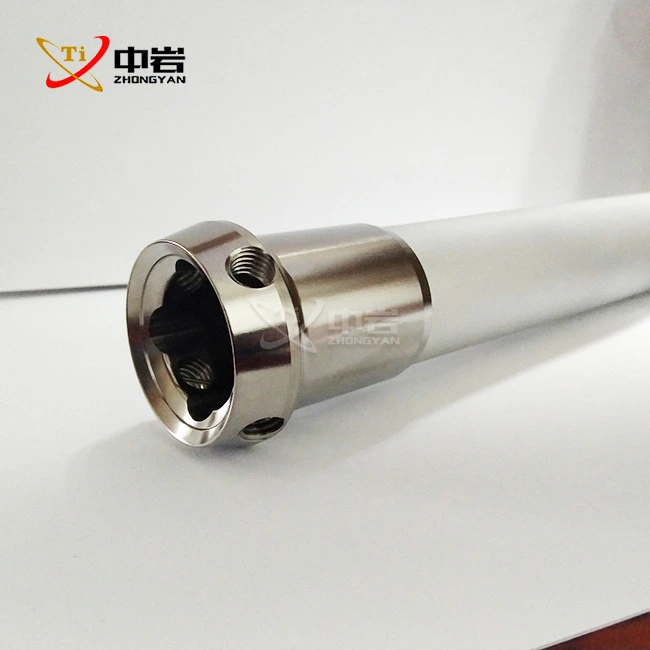
Titanium Pylon Connector represents a great way to change OEM uses in many important industries. The Grade 5 titanium alloy (Ti-6Al-4V) used in these precision-engineered structural parts gives them an unbeatable mix of high tensile strength, resistance to corrosion, and weight reduction, meeting the strictest needs in aerospace, industrial machinery, and chemical processing systems. When OEM manufacturers have to find the right balance between structural integrity and weight, titanium pylon connectors are the answer. They are 40% lighter than steel equivalents but still have better load-bearing capacity and fatigue resistance under continuous mechanical stress.
Understanding Titanium Pylon Connectors: Features and Benefits
Titanium Pylon Connector units are important structural contact parts in OEM systems that are very complicated and cannot be compromised on reliability. At Zhongyan, we make these connections using cutting-edge CNC grinding methods that ensure dimensions are accurate to the micron level.
Material Properties That Define Performance
The base of our connection tech is grade 5 titanium alloy. This mix of materials has a tensile strength of at least 950 MPa and a yield strength of more than 880 MPa, making it a strong base for high-stress uses. These links are naturally resistant to oxidation and chemical attack because they are made of titanium metal. This means they will last longer in places where other materials break down quickly. Our links keep their structural integrity from -55°C to 315°C, which means they can handle high temperature changes without losing their shape or mechanical properties.
Titanium alloy links' high strength-to-weight ratio completely changes the ways they can be designed. Engineers working on spacecraft structures or industrial machinery can select these parts because they know they will hold heavy loads with little mass. This benefit is especially useful in situations where every gram can affect how well something works or how much it costs to run.
Customization Capabilities for Diverse OEM Requirements
Zhongyan's production skills allow us to completely customize Titanium Pylon Connector units to meet the design requirements of OEMs. We make connectors in special sizes from 50 mm to 300 mm, and their shapes are made to fit the needs of each assembly. We can add complicated features like threaded links, alignment surfaces, and built-in mounting holes without affecting the structural stability by using CNC machining. You can choose between matte blasted or polished surface finishes based on how you want the metal to look or how it needs to work, like how smooth the edges of an assembly should be.
Our connector engineering is based on modular design principles, which make it easy to integrate into the structures of current OEM products. Our design teamwork services help with fast development and iteration, which shortens the time it takes to get a new product to market. Procurement managers like this feature.
Maintenance Advantages and Total Cost of Ownership
Titanium has a very high resistance to corrosion, which means that the connection will need less upkeep over its lifetime. Titanium joints don't need as much maintenance as steel parts, which need to be coated to protect them and checked for rust damage on a regular basis. This feature is very useful for chemical processing equipment or industrial gear that works in corrosive environments and where downtime for repair means a lot of lost work.
Titanium alloy connections last longer and cost less over their lifetime because they can handle repeated mechanical stress and exposure to the environment. When we look at the total cost of ownership instead of just the purchase price, titanium connections offer a better deal because they last longer and cause fewer problems with operations.
Titanium vs. Other Materials: Why Titanium Excels in OEM Applications
One of the most important decisions in OEM component design is the choice of material. A thorough study shows why the Titanium Pylon Connector works better than other materials in tough situations.
Mechanical Performance Comparison
Steel connections are strong and don't cost as much at first, but they are heavier, which forces designers to make other choices. A steel pylon connection that can be used in aircraft could weigh 40–45% more than a titanium component of the same size and shape. This would require extra support in other parts of the assembly, which would lower the payload capacity. Aluminum, on the other hand, is lightweight but not strong enough for high-stress uses. This raises safety issues and the risk of premature failure under dynamic loading conditions.
Titanium Pylon Connector units fill in this gap in efficiency. The Ti-6Al-4V metal that we use at Zhongyan is very strong, almost as strong as high-grade steel, and has a density that is about 56% that of steel. This mixture lets engineers choose parts that meet strict structural standards without adding too much weight, which slows down the whole system.
Long-Term Durability and Value Proposition
When buying something, people usually look at how much it will cost up front, but lifetime research shows that titanium is cheaper in the long run. When steel joints are used in corrosive settings, they need protected coatings that cost more and break over time, so they need to be replaced. Aluminum parts may need to be bigger than they need to be to make up for their lower strength, which raises the cost of materials and adds weight. Titanium connections don't have either of these problems because of the way the material is made.
We've worked with aircraft OEM clients who switched from coated steel to titanium links in airframe parts and saw 30% longer service intervals. Titanium's resistance to rust meant that coating upkeep was no longer needed, and inspections were also less frequent. Customers who use titanium in chemical processes say the same thing: the parts stayed the same size and shape even in settings where stainless steel alternatives broke down quickly.
Real-World OEM Case Studies
A car company that was making high-performance electric cars had trouble with the methods they used to connect the batteries. Steel frames made the whole thing too heavy, and metal parts didn't pass the fast testing rules. Custom Titanium Pylon Connector solutions fixed both problems. They cut the weight of each vehicle's mounting system by 2.3 kilograms while passing all structural validation tests. The reduced weight directly increased the range of the car, which is a key competitive benefit in markets for electric vehicles.
A company that makes industrial gear and adds robotic systems needed connections that could handle repeated high-frequency vibrations in marine settings. Within 18 months, conventional materials either cracked from wear and tear or broke down because of rust. Titanium alloy connectors made to their specs have been used continuously for more than 60 months without any measured degradation. This has changed reliability measures and customer happiness scores.
Procurement Guide: How to Source the Best Titanium Pylon Connectors
To successfully buy Titanium Pylon Connector components, you need to work with providers who can show they have the technical know-how, quality control, and help you throughout the whole project.
Supplier Evaluation Criteria
Manufacturers of trustworthy titanium connectors maintain approvals that prove their quality management systems work. Zhongyan follows ISO 9001:2015 guidelines, which make sure that all of our processes are uniform, from checking the raw materials to doing the final review. Our factory is in Baoji, which is known as China's Titanium Valley. It gives us access to high-quality titanium materials and specialized working know-how that we've gained by focusing on this industry for decades.
Verification of material compliance is an important thing to think about when buying something. We make sure that all of our Titanium Pylon Connector units meet the standards set by ASTM, AMS, and ISO. For each production batch, we give you a material approval and a test report. This paperwork helps you meet your quality assurance needs and lets you track your supplies all the way through the chain.
Customization and Technical Collaboration
During the planning phase, engineers often need to work together on complex OEM projects. We have a professional team that works directly with your engineers to make sure that the shape of the connector is best for your load cases, assembly methods, and surroundings. We offer design for manufacturability feedback that can lower the cost of production while also making the product work better.
The first step in customizing something is figuring out what your technical needs are. These include the size, accuracy, surface finish, and any special features like threaded inserts or fixing holes. Then, we use our CNC turning, milling, and grinding skills to make production plans for making parts that exactly match your needs. You can quickly send prototype numbers for testing to make sure they work before committing to production amounts.
Lead Times and Order Planning
To plan when to buy something, you need to know how long the usual lead time is and how customization changes arrival times. Standard Titanium Pylon Connector setups from our current product line can usually be sent out two to three weeks after an order is confirmed. Custom shapes that need new tools or specialized machining processes usually take between 4 and 6 weeks from the time the design is approved until the first item is delivered. We are able to build up production while keeping quality the same across all units, which helps with high-volume runs.
The minimum order quantity changes based on how complicated the design is. For standard setups, the MOQ may be as low as 50 units, but for fully customized designs, it's usually between 100 and 200 units to support the cost of the tools. We work closely with procurement managers to set up orders that match the number of items needed in stock with the number of items that can be made economically. For long-term users, we offer flexible payment terms.
Why Titanium Pylon Connectors Are the Preferred Choice for OEM Clients
OEM companies that work in markets that are very competitive need parts that give them measurable performance benefits while also helping them meet their business efficiency and cost management goals. Titanium Pylon Connector solutions meet these needs in a number of ways that have a direct effect on the bottom line.
Weight Optimization Without Structural Compromise
There are design choices between strength, weight, longevity, and cost in every OEM application. Titanium connections are the only ones that can meet a lot of different needs at the same time. The 40% lighter weight compared to steel makes it possible to improve the overall system. Lighter structures need less structural support, use less energy while they're working, and are easier to handle. Fuel economy goes up for planes, electric cars get longer ranges, and manufacturing equipment can be moved around more easily.
Because titanium has a high strength-to-weight ratio, engineers can request connections made of it without having to oversize them or add extra support to the structure. A Titanium Pylon Connector made to meet specific load requirements can be smaller and lighter than steel options while still meeting the same performance and safety standards. This design efficiency spreads through whole assemblies, giving the end product big benefits that make it more competitive.
Performance in Harsh Operating Environments
Equipment used in chemical processing, the marine industry, and factories often works in conditions that speed up the breakdown of materials. Titanium's natural oxide layer protects it very well from rust caused by acids, alkalis, salt water, and industrial chemicals. The structural integrity and dimensional stability of parts made from Ti-6Al-4V metal are maintained, while other materials need safety systems that cost more and fail over time.
We've provided Titanium Pylon Connector solutions for equipment on offshore oil platforms, where salt spray and hydrogen sulfide make the environment very corrosive. Comparable materials had to be replaced every 24 to 36 months, but these joints have been used for more than 10 years without any rust or loss of mechanical properties. When you get rid of unplanned repairs and the downtime that comes with it, you save a lot of money on operational costs, which more than makes up for the higher original material costs.
Return on Investment Through Lifecycle Value
When choosing a component, the total lifespan costs should be taken into account, not just the buying price. Titanium connections provide return on investment in a number of ways. When something lasts longer, it doesn't need to be replaced as often, which saves money on work costs. Corrosion protection gets rid of the need for coatings and inspections. Over time, lowering the weight of something makes it use less energy. Improvements to reliability cut down on service claims and make customers happier.
OEM clients always say that adding titanium connectors to their products makes them stand out in their markets. Manufacturers of equipment can confidently say that their products will last longer and cost less to run than similar products made with standard materials. These marketing benefits lead to higher prices and a bigger share of the market, which is why premium component specs are necessary.
Emerging Trends and Future Developments
Titanium processing technology keeps getting better, which opens up new ways to improve speed and cut costs. Additive manufacturing methods now make it possible to make complicated titanium connection shapes that would not be possible with traditional machining. This opens up design options for topology-optimized structures that are lighter as well. New developments in surface treatment are making materials even more resistant to rust in harsh chemical conditions. Recycling programs for titanium scrap are making the materials more sustainable, which is important for OEMs who are making choices about what to buy because of environmental worries.
Conclusion
Titanium Pylon Connector units have a lot of benefits for OEM uses that need high strength-to-weight ratios, great resistance to rust, and long-term durability. The properties of Grade 5 titanium alloy make it possible to create parts that improve system performance while lowering lifetime costs by allowing longer service intervals and requiring less upkeep. Specialized manufacturers like Zhongyan can fully customize their products to meet the needs of OEMs. Precise CNC cutting makes sure that the dimensions are correct and the quality is always the same. Titanium connectors are a better buy when you look at the total cost of ownership instead of just the original purchase price. This is because they improve reliability, operating efficiency, and your ability to compete in tough markets.
FAQ
Which industries benefit most from titanium pylon connectors?
Due to strict weight reduction standards and harsh working conditions, aerospace manufacturers represent the primary market for the Titanium Pylon Connector. Manufacturers of industrial tools use these links in places where they need to be resistant to corrosion and last a long time. Titanium is resistant to harsh chemicals, which is good for tools used in chemical processes. Titanium links are used in the production of electronics, especially sputtering target assemblies, where the purity of the material and its steadiness in size are very important.
How does corrosion resistance improve product reliability?
Titanium makes a stable oxide layer that heals itself when it gets broken. This keeps it safe from chemical attacks and environmental harm. When this trait is present, corrosion-related problems that cause unplanned downtime in industrial equipment are eliminated. The dimensions and mechanical qualities of the parts stay the same throughout their service life. This ensures steady performance and gets rid of the reliability issues that come with steel or metal options having connections that corrode or structures that lose their strength.
What specifications are needed when ordering custom titanium connectors?
For unique orders, the first step is to make full-dimensional models with tolerances. Mechanical qualities are based on the material grade standard, which is usually Grade 2 for pure titanium uses or Grade 5 for high-strength needs. The standards for the surface finish affect both how it looks and how it works. Engineers can make designs better by using load requirements and working environment conditions. Tooling decisions and unit prices are affected by how much output is expected to happen. At Zhongyan, our expert team helps customers write specifications and makes sure that all important factors are taken into account.
Partner with Zhongyan for Your Titanium Pylon Connector Requirements
Precision Titanium Pylon Connector units made just for demanding OEM uses in the aircraft, industrial machinery, and chemical processing industries are what Zhongyan does best. Our advanced CNC machining skills and site in Baoji, China's Titanium Valley, give us access to high-quality products and expert knowledge. We work closely with your engineering and purchasing teams to create unique connector solutions that meet all of your exact needs. Our work is backed by ISO 9001:2015 approval and full material traceability. Throughout the lifetime of your project, our team provides steady quality and quick support, whether you need a small number of prototypes for validation testing or a lot of products to be made. Email our Titanium Pylon Connector provider team at sales@titaniumstudy.com to talk about your needs and find out how our solutions can help your product work better and give you an edge over your competitors.
References
1. Boyer, R., Welsch, G., & Collings, E.W. (2019). Materials Properties Handbook: Titanium Alloys. ASM International, Materials Park, Ohio.
2. Donachie, M.J. (2000). Titanium: A Technical Guide, 2nd Edition. ASM International, Materials Park, Ohio.
3. Peters, M., Kumpfert, J., Ward, C.H., & Leyens, C. (2003). Titanium Alloys for Aerospace Applications. Advanced Engineering Materials, Volume 5, Issue 6, pp. 419-427.
4. Schutz, R.W. & Watkins, H.B. (1998). Recent Developments in Titanium Alloy Application in the Energy Industry. Materials Science and Engineering A, Volume 243, Issues 1-2, pp. 305-315.
5. Veiga, C., Davim, J.P., & Loureiro, A.J.R. (2012). Properties and Applications of Titanium Alloys: A Brief Review. Reviews on Advanced Materials Science, Volume 32, pp. 133-148.
6. Wanhill, R.J.H. & Barter, S.A. (2012). Fatigue of Beta Processed and Beta Heat-treated Titanium Alloys. Springer Science & Business Media, Dordrecht, Netherlands.
_1755652968020.jpg)
(1)_1755588522797.jpg)
_1755674651182.jpg)
Learn about our latest products and discounts through SMS or email