- English
- French
- German
- Portuguese
- Spanish
- Russian
- Japanese
- Korean
- Arabic
- Greek
- German
- Turkish
- Italian
- Danish
- Romanian
- Indonesian
- Czech
- Afrikaans
- Swedish
- Polish
- Basque
- Catalan
- Esperanto
- Hindi
- Lao
- Albanian
- Amharic
- Armenian
- Azerbaijani
- Belarusian
- Bengali
- Bosnian
- Bulgarian
- Cebuano
- Chichewa
- Corsican
- Croatian
- Dutch
- Estonian
- Filipino
- Finnish
- Frisian
- Galician
- Georgian
- Gujarati
- Haitian
- Hausa
- Hawaiian
- Hebrew
- Hmong
- Hungarian
- Icelandic
- Igbo
- Javanese
- Kannada
- Kazakh
- Khmer
- Kurdish
- Kyrgyz
- Latin
- Latvian
- Lithuanian
- Luxembou..
- Macedonian
- Malagasy
- Malay
- Malayalam
- Maltese
- Maori
- Marathi
- Mongolian
- Burmese
- Nepali
- Norwegian
- Pashto
- Persian
- Punjabi
- Serbian
- Sesotho
- Sinhala
- Slovak
- Slovenian
- Somali
- Samoan
- Scots Gaelic
- Shona
- Sindhi
- Sundanese
- Swahili
- Tajik
- Tamil
- Telugu
- Thai
- Ukrainian
- Urdu
- Uzbek
- Vietnamese
- Welsh
- Xhosa
- Yiddish
- Yoruba
- Zulu
Custom Hex Titanium Bolt: How to Ensure Perfect Fit?

To create Custom Hex Titanium Bolt units that fit precisely, you must be attentive about material, part size, and production quality. When obtaining high-performance parts, buying teams must collaborate with ISO-certified makers that understand the importance of thread tolerances, torque standards, and installation settings. The optimum fit is when a supplier's CNC machining and quality assurance techniques are examined to fulfill mechanical criteria, including load capacity, weather exposure, and assembly geometry. Engineers can minimize costly installation mistakes and ensure structural integrity in medical, industrial, and aerospace environments by carefully describing requirements, prototyping critical applications, and inspecting for dimensional conformity.
Understanding Custom Hex Titanium Bolts: Specifications and Benefits
When I meet with aerospace and medical engineering teams, I ask: What are precision-engineered Custom Hex Titanium Bolt components? These are more than smaller structural parts—they're where material science meets mechanical reliability.
Material Grades and Their Engineering Significance
We typically create screws from two titanium varieties that fulfill distinct performance criteria at Zhongyan. Grade 2 commercial titanium is resistant to corrosion yet weak. This makes it ideal for chemical processing equipment that prioritizes stability over load. The tensile strength is usually 340–450 MPa, which is sufficient for many industrial applications that need chemical tolerance and weight reduction.
Grade 5 titanium (Ti-6Al-4V) is highly requested. This durable metal is 6% aluminum and 4% vanadium and has a tensile strength of 860–1100 MPa. It retains titanium's corrosion resistance. These screws can support massive constructions without changing shape, with a yield strength of 795–930 MPa. These requirements have worked repeatedly in high-performance racing suspension systems and airplane fuselage assemblies, when failure is not an option.
Key Performance Characteristics That Matter
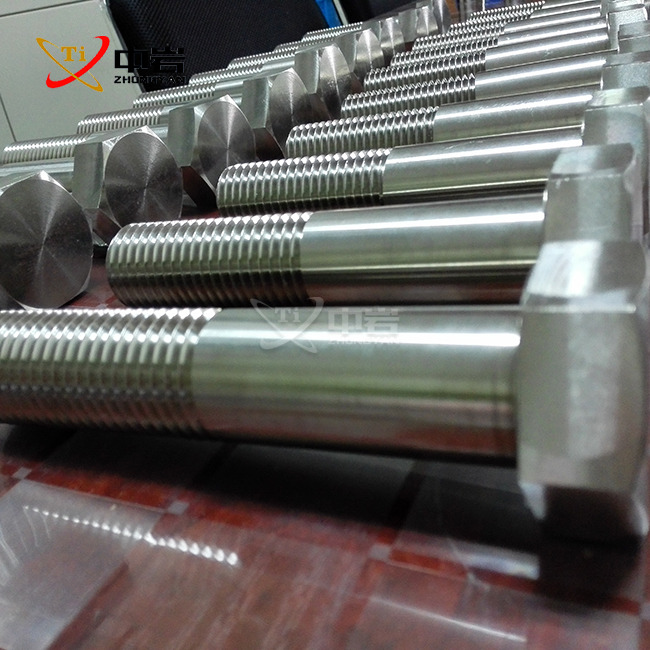
The triangular head offers technical advantages beyond appearance. The six-sided configuration allows more power than Phillips or slotted designs, reducing cam-out during fitting. This is significant because Custom Hex Titanium Bolts tend to gall, a cold-welding process in which metal surfaces freeze from friction and pressure.
Here are the main reasons why Custom Hex Titanium Bolt units are the best choice for tough jobs:
• These screws are as robust as high-grade steel but 45% lighter. Aerospace parts with less weight have more cargo and higher fuel economy.
• Titanium's inherent TiO₂ coating provides superior corrosion resistance and weather resistance. This passive coating self-repairs when touched, protecting it from saltwater, chlorides, and many industrial chemicals that tear down stainless steel.
• Biocompatibility and non-magnetic characteristics make these devices essential for MRI-compatible medical equipment. The material doesn't affect the immune system or sensitive electronics.
• Grade 5 fasteners can withstand temperatures from -252°C to 400°C, which is typical of industrial situations.
These benefits answer production concerns procurement managers have, such as fasteners breaking down too soon, too many repair cycles, and weight costs that lower system performance. Properly selected and installed Custom Hex Titanium Bolt units often outlast the systems they hold together.
Practical Identification and Specification Guidelines
Procurement professionals can learn about product trustworthiness indications and badges. Reliable manufacturers designate Grade 5 screws with "Ti64" or "GR5" and heat lot numbers for easy tracking. Metric, UNC, and UNF standards determine thread sizes. Sizes are M3 to M20 in metric values and 1/8" to 3/4" in imperial units.
Use different surface treatments for different tasks. Natural CNC mill finish stays on "as-machined" surfaces. The protective oxide layer is strengthened by passivation chemicals. Colored oxide coatings from anodizing aren't simply lovely; they help assign colors to torque specifications in complex systems. Zhongyan offers all three finishes and may customize them for your assembly process and environment.
Common Challenges in Ensuring a Perfect Fit
The discrepancy between paper specs and installation generates more purchase issues than most experts realize. Marine equipment has failed due to slight size discrepancies that seemed insignificant on paper but proved disastrous when loaded and unloaded several times. Custom Hex Titanium Bolt threads didn't match secret tap specifications, delaying aerospace projects for weeks.
Material Inconsistencies and Supply Chain Verification
Even though they share a name, Custom Hex Titanium Bolts are constructed of different materials. Some vendors buy raw titanium bar stock from unreliable mills. The quantity of aluminum and vanadium in Grade 5 bars might vary. After field usage, these composition changes affect hardness, ductility, and rust resistance.
Foreign supply lines exacerbate the issue. Batch testing is sometimes shown on material sheets instead of lot proof. This weakens quality assurance. Purchasing managers need suppliers who use spectroscopy to evaluate each output lot and offer traceable mill test reports (MTRs) showing chemical composition, mechanical qualities, and heat treatment parameters.
Dimensional Accuracy During CNC Machining
Because metal conducts heat poorly, titanium is challenging to process. CNC turning and milling build up heat near the cut instead of distributing it. This limited heat increase creates dimensional drift, thus threads cut at the start of a manufacturing run may measure differently than threads machined hours later due to tool wear and temperature fluctuations.
Alignment with OEM and International Standards
Many procurement documents include ASTM B348 for titanium bar stock or AMS 4967 for aerospace-grade Ti-6Al-4V. These criteria solely cover material quality, not fastener size or function. When turning a material standard into a usable fastener, you must specify thread form, head size, tolerance grades, and surface polish.
When OEM parts use private specs that are different from ISO or ANSI standards, misalignment problems get worse. I've worked with car race teams whose suspension designs needed to lower the height of the Custom Hex Titanium Bolt heads by 2 mm so that custom-made parts could fit. These needs couldn't be met by standard catalog fasteners—only custom CNC manufacturing with exact dimensional control could give them the perfect fit their systems needed.
Step-by-Step Process to Achieve the Perfect Fit
To obtain Custom Hex Titanium Bolt units that perform perfectly in critical systems, be diligent rather than hopeful. My purchase approach, refined over hundreds of industrial and aeronautical projects, has four unambiguous phases that build trust.
Defining Mechanical Requirements with Precision
A good fastener specification starts with a comprehensive load study. What tension pressures will the Custom Hex Titanium Bolt experience in best and worst cases? Shear loads differ greatly from tension loads. Suspension loading combos are tricky and must be calculated. Environmental variables matter. Will the screws constantly be exposed to seawater, temperature variations, or substances that could damage the surface passivation?
Evaluating Manufacturers Against Certification Standards
Marketing materials are less reliable than quality marks for product quality. ISO 9001:2015 accreditation proves quality management systems are recorded, while aerospace uses require AS9100D certification for configuration management and tracking. ISO 13485 requires biocompatibility and sanitation in medical device closures.
Prototyping and Testing Before Full Production
Design calculations are verified by mechanical testing. Tensile testing indicates Grade 5 yield and final strengths. Fatigue testing simulates cyclic loading situations, which is crucial for aircraft and automobiles, where shaking causes failure. To ensure surface treatments protect fasteners, corrosion testing submerges them in seawater or acidic conditions for long periods.
Incorporating Feedback and Planning Bulk Orders
Bulk procurement strategies measure inventory pricing against delivery time. Depending on the quantity required and the complexity of the design, Custom Hex Titanium Bolt units typically take 4 to 8 weeks to manufacture. Volume pricing can save 15–25% on purchases over 1,000 items. We help buying teams estimate needs and generate blanket purchase orders with release dates. This reduces costs and stabilizes the supply chain.
Comparison of Custom Hex Titanium Bolts with Alternative Materials
The choice of material has a big effect on the total cost of ownership, which includes not only the purchase price but also the cost of installation, the frequency of upkeep, and the number of times an item needs to be replaced over its lifetime. By comparing different aspects of performance, procurement managers can make choices that are both good for business and meet technical needs.
Titanium Versus Stainless Steel Performance Metrics
Most of the time, stainless steel 316L screws are used instead of Custom Hex Titanium Bolt units in places where metals can rust. Even though 316L is pretty resistant to saltwater and costs 40–60% less than Grade 5 titanium, the differences in performance become noticeable in tough situations. Titanium weighs 4.43 g/cm³, while stainless steel weighs about 8.0 g/cm³. This means that stainless steel is almost twice as heavy as titanium for the same volume.
Titanium Versus Aluminum Trade-offs
Aluminum metal screws are cheaper and lighter than Custom Hex Titanium Bolt units, which makes them a good choice for uses that need to be light. But because aluminum isn't as strong (its normal tensile strength is 310–470 MPa for 7075-T6), it needs bigger fastener sizes to hold the same amount of weight.
Hex Bolts Versus Socket Head Cap Screws
A fastener's style affects its usefulness for use in addition to the material it is made of. Socket head cap screws have cylinder-shaped heads with hex drives inside. They have smaller profiles that make room for other parts in small systems. Custom Hex Titanium Bolt units have hex profiles on the outside that let you use normal wrenches and sockets to apply more force during fitting.
Procurement Best Practices for Buying Custom Hex Titanium Bolts
When buying precision-engineered Custom Hex Titanium Bolt units for strategic reasons, you need to use different methods than when buying common items. Product quality, shipping reliability, and total cost are all affected by the relationship with the seller in a bigger way than initial price quotes suggest.
Selecting Reputable Suppliers with Proven Capabilities
A thorough evaluation of a company's manufacturing capabilities should look at its production tools, quality control systems, and technical know-how. When I'm looking for a seller, I look for CNC turning centers with high-precision wheels that can keep tolerances tight over long production runs. With wire EDM tools, you can make Custom Hex Titanium Bolt threads with complicated shapes and geometries that you can't do with regular threading.
Quality management includes more than just ISO certification. It also includes real testing methods and ways of keeping records. Does the seller use spectroscopic research to check the arriving materials? Do they keep measurement tools that are always accurate and have written plans for when to do so? Are inspection records specific and full of details, or are they just general templates with little real information? These details show whether quality assurance shows real dedication or just a show of compliance.
Managing Custom Size Orders and Lead Times
The lead times for custom-made products are very different from the lead times for standard products. Getting raw titanium usually takes two to three weeks. CNC machining can take an extra one to two weeks, based on how complicated the job is and how many are being done. Finally, quality checking and surface treatments take more days. For Custom Hex Titanium Bolt orders, realistic planning allows for a total wait time of 6 to 8 weeks. If project deadlines require faster delivery, expedited choices are available at a higher cost.
Communication about specifications is what makes production work. Specification of thread callouts using ISO or ANSI standards, measurement limits using standard notation, and surface finish requirements using Ra values or similar standards are all taken care of by detailed engineering models that follow standard conventions. Instead of using vague terms like "Grade 5" that can be interpreted in different ways, Custom Hex Titanium Bolt material specs should directly refer to ASTM or AMS standards.
Cost Considerations and Volume Pricing Strategies
Material types have a big effect on prices. Because it is easier to work with and costs less, Grade 2 economically pure titanium is about 30% cheaper than Grade 5 metal. When technical needs don't call for Grade 5's higher strength, choosing Grade 2 saves a lot of money without lowering its biocompatibility or resistance to corrosion.
A lot of procurement workers don't understand how much the complexity of manufacturing affects unit costs. Standard Custom Hex Titanium Bolt thread shapes and sizes are easier to make and cost less than unique specs that need special tools. Surface processes raise prices. Passivation raises prices by 8–12%, and anodizing raises prices by 15–25%, based on the color and coating thickness needs.
Conclusion
To get a perfect fit with titanium hex screws, you need to take a planned approach that includes choosing the right materials, making sure the seller is qualified, and checking the quality thoroughly. To be successful in procurement, you need to know how thread tolerances, environmental conditions, and manufacturing skills all work together, rather than just buying parts that meet basic size requirements. Problems like consistent materials, accurate measurements, and following standards can be solved by working with industrial partners who offer precise CNC machining, complete quality systems, and real technical knowledge.
Smart buyers know that the lowest starting price doesn't always mean the lowest total cost of ownership. Failures of fasteners lead to machine downtime, safety issues, and expensive repairs that are needed right away and wipe out any savings from the purchase price. Engineers can get reliable, high-performance fastening solutions for demanding aerospace, medical, and industrial uses by following tried-and-true procurement methods like clearly defining requirements, prototyping important applications, and working with certified manufacturers.
FAQ
When are custom bolts necessary over standard catalog fasteners?
When standard sizes don't meet the needs of the assembly, when proprietary thread forms offer better vibration resistance, or when special surface treatments are needed to deal with specific weather exposures, then custom specs are a must. In aerospace systems, non-standard grip lengths are often used to better distribute clamp load, while medical devices may need custom head shapes that fit into implant designs that are limited in space.
What are the benefits of titanium hex nuts over stainless steel in acidic environments?
Titanium's naturally renewing oxide layer protects it from chloride-induced pitting and crevice corrosion, which breaks down stainless steel in chemical processing and naval settings. The performance of stainless steel 316L is fine in mild environments, but titanium lasts a lot longer than stainless steel options in saltwater, acidic workplaces, and high-temperature oxidizing environments where stainless passivation fails.
What are typical manufacturing and delivery timelines for custom orders?
Production plans usually include getting the raw materials, CNC machining, quality checks, and surface treatment processes for 6 to 8 weeks from the time an order is placed until it is delivered. When a job needs to be done quickly enough to justify the extra cost, expedited manufacturing can cut lead times to 3–4 weeks. Lead times may be a little longer for large orders, but repeat orders using the same tooling models usually arrive faster than first-time special runs that need new production setups.
Partner with Zhongyan for Precision Titanium Fastening Solutions
Zhongyan is ready to meet your most difficult titanium fastener needs. Their production skills have been tested in airplane structural parts, medical device implants, and high-performance industrial equipment. Our factory in Baoji, China's famous Titanium Valley, is ISO 9001:2015 certified and has cutting-edge CNC machining centers, strict quality inspection routines, and full material tracking systems to make sure that every custom hex fastener you order meets your exact needs.
We make precision titanium hex bolts from Grade 2 and Grade 5 certified materials. Our sizes range from M3 to M20, and we offer unique thread forms and special surface processes like passivation and anodizing. Our engineering team works with your designers to come up with specifications. They give you advice on how to make the fasteners work better and spot any problems that might come up during production. Our flexible OEM and ODM skills can meet both standard and highly customized needs, and our volume price structures make it very cost-effective to buy in bulk.
To talk about your unique fastener needs, email our expert sales team at sales@titaniumstudy.com. As a well-known company that makes custom hex titanium bolts, we offer thorough quotes, material certifications, and trial samples that show how dedicated we are to quality and accuracy. Allow us to become your reliable partner for titanium fixing solutions that fit perfectly, last a long time, and work reliably in your most important tasks.
References
1. Boyer, R., Welsch, G., & Collings, E.W. (2007). Materials Properties Handbook: Titanium Alloys. ASM International, Materials Park, Ohio.
2. Donachie, M.J. (2000). Titanium: A Technical Guide, 2nd Edition. ASM International, Materials Park, Ohio.
3. Veiga, C., Davim, J.P., & Loureiro, A.J.R. (2012). "Properties and Applications of Titanium Alloys: A Brief Review." Reviews on Advanced Materials Science, Volume 32, pp. 133-148.
4. Lutjering, G., & Williams, J.C. (2007). Titanium, 2nd Edition: Engineering Materials and Processes. Springer-Verlag, Berlin Heidelberg.
5. Bickford, J.H. (2008). Introduction to the Design and Behavior of Bolted Joints: Non-Gasketed Joints, 4th Edition. CRC Press, Boca Raton, Florida.
6. ASTM International (2021). ASTM B348-21: Standard Specification for Titanium and Titanium Alloy Bars and Billets. ASTM International, West Conshohocken, Pennsylvania.
(1)_1755593289268.jpg)
Learn about our latest products and discounts through SMS or email