- English
- French
- German
- Portuguese
- Spanish
- Russian
- Japanese
- Korean
- Arabic
- Greek
- German
- Turkish
- Italian
- Danish
- Romanian
- Indonesian
- Czech
- Afrikaans
- Swedish
- Polish
- Basque
- Catalan
- Esperanto
- Hindi
- Lao
- Albanian
- Amharic
- Armenian
- Azerbaijani
- Belarusian
- Bengali
- Bosnian
- Bulgarian
- Cebuano
- Chichewa
- Corsican
- Croatian
- Dutch
- Estonian
- Filipino
- Finnish
- Frisian
- Galician
- Georgian
- Gujarati
- Haitian
- Hausa
- Hawaiian
- Hebrew
- Hmong
- Hungarian
- Icelandic
- Igbo
- Javanese
- Kannada
- Kazakh
- Khmer
- Kurdish
- Kyrgyz
- Latin
- Latvian
- Lithuanian
- Luxembou..
- Macedonian
- Malagasy
- Malay
- Malayalam
- Maltese
- Maori
- Marathi
- Mongolian
- Burmese
- Nepali
- Norwegian
- Pashto
- Persian
- Punjabi
- Serbian
- Sesotho
- Sinhala
- Slovak
- Slovenian
- Somali
- Samoan
- Scots Gaelic
- Shona
- Sindhi
- Sundanese
- Swahili
- Tajik
- Tamil
- Telugu
- Thai
- Ukrainian
- Urdu
- Uzbek
- Vietnamese
- Welsh
- Xhosa
- Yiddish
- Yoruba
- Zulu
Why Do Industries Prefer Custom CNC Machined Titanium Parts Over Steel?

Industries prefer Custom CNC Machined Titanium Parts over steel because titanium delivers an unmatched strength-to-weight ratio, exceptional corrosion resistance, and biocompatibility that steel cannot replicate. When engineers face demanding applications in aerospace, medical devices, or chemical processing environments, titanium solves critical performance challenges while reducing overall system weight. Steel's susceptibility to rust and its heavier density make it less suitable for high-stakes applications where failure is not an option. Titanium's ability to withstand extreme temperatures and corrosive chemicals while maintaining structural integrity positions it as the material of choice for industries that prioritize reliability and long-term performance.
Understanding Custom CNC Machined Titanium Parts vs Steel
When purchasing managers look at metals for precision parts, they quickly learn that not all of them work the same way when they are stressed, heated, or corroded. Custom CNC Machined Titanium Parts and steel are fundamentally different in many ways, not just in terms of price. These differences include physical qualities, difficulties in machining, and long-term dependability of performance.
Material Properties That Define Performance
Steel has a density of 7.85 g/cm³, while titanium alloys, especially Grade 5 (Ti-6Al-4V), have a density of 4.43 g/cm³. Finding ways to cut weight by 40% is very helpful when making parts for spacecraft or medical implants. The tensile strength of Grade 5 titanium is 895 MPa, but it still has a very thin shape. Some types of steel may be harder than titanium, but titanium has a much higher strength-to-density ratio. This is important when every gram counts in airplane design or when doctors need tools that keep their hands from getting tired during long procedures. Titanium naturally creates an inactive oxide layer that keeps it safe from rusting in air, salt water, and many industrial chemicals. To make steel resistant to rust, it needs protective coats or expensive alloying elements like chromium (in stainless steel), but these methods don't always work in places with a lot of chloride. When used in chemical processing plants that work with acids or in naval uses that are constantly exposed to saltwater, titanium parts last for decades while steel parts rust and need to be replaced often.
CNC Machining Process Complexities
When compared to steel, titanium is harder to machine technically. Titanium doesn't conduct heat well (17 W/mK compared to 50 W/mK for steel), so heat builds up in the cutting areas instead of spreading out through the material. For this to happen, you need special carbide tools, cooling lines with high pressure, and slower cutting speeds. Procurement teams should know that these complicated machining steps have a direct effect on lead times and costs, but the accuracy they produce is worth the extra money. Steel is easier to work with because it conducts heat better and doesn't tend to become hard after being worked on. Standard tools are good at cutting steel, which speeds up production processes. But the fact that the part is easy to machine doesn't matter if it breaks too soon because of rust or being too heavy. At Zhongyan, we've made sure that our CNC turning, milling, and grinding processes work best with titanium's unique properties. This way, we can achieve limits of ±0.005mm that meet ASTM and AMS standards.
Common Steel Grades and Their Limitations
Grades of stainless steel like 316L are good at resisting rust and aren't too strong, so they can be used in a wide range of industrial settings. Different types of carbon steel are cheap and have great strength and machinability. But when engineers need parts for exploding targets in electronics manufacturing or tooth implants that need to fuse with the bone, steel's flaws become clear. Steel isn't biocompatible enough to be implanted permanently in the body, and it can't handle the high temperatures and low pressures used to make semiconductors without breaking down.
Key Benefits of Custom CNC-Machined Titanium Parts Over Steel
The choice to use Custom CNC Machined Titanium Parts instead of steel is based on measurable performance benefits that have a direct effect on working efficiency, product life, and safety margins. Even though titanium costs more at first, these perks lead to real-world cost savings.
Superior Strength-to-Weight Ratio
Titanium parts make assemblies 40–50% lighter than steel ones of the same size and shape, but they can still hold the same amount of weight or more. In aerospace uses, this lowers the amount of fuel that needs to be used. For every kilogram saved in aircraft construction, about 300 liters of fuel are saved each year. In motorsports, racing teams change steel valve springs and connecting rods with titanium ones to lower the moving mass. This lets the engine go faster and respond better to throttle inputs. Medical device makers make surgical tools out of titanium so that surgeons don't get too tired during long, complicated treatments.
Outstanding Corrosion Resistance
Titanium's passive oxide layer can fix itself when it gets scratched, keeping it safe in places where steel would break in months. Offshore oil platforms use titanium pipes and fittings in areas where they come into contact with seawater. This saves money on upkeep costs that come with steel's pitting and crevice corrosion. Chemical processing plants that use chlorine, sulfuric acid, or alkaline solutions choose titanium heat exchangers and reactor vessels over steel ones because chemicals break down steel ones quickly. Titanium propeller shafts and rigging parts are used in the naval business because they work effectively for 20 years or more without any coatings. Our corrosion-resistant titanium parts, which come in sizes from M3 to M100, are made by Zhongyan and are used in fields where machine downtime costs a lot of money. Compared to coated steel options that break down over time, being able to work without protection coatings or regular checks cuts lifetime costs by a large amount.
Biocompatibility and Medical Applications
Titanium is the only material that can be used for lasting implants like bone screws, spine bars, dental implants, and joint replacements because it is completely biocompatible. The Young's modulus of the material is about 110 GPa, which is closer to the range of values found in human bone (10–30 GPa) than steel's 200 GPa. This means that the material doesn't have as many stress buffering effects that cause bone to break down. Titanium is not magnetic, so people with implants can safely go through MRI scans. Steel implants, on the other hand, cause risky artifacts and heating. Titanium is used by companies that make surgical instruments for tools that need to be sterilized over and over again. The material can go through an autoclave without rusting or changing its shape. When dental labs make titanium abutments and frames, they use precise fitting to make sure that the implants fit securely. Zhongyan can make medical-grade parts that meet ASTM F136 standards. This makes sure that the materials are pure and can be tracked, which is needed for governmental approval.
Precision Tolerances and Engineering Performance
With today's CNC cutting technology, titanium parts can be made with tolerances that are on par with steel. Our tools keep the accuracy of their measurements to within ±0.005mm even when working with complicated shapes, internal channels, and threaded parts. This level of accuracy is very important when making hydraulic parts for spacecraft that need perfect surface finishes for the seals to work right, or when making sputtering targets for semiconductors that need flat surfaces to make sure even thin-film deposition. Titanium has a very high wear strength, which means that parts can be stressed millions of times without cracking. Titanium doesn't easily fatigue, which is a common reason why steel parts fail in cycle loading situations. This makes it useful for aircraft landing gear parts, reciprocating engine parts, and offshore structure members.
The Titanium CNC Machining Process Explained
Purchasing workers can better understand quality control points and wait times if they know how custom CNC-machined titanium parts are made, from raw titanium stock to finished precision components.
Raw Material Sourcing and Quality Verification
The process starts with approved titanium bars, billets, or plates that meet the requirements of ASTM B348. Zhongyan is in Baoji, which is known as China's Titanium Valley. It has easy access to high-quality titanium resources and the facilities needed to handle them. Before cutting starts, the chemical makeup and mechanical properties of each batch are checked to make sure they meet the grade standards. Material certificates list things like the amount of air and iron in an item, which can change how easy it is to machine and how well the finished product works.
Specialized Machining Techniques
For CNC spinning titanium, a high-pressure cooling flow must be maintained at all times to control heat generation and avoid work-hardening. Our Swiss-type lathes are great at turning complicated parts that need to be very closely centered. When milling, climb-cutting techniques and specific tool paths are used to cut down on the time it takes to engage the tool, which increases the life of the carbide insert. For parts that need very smooth surfaces, we use grinding processes that reach Ra 0.2µm smoothness. This is necessary for uses like medical implants, where surface roughness affects how well the body integrates the device. Wire EDM machining can make internal shapes that are too complicated to be possible with regular cutting. This technology is very helpful for making cooling paths in aircraft parts or sputtering targets with complicated shapes.
Overcoming Heat and Tool Wear Challenges
Titanium tends to produce intense heat when it is cut, which speeds up tool wear and can distort dimensions if not handled properly. To deal with these problems, we use rigid machine tool setups, cutting edges that stay sharp because we change the tools often, and advanced water delivery systems that flood the cutting zone. Monitoring systems keep an eye on cutting forces and temperatures all the time, and they change settings automatically to keep the process stable. Choosing the right tools strategically has a big effect. For example, we use carbide types that are specially made for titanium and have coatings that reduce friction and chemical contact. By putting money into tooling technology, we can keep up the high-quality standards our aircraft and medical clients expect while keeping production costs low.
Quality Inspection and Standards Compliance
Coordinate measuring tools (CMM) and visual comparators are used to check the dimensions of every part. Thread gauges check the accuracy of precision fitting for use with fasteners. Measurements of surface roughness support the finish standards. X-ray screening and checking the hardness of materials are used to find flaws below the surface in serious situations. Documentation packages have material certificates, measurement reports, and process trip records that meet the needs of both ISO9001:2015 and AS9100D. This thorough quality control method makes sure that titanium parts that leave our facility work reliably in the places they're meant to go, like a jet engine running at 600°C or a tooth implant holding up chewing loads for decades.
Industry Applications Driving the Preference for Titanium CNC Parts
Custom CNC Machined Titanium Parts are popular because they can be used in many industries. Titanium costs more than steel, but it has performance benefits that steel can't match. Actual uses show why businesses are willing to pay more for it.
Aerospace and Aviation
Titanium is used by commercial airplane makers for engine parts, structural fasteners, and hydraulic system parts, where lowering weight directly lowers costs. A modern widebody airplane is made up of about 7–9 percent titanium by structural weight. Titanium is used to make compressor blades and discs because it can handle temperatures ranging from -55°C at cruise level to 600°C+ in engine hot parts. Titanium's strength to withstand wear and corrosion makes it a good material for landing gear parts that are used in places where deicing chemicals and hydraulic fluids are present. Space launch ships use titanium as much as possible to increase the payload share. Titanium's low density and great strength at high temperatures make it useful for rocket engine thrust cylinders and propellant tanks. Titanium is used in satellite designs because it is stable at high temperatures and doesn't react with atomic oxygen in low Earth orbit.
Medical and Biotech Industries
Hip stems, knee replacements, and fracture fixation devices are all made from titanium by orthopedic implant makers. The biocompatibility of the material removes the risk of rejection, and its strength supports body weight loads for the life of the patient. Some spinal fusion cages are made of hollow titanium devices that help bone grow, which is not possible with steel. Precision-machined titanium abutments with internal threading that join to implant fixings are used in dental implant systems. To make sure that the artificial connection works well, these parts must be very accurate in terms of their dimensions and surface finish. Surgical tool sets come with titanium tweezers, retractors, and scissors that stay sharp even after being sterilized many times and are still light enough for the surgeon to comfortably use. At Zhongyan, we make medical-grade titanium parts, like dentistry discs and special OEM parts, that meet the strict purity and traceability standards of regulatory bodies around the world.
Motorsport and High-Performance Automotive
To cut down on unsprung mass and moving weight, Formula 1 teams make titanium valve retainers, connecting rods, and suspension parts. These improvements in speed mean faster acceleration, better driving, and a more responsive engine. Compared to stainless steel options, titanium exhaust systems don't rust at high temperatures from combustion fumes and are lighter for the car. Titanium fasteners are used all over the chassis parts of high-performance bikes to reduce weight and improve power-to-weight ratios. Titanium wheel bolts and brake cylinder pistons show how useful the material is in car settings where weight is an issue.
Energy and Marine Sectors
Offshore oil and gas sites are exposed to some of the harshest conditions on Earth. They are constantly hit by high temperatures and pressures, as well as saltwater. Titanium pipe systems, heat exchangers, and structural fasteners last for decades without any upkeep, while steel needs to be coated with protective materials and replaced often. Titanium is used in blowout preventers and control systems on subsea drilling equipment that works at depths greater than 3,000 meters. Titanium is used for tidal turbine parts and offshore wind tower bolts that will be exposed to water in renewable energy projects. Because the material doesn't corrode, there are no upkeep costs for getting to equipment in difficult offshore areas. Titanium is used in naval ships' power systems, radar domes, and parts of submarines' pressure hulls. The non-magnetic features of the material keep sensitive sensing equipment from being harmed, and it resists corrosion in saltwater service.
Comparing Costs, Lead Times, and Procurement Considerations
For a realistic cost study, you need to look at the total costs of ownership instead of just the prices of the beginning parts. When upkeep, replacement regularity, and system-level benefits are taken into account, the Custom CNC Machined Titanium Parts advantage over steel often goes away.
Raw Material and Machining Cost Factors
Titanium billets are about 10 times more expensive than steel stock of the same size because they require a lot of energy to be extracted and processed. Because of slower cutting speeds, specialized tools, and higher rates of tool wear, machining costs are two to three times higher. Because of these things, titanium parts are more expensive at first than steel ones. But lifetime cost research shows a different picture of the economy. A titanium part that lasts 20 years or more without any rust upkeep is better than a steel part that needs to be replaced every 3 to 5 years and has to have its protective coating reapplied. Industries figure out the total cost of ownership, which includes installation work, machine downtime, and disposal costs. Titanium often performs better in these areas, even though it costs more at the start. The amount of production has a big effect on prices. Due to the time and materials that are wasted during process optimization, prototype numbers cost more than regular amounts. Through better tool tracks and higher material yields, economies of scale are made possible by high-volume production runs. The cost of a part is affected by how complicated it is because it takes longer to machine and needs special fixtures to hold it while it's being worked on.
Lead Time Optimization Strategies
Standard wait times for titanium parts are between 2 and 4 weeks, which includes getting the materials, making them, and checking the quality. When material stock meets part specs, production can be sped up, cutting lead time to 5–10 days for urgent needs. Prototyping services let you test your design before you buy the tools to make it, so you can find problems with dimensions early in the development process. Working with a titanium expert like Zhongyan, who has a track record of delivering high-quality materials and following tried-and-true process factors, lowers the risk of wait times. Because we are in Baoji, we have easy access to China's biggest titanium production infrastructure. This means that we don't have to wait as long to get raw materials, which can happen at other sources and cause delays.
Selecting a Reliable Titanium Parts Supplier
In addition to stated prices, procurement workers should look at suppliers on a number of other important factors. Material certifications check the makeup of the alloy and its mechanical qualities. Look for paperwork that shows agreement with ASTM, AMS, and ISO standards. Manufacturing certifications like AS9100D and ISO9001:2015 show that quality control systems can regularly make parts for flight applications.When working with titanium's difficult qualities, technical know-how is very important. Suppliers need to explain how they handle temperature control, choose tools, and check quality. Production ability tells you if a provider can handle both small batches for prototypes and large production runs as programs get better. Custom finishing methods, such as electropolishing, anodizing, and sealing, open up more design options. Responding quickly to customer service issues has an effect on the success of a project. Suppliers should offer engineering help, feedback on design for manufacturability, and open contact throughout the production cycle. At Zhongyan, we help OEM and ODM partnerships by offering unique packaging, branding choices, and technical advice that helps clients make designs that work best for making titanium products. We can work with raw titanium materials like bars, plates, tubes, and wires, and we can also do full CNC machining services, which include turning, milling, grinding, laser cutting, and EDM. This vertical merger makes it easier to keep an eye on quality and make sure orders are delivered on time, compared to when sellers outsource parts of the production chain.
Conclusion
In tough industries, people choose Custom CNC Machined Titanium Parts over steel because they need better performance that goes beyond initial cost concerns. Titanium's superior strength-to-weight ratio, resistance to corrosion, biocompatibility, and fatigue resistance make it a good choice for engineering problems where steel options fail quickly or need a lot of upkeep. The original investment is higher because titanium is harder to work with and costs more, but over its lifetime, it is more cost-effective in situations where stability, weight reduction, and resistance to environmental factors are important. Titanium parts are used by aerospace, medical device, and industrial operations to reach performance levels that can't be reached with steel. These companies are willing to pay more for materials and manufacturing skills that will last for a long time. Custom CNC-machined titanium parts are still the best way to go for zero-failure uses, even as industries keep pushing the limits of performance.
FAQ
What makes titanium more expensive than steel for CNC-machined parts?
Titanium costs about 10 times more than steel because it takes a lot of energy to get it out of the ground, and complicated processing is needed to make it. Titanium's low heat conductivity and work-hardening tendency mean that special carbide tools, high-pressure coolant systems, and slower cutting speeds are needed, which makes the cost of machining Custom CNC Machined Titanium Parts 2-3 times higher than steel. Tool wear rates are higher than those for steel, which drives up the cost of consumables used in manufacturing.
Can titanium achieve the same surface finishes as steel?
When you machine titanium parts correctly, you can get great surface finishes, but the process is different from when you machine steel parts. We regularly make parts that are Ra 0.2µm smooth by precision grinding them and then electropolishing or spinning them. Because titanium tends to smear when polished, only skilled makers can achieve mirror-like or satin finishes that can be used for medical implants, aircraft parts, and cosmetic purposes.
How do you prevent thread galling in titanium fasteners?
Thread galling, which is when two threads cold join together, is a regular problem with titanium. Surface processes like Type II or III anodizing, physical vapor deposition coatings, or dry film lubricants used during production help reduce this. Making sure the openings are right is done by precision thread machining to Class 3A/3B fit standards. Changes to the thread design, such as making the pitch bigger or the contact length shorter, can also lower the risk of galling in serious situations.
Partner with Zhongyan for Custom CNC-Machined Titanium Parts Excellence
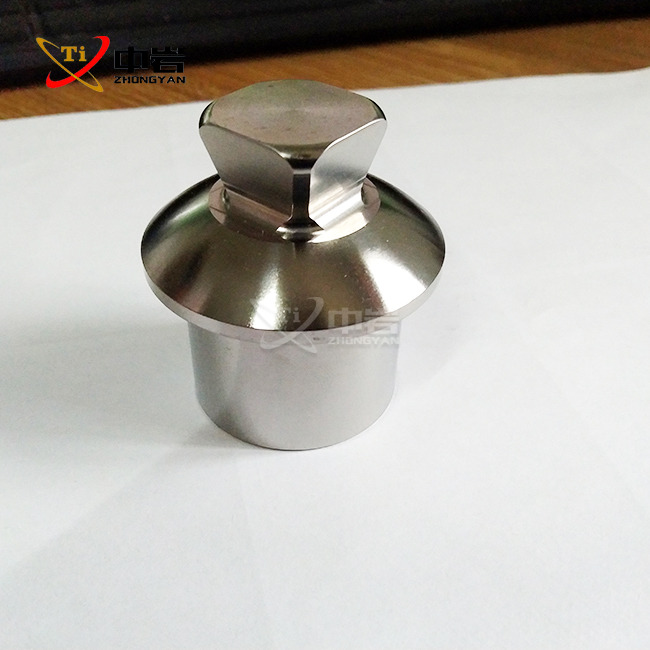
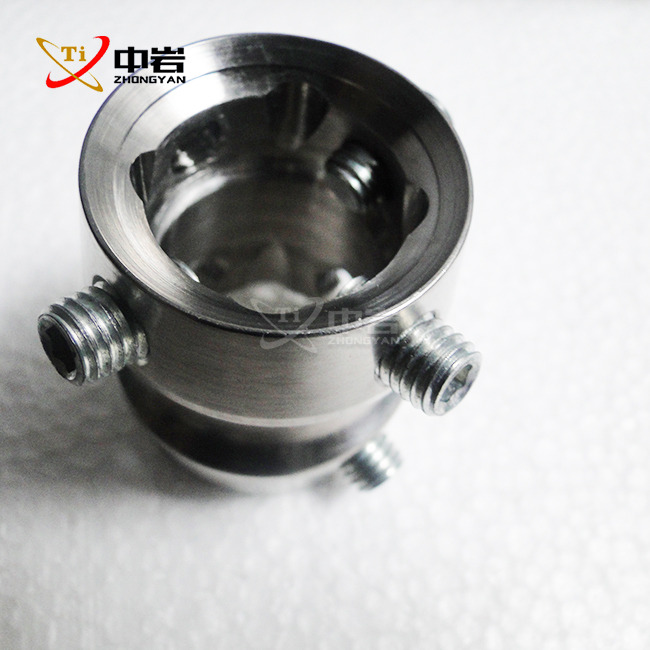
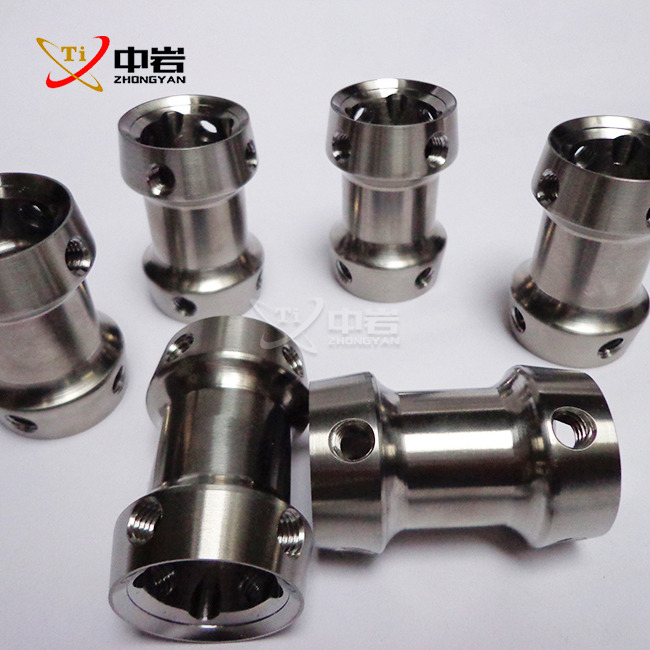
Zhongyan makes precise Custom CNC Machined Titanium Parts that are designed to work in the toughest aircraft, medical, industrial, and technology environments. Our Grade 5 titanium parts come in sizes from M3 to M100 and have precise fitting, are resistant to rust, and can be finished in any way that meets ASTM and ISO standards. We are based in Baoji, China, which is known as the "Titanium Valley." We use direct access to materials, cutting-edge CNC equipment, and skilled engineering teams to produce large amounts of goods while strictly controlling quality. As a dependable titanium parts seller, we help OEM and ODM partnerships by offering unique packaging and expert support during the whole process of buying from us. Please email our team at sales@titaniumstudy.com to talk about your titanium machining needs and find out how our services can improve the performance of your parts and the stability of your supply chain.
References
1. Boyer, R., Welsch, G., and Collings, E.W. (1994). Materials Properties Handbook: Titanium Alloys. ASM International, Materials Park, Ohio.
2. Donachie, Matthew J. (2000). Titanium: A Technical Guide, Second Edition. ASM International, Materials Park, Ohio.
3. Ezugwu, E.O. and Wang, Z.M. (1997). Titanium Alloys and Their Machinability: A Review. Journal of Materials Processing Technology, Volume 68, Issue 3.
4. Peters, M., Kumpfert, J., Ward, C.H., and Leyens, C. (2003). Titanium Alloys for Aerospace Applications. Advanced Engineering Materials, Volume 5, Issue 6.
5. Rack, H.J. and Qazi, J.I. (2006). Titanium Alloys for Biomedical Applications. Materials Science and Engineering C, Volume 26, Issue 8.
6. Veiga, C., Davim, J.P. e Loureiro, A.J.R. (2012). Properties and Applications of Titanium Alloys: A Brief Review. Reviews on Advanced Materials Science, Volume 32, Number 2.
(1)_1755587348264.jpg)
Learn about our latest products and discounts through SMS or email