- English
- French
- German
- Portuguese
- Spanish
- Russian
- Japanese
- Korean
- Arabic
- Greek
- German
- Turkish
- Italian
- Danish
- Romanian
- Indonesian
- Czech
- Afrikaans
- Swedish
- Polish
- Basque
- Catalan
- Esperanto
- Hindi
- Lao
- Albanian
- Amharic
- Armenian
- Azerbaijani
- Belarusian
- Bengali
- Bosnian
- Bulgarian
- Cebuano
- Chichewa
- Corsican
- Croatian
- Dutch
- Estonian
- Filipino
- Finnish
- Frisian
- Galician
- Georgian
- Gujarati
- Haitian
- Hausa
- Hawaiian
- Hebrew
- Hmong
- Hungarian
- Icelandic
- Igbo
- Javanese
- Kannada
- Kazakh
- Khmer
- Kurdish
- Kyrgyz
- Latin
- Latvian
- Lithuanian
- Luxembou..
- Macedonian
- Malagasy
- Malay
- Malayalam
- Maltese
- Maori
- Marathi
- Mongolian
- Burmese
- Nepali
- Norwegian
- Pashto
- Persian
- Punjabi
- Serbian
- Sesotho
- Sinhala
- Slovak
- Slovenian
- Somali
- Samoan
- Scots Gaelic
- Shona
- Sindhi
- Sundanese
- Swahili
- Tajik
- Tamil
- Telugu
- Thai
- Ukrainian
- Urdu
- Uzbek
- Vietnamese
- Welsh
- Xhosa
- Yiddish
- Yoruba
- Zulu
Why Do Engineers Prefer GR36 Titanium Bar for Critical Components?
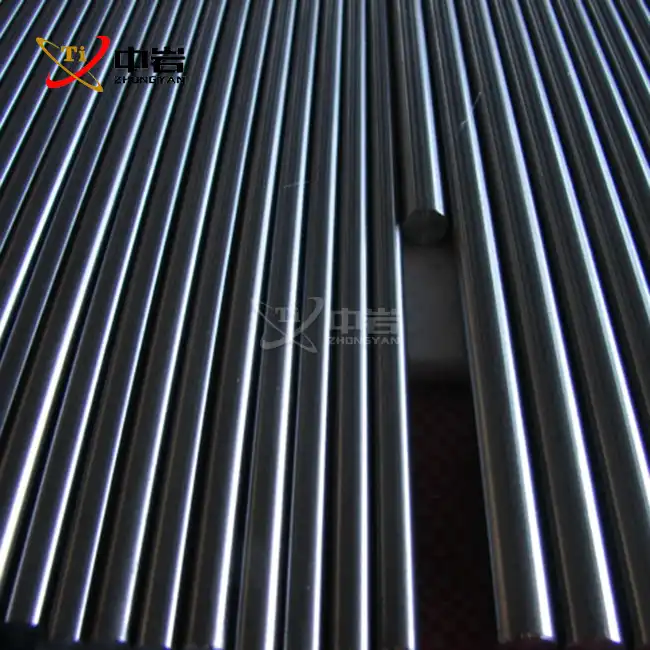
In the design of crucial components that are subject to high temperatures, corrosion, and severe mechanical stresses, GR36 titanium bar is always specified by engineers. For applications where more common materials have failed, this titanium alloy—officially known as Ti-6Al-2Sn-4Zr-6Mo following ISO 5832-2 standards—offers unparalleled performance. Component longevity and operational safety are directly impacted by GR36's outstanding combination of creep resistance up to 540°C, excellent dimensional stability under thermal cycling, and high tensile strength reaching 900 MPa. These attributes contribute to the material's favour. A strategic procurement choice influencing project performance, lifetime costs, and regulatory compliance, choosing the right titanium grade is becoming more important as industries throughout the world require materials that adhere strictly to international standards like ASTM B348 and AMS specifications. Technical, economic, and practical considerations are discussed in this article as to why GR36 titanium bar is trusted by engineers for critical applications such as aerospace fasteners, medical prostheses, chemical processing equipment, and industrial machinery components.
Understanding the Core Properties of GR36 Titanium Bar
Chemical Composition and Alloying Strategy
A meticulously controlled alloying element blend significantly alters the microstructure and performance attributes of a titanium bar with the GR36 designation. The alloy is composed of titanium as the base metal, about 6% aluminium for solid-solution strengthening and density reduction, 2% tin for improved creep resistance, 4% zirconium for enhanced high-temperature stability, and 6% molybdenum for greater beta phase stability and strength. This alpha-beta structure produces a material with a happy medium between workability during production and outstanding mechanical performance during use.
Baoji Zhongyan Titanium Industry Co., Ltd. conducts thorough compositional testing on all of its GR36 titanium bars to guarantee they meet the requirements of ISO 5832-2 and ASTM B348. It is essential to do spectroscopic analysis on every production batch to ensure that the elemental ratios are within prescribed tolerances for safety-critical applications where material variability could endanger structural integrity. Doing so guarantees uniform behaviour of the material across all heat batches.
Mechanical Performance Metrics
Procurement managers mainly use mechanical qualities as selection criteria when evaluating titanium bar materials. In the annealed state, the GR36 titanium bar displays a yield strength of at least 850 MPa and tensile strength values that reach or surpass 900 MPa. Aerospace applications greatly benefit from this strength-to-weight advantage, as every gram of structural mass directly affects fuel efficiency and payload capacity.
This grade is stiff enough for structural purposes and still workable enough for CNC machining, with a modulus of elasticity of around 114 GPa. Elongation values of 10% or more guarantee sufficient ductility to avoid brittle failure when subjected to impact loads or thermal shock. Valve parts and bearing races are just two examples of sliding contact applications that benefit greatly from a surface hardness of HRC 36.
Temperature and Environmental Resistance
GR36 titanium bar maintains mechanical properties across temperature ranges that would degrade alternative materials. The alloy's superior creep resistance enables sustained operation at temperatures up to 540°C without experiencing dimensional changes or strength reduction that could lead to component failure. This thermal capability makes the material indispensable for turbine engine components, exhaust systems, and chemical reactors operating under continuous thermal stress.
Corrosion resistance represents another defining advantage of this titanium grade. The material demonstrates exceptional immunity to oxidising acids, chloride solutions, and marine environments that rapidly attack stainless steels and aluminium alloys. This chemical stability eliminates the need for protective coatings in many applications, reducing maintenance expenses and extending service intervals—factors that often justify the initial material investment when lifecycle costs are properly calculated.
GR36 Titanium Bar vs. Other Common Materials for Critical Components
Comparison with Other Titanium Grades
The unique function of the GR36 titanium bar can be better understood by comparing it to two other common grades: commercially pure grade 2 and the widely used grade 5 (Ti-6Al-4V). Although it is not strong enough for use in extreme temperatures, Grade 2 is very formable and has excellent corrosion resistance. Its tensile strength is usually less than 450 MPa, and its maximum operating temperature is rarely more than 300°C, making it unsuitable for heavily loaded structural components.
The room-temperature strength of grade 5 titanium is close to 900 MPa, and its high-temperature performance is sufficient up to about 400°C. The creep resistance and dimensional stability of grade 5 are inferior to those of GR36 when subjected to prolonged high temperatures. Components subjected to continuous mechanical and thermal stress over long periods of service benefit greatly from the microstructural characteristics created by the added molybdenum and tin to GR36 titanium bar, which resist deformation as a function of time.
Performance Advantages Over Alternative Metals
Stainless steel grades like 316L and 17-4PH represent common alternatives engineers consider when specifying corrosion-resistant materials. While stainless steels offer lower material costs, their density of approximately 8.0 g/cm³ nearly doubles that of titanium at 4.43 g/cm³. This weight penalty proves prohibitive in aerospace and portable medical equipment applications where mass directly affects performance and usability.
Aluminium alloys provide excellent weight savings but cannot match the strength, temperature capability, or corrosion resistance of GR36 titanium bars. High-strength aluminium alloys experience rapid strength degradation above 150°C and suffer galvanic corrosion when coupled with dissimilar metals—limitations that exclude their use in many critical applications. The lifecycle cost analysis consistently favours titanium when factoring replacement frequency, maintenance requirements, and operational reliability into total ownership calculations.
How to Procure High-Quality GR36 Titanium Bars for Your Projects?
Supplier Certification and Quality Verification
Finding suppliers of GR36 titanium bars that can prove they can make materials to international standards is the first step in a successful procurement process. Although certification to ISO 9001:2015 does show that a supplier has established quality management systems, it is not a guarantee that the provider will comply with material specifications. Suppliers should include materials test reports (MTRs) with chemical composition analysis, mechanical test findings, and heat treatment records that can be traced to specific production batches with each shipment. Procurement experts should ensure this.
To meet the demands of high-volume production, Baoji Zhongyan Titanium Industry Co., Ltd. keeps thorough certification paperwork and testing capabilities. In addition to metallographic labs for microstructural investigation and state-of-the-art spectroscopic equipment for compositional verification, our facility also has tensile testing machines that are calibrated to international standards. Thanks to our well-oiled quality infrastructure, we can back up our customers' quality assurance and regulatory compliance needs with verifiable conformity evidence.
Customisation Options and Technical Specifications
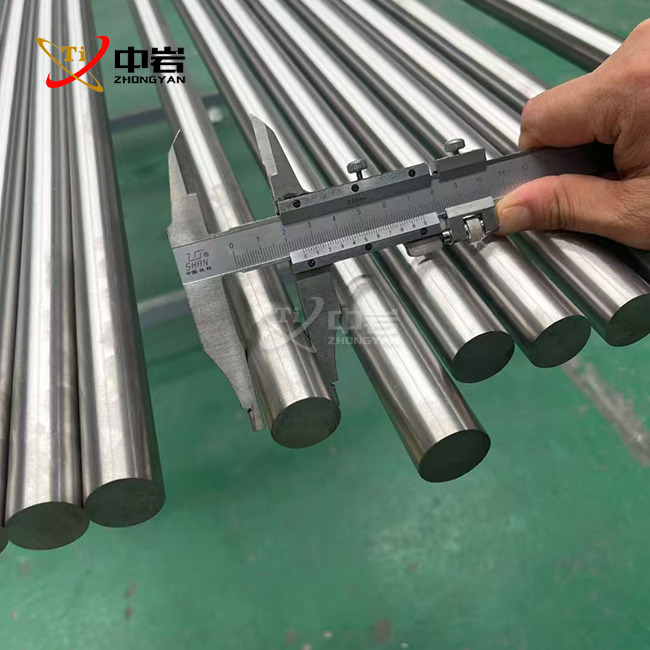
While most titanium bar stock comes in standard lengths and diameters, important components often need custom dimensions, surface treatments, and mechanical properties. GR36 titanium bar is available in a variety of surface treatments, including polished, brilliant, machined, and annealed, to meet the needs of various applications. With dimensional tolerances starting at H9 and going up to even finer specifications, precise machining can be done without removing too much material.
Together with our clients, our technical team develops project requirements that address the individual needs of each job. Optimising mechanical qualities for individual loading circumstances is possible with tailored heat treatment processes. Precision grinding services produce bars that meet concentricity and straightness standards suitable for Swiss-type turning processes. Material utilisation directly affects component cost in high-volume production runs; having length options ranging from 1000 mm standard stock to custom-cut lengths reduces material waste and handling expenses.
Pricing Considerations and Supply Chain Management
The cost of raw materials, the difficulty of processing them, and changes in market demand all affect the price of GR36 titanium bars. Because of its strategic alloying role and its sensitivity to fluctuations in mine production and worldwide demand, molybdenum content has a substantial impact on base costs. Managers in charge of procurement should network with titanium bar suppliers that can guarantee a steady supply at a reasonable price by means of volume commitments or advance contracts, securing advantageous conditions for anticipated production timelines.
Sourcing from manufacturers in specialised industrial districts, such as Baoji, China, known as "Titanium Valley" for its concentrated titanium processing skills and infrastructure, requires careful logistics planning. Due to our facility's proximity to both primary titanium smelting operations and manufacturers of specialised equipment, we can offer affordable prices without sacrificing quality. We help our clients find the sweet spot between delivery speed and transportation expenses with our versatile shipping arrangements, which include expedited air freight for last-minute needs and consolidated ocean freight for economical bulk shipments.
Practical Applications and Case Studies Highlighting GR36 Titanium Bar Advantages
Aerospace Component Manufacturing
Aircraft engine manufacturers specify GR36 titanium bar for compressor blades, turbine discs, and fasteners operating in the hot sections of jet engines where temperatures regularly exceed 450°C. The material's creep resistance prevents dimensional changes that would alter blade tip clearances and reduce engine efficiency over thousands of flight hours. One major aerospace OEM documented 30% improvement in component service life compared to earlier-generation titanium alloys, translating to reduced maintenance costs and improved aircraft availability.
Structural fasteners manufactured from this titanium grade provide essential joining functionality in composite airframe assemblies. The thermal expansion coefficient closely matches carbon fibre-reinforced polymer structures, preventing stress concentration and fatigue crack initiation at fastener holes during thermal cycling experienced throughout flight envelopes. This compatibility allows engineers to design lighter, more efficient aircraft structures without compromising safety margins.
Medical Device and Implant Applications
Surgical instrument producers turn to GR36 titanium bar for specialised tools that require biocompatibility, high resistance to corrosion from sterilisation chemicals, and exceptional strength. Orthopaedic implant manufacturers fabricate prosthetic components from GR36 titanium grade due to its mechanical qualities that match human bone strength and its demonstrated tissue compatibility. Components needing Class I medical device regulatory approval can benefit from the reduced machining time and improved final surface quality achieved with cold-drawn titanium bar stock, which has a polished surface finish.
A leading prosthetics manufacturer significantly reduced the instrument return rates for arthroscopy tools by switching from stainless steel to GR36 titanium bar. There were noticeable gains in product performance and customer satisfaction as a result of the synergy of reduced surgeon fatigue, longer instrument lifespan due to greater corrosion resistance, and complicated geometries made possible by excellent machinability.
Chemical Processing and Industrial Equipment
The corrosion resistance and strength retention of GR36 titanium bar make it an ideal material for chemical reactors, heat exchangers, and pump components that are subjected to harsh operating conditions. Titanium bar components in a hydrochloric acid concentration system were used for fifteen years without interruption by one petrochemical plant, replacing stainless steel components that had to be replaced every year. Within the first three years of operation, the larger original expenditure was justified by the avoided downtime and maintenance expenses.
Subsea machinery exposed to mechanical loading, seawater, and hydrogen sulphide uses fasteners and structural components made of this titanium grade. These components are used in offshore oil and gas platforms. The material's resistance to chloride stress corrosion cracking improves safety and decreases the need for costly underwater maintenance operations by eliminating a typical failure mechanism that affects high-strength steels in marine environments.
Why Is the GR36 Titanium Bar the Preferred Choice for Critical Components?
Engineering Decision Framework
Material selection for critical components follows a systematic evaluation process balancing mechanical performance, environmental compatibility, manufacturing feasibility, and lifecycle economics. The GR36 titanium bar consistently ranks favourably across these criteria when engineers apply rigorous decision methodologies. The material's proven performance record in demanding applications reduces technical risk compared to newer alloys lacking extensive service history and failure mode data.
Regulatory compliance considerations increasingly influence material selection, particularly in aerospace and medical sectors where documentation requirements and traceability standards continue expanding. Established materials like the GR36 titanium bar benefit from decades of accumulated test data, design allowables, and approval status with regulatory agencies worldwide. This regulatory acceptance accelerates product development timelines and reduces certification costs compared to implementing novel materials requiring extensive qualification testing.
Performance Validation and Industry Acceptance
Leading engineering organisations and standards bodies have extensively characterised GR36 titanium bar properties through collaborative research programmes and service experience documentation. Published design data covers fatigue behaviour, fracture toughness, stress corrosion cracking resistance, and weldability—information essential for structural analysis and component certification. This comprehensive knowledge base enables engineers to design with confidence, accurately predicting component behaviour throughout anticipated service conditions.
Industry testimonials from aerospace manufacturers, medical device producers, and chemical processing facilities consistently highlight the reliability and performance consistency of components manufactured from this titanium grade. OEM engineering teams report fewer warranty claims, reduced field failures, and improved customer satisfaction when specifying GR36 titanium bar for critical applications compared to alternative materials showing higher failure rates or requiring more frequent replacement intervals.
Conclusion
The GR36 titanium bar has earned its position as the preferred material for critical components through demonstrated superior performance, comprehensive regulatory acceptance, and proven lifecycle cost advantages. The combination of exceptional mechanical properties, including tensile strength exceeding 900 MPa, creep resistance to 540°C, corrosion immunity, and biocompatibility, creates a unique material capability profile unmatched by competing alloys or alternative metals. Engineers specifying this grade gain confidence from extensive industry experience, published design data, and established supplier capabilities supporting high-volume production requirements with consistent quality. As industries continue demanding lighter, stronger, and more durable components, the technical advantages and economic value proposition of GR36 titanium bar ensure its continued prominence in aerospace, medical, chemical processing, and industrial applications where component reliability directly impacts safety, operational efficiency, and business success.
FAQ
What makes the GR36 titanium bar superior to Grade 5 for high-temperature applications?
The GR36 titanium bar contains molybdenum and tin alloying additions not present in Grade 5, creating superior creep resistance and dimensional stability at sustained temperatures above 450°C. This composition enables reliable performance up to 540°C, where Grade 5 would experience unacceptable time-dependent deformation affecting component function and safety margins in turbine engines and chemical processing equipment.
Can a GR36 titanium bar be customised to meet specific project requirements?
Manufacturers offer extensive customisation, including non-standard diameters, custom lengths, specific heat treatment conditions, and precision surface finishes. Dimensional tolerances can be specified to H9 or tighter standards, with options for polished, bright, or machined surfaces. Custom mechanical property specifications through controlled heat treatment cycles accommodate unique loading conditions in specialized applications.
What certifications should buyers verify when sourcing GR36 titanium bar?
Procurement professionals should confirm suppliers maintain ISO 9001:2015 quality management certification and provide material test reports documenting ASTM B348 and ISO 5832-2 compliance for each shipment. Verification of chemical composition through spectroscopic analysis, mechanical testing results, and heat treatment records ensures the material meets specifications critical for component performance and regulatory approval in aerospace and medical applications.
Partner with Zhongyan for Premium GR36 Titanium Bar Supply
Zhongyan specialises in manufacturing precision GR36 titanium bar products meeting the exacting standards aerospace, medical, and industrial customers demand. Our Baoji facility combines over fifteen years of titanium processing expertise with advanced CNC machining capabilities, producing custom components and raw materials conforming to ASTM B348, ISO 5832-2, and customer-specific requirements. As a trusted titanium bar manufacturer, we maintain rigorous quality control throughout production, from raw material verification through final inspection, ensuring every shipment meets documented specifications.
Our comprehensive capabilities include custom diameter cold-drawing from 10mm to large sizes, precision grinding to H9 tolerances, and specialized heat treatments optimising mechanical properties for your application. Whether your project requires standard 1000 mm lengths or custom-cut stock minimising waste, our production flexibility supports both prototype quantities and high-volume manufacturing schedules. Contact our technical team at sales@titaniumstudy.com to discuss your GR36 titanium bar requirements. We provide detailed quotations, material certifications, and engineering support, helping you specify the optimal material configuration for critical component manufacturing success.
References
1.Boyer, R., Welsch, G., and Collings, E. W. (1994). Materials Properties Handbook: Titanium Alloys. ASM International, Materials Park, Ohio.
2. Donachie, Matthew J. (2000). Titanium: A Technical Guide, 2nd Edition. ASM International, Materials Park, Ohio.
3. Peters, M., Kumpfert, J., Ward, C. H., and Leyens, C. (2003). Titanium Alloys for Aerospace Applications. Advanced Engineering Materials, Volume 5, Issue 6.
4. ASTM International (2021). ASTM B348-13: Standard Specification for Titanium and Titanium Alloy Bars and Billets. West Conshohocken, Pennsylvania.
5. International Organization for Standardisation (2018). ISO 5832-2: Implants for Surgery - Metallic Materials - Part 2: Unalloyed Titanium. Geneva, Switzerland.
6. Lutjering, G. and Williams, J. C. (2007). Titanium, 2nd Edition: Engineering Materials and Processes. Springer-Verlag, Berlin Heidelberg.
_1755673729494.jpg)
Learn about our latest products and discounts through SMS or email