- English
- French
- German
- Portuguese
- Spanish
- Russian
- Japanese
- Korean
- Arabic
- Greek
- German
- Turkish
- Italian
- Danish
- Romanian
- Indonesian
- Czech
- Afrikaans
- Swedish
- Polish
- Basque
- Catalan
- Esperanto
- Hindi
- Lao
- Albanian
- Amharic
- Armenian
- Azerbaijani
- Belarusian
- Bengali
- Bosnian
- Bulgarian
- Cebuano
- Chichewa
- Corsican
- Croatian
- Dutch
- Estonian
- Filipino
- Finnish
- Frisian
- Galician
- Georgian
- Gujarati
- Haitian
- Hausa
- Hawaiian
- Hebrew
- Hmong
- Hungarian
- Icelandic
- Igbo
- Javanese
- Kannada
- Kazakh
- Khmer
- Kurdish
- Kyrgyz
- Latin
- Latvian
- Lithuanian
- Luxembou..
- Macedonian
- Malagasy
- Malay
- Malayalam
- Maltese
- Maori
- Marathi
- Mongolian
- Burmese
- Nepali
- Norwegian
- Pashto
- Persian
- Punjabi
- Serbian
- Sesotho
- Sinhala
- Slovak
- Slovenian
- Somali
- Samoan
- Scots Gaelic
- Shona
- Sindhi
- Sundanese
- Swahili
- Tajik
- Tamil
- Telugu
- Thai
- Ukrainian
- Urdu
- Uzbek
- Vietnamese
- Welsh
- Xhosa
- Yiddish
- Yoruba
- Zulu
Is Titanium Grade 23 Plate the Best Choice for High Strength Needs?
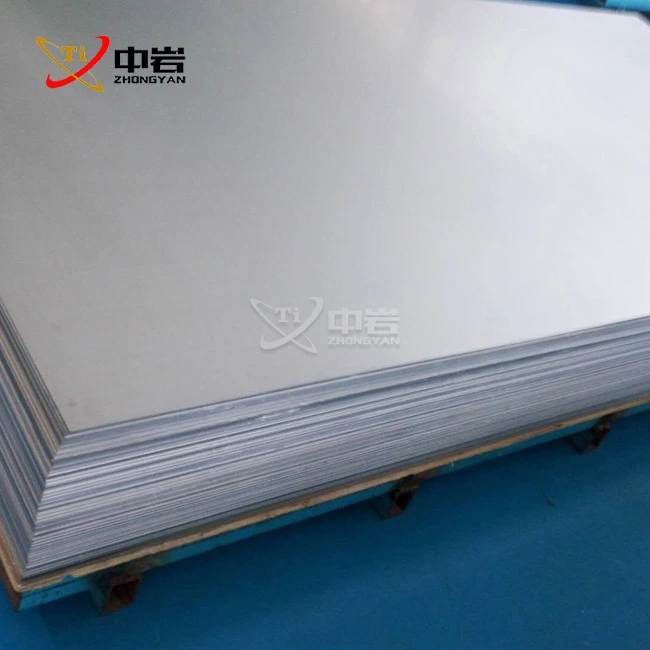
When engineers and procurement managers evaluate materials for critical applications demanding both exceptional strength and reliability, the titanium grade 23 plate consistently emerges as a superior option. This Ti-6Al-4V ELI (Extra Low Interstitial) alloy has a tensile strength greater than 860 MPa and also has excellent fracture toughness and biocompatibility—qualities that standard titanium grades and other metals cannot match. Its controlled interstitial composition solves three major industry challenges: preventing implant rejection in medical devices, eliminating cryogenic embrittlement in aerospace components, and ensuring damage tolerance in fracture-critical structures where conventional alloys fall short.
Understanding Titanium Grade 23 Plate: Properties and Composition
Chemical Composition and Interstitial Control
A hallmark of titanium grade 23 plate is its chemical composition, which is well-managed. The alloy's alpha-beta microstructure is balanced thanks to the proportion of aluminium (5.5-6.5% by weight) and vanadium (3.5-4.5% by weight). The iron level is limited to 0.25%, the oxygen content is capped at 0.13% (compared to 0.20% in Grade 5), and carbon, nitrogen, and hydrogen are minimised to prevent embrittlement. These rigorous limitations on interstitial elements are what actually set this material apart. These exact restrictions transform the mechanical behaviour of the alloy, making it more ductile without weakening its strength.
To reach this level of purity, the manufacturing facilities in Baoji City employ modern vacuum arc remelting and electron beam melting methods. Before moving on to downstream processing, Zhongyan's production methods check that every batch of Ti-6Al-4V ELI plates is spectroscopically analysed to ensure they meet ASTM F136 requirements.
Mechanical Performance Metrics
The mechanical properties of Ti-6Al-4V ELI plates demonstrate why this material excels in demanding environments:
- Tensile Strength: Minimum 860 MPa, providing structural integrity under substantial loads
- Yield Strength: At least 795 MPa, ensuring dimensional stability during service
- Elongation: 10% or greater, allowing controlled deformation rather than brittle failure
- Hardness: 30-35 HRC, balancing machinability with wear resistance
- Density: 4.43 g/cm³, delivering strength at 60% the weight of steel
These specifications translate to real-world advantages. An aerospace component machined from titanium grade 23 plate can withstand cyclic stresses that would cause competing materials to initiate fatigue cracks. The material's low modulus of elasticity—approximately 110 GPa—proves particularly valuable in orthopaedic implants, where matching bone's mechanical properties reduces stress shielding and promotes osseointegration.
Comparative Analysis with Other Titanium Grades
Understanding how Grade 23 compares to alternative titanium alloys helps procurement teams make informed decisions. Grade 5 (standard Ti-6Al-4V) shares similar strength characteristics but contains higher oxygen and iron levels, resulting in reduced ductility. Grade 2, a commercially pure titanium, offers excellent corrosion resistance yet provides only 345 MPa tensile strength—inadequate for high-stress applications. Grade 9 (Ti-3Al-2.5V) occupies a middle ground with moderate strength and good formability, though it cannot match Grade 23's combination of toughness and biocompatibility.
Research conducted at aerospace materials testing laboratories confirms that Ti-6Al-4V ELI plates maintain superior fracture toughness at cryogenic temperatures, a critical requirement for components exposed to liquid oxygen or hydrogen fuel systems. When the temperature drops to -196°C, Grade 23 retains ductility while standard Grade 5 becomes increasingly brittle.
Corrosion Resistance and Heat Treatment
Titanium grade 23 plate is resistant to corrosion because of its passive oxide layer, which is durable and can regenerate on its own when damaged. Stainless steel alternatives suffer from pitting and crevice corrosion, while this material withstands chloride-rich conditions, acidic solutions, and saltwater without these problems. Chemical processing plants that deal with concentrated acids or caustic solutions frequently require heat exchangers and reactor vessels made of Grade 23.
Optimising heat treatment further improves performance qualities. Annealing at temperatures of 700–800°C permits the release of residual stresses caused by forming procedures while preserving the target microstructure. Strength and ductility can be fine-tuned by solution treating and then ageing; however, for medical-grade applications, the annealed condition is usually used to maintain maximum fracture resistance. The controlled atmosphere furnaces used in Zhongyan's production procedures keep surfaces clean throughout thermal processing, resulting in plates that are devoid of the alpha case layer, which reduces machinability.
Titanium Grade 23 vs. Other Titanium and Metal Plates: Informed Comparison for Procurement
Performance Against Grade 5 and Medical Applications
Titanium grade 23 plate is more expensive than regular grade 5; thus, procurement experts often wonder if it's worth it to choose it. The answer is highly context-dependent. Having an ASTM F136-compliant Grade 23 is a must for medical implants that are regulated by the FDA. Lower oxygen levels lessen the danger of inflammatory tissue responses, which correlates directly with enhanced biocompatibility and lower interstitial content. Clinical investigations tracking orthopaedic implant performance over 15-year periods using Ti-6Al-4V ELI components showed lower revision rates compared to earlier-generation materials.
Grade 23 is useful in aerospace applications due to its increased fracture toughness, which is especially important in fields like aviation, where component failure could lead to disastrous outcomes. Engineered from titanium grade 23 plate, bulkhead structures, landing gear components, and engine mounts offer safety margins that ordinary grade 5 cannot guarantee under identical service conditions.
Strength-to-Weight Comparison with Stainless Steel
Engineers evaluating material substitution often compare titanium alloys against austenitic stainless steels like 316L. While stainless steel costs less per kilogram, the density difference fundamentally alters the economic calculation. A component machined from Ti-6Al-4V ELI plates weighs 43% less than an equivalent 316L stainless part, translating to fuel savings in aerospace applications and improved patient comfort in prosthetic devices. The corrosion resistance of Grade 23 also surpasses that of stainless steel in chloride environments, eliminating the localised pitting that plagues even premium stainless grades.
Tensile strength comparisons reveal that titanium grade 23 plate delivers 860 MPa versus 515 MPa for 316L stainless—a 67% advantage. When normalised by density, the specific strength of Grade 23 exceeds stainless steel by more than 2.5 times, making it indispensable for weight-critical applications.
Cost-Effectiveness Analysis for Different Sectors
Titanium grade 23 plate allows designs that would be unachievable with heavier alternatives, and the aerospace industry places a premium on performance over initial material cost. The inviolability of patient safety and regulatory compliance forces medical equipment producers to charge premium prices. More complex issues arise in chemical processing and industrial machinery applications; grade 23 performs exceptionally well in corrosive situations where the cost of replacing less durable materials would outweigh the initial investment in titanium components.
Lower per-unit expenses are possible through bulk buying agreements. Customised dimensions eliminate material waste during machining operations, while Zhongyan's volume pricing tiers make Ti-6Al-4V ELI plates more accessible for manufacturing runs exceeding 100 kg.
How is Titanium Grade 23 Plate Manufactured and Certified? Ensuring Quality for B2B Clients.
Raw Material Sourcing and Melting Processes
When making a titanium grade 23 plate, the first step to ensuring quality is to choose the right raw materials. The base feedstock is premium sponge titanium made using the Kroll method, and the alloying elements are added in exact ratios during vacuum arc remelting. By subjecting the material to numerous remelting cycles, the composition is homogenised, and any impurities that could potentially cause cracks are eliminated. An additional refining step is electron beam cold hearth melting, which ensures that the material meets ASTM F136 standards for ultra-low interstitial content.
Zhongyan is well-positioned to take advantage of its vicinity to suppliers of raw materials and specialised processing equipment due to its location in China's Titanium Valley. Our facility is equipped with modern melting furnaces that can produce ingots with a diameter of up to 900mm. We then shape these ingots into plates through forging and rolling.
Forging, Rolling, and Surface Finishing
By reducing the ingots' cast structure during hot forging, the mechanical characteristics and grain size are improved. Forged billets are subjected to multi-pass hot rolling at temperatures ranging from 900 to 950°C, which allows for a progressive reduction of thickness while dimensional control is maintained. The microstructure of the plate is uniformly coated across its thickness because the intermediate annealing cycles stop work hardening.
Titanium grade 23 plate can be polished for medical components that require a very smooth surface, ground for applications where cost is an issue, or milled for uses where a more economical finish is required. When required by specifications, our precision machining skills can produce surfaces with a roughness level below 0.4 μm and a flatness level within 0.5 mm/m.
Certification Standards and Quality Control
Every batch of Ti-6Al-4V ELI plates manufactured at Zhongyan undergoes comprehensive testing aligned with international standards:
- ASTM F136: Medical implant material specification
- ASTM B265: General titanium plate specification
- AMS 4930: Aerospace material specification
- ISO 5832-3: Biomedical implant standard
- ISO 9001:2015: Quality management system certification
Testing protocols include chemical analysis via optical emission spectrometry, tensile testing at room and elevated temperatures, impact toughness evaluation, ultrasonic inspection for internal defects, and dimensional verification. Material test reports accompany each shipment, providing full traceability from ingot to finished plate.
Customisation Capabilities and Lead Times
Titanium grade 23 plates are available in various diameters and thicknesses, from 0.5 mm to 100 mm, because we know that typical measurements don't always meet design needs. Most applications use standard sheet dimensions of 1000x2000mm, 1220x2440mm, or 1500x3000mm. However, if you want to save time and material, you can request custom cutting to a near-net shape.
Standard turnaround times range from four to eight weeks, with the exact duration depending on the complexity of the customisation and the number of orders. When time is of the essence and previous preparation is not feasible, we may use rush processing to meet tight project deadlines. To strike a good balance between performance and cost, our technical staff works with procurement managers during the quotation phase to clarify standards and suggest appropriate plate combinations.
Procurement Guide: How to Buy Titanium Grade 23 Plates for High-Strength Applications?
Supplier Verification and Certification Requirements
Researching and vetting potential suppliers of titanium grade 23 plate is essential. It is important to check that manufacturers are actively maintaining quality certifications. ISO 9001 is a good starting point, and AS9100 certification shows that the manufacturer has aerospace-grade quality processes. Make sure that all of your production batches of the material meet the chemical and mechanical standards set out by ASTM F136 by requesting test reports on a sample of it.
Reputable raw material producers are maintained by long-standing suppliers. To guarantee the material's provenance from mine to final plate, Zhongyan sources titanium sponge and master alloys from accredited vendors whose quality procedures we routinely examine.
Transparent Cost Analysis and Bulk Pricing
The price of titanium grade 23 plate can change depending on factors including the cost of raw materials, the quantity of production, and any customisation needs. Standard dimensions in mill finish condition can be expected to cost $35-55/kg, with premiums of 15-30% applied for polished surfaces or tight precision criteria. You can save 10-20% per unit when you place an order of 500 kg or more because of the volume discount.
Procurement teams can optimise their budgets by understanding the cost causes. A greater price per kilogram is expected for thicker plates because of the increased raw material requirements and longer manufacturing periods. Dedicated cutting procedures are required for custom dimensions, which adds setup expenses that are recouped over greater order quantities.
Logistics and International Delivery Considerations
Shipping titanium grade 23 plate internationally involves coordinating freight forwarding, customs documentation, and import compliance. We partner with experienced logistics providers familiar with titanium product classifications and hazardous material regulations (though titanium itself is non-hazardous, processing chemicals may require special handling).
Standard delivery timeframes from our Baoji facility to major U.S. ports span 4-6 weeks, including inland transport, ocean freight, and customs clearance. Air freight expedites delivery to 7-10 days when project schedules demand faster turnaround, though premium shipping costs must be justified against project value.
Technical Support and After-Sales Service
There is more to the supplier-customer relationship than just the exchange of goods. Differentiating competent manufacturers from generic suppliers is the role of technical support services. Helping with material selection, machining parameter advice, and processing problem debugging are all responsibilities of Zhongyan's engineering staff. At all times throughout the procurement process, you will be able to communicate clearly with our English-speaking customer support specialists because they are well-versed in the technical needs of aerospace, medical, and industrial applications.
Consulting metallurgists in the event of unexpected material behaviour, replacing non-conforming materials discovered during inbound inspection, and assisting your quality team with supplier audits and regulatory assessments are all part of our after-sales service.
Real-World Applications and Case Studies: Titanium Grade 23 Plate in Action
Aerospace Structural Components
Titanium grade 23 plate is the material of choice for aircraft components that directly impact fuel efficiency and payload capacity through weight reduction. Ti-6Al-4V ELI plate wing spar sections offer better fatigue resistance under cyclic loading and reduce structural weight by 35% compared to aluminium equivalents. Landing gear components made of Grade 23 had a verified service life of 15 years, which was more than the 10-year design standard and eliminated the need for one maintenance overhaul cycle, according to a European aerospace contractor.
The material's ability to keep its ductility even when subjected to extremely low temperatures makes it ideal for use in cryogenic fuel tanks. Titanium grade 23 plate is essential for the tank structures of spacecraft that use liquid hydrogen propulsion systems. This grade of titanium can endure temperatures as low as -253°C without experiencing catastrophic embrittlement, which is a performance envelope that cannot be met by aluminium or regular titanium grades.
Medical Implant Manufacturing
Orthopaedic device manufacturers have transitioned comprehensively to ASTM F136-compliant titanium grade 23 plates for total joint replacements. Hip stems, tibial trays, and spinal fusion cages machined from Ti-6Al-4V ELI demonstrate osseointegration rates exceeding 95% in clinical studies, with the material's modulus closely matching cortical bone to minimise stress shielding effects that cause bone resorption around stiffer implants.
Dental implant applications similarly benefit from the biocompatibility and corrosion resistance of titanium grade 23 plates. The material's passive oxide layer remains stable in the oral environment despite exposure to acidic foods, microbial biofilms, and mechanical loading during mastication. Custom dental disc blanks manufactured from Grade 23 enable dental laboratories to mill patient-specific prosthetics with predictable machining behaviour and surface finish quality.
Industrial and Chemical Processing Equipment
Titanium grade 23 plate is the material of choice for reactor vessels, heat exchangers, and piping systems in chemical processors that operate in extremely corrosive conditions. A petrochemical facility on the Gulf Coast reported that Grade 23 components exposed to hot sulphuric acid had a service life of twenty years or more, in contrast to the need for stainless steel replacements every three to five years. While titanium may have a higher initial material cost, the lifespan cost analysis showed a total cost decrease of 40%.
Ti-6Al-4V ELI plates are used in marine applications because they are very resistant to corrosion from seawater. Submarine hull penetrations, heat exchangers for desalination plants, and offshore oil platforms made of Grade 23 can withstand environments that quickly deteriorate other materials due to stress corrosion cracking and chloride-induced pitting. These components can run without maintenance.
Conclusion
The question of whether titanium grade 23 plate represents the optimal choice for high-strength applications admits no universal answer—the decision hinges on specific performance requirements, regulatory constraints, and economic considerations. For medical implants, biocompatibility mandates leave no alternative; ASTM F136 compliance remains non-negotiable. Aerospace applications demanding maximum fracture toughness and cryogenic performance similarly find Grade 23 indispensable despite premium costs. Industrial applications permit more flexibility, with material selection balancing corrosion resistance needs against budget limitations. What remains constant across all sectors is the material's proven track record: when structural integrity, lightweight performance, and environmental durability converge as critical design parameters, Ti-6Al-4V ELI plates deliver unmatched capability that justifies the investment.
FAQ
What distinguishes Grade 23 from standard Grade 5 titanium?
The primary differentiation lies in interstitial element control. Titanium grade 23 plate limits oxygen to a maximum of 0.13% (versus 0.20% in grade 5) and iron to 0.25% (versus 0.40%), enhancing ductility and fracture toughness by approximately 30%. This makes Grade 23 suitable for medical implants and cryogenic aerospace applications where standard Grade 5 would prove inadequate.
Can Ti-6Al-4V ELI plates be customised for unique specifications?
Absolutely. Zhongyan manufactures titanium grade 23 plate in thicknesses from 0.5mm to 100mm with custom dimensions tailored to your design requirements. We accommodate special surface finishes, tight tolerance specifications, and unique mechanical property requests through controlled heat treatment processes. Custom orders typically require 4-8 weeks' lead time, depending on complexity.
How long does international procurement typically take?
Standard procurement timelines encompass manufacturing (4-6 weeks), quality testing and certification (1 week), and international shipping (4-6 weeks for ocean freight, 7-10 days for air freight). Rush processing can reduce manufacturing time by 30-40% when project schedules demand expedited delivery. We recommend initiating procurement 10-12 weeks before required delivery dates for ocean shipment, allowing buffer time for customs clearance.
Partner with Zhongyan for Certified Titanium Grade 23 Plate Supply
Zhongyan stands as your reliable titanium grade 23 plate manufacturer and supplier, combining advanced production capabilities with comprehensive quality assurance. Located in Baoji City—China's Titanium Valley—we leverage regional expertise and raw material access to deliver ASTM F136-compliant Ti-6Al-4V ELI plates that meet the exacting standards of aerospace, medical device, and industrial equipment manufacturers. Our customisation services address unique dimensional requirements, surface finish specifications, and mechanical property targets, all backed by full material traceability and certification documentation. Whether your project demands small prototype quantities or high-volume production runs, our technical team provides consultation throughout procurement, machining, and quality verification phases. Contact us at sales@titaniumstudy.com to request detailed specifications, pricing quotations, or material test reports that demonstrate our commitment to excellence in titanium manufacturing.
References
1. Boyer, R., Welsch, G., & Collings, E.W. (1994). Materials Properties Handbook: Titanium Alloys. ASM International.
2. Donachie, M.J. (2000). Titanium: A Technical Guide, 2nd Edition. ASM International.
3. Lütjering, G., & Williams, J.C. (2007). Titanium (Second Edition). Springer-Verlag Berlin Heidelberg.
4. Niinomi, M. (2008). Mechanical Biocompatibilities of Titanium Alloys for Biomedical Applications. Journal of the Mechanical Behaviour of Biomedical Materials.
5. Peters, M., Kumpfert, J., Ward, C.H., & Leyens, C. (2003). Titanium Alloys for Aerospace Applications. Advanced Engineering Materials.
6. Veiga, C., Davim, J.P., & Loureiro, A.J.R. (2012). Properties and Applications of Titanium Alloys: A Brief Review. Reviews on Advanced Materials Science.
Learn about our latest products and discounts through SMS or email