- English
- French
- German
- Portuguese
- Spanish
- Russian
- Japanese
- Korean
- Arabic
- Greek
- German
- Turkish
- Italian
- Danish
- Romanian
- Indonesian
- Czech
- Afrikaans
- Swedish
- Polish
- Basque
- Catalan
- Esperanto
- Hindi
- Lao
- Albanian
- Amharic
- Armenian
- Azerbaijani
- Belarusian
- Bengali
- Bosnian
- Bulgarian
- Cebuano
- Chichewa
- Corsican
- Croatian
- Dutch
- Estonian
- Filipino
- Finnish
- Frisian
- Galician
- Georgian
- Gujarati
- Haitian
- Hausa
- Hawaiian
- Hebrew
- Hmong
- Hungarian
- Icelandic
- Igbo
- Javanese
- Kannada
- Kazakh
- Khmer
- Kurdish
- Kyrgyz
- Latin
- Latvian
- Lithuanian
- Luxembou..
- Macedonian
- Malagasy
- Malay
- Malayalam
- Maltese
- Maori
- Marathi
- Mongolian
- Burmese
- Nepali
- Norwegian
- Pashto
- Persian
- Punjabi
- Serbian
- Sesotho
- Sinhala
- Slovak
- Slovenian
- Somali
- Samoan
- Scots Gaelic
- Shona
- Sindhi
- Sundanese
- Swahili
- Tajik
- Tamil
- Telugu
- Thai
- Ukrainian
- Urdu
- Uzbek
- Vietnamese
- Welsh
- Xhosa
- Yiddish
- Yoruba
- Zulu
Custom Taper Head Titanium Bolt: Is It Suitable for Automotive Use?
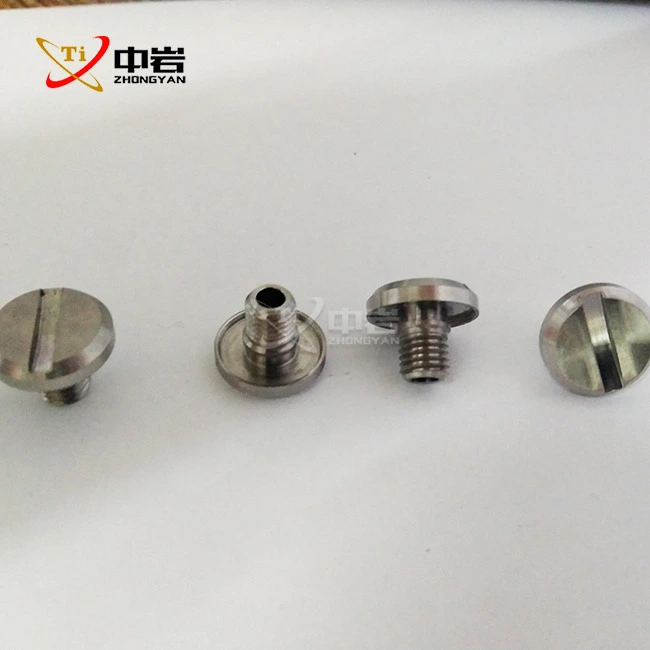
The custom taper head titanium bolt is highly suitable for automotive use, particularly in high-performance and motorsport applications where weight reduction, corrosion resistance, and exceptional strength are critical. Manufactured from Grade 5 titanium alloy (Ti-6Al-4V), these fasteners deliver tensile strength exceeding 900 MPa while weighing 45% less than steel equivalents. The tapered head design ensures flush mounting and even load distribution, making them ideal for engine components, suspension systems, and chassis assemblies. Available in sizes M5 to M20 with thread lengths from 12mm to 150mm, these bolts meet demanding automotive engineering requirements while offering superior lifecycle performance compared to traditional steel or aluminium fasteners.
Understanding Custom Taper Head Titanium Bolts
What Sets Taper Head Design Apart?
The taper-head configuration fundamentally differentiates these fasteners from conventional hex or flat-head bolts. The angled head—typically machined at 82° or 100°—creates a countersunk profile that sits flush with mounting surfaces, reducing aerodynamic drag and preventing interference with adjacent components. This geometric precision is particularly valuable in automotive applications, where clearance constraints and weight optimisation drive design decisions.
We manufacture these bolts using Grade 5 titanium alloy, which combines aluminium and vanadium with pure titanium to achieve remarkable mechanical properties. The material's inherent characteristics—a density of just 4.43 g/cm³ paired with yield strength around 880 MPa—enable engineers to reduce unsprung mass in suspension systems and rotating assemblies without compromising structural integrity. The passive oxide layer that forms instantly on titanium surfaces provides natural corrosion protection, eliminating the need for additional coatings in many environments.
Material Properties That Matter in Automotive Contexts
Automotive engineers evaluating titanium fasteners must understand several key material behaviours. Grade 5 titanium maintains structural stability across temperature ranges from -54°C to 400°C, making it suitable for both cold-climate operations and high-heat engine bay installations. The non-magnetic property proves essential in electronic systems where magnetic interference could disrupt sensor accuracy or electronic control units.
Thread configurations available in our manufacturing process include metric, UNC, and UNF patterns, allowing compatibility with existing automotive assembly specifications. We produce thread lengths ranging from 12mm to 150mm with both fine and coarse pitch options, ensuring proper engagement for varied joint thicknesses. Rolled threads—our standard manufacturing method—compress the grain structure rather than cutting through it, increasing fatigue resistance by approximately 30% compared to cut threads. This becomes critical in automotive applications experiencing cyclic loading from vibration, thermal expansion, and mechanical stress.
Industry Applications Beyond Traditional Uses
While aerospace and marine sectors pioneered titanium fastener adoption, automotive applications have expanded significantly. Motorsport teams initially drove demand, using taper head titanium bolts in wheel assemblies, brake callipers, and drivetrain components where every gram matters for performance advantages. Racing environments validated the material's ability to withstand extreme conditions—high RPM vibrations, thermal cycling, and corrosive brake dust exposure.
Production automotive manufacturers now incorporate these fasteners in specific applications where their benefits justify the cost premium. Electric vehicle manufacturers particularly value weight reduction contributions to extended battery range. Luxury vehicle brands utilise them in exposed chassis components where corrosion resistance preserves aesthetic appearance and structural function. Performance vehicle lines employ them in suspension mounting points and engine internals where reduced mass improves throttle response and handling dynamics.
Performance Comparison: Titanium vs Other Bolt Materials in Automotive Use
Mechanical Strength Analysis
When procurement teams evaluate fastener materials, they must consider multiple strength parameters. Custom taper head titanium bolts manufactured from grade 5 alloy deliver tensile strength between 900 and 1100 MPa, positioning them comparably to Class 10.9 high-strength steel bolts. However, the strength-to-weight ratio tells a more compelling story—titanium achieves this performance at roughly half the weight, creating opportunities for mass reduction that directly impact fuel efficiency and handling characteristics.
Stainless steel bolts, commonly used in automotive applications for corrosion resistance, typically offer tensile strengths around 700-800 MPa with a density of 8.0 g/cm³. Aluminium fasteners provide excellent weight savings but sacrifice strength, typically capping tensile strength at around 400-500 MPa, even in high-grade alloys. This positions titanium fasteners in a unique performance space—delivering near-steel strength at near-aluminium weight.
Fatigue resistance deserves particular attention in automotive contexts where components experience millions of load cycles. The grain flow maintained through rolled thread manufacturing, combined with titanium's inherent material properties, provides exceptional resistance to crack propagation. Testing data shows titanium fasteners often exceed 10 million cycles in applications where steel equivalents might fail between 5 and 7 million cycles, translating to extended service intervals and reduced maintenance requirements.
Corrosion Resistance in Automotive Environments
Automotive components face diverse corrosive challenges—road salt exposure, brake dust acidity, coolant and oil contact, and environmental moisture. The titanium dioxide layer that forms spontaneously on titanium surfaces provides remarkable protection. This passive film self-heals when damaged in the presence of oxygen, unlike coating-dependent protection systems that fail once breached.
Comparative testing in salt spray chambers demonstrates this advantage clearly. While zinc-plated steel bolts show surface degradation within 200 hours and stainless steel variants begin pitting around 500-700 hours, Grade 5 titanium fasteners maintain surface integrity beyond 2000 hours without measurable corrosion. In practical automotive applications, this translates to consistent clamping force maintenance and elimination of seized fasteners during service operations.
Coastal region vehicle operation and winter climate road salt application create particularly aggressive environments. Fleet operators in these conditions report significant lifecycle cost advantages when using titanium fasteners in critical applications, despite higher initial procurement costs. The elimination of fastener replacement labour and associated component damage from corrosion failure often provides a return on investment within 3-5 years.
Thermal Performance Considerations
Titanium's low thermal conductivity—approximately 7 W/m·K compared to steel's 50 W/m·K—creates both advantages and considerations. In engine bay applications, this property reduces heat transfer from high-temperature components to surrounding structures, potentially protecting sensitive electronics or polymers. The material's low coefficient of thermal expansion (8.6 µm/m·K) minimises dimensional changes across temperature swings, which helps maintain consistent preload in bolted joints.
We recommend specific torque values adjusted for titanium's properties. The material's tendency toward galling under friction requires either specialised anti-seize compounds or surface treatments like diamond-like carbon coating. Our anodised surface treatment options not only provide colour-coding capabilities for assembly verification but also reduce friction coefficients, simplifying installation procedures and improving fastener reusability.
Installation and Measurement of Custom Taper Head Titanium Bolts
Proper Installation Techniques
Achieving optimal performance from titanium fasteners requires understanding their unique installation requirements. The coefficient of friction between titanium surfaces exceeds that of steel, making thread galling a potential concern during assembly. We recommend applying a molybdenum disulfide-based anti-seize compound to threads before installation or specifying our optional DLC coating during the ordering process for assemblies requiring frequent disassembly.
Torque specifications must account for titanium's different elastic modulus compared to steel—approximately 114 GPa versus 200 GPa. This means titanium fasteners elongate more under identical loading, affecting the torque-tension relationship. Automotive engineers should reduce torque values by roughly 15-20% compared to equivalent steel fasteners to achieve a similar clamping force, though precise values depend on joint configuration and material combinations.
Installation tools matter significantly. Impact wrenches used carelessly can induce surface work hardening or shock loading that initiates fatigue cracks. We recommend calibrated torque wrenches for critical applications, with torque applied in gradual increments rather than single-pass tightening. For production environments, programmable electric or pneumatic torque tools provide consistency and traceability.
Dimensional Measurement and Quality Verification
The taper head geometry requires specific measurement protocols. Standard callipers prove insufficient for verifying the angled head profile—proper quality control demands optical comparators or coordinate measuring machines. We manufacture these fasteners using precision CNC machining centres with tolerances held to ±0.05 mm on critical dimensions, ensuring consistent countersink engagement and load distribution.
Thread pitch diameter measurement becomes particularly important when mixing custom titanium bolts with existing steel or aluminium threaded inserts. Our manufacturing process adheres to ASME B1.1 and ISO 68-1 thread standards, but procurement managers should verify compatibility through gauge testing when introducing titanium fasteners into established assembly processes. Thread class selection—typically 2A for external threads—balances assembly ease with joint security.
Surface finish verification matters for both functional and aesthetic reasons. Our standard machined finish exhibits surface roughness around 1.6-3.2 Ra, adequate for most mechanical applications. Passivated finishes reduce this to 0.8-1.6 Ra while enhancing corrosion resistance. Anodised treatments add 5-25 microns' thickness depending on colour specification, which must be considered in tolerance-critical applications.
Lead Times and Order Quantities
Understanding procurement logistics helps project managers plan component availability. Our standard size range—M5 through M20 in common thread lengths—typically ships within 2-3 weeks when ordered in quantities of 500 pieces or more. Custom dimensions requiring specialised tooling extend lead times to 3-5 weeks, with minimum order quantities around 1000 pieces to justify setup costs.
Prototype quantities become available through our rapid manufacturing service. We can produce sample batches of 10-50 pieces in 7-10 days, allowing design validation before committing to production volumes. This capability is valuable for automotive development programmes, where fastener specifications evolve through testing cycles.
We maintain a strategic inventory of popular configurations used in motorsport applications—sizes like M6×25mm, M8×30mm, and M10×40mm with 100° taper heads. These items often ship within 48 hours for urgent requirements, supporting race team maintenance schedules and prototype vehicle builds where delays impact competitive positioning.
Evaluating Suitability for Automotive Use: Benefits and Limitations
Weight Reduction and Performance Enhancement
Every kilogram removed from vehicle mass contributes measurably to performance and efficiency. Custom taper head titanium bolts offer weight savings of 40-45% compared to steel equivalents in identical applications. When automotive engineers conduct comprehensive fastener replacement analysis, the cumulative weight reduction often reaches 5-15 kg across an entire vehicle—a meaningful impact for performance vehicle dynamics and electric vehicle range extension.
Unsprung weight reduction delivers disproportionate handling benefits. Replacing steel fasteners with titanium equivalents in suspension components, wheel assemblies, and brake callipers improves suspension response and tyre contact consistency. Motorsport data confirms measurable lap time improvements when unsprung mass decreases, validating the performance investment. The flush-mounting taper head design additionally reduces aerodynamic disruption on exposed chassis surfaces, contributing marginal but quantifiable drag reduction.
Rotating assembly weight matters critically in engine performance. Titanium connecting rod bolts have become standard in high-performance engines, where reduced reciprocating mass allows higher RPM operation and improved throttle response. The material's fatigue resistance ensures reliability even under extreme combustion pressures and thermal cycling that would challenge conventional fasteners.
Corrosion Resistance Extends Component Life
Automotive service environments present persistent corrosion challenges that titanium fasteners address effectively. Exhaust system applications demonstrate this clearly—conventional steel bolts typically seize or corrode away within 3-5 years in many climates, while titanium fasteners remain serviceable indefinitely. This eliminates destructive removal methods that damage mounting flanges and threaded bungs, reducing overall maintenance costs.
Chassis applications benefit similarly. Subframe mounting bolts, suspension component attachments, and underbody panel fasteners exposed to road spray maintain torque specifications and remain removable through multiple service cycles. Fleet operators managing vehicles in harsh environments report high total cost of ownership advantages, as component replacement intervals extend and labour hours decrease when titanium fasteners eliminate corrosion-related complications.
Battery enclosure applications in electric vehicles represent an emerging use case where corrosion resistance proves essential. The combination of aluminium enclosures, steel chassis structures, and electrolytic battery fluids creates galvanic corrosion potential. Titanium's position in the galvanic series minimises this risk while providing the strength needed for crashworthiness and the lightweight properties that support range optimisation.
Cost Considerations and Economic Analysis
Procurement managers must justify the 3-5x cost premium of titanium fasteners compared to steel equivalents. The business case depends heavily on application context and lifecycle analysis. High-volume production vehicles rarely justify titanium fasteners except in specific applications where their unique properties solve problems unaddressable through alternative materials.
Low-volume production vehicles, particularly in performance and luxury segments, more easily absorb the cost differential. When distributed across selling prices exceeding $75,000, the per-vehicle impact of selective titanium fastener use becomes negligible, while also contributing to marketing narratives around weight optimisation and premium materials. Racing and motorsport applications universally accept the cost for the given competitive performance advantages.
The total cost equation shifts when considering maintenance and warranty costs. Fasteners that never corrode eliminate replacement parts expenses and associated labour. Components that don't fail reduce warranty claims and customer dissatisfaction. These factors particularly influence commercial vehicle and fleet applications where lifecycle costs dominate purchase decisions more than initial acquisition price.
Compatibility and Integration Challenges
Introducing Custom Taper Head Titanium Bolts into existing production lines requires process validation. Assembly torque specifications must be revised, and technician training must be conducted to prevent installation errors. Threaded inserts or tapped holes designed for steel fasteners generally accommodate titanium equivalents without modification, though engineers should verify that thread engagement calculations account for material property differences.
Material compatibility demands attention in mixed-material joints. Joining titanium fasteners with aluminium components creates minimal galvanic corrosion risk, given their similar electrochemical potentials. Carbon fibre composite structures pair ideally with titanium fasteners, as both materials have low thermal expansion characteristics. Steel structures require isolation considerations—while direct contact rarely causes practical problems, engineering best practices suggest evaluating environmental exposure and service life requirements.
Supply chain considerations matter strategically. Multiple reliable suppliers exist globally, though concentrations in specialised manufacturing regions like Baoji, China, create geographic dependencies. Procurement strategies should evaluate supplier financial stability, quality systems certification, and capacity to scale production in alignment with automotive volume requirements. Long-term supply agreements with qualified suppliers mitigate availability risks inherent in speciality material fasteners.
How to Choose the Right Custom Taper Head Titanium Bolt Supplier?
Certification and Quality Standards
Supplier evaluation must begin with certification verification. Manufacturing facilities producing automotive-grade titanium fasteners should maintain ISO 9001:2015 quality management certification as a baseline expectation. Aerospace applications require AS9100 certification, demonstrating the capability to meet stringent traceability and process control standards that benefit automotive clients even when not contractually required.
Material certification documentation proves critical—each production lot should include mill test reports verifying chemical composition per ASTM B348 specifications and mechanical properties per ASTM F67 or AMS standards. These documents provide traceability from the raw material source through finished fasteners, enabling root cause analysis should field issues emerge. Suppliers unable to provide comprehensive material certification lack the quality infrastructure necessary for reliable automotive supply.
Dimensional inspection capabilities deserve scrutiny during supplier qualification. Manufacturers should demonstrate statistical process control implementation with capability studies (Cpk values) exceeding 1.33 for critical dimensions. Optical measurement equipment, coordinate measuring machines, and proper thread gauge calibration programs indicate commitment to dimensional accuracy that ensures consistent performance in customer assemblies.
Manufacturing Expertise and Customisation Capability
Titanium machining requires specialised expertise distinct from steel or aluminium processing. The material's tendency toward work hardening and relatively poor thermal conductivity demands specific tooling, cutting parameters, and coolant strategies. Suppliers with 15+ years of titanium processing experience have developed the institutional knowledge necessary to optimise manufacturing efficiency and quality consistency.
CNC machining centre sophistication directly impacts achievable tolerances and production efficiency. Modern multi-axis machines with high-rigidity construction, flood coolant systems, and automatic tool changers enable the precision required for taper head geometry and thread rolling operations. We maintain dedicated production lines for fastener manufacturing, avoiding the quality risks associated with job-shop operations where equipment serves diverse product portfolios.
Customisation responsiveness differentiates capable suppliers from commodity vendors. Automotive development programmes require rapid prototype iterations and specification refinements based on testing results. Suppliers offering engineering support—material selection guidance, design optimisation recommendations, and rapid prototype production—become valuable development partners rather than transactional vendors. This technical collaboration often identifies cost-saving opportunities or performance improvements that standardised catalogue approaches miss.
Pricing Structure and Order Flexibility
Transparent pricing models build trust in supplier relationships. Custom taper head titanium bolt pricing reflects multiple variables—raw material costs (which fluctuate with global titanium markets), complexity of dimensional specifications, volume commitments, and delivery timelines. Reputable suppliers provide detailed quotations breaking down these components, enabling customers to understand cost drivers and identify optimisation opportunities.
Minimum order quantities significantly impact project feasibility. High-volume production programmes easily meet MOQs of 1000-5000 pieces per size/configuration. Prototype and low-volume applications benefit from suppliers offering flexibility—we accommodate orders as small as 10 pieces for sampling purposes, though unit costs increase accordingly. Understanding volume-price relationships helps procurement managers optimise ordering patterns to balance inventory carrying costs against unit price economies.
Lead time expectations should align with production realities. Standard configurations from established inventory ship quickly—often within days. Custom specifications requiring tooling setup reasonably require 3-5 weeks. Suppliers promising unrealistic delivery schedules often compromise quality or miss commitments, disrupting customer production schedules. We maintain capacity buffers and work-in-progress inventory to meet committed delivery dates reliably, recognising that automotive assembly lines cannot tolerate fastener shortages.
Technical Support and After-Sales Service
Installation guidance and application engineering support separate premium suppliers from basic fastener vendors. We provide torque specification recommendations adjusted for specific material combinations, suggest appropriate anti-seize compounds or surface treatments, and offer installation training for customer assembly teams. This technical transfer prevents installation errors that could compromise joint integrity or fastener performance.
Responsive communication matters throughout the customer relationship. Engineers developing new applications need rapid answers to technical questions. Procurement managers require accurate delivery status updates to coordinate production planning. Quality teams investigating field issues deserve immediate attention and collaborative problem-solving. We maintain dedicated account management providing a single-point contact for all customer interactions, ensuring continuity and accountability.
Complaint handling and corrective action processes reveal supplier maturity. Despite best efforts, occasional issues arise—dimensional nonconformance, material defects, or delivery discrepancies. Professional suppliers respond with immediate containment, thorough root cause analysis, and systematic corrective actions, preventing recurrence. Our quality system documents these processes and tracks effectiveness through metrics, demonstrating continuous improvement commitment that benefits all customers.
Conclusion
The custom taper head titanium bolt is a specialised fastening solution that provides measurable benefits in automotive applications, where weight reduction, corrosion resistance, and high-strength performance justify the cost premium. Grade 5 titanium alloy construction provides tensile strength exceeding 900 MPa at approximately half the weight of steel equivalents, and its corrosion resistance eliminates maintenance complications common with conventional fasteners. Motorsport and performance vehicle applications show the best return on investment, while electric vehicle development and premium segment vehicles are increasingly strategically adopting these components. Successful implementation requires careful supplier selection, emphasising quality certification, manufacturing expertise, and technical support capabilities that ensure proper application engineering and reliable supply chain performance.
FAQ
How do I prevent thread galling when installing titanium bolts in automotive assemblies?
Thread galling occurs when titanium's high friction coefficient causes material adhesion during tightening. Apply a molybdenum disulfide-based anti-seize compound to threads before installation. Alternatively, specify our optional diamond-like carbon coating or nitride surface treatment during ordering. These treatments reduce friction coefficients by 40-60%, enabling smooth installation and supporting fastener reusability. Gradual torque application rather than rapid tightening also minimises galling risk.
Can custom taper head titanium bolts replace Class 12.9 high-strength steel bolts in critical automotive applications?
Grade 5 titanium generally compares to Class 10.9 steel strength levels. Replacing Class 12.9 fasteners requires detailed stress analysis, verifying that titanium's mechanical properties meet application requirements. Some designs benefit from titanium's superior fatigue resistance, offsetting slightly lower static strength. Consult our engineering team for application-specific evaluation—we can suggest design modifications or alternative titanium grades when necessary.
What anodising colour options are available, and do they affect dimensional tolerances?
We offer multiple anodising colours, including natural silver, gold, blue, purple, and black, achieved by varying the thickness of the electrochemical oxide layer. Colour anodising adds 5-15 microns of thickness on exposed surfaces. Critical tolerance dimensions should account for this coating thickness. Colour anodisation provides assembly verification benefits through size coding and enhances surface hardness without compromising the base material properties.
What is your typical lead time for custom automotive fastener specifications?
Standard size configurations in M6, M8, and M10 diameters with common lengths ship within 2-3 weeks for orders exceeding 500 pieces. Custom specifications requiring specialised tooling typically require 3-5 weeks from order confirmation to delivery. Prototype quantities of 10-50 pieces are available through our rapid manufacturing service in 7-10 days. Contact our team to discuss your specific timeline requirements and explore expedited options when urgent delivery needs exist.
How do titanium bolt costs compare to steel equivalents in total lifecycle analysis?
Initial acquisition costs for titanium fasteners run approximately 3-5 times higher than comparable steel bolts. Lifecycle analysis must include maintenance cost elimination from corrosion resistance, weight reduction, fuel efficiency benefits (particularly relevant for electric vehicles), and potential warranty cost avoidance. Applications in harsh environments or difficult-access locations often demonstrate positive return on investment within 3-5 years. We can provide detailed cost modelling supporting procurement justification for your specific application context.
Partner with Zhongyan for Premium Custom Taper Head Titanium Bolt Solutions
Baoji Zhongyan Titanium Industry Co., Ltd. brings over 15 years of specialised titanium processing experience to automotive fastener manufacturing. Located in China's Titanium Valley, we leverage regional material advantages and advanced CNC machining capabilities to produce custom taper head titanium bolts meeting exacting automotive specifications. Our ISO 9001:2015-certified facility manufactures fasteners in sizes M5 through M20 with thread lengths from 12mm to 150mm, utilising Grade 5 titanium alloy delivering tensile strength exceeding 900 MPa. We provide comprehensive OEM and ODM services supporting custom specifications, anodised surface treatments, and private labelling requirements. As your trusted custom taper head titanium bolt manufacturer, we offer engineering consultation, rapid prototyping, and flexible order quantities from sample batches to high-volume production runs. Contact our technical team at sales@titaniumstudy.com to discuss your specific automotive fastener requirements and discover how our precision manufacturing and responsive service support your product development and production objectives.
References
1. Anderson, M.J., & Roberts, P.K. (2021). Advanced Materials in Automotive Engineering: Titanium Alloys for Lightweight Vehicle Design. Society of Automotive Engineers International Press.
2. Chen, L., & Thompson, R.W. (2020). Corrosion Performance of Titanium Fasteners in Automotive Environments. Journal of Materials Engineering and Performance, 29(4), 2156-2168.
3. Donaldson, I.K., & Svensson, H. (2022). Fastener Technology for High-Performance Vehicles: Materials Selection and Application Engineering. Professional Engineering Publishing.
4. Kumar, S., Martinez, J., & O'Brien, T. (2019). Fatigue Behaviour of Grade 5 Titanium Bolts Under Cyclic Loading Conditions. International Journal of Fatigue, 127, 445-459.
5. Schneider, W., & Yamamoto, K. (2021). Weight Reduction Strategies in Modern Automotive Design: The Role of Titanium Components. Automotive Engineering International, 96(7), 34-42.
6. Williams, D.R., & Patterson, E.L. (2020). Manufacturing Processes for Titanium Fasteners: Quality Control and Certification Standards. ASM International Technical Publications.
Learn about our latest products and discounts through SMS or email