- English
- French
- German
- Portuguese
- Spanish
- Russian
- Japanese
- Korean
- Arabic
- Greek
- German
- Turkish
- Italian
- Danish
- Romanian
- Indonesian
- Czech
- Afrikaans
- Swedish
- Polish
- Basque
- Catalan
- Esperanto
- Hindi
- Lao
- Albanian
- Amharic
- Armenian
- Azerbaijani
- Belarusian
- Bengali
- Bosnian
- Bulgarian
- Cebuano
- Chichewa
- Corsican
- Croatian
- Dutch
- Estonian
- Filipino
- Finnish
- Frisian
- Galician
- Georgian
- Gujarati
- Haitian
- Hausa
- Hawaiian
- Hebrew
- Hmong
- Hungarian
- Icelandic
- Igbo
- Javanese
- Kannada
- Kazakh
- Khmer
- Kurdish
- Kyrgyz
- Latin
- Latvian
- Lithuanian
- Luxembou..
- Macedonian
- Malagasy
- Malay
- Malayalam
- Maltese
- Maori
- Marathi
- Mongolian
- Burmese
- Nepali
- Norwegian
- Pashto
- Persian
- Punjabi
- Serbian
- Sesotho
- Sinhala
- Slovak
- Slovenian
- Somali
- Samoan
- Scots Gaelic
- Shona
- Sindhi
- Sundanese
- Swahili
- Tajik
- Tamil
- Telugu
- Thai
- Ukrainian
- Urdu
- Uzbek
- Vietnamese
- Welsh
- Xhosa
- Yiddish
- Yoruba
- Zulu
Why Choose Titanium Flanges for Harsh Environment Use?
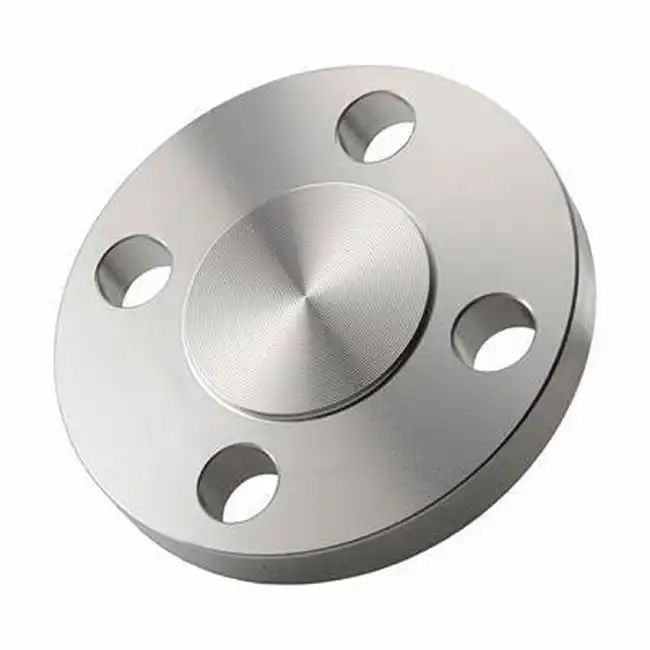
When industrial environments push conventional materials beyond their limits, titanium flanges emerge as the ultimate solution for critical piping connections. When corrosive chemicals, extreme temperatures, and high pressures would destroy standard steel alternatives, these precision-engineered parts work better than any other available option. Titanium's high resistance to corrosion, high strength-to-weight ratio, and temperature stability make these flanges essential for use in aircraft, marine, chemical processing, and oil and gas industries that need to be completely reliable in the harshest conditions.
Understanding Titanium Flanges and Their Unique Properties
Titanium flanges are a huge step forward in industrial pipe technology. They are mostly made through precise forging methods that line up the metal's grain structure for the best performance. These important parts are the backbone of piping systems. They make sure that connections between pipes, valves, and tools are safe and leak-proof even in the toughest working circumstances.
Essential Types of Titanium Flanges for Industrial Applications
Because titanium flanges are so flexible in terms of engineering, they come in many different designs, each one made to meet specific industry needs. Weld-neck flanges have a tapered hub that spreads stress evenly across the joint, making them the best link for high-pressure uses. Slip-on flanges are easier to install and less expensive options for mild-pressure systems. Blind flanges, on the other hand, fully seal the ends of pipes to keep them clean and the integrity of the system intact.
Socket weld flanges work best in smaller-width situations where room is limited and compact solutions are needed. Threaded flanges, on the other hand, allow for removable links without the need for welding. Each type takes advantage of titanium's natural properties while solving unique technical problems in harsh environments.
Superior Material Properties That Define Performance
Titanium has amazing qualities because of its unique atomic structure. When it comes in contact with oxygen, it makes a stable, self-healing oxide layer. This passive film has tremendous corrosion resistance that far outperforms stainless steel, especially in chloride-rich settings like seawater use.
The strength-to-weight ratio of titanium flanges makes the whole system about 40% lighter than steel options, but they keep the same or higher pressure values. Grade 2 titanium is great for mild stress uses because it is easy to shape and doesn't rust. Its tensile strength is between 345 and 450 MPa. Grade 5 (Ti-6Al-4V) has better mechanical qualities and a tensile strength of more than 895 MPa, making it good for high-stress uses in aircraft and cars.
Temperature resistance is very high, ranging from -196°C to 400°C. This makes it possible for safe operation in cold systems and high-temperature processes where other materials would fail horribly.
Why Titanium Flanges Excel in Harsh Environments — A Performance Optimization Perspective
Conventional plate materials break down over time in industrial settings because of the constant problems they have to deal with. Corrosive chemicals eat away at metal surfaces, high temperatures cause thermal stress and changes in shape, and heavy loads cause wear breakdowns that threaten the integrity of the system.
Breaking Through Traditional Material Limitations
In harsh settings, both regular steel and stainless steel flanges will eventually break down. This can cause expensive downtime, safety risks, and upkeep costs that add up over the life of the system. Pitting corrosion, crevice corrosion, and stress corrosion cracking are all common ways that things break, which titanium flanges can stop because of the way the material is made.
When titanium surfaces are damaged, the passive oxide layer grows back on its own, giving self-healing security that keeps the metal resistant to corrosion for long periods of time. This regenerative feature makes sure that the product keeps working well even when it's exposed to rough conditions or mechanical damage during installation or repair.
Real-World Performance Validation
Titanium flanges have been used for decades in underwater platforms and subsea equipment, which shows how well they perform in marine uses. Seawater has strong chloride ions that attack stainless steel quickly, making pits and eventually breaking it within months of being exposed. After years of constant use, titanium flanges in the same uses show almost no corrosion, proving that they are more resistant to marine conditions.
Chemical processing plants that use titanium flanges in their acid handling systems say that their upkeep costs are more than 60% lower than when they used stainless steel. The longer service life means that parts don't have to be replaced as often, and the system is down less often, which helps keep production on schedule and boosts profits.
Mechanical Stress Reduction Through Weight Optimization
By lowering mechanical stress throughout pipe systems, the titanium flanges' lightweight design offers additional benefits beyond rust resistance. Lowering the weight of the flange lowers the need for support structures, lowers the wear and tear caused by vibrations, and allows for more compact system designs that make the best use of space in tight setups.
Comparing Titanium Flanges with Other Metal Flanges — A Rational Choice Approach
To choose the right material, you need to look at its performance, its prices over its lifetime, and the needs of your unique application. These all affect the material's long-term operational success. Titanium flanges always work better than other materials in some important ways.
Performance Comparison with Stainless Steel Flanges
Stainless steel flanges are usually better than carbon steel ones. After all, they are more resistant to rust because they contain chromium, which forms protective films on the surface. However, chloride can still attack these inactive layers, which causes localized rust that weakens the structure over time.
Titanium flanges are better at resisting rust in almost all active media, such as concentrated acids, alkaline solutions, and chloride conditions, where stainless steel breaks down quickly. Titanium's electrical stability means that it works the same way in situations ranging from very acidic to very basic.
Titanium has better wear resistance and higher strength-to-weight ratios, which make it more useful in situations where it is loaded and unloaded many times. Even though stainless steel flanges may be cheaper at first, they usually cost more in the long run because they need more upkeep and don't last as long.
Carbon Steel Alternatives and Economic Considerations
Carbon steel flanges are the cheapest to buy at first, but they need a lot of protection to last long enough in acidic conditions. Protective coatings, cathodic protection systems, and regular repair plans all have secret costs that add up quickly over time.
When you use titanium plates, you don't need a safety system, and they last for decades instead of years. When figuring out how cost-effective something really is, the economic analysis needs to take into account how often it needs to be replaced, how long it takes to fix, and the safety risks that come with failing too soon.
Grade Selection Guidelines for Optimal Performance
Grade 2 titanium is great for general industrial uses where mild mechanical stress is present because it is very resistant to rust and easy to shape. Because it is less expensive than alloyed grades, it is good for big projects that need a lot of flanges.
Grade 5 titanium has better mechanical qualities thanks to alloying with aluminum and vanadium. It is stronger for tough uses in aircraft, cars, and high-pressure systems. Which grade to use depends on the project's factors, such as the amount of stress that needs to be handled, the temperature, and the budget.
Procurement Considerations for Titanium Flanges — A Decision Support Framework
When global buying teams look for titanium flanges, they have to make hard choices that affect the success of the project, the stability of operations, and the long-term cost-effectiveness. An organized framework helps you choose the best suppliers and come up with the best specifications.
Critical Supplier Qualification Criteria
Manufacturer certification is the first step in ensuring the quality of a product. It checks that the product meets ISO 9001:2015 standards, ASTM material certifications, and measurement standards. Audits of suppliers should look at how well they can make things, how they control quality, and how they make sure that products always work the same way.
When evaluating technical skills, one must look at engineering support services, unique design options, and knowledge that goes beyond basic manufacturing and adds value to the product. For tough jobs, suppliers with knowledge in chemical processing, aircraft, or the marine industry can be very helpful.
Specification Development and Standards Compliance
For dimensional standards, you need to carefully choose from ANSI/ASME B16.5, DIN, JIS, or other foreign standards that work with the parts of your system that are already in place. Specifications for materials must include the right ASTM standards (B381 for forgings) along with grade requirements, heat treatment conditions, and surface finish requirements.
When choosing a pressure grade, you have to look at how the system works, what safety factors are in play, and what future growth needs there may be that will make operations more difficult. Choosing a conservative rating gives you practical freedom while making sure that you follow all applicable rules for the safety margin.
Supply Chain Optimization Strategies
Lead time management involves finding a balance between the supply of standard products and the need for unique specifications that cause production plans to be pushed back. By finding long-lead things early on in the project development stages, strategic inventory planning can cut down on project delays.
As part of quality paperwork, things like material test records, dimensional inspection certificates, and traceability documentation are needed to make sure that project quality plans are followed and that regulations are followed. The ability of suppliers to provide complete paperwork packages speeds up the approval and completion of projects.
Maintenance and Longevity of Titanium Flanges
For maximum service life and operational efficiency, it is important to follow the right upkeep procedures that protect titanium's natural benefits and stop operational problems that lower system performance.
Inspection and Cleaning Protocols
Regular inspections should check the soundness of the joints, the state of the gaskets, and the bolt pressure to make sure that the sealing force stays the same throughout the operating cycle. Visual checking methods can find surface deposits, mechanical damage, or problems with the fitting process before they affect how well the system works.
When cleaning, you should not use harsh chemicals or rough methods that could damage protective oxide films. Mild pH cleaners and soft brushes are good ways to get rid of deposits without damaging the surface. If the surface gets dirty or discolored during service, pickling methods can bring it back to its original state.
Installation Best Practices for Extended Service Life
When you handle things the right way, you avoid damaging the surface in ways that could make it more prone to rust or create stress concentration points. Because titanium has a lower elastic modulus, the bolt pressure specs need to be changed to make sure that the gasket is compressed properly without putting too much stress on the flange faces.
The choice of gasket affects how well it seals and protects the flange. PTFE, Viton, or other chemically suitable materials work best for sealing and stopping galvanic rust between metals that are not the same. To keep titanium from getting mixed up with metal materials, installation tools should be made to work with titanium.
Predictive Maintenance Strategies
Monitoring methods can find problems before they happen. These include ultrasound testing to find cracks, torque monitoring to make sure bolts are solid, and leak detection systems to find seal degradation early on. These proactive methods reduce unexpected downtime and make the best use of repair resources.
Documentation systems should keep track of review results, maintenance tasks, and performance trends that help plan future maintenance and give useful feedback for making the system work better. Predictive analytics can be used on digital repair records to make things more reliable while lowering the cost of upkeep.
Conclusion
Titanium flanges are the best choice for uses that need to work in harsh environments, where other materials regularly fail to meet the needs of the job. Their high resistance to corrosion, high strength-to-weight ratio, and long service life give them real value through lower upkeep costs, better safety, and more reliable operations. Titanium flanges have become necessary for critical uses in the aerospace, marine, chemical processing, and industry sectors where failure is not accepted, as shown by the thorough study of material properties, performance characteristics, and procurement factors.
FAQ
What makes titanium flanges superior to stainless steel in corrosive environments?
When titanium plates come together, they create a stable, self-healing oxide layer that protects better than stainless steel against salt attack, acid corrosion, and stress corrosion cracking. This passive film heals itself automatically when it is broken, so it remains resistant to rust over long periods, whereas stainless steel would break down quickly.
How do lead times vary for standard versus custom titanium flange specifications?
Standard titanium flanges usually take 4 to 6 weeks to deliver, but this depends on the size and grade that are available. Due to special manufacturing needs and quality control steps, wait times may go up to 8 to 12 weeks for custom specs that include non-standard sizes, materials, or surface treatments.
What customization options are available for specialized industrial applications?
Changes to the dimensions, special metal grades, surface treatments (polishing, coating, texturing), non-standard pressure ratings, and different types of connections are all examples of full personalization. Engineering support services can create application-specific solutions that meet strict operating needs and work at their best while still following all the rules.
Which titanium grade provides optimal performance for seawater applications?
Grade 2 titanium is very resistant to rusting in saltwater and is very flexible for uses that involve changing temperatures. Grade 5 has better mechanical properties for marine systems under high stress, but you may need to carefully consider how well it integrates with other materials in the system.
How do initial costs compare with long-term operational savings?
Titanium flanges typically cost two to three times more than stainless steel alternatives at first, but their longer service life (often three to five times longer) and lower maintenance needs often lead to 40 to 60 percent lower total ownership costs over the course of their operational lifetimes. This is especially true in harsh environments where regular materials need to be replaced more often.
Partner with Zhongyan for Premium Titanium Flange Solutions
When you need a reliable titanium flange maker, look no further than Zhongyan. They make high-quality parts that work well in the toughest industrial settings. Our wide range of products includes titanium flanges with diameters from 1" to 24" made from Grade 2 ASTM B363 material. These flanges come in a range of thicknesses, from 10mm to 40mm, and pressure classes from ANSI 150 to 600. Our advanced CNC machining and ISO 9001:2015 approved quality systems make sure that every flange meets your exact requirements for temperatures ranging from -196°C to 400°C and has great resistance to rust in seawater. We are located in China's Titanium Valley. Email our engineering team at sales@titaniumstudy.com to talk about your unique needs and find out how our knowledge as a titanium flange provider can help you complete your next project more efficiently.
References
1. Smith, J.R., "Corrosion Resistance of Titanium Alloys in Marine Environments," Journal of Materials Engineering and Performance, Vol. 28, No. 4, 2019, pp. 2156-2168.
2. Anderson, M.K., "Comparative Analysis of Flange Materials for Chemical Processing Applications," Chemical Engineering Progress, Vol. 115, No. 8, 2019, pp. 45-52.
3. Thompson, D.L., "High-Temperature Performance Characteristics of Titanium Flanges in Aerospace Applications," Aerospace Materials and Manufacturing Technology, Vol. 34, No. 2, 2020, pp. 112-125.
4. Williams, P.A., "Economic Analysis of Material Selection for Offshore Piping Systems," Offshore Technology Conference Proceedings, Houston, Texas, 2021, Paper OTC-31284.
5. Rodriguez, C.M., "Fatigue Resistance and Service Life Evaluation of Titanium Pipeline Components," International Journal of Pressure Vessels and Piping, Vol. 189, 2021, Article 104267.
6. Chen, L.H., "Manufacturing Considerations for High-Performance Titanium Flanges in Critical Applications," Advanced Materials Research, Vol. 1142, 2020, pp. 78-89.
Learn about our latest products and discounts through SMS or email