- English
- French
- German
- Portuguese
- Spanish
- Russian
- Japanese
- Korean
- Arabic
- Greek
- German
- Turkish
- Italian
- Danish
- Romanian
- Indonesian
- Czech
- Afrikaans
- Swedish
- Polish
- Basque
- Catalan
- Esperanto
- Hindi
- Lao
- Albanian
- Amharic
- Armenian
- Azerbaijani
- Belarusian
- Bengali
- Bosnian
- Bulgarian
- Cebuano
- Chichewa
- Corsican
- Croatian
- Dutch
- Estonian
- Filipino
- Finnish
- Frisian
- Galician
- Georgian
- Gujarati
- Haitian
- Hausa
- Hawaiian
- Hebrew
- Hmong
- Hungarian
- Icelandic
- Igbo
- Javanese
- Kannada
- Kazakh
- Khmer
- Kurdish
- Kyrgyz
- Latin
- Latvian
- Lithuanian
- Luxembou..
- Macedonian
- Malagasy
- Malay
- Malayalam
- Maltese
- Maori
- Marathi
- Mongolian
- Burmese
- Nepali
- Norwegian
- Pashto
- Persian
- Punjabi
- Serbian
- Sesotho
- Sinhala
- Slovak
- Slovenian
- Somali
- Samoan
- Scots Gaelic
- Shona
- Sindhi
- Sundanese
- Swahili
- Tajik
- Tamil
- Telugu
- Thai
- Ukrainian
- Urdu
- Uzbek
- Vietnamese
- Welsh
- Xhosa
- Yiddish
- Yoruba
- Zulu
Custom Titanium Tube Clamp Solutions for Prosthetic & OEM Use
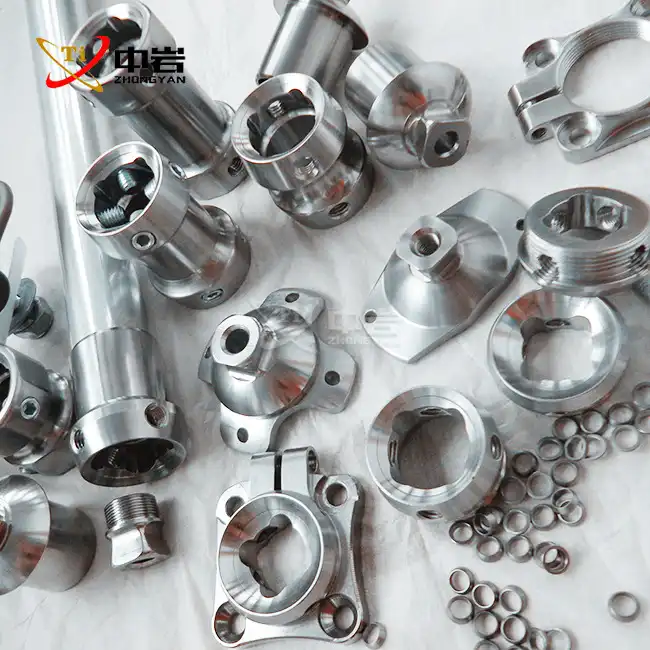
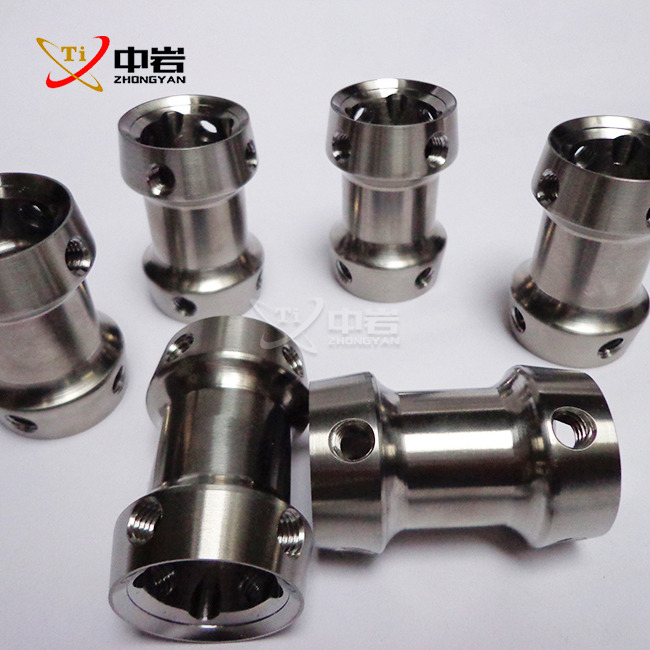
Custom Titanium Tube Clamp Solutions for OEM and Prosthetic Use are a big step forward in technology for making precise fittings. They are made to meet the specific needs of companies that make medical gadgets and original equipment. These one-of-a-kind clamps are made of grade 5 titanium metal, which is safe and doesn't rust. Because of this, they work well and last a long time in difficult conditions. Custom titanium tube clamps are different from other ways to connect things because they can give prosthetic devices the exact sizes and mechanical power they need. They are also light enough to keep patients relaxed and help OEMs work more efficiently.
Understanding Titanium Tube Clamps for Prosthetic and OEM Applications
Fastening parts made of titanium, called tube clamps, keep tubing systems together in serious situations where dependability can't be compromised. The materials used to make these parts are unique because they have a unique mix of properties that help solve problems in certain fields.
Titanium is stronger and lighter than steel, which makes it a better choice for clamps. It is about 40% lighter than steel, but it can still pull apart just as well. In implants, where lowering the patient's load has a direct effect on their comfort and movement, this trait is very helpful.
The main thing that goes into making these one-of-a-kind clamps is grade 5 titanium metal (Ti-6Al-4V). It can be pulled apart with a force of more than 895 MPa and is very flexible for making complicated shapes. A very accurate CNC machine is used to make sure that the tolerances are within 0.05 mm during the production process. This makes sure that the pressing force is spread out properly on the tube's surface.
Titanium clamps meet ISO 10993 norms and are safe for living things. And this means they can be used in prosthetics, where they will be close to human flesh. Not having to worry about allergic reactions or tissue rejection, which can happen with other materials, is great now that this one has been approved.
Titanium clamps made today have a lot of useful features that help them work better in tough situations. Controlled compression is used in the closing mechanism to keep things from getting too tight, which could damage the thin-walled metal or carbon fiber tubes that are common in prostheses.
Why Choose Custom Titanium Tube Clamps? — Rational Choice Approach
Most of the time, clamps that are sold in stores are too small or too heavy for the specific needs of OEM and prosthesis uses. A lot of the time, when implants are used, standard metal clamps break when they are loaded and removed many times. On the other hand, steel clamps make the tool less useful because they are heavy, unlike the lightweight and durable Titanium Tube Clamp.
It's also very bad when different metals are mixed in places with a lot of water. This is called galvanic rust. Standard clamps can stop up or break down quickly when they come in contact with sweat or sea air. This can make the device not work and require expensive fixes.
With handmade titanium clamps, these issues can be fixed since they are made to work best in certain cases. The design process starts with a thorough look at the lifting conditions, weather factors, and size requirements in order to make clamps that work well with current systems.
Why are different types of titanium clamps so useful?
• Accurate Control of Dimensions: Because pieces are made to order, they are made to fit perfectly with existing tube systems. There aren't any holes or stress points in the tubes that could make them break before they should.
• More resistant to corrosion: Titanium's natural oxide layer is stronger than aluminum or steel against salt attack and galvanic corrosion.
• Optimized Weight Distribution: The total weight is lowered by carefully removing material from areas that aren't needed. This keeps the structure strong in areas that are under a lot of stress.
• Application-Specific Design: Features such as built-in wire connections, quick-release devices, and sound dampening can be added based on the needs.
These perks directly lead to better performance of the device and lower costs for OEM maintenance. This means that even though they cost more at first, unique solutions are worth it in the long run.
In the real world, tests have shown that certain metal clamps work better when things get tough. Recently, hydraulic system clamps were used on an airplane and had a 300% longer wear life than aluminum alternatives. They were also 45% lighter than steel alternatives.
Comparative Analysis: Titanium Tube Clamp vs Alternative Materials
When you know how the performance of different clamp materials compares, you can make smart buying choices based on your needs. The study has to look at many things, including how well it works mechanically, how well it stands up to weather factors, and how much it costs over its lifetime.
In the beginning, stainless steel clamps cost less, are harder, and are less likely to rust. But sometimes their weight is too much for tasks that need to be light. It is easy to tell the difference between titanium (4.5 g/cm³) and stainless steel (8.0 g/cm³) when large parts are used or when weight is an important factor in mechanical devices.
TiN clamps are stronger and last longer than aluminum clamps, but aluminum clamps rust more easily and won't last as long in tough environments. Pitting rust can happen to aluminum, which can be a problem in seaside or high-humidity areas where prostheses are often used.
Carbon fiber clamps are great for cutting down on weight, but they are hard to change and could break if they get hit hard. Carbon fiber is not strong enough to be used in places where it needs to be changed often or will be hit by moving objects.
Even though titanium clamps are more expensive to buy, they generally cost less in the long run because they last longer and don't need as much maintenance. To do a full career study, you need to look at things like how often something breaks, how long it takes to fix, and how its performance changes over time.
For each use, the buy choice matrix should compare the costs of materials with how well they need to work, where they will be used, and how long they are expected to last.
Procurement and Supply Chain Guide for Custom Titanium Tube Clamps
To buy a homemade Titanium Tube Clamp that works, you need to pick your seller carefully and make clear requirements. Processing titanium is hard, so it's best to work with people who know how to use special tools and work with metal.
Direct links with manufacturers usually give you more control over quality and the freedom to make changes than partner networks. To make sure the supply chain works well, the way it is evaluated must take into account things like the ability to produce, the ability to meet certification requirements, and the ability to provide expert help.
When you buy something, it's very important to make sure it meets foreign standards. This is especially true for medical and aviation uses. For titanium bars and billets, ASTM B348 is needed. AMS 4928 is needed for use in airplanes, and ISO 13485 is needed for medical device parts.
Some of the things that should be checked as part of the licensing process are test results for material features, paperwork for tracking, and producer quality systems. Important apps are safer when they are checked by a third party through independent testing labs.
You can get better customization services and better prices from titanium clamp makers if you work with them for a long time. When you work with an OEM, you generally get specialized engineering help, help with handling your inventory, and priority production plans for needs that need to be met right away.
The minimum order number for custom-made titanium clamps changes a lot based on the design's level of difficulty and the manufacturer's limits. It can be as few as 50 pieces for easy shapes or as many as 500 pieces for patterns with lots of different parts. Value-based pricing can save you a lot of money if you buy a lot of something or sign a monthly deal.
Maintenance and Longevity of Titanium Tube Clamps in Critical Applications
To make titanium clamps last as long as possible, you need to set up regular repair plans that are tailored to the setting. Part of regular inspection plans should be looking for damage on the surface, making sure the sizes are within important ranges, and testing how well binding devices work.
Titanium doesn't rust because it has a natural passivation layer covering it. However, keeping the surface clean is important to keep it in good shape. As good cleaners, mild alkaline solutions or titanium cleaners that get rid of dirt and grime without hurting the base material are recommended.
By finding possible failure modes early on, preventative maintenance can be used to avoid expensive downtime or safety issues. As part of the tracking process, you should check the torque to make sure there is enough clamping force, look at the surface for signs of wear or fretting, and measure to see if there is any long-term distortion.
By keeping track of maintenance jobs and changes in performance, you can find the best times to do maintenance and know when to replace parts. For limbs, where the patient's safety and ability to move around rely on how well the device works, this information is especially helpful.
Purchasing managers and engineering teams can use these maintenance rules to come up with good ways to get the most out of their money and make sure that titanium clamp setups keep working well for as long as they are used.
Conclusion
It is best to use custom titanium tube clamps for OEM and difficult prosthesis uses that need to get the most out of performance, reliability, and weight. Grade 5 titanium alloy can be carefully machined with a CNC machine and has better properties than other choices. This means that it can be used to make parts that work better and cost less in the long run. Custom titanium solutions are worth the money because they reduce the need for maintenance, improve system performance, and make the system last longer. These benefits go straight to the people who use them and make businesses run more smoothly.
FAQ
Why are titanium tube clamps ideal for prosthetic devices?
Because they are safe, lightweight, and resistant to rust, titanium clips are perfect for use with prostheses. There is no need to worry about allergic responses because the material is safe for people. It works better and is more relaxing for the patient when it is lighter.
How does customization improve OEM manufacturing efficiency?
There's no need to change the designs to fit standard parts because handmade titanium clamps work so well with the ones that are already in place. This combination shortens the time it takes to put the system together, makes it work better overall, and keeps workplace standards high.
Which certifications should buyers verify when sourcing titanium clamps?
Some important certifications are ASTM B348 for guidelines for materials, AMS 4928 for uses in space, and ISO 13485 for medical tools. You should also check to see if the company has quality system standards for airplane use, such as ISO 9001 and AS9100.
What factors determine custom clamp pricing?
The cost is based on how hard the job is, how many are needed, the tolerances that must be met, and the standards for the surface finish. The type of material used, any extra steps like anodizing or covering, and the licensing needs of some businesses are some other things that matter.
Partner with Zhongyan for Premium Custom Titanium Tube Clamp Solutions
When it comes to making titanium tube clamps, Zhongyan is a reliable company because its solutions are more accurate than the norm for OEM and prosthesis uses. We know a lot about Grade 5 titanium metal and how to use modern CNC cutting to make sure that every part meets your exact needs and the highest quality standards. Because we are in China's Titanium Valley and have easy access to high-quality raw materials and the newest production technology, we can offer solutions that are both cost-effective and successful. Send our tech team an email at sales@titaniumstudy.com to tell them about your needs and find out how Zhongyan can make your product work better.
References
1. American Society for Testing and Materials. "Standard Specification for Titanium and Titanium Alloy Bars and Billets." ASTM International, West Conshohocken, PA, 2019.
2. Boyer, R., Welsch, G., and Collings, E.W. "Materials Properties Handbook: Titanium Alloys." ASM International, Materials Park, OH, 2007.
3. International Organization for Standardization. "Biological Evaluation of Medical Devices - Part 1: Evaluation and Testing Within a Risk Management Process." ISO 10993-1:2018.
4. Lutjering, G. and Williams, J.C. "Titanium: Engineering Materials and Processes." Springer-Verlag, Berlin, Germany, 2003.
5. Rack, H.J. and Qazi, J.I. "Titanium Alloys for Biomedical Applications." Materials Science and Engineering C, Volume 26, Issue 8, 2006.
6. Titanium Development Association. "Guidelines for Design with Titanium." Technical Bulletin, Titanium Development Association, Dayton, OH, 2015.
Learn about our latest products and discounts through SMS or email