- English
- French
- German
- Portuguese
- Spanish
- Russian
- Japanese
- Korean
- Arabic
- Greek
- German
- Turkish
- Italian
- Danish
- Romanian
- Indonesian
- Czech
- Afrikaans
- Swedish
- Polish
- Basque
- Catalan
- Esperanto
- Hindi
- Lao
- Albanian
- Amharic
- Armenian
- Azerbaijani
- Belarusian
- Bengali
- Bosnian
- Bulgarian
- Cebuano
- Chichewa
- Corsican
- Croatian
- Dutch
- Estonian
- Filipino
- Finnish
- Frisian
- Galician
- Georgian
- Gujarati
- Haitian
- Hausa
- Hawaiian
- Hebrew
- Hmong
- Hungarian
- Icelandic
- Igbo
- Javanese
- Kannada
- Kazakh
- Khmer
- Kurdish
- Kyrgyz
- Latin
- Latvian
- Lithuanian
- Luxembou..
- Macedonian
- Malagasy
- Malay
- Malayalam
- Maltese
- Maori
- Marathi
- Mongolian
- Burmese
- Nepali
- Norwegian
- Pashto
- Persian
- Punjabi
- Serbian
- Sesotho
- Sinhala
- Slovak
- Slovenian
- Somali
- Samoan
- Scots Gaelic
- Shona
- Sindhi
- Sundanese
- Swahili
- Tajik
- Tamil
- Telugu
- Thai
- Ukrainian
- Urdu
- Uzbek
- Vietnamese
- Welsh
- Xhosa
- Yiddish
- Yoruba
- Zulu
Why Choose Medical Grade Titanium Wire Over Stainless Steel?
Choosing between medical grade titanium wire and stainless steel wire for important medical uses has a big effect on how well the gadget works, how safe the patient is, and how well the patient does in the long run. Medical grade titanium wire is the best choice for orthopedic implants, oral uses, and cardiovascular devices because it is biocompatible, doesn't rust, and has the best mechanical qualities. Titanium wire is better than stainless steel options because it doesn't cause nickel allergies, helps bones fuse better, stays strong in tough biological settings, and is fully compatible with MRIs.
Understanding Medical Grade Titanium Wire and Stainless Steel Wire
Defining Medical Grade Titanium Wire Standards
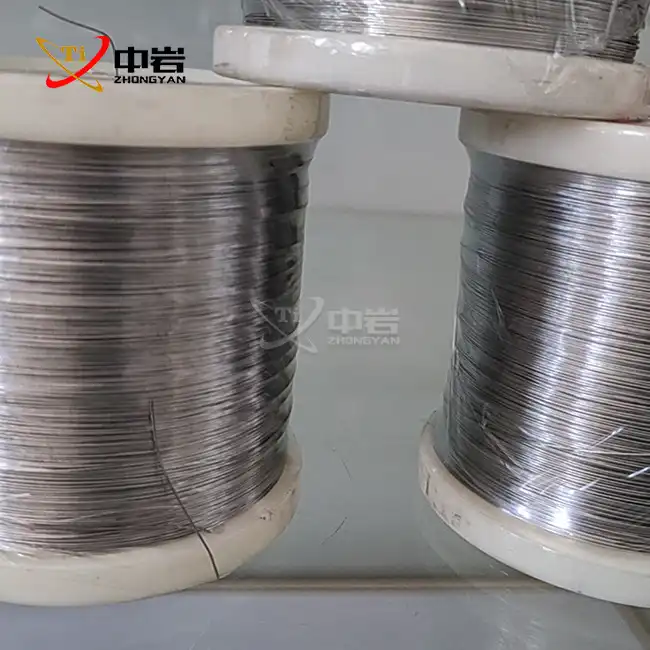
Metal wire made of medical grade titanium is a special kind of biomaterial that is made to be used in surgery and implants. This very pure titanium thread is made in a very strict way so that it meets strict international standards like ASTM F67 for economically pure grades and ASTM F136 for titanium alloys. Grade 1, Grade 2, and Grade 4 economically pure titanium are the most common grades. Each has its own unique mechanical qualities that make it useful for different medical uses. Our ASTM F67 Grade 1 CP Titanium Wire meets these exact requirements; it has a 0.6mm thickness and 300m of length per coil. This standard meets the requirements for ISO 5832-2 approval and stays in line with CE/FDA rules, making sure that it is accepted by all regulatory bodies around the world. The wire is very pure, with oxygen levels below 0.18% and nitrogen levels below 0.03%. Its tensile strength is above 240 MPa after being annealed.
Stainless Steel Wire in Medical Applications
316L surgical grade stainless steel wire has long been used to make medical devices because it is easy to find and doesn't cost much. This austenitic stainless steel has molybdenum, nickel, and chromium in it, which gives it good protection against rust and strength. But 316L stainless steel has some problems when it comes to advanced medical uses. For example, it can become sensitive to nickel, it doesn't hold up well against corrosion in chloride settings, and its magnetic qualities make MRI treatments less accurate. The main difference is in the way the material is made and how it reacts biologically. Titanium makes a more solid and self-healing titanium dioxide layer on the surface, which protects it better against biological corrosion over time. Stainless steel uses chromium oxide passivation layers.
Core Advantages of Medical Grade Titanium Wire Over Stainless Steel
Exceptional Biocompatibility and Tissue Integration
Because it is bio-inert and doesn't release harmful ions, medical grade titanium wire is more biocompatible than stainless steel. Titanium is very good at absorbing tissue, so it doesn't cause allergic responses like nickel-containing stainless steel metals do. This benefit is very important for long-term implant uses where the security of the material-tissue contact is key to clinical success. In addition to being compatible, titanium wire helps osseointegration, which is the direct structural and functional link between live bone tissue and the implant surface. This special feature lets bone cells grow right on top of the titanium surface, making a strong biological bond that makes implants last longer and lowers the chance that they will come loose or fail.
Superior Corrosion Resistance in Biological Environments
Titanium wire doesn't rust very easily in body fluids, which are full of chloride ions, proteins, and changing pH levels that make the conditions very harsh. A stable titanium dioxide (TiO2) passivation layer forms on its own, providing self-healing protection that repairs itself when broken, ensuring the long-term stability of the material. Comparative tests show that titanium wire keeps its shape and surface features even after being exposed to fake body fluids for a long time, while stainless steel breaks down and lets ions leak out. This better rust resistance directly means that the device will last longer and there will be a lower risk of clinical problems.
Optimal Mechanical Properties for Medical Applications
Titanium wire has mechanical qualities that are very similar to those of human bone. This solves the important problem of stress shielding that happens when implant materials are much harder than the bone tissue around them. Titanium's elastic stiffness (about 110 GPa) is closer to bone's (15–30 GPa) than stainless steel's (200 GPa), which helps natural load distribution and keeps bone mass high around implants. In addition to its excellent static qualities, titanium wire also has a high level of fatigue resistance, which means it can survive millions of loading cycles in dynamic applications like heart devices and orthopedic implants that are put under a lot of stress over and over again.
Comparative Analysis: Medical Grade Titanium Wire vs Stainless Steel Wire
Performance Metrics and Durability Comparison
A thorough investigation shows that titanium wire performs significantly better in a number of important areas. Tensile strength data shows that our Grade 1 titanium wire can handle ≥240 MPa while still being very flexible, which makes it possible to do the complex shaping that is needed to make medical devices. Because they aren't magnetic, they can be used with any MRI machine, so there are no worries about patient safety or image flaws like there are with stainless steel implants. Fatigue testing shows that titanium wire can handle long-term cycle loading without cracks starting or spreading. This quality is very important in situations like pacemaker leads, where the wire has to last millions of heartbeats over the course of the patient's life without breaking.
Total Cost of Ownership Analysis
Titanium wire costs more than stainless steel options at first, but when you look at the total cost of ownership, you can see that it is much cheaper in the long run. Long-term savings for healthcare systems and medical device makers come from fewer surgeries that need to be redone, implants that last longer, and problems with MRI compatibility being fixed. Because it is more resistant to corrosion, makers don't have to worry about their devices breaking down and causing problems. This means fewer warranty claims and less risk for them. All of these reasons make it worth spending more on titanium wire products for important medical uses.
Grade Selection for Specific Applications
For different medical uses, different types of titanium have qualities that work best. Grade 1 is the most flexible and can be shaped in the most complicated ways. This makes it perfect for orthodontic uses and special implant setups. Grade 2 has the right amount of strength and flexibility for normal surgical uses, while Grade 4 is stronger for orthopedic implants that hold weight. Our titanium wire is surface polished, which gets rid of any rough spots on the surface that could help bacteria stick or cause tissue pain. The annealed state also makes sure that the wire is easy to shape for later manufacturing processes. Specific hospital and manufacturing needs can be met by custom spooling choices, which help keep production processes running smoothly.
How to Choose and Procure Medical Grade Titanium Wire?
Essential Certification and Compliance Requirements
Pay close attention to licensing standards and legal compliance to successfully purchase medical grade titanium wire. Suppliers must show a lot of paperwork, like mill test certificates (EN 10204 3.1), records of how materials were sourced, and proof that they follow medical device standards like ISO 13485 and FDA Quality System Regulation. Certification needs change based on the planned use and the market location. For European markets, products must have the CE stamp, and for some US uses, they may need FDA 510(k) clearance. Working with providers who keep their certifications up to date in multiple countries makes the legal process easier for companies that make medical devices used around the world.
Supplier Evaluation and Quality Assurance
Technical skills, quality processes, and the dependability of the supply chain are all important parts of a good supplier review. Some of the most important things that are used to judge a company are its production capability, its modern manufacturing equipment, its quality control instruments, and its technical support services. Suppliers should show that their quality is always the same by using statistical process control and thorough testing methods. Our modern production facilities, precision machining skills, and strict quality management systems show that Baoji Zhongyan Titanium Industry Co., Ltd. meets these standards. Because we are in China's Titanium Valley, we have access to high-quality raw materials and specialized working knowledge. This lets us offer stable quality and low prices to customers around the world.
Procurement Best Practices and Supply Chain Optimization
Strategic planning and building partnerships with suppliers are needed to get the best deals on medical grade titanium wire. By committing to buy a lot of something, you can usually get better prices and be given priority, and working together technically can lead to unique solutions that improve the performance of the gadget and make production more efficient. Setting clear standards for wire diameter, tensile strength, surface finish, and packing stops confusion and makes sure that the quality of the material stays the same. Regular audits and reviews of suppliers' work help keep quality standards high and find ways to save money and keep things running smoothly.
Case Studies and Testimonials Demonstrating the Value of Medical Grade Titanium Wire
Orthopedic Implant Success Stories
Leading makers of orthopedic devices say that switching from stainless steel to titanium wire components has made a big difference in how well implants work and how well patients do after getting them. Studies in humans have shown that using titanium in spine fusion hardware and fracture fixation devices lowers the risk of infections, improves osseointegration, and lowers the need for repeat surgery. One big orthopedic company found that implant-related problems went down by 40% after they switched their spine rod systems to titanium wire. Better long-term clinical results and higher patient happiness scores were caused by the improved biocompatibility and corrosion resistance.
Dental and Orthodontic Application Testimonials
Dentists regularly say that titanium wire orthodontic appliances work better than stainless steel alternatives in terms of practical outcomes. Nickel sensitivity is no longer a problem because the alloy is hypoallergenic, and the optimum mechanical qualities allow teeth to move effectively while causing the patient less pain. Our medical grade titanium wire has improved treatment effectiveness and patient cooperation, according to a well-known orthodontic office. The non-magnetic features were especially helpful for patients who needed MRIs during treatment because they didn't have to take out or change the gadget.
Cardiovascular Device Performance Validation
Manufacturers of cardiovascular devices have proven that titanium wire works better in tough situations, like in pacemaker leads and artery tubes. The biocompatibility keeps inflammatory reactions to a minimum, which protects the device's ability to work, and the high level of fatigue resistance makes sure that it will work well for long periods of time. According to clinical statistics from a major pacemaker company, titanium wire components added to the design of leads made them last a lot longer. The mix of resistance to corrosion and functional stability meant that the device needed to be replaced less often, which improved the quality of life for patients.
Conclusion
Medical grade titanium wire is clearly better than stainless steel for important medical uses, according to the overwhelming proof. When you put together great biocompatibility, superior corrosion resistance, optimal mechanical qualities, and MRI compatibility, you get strong benefits that help patients, healthcare workers, and device makers. Even though titanium wire may cost more at first, it is much cheaper in the long run because it has fewer problems, lasts longer, and improves clinical results. Investing in high-quality titanium materials shows a dedication to patient safety and professional excellence, which is what sets the standards for making medical devices today.
FAQ
What makes medical grade titanium wire superior to stainless steel for implant applications?
Medical grade titanium wire has many important benefits, such as being biocompatible (doesn't cause allergic responses), highly resistant to corrosion in living settings, and having the best mechanical qualities that are most like human bone. Because they aren't magnetic, they can be used in MRIs, and their ability to promote osseointegration makes implant links stronger and last longer.
Can titanium wire be sterilized using standard hospital protocols?
Yes, titanium wire works very well with all common ways to sterilize things, like steam autoclaving, ethylene oxide treatment, and gamma irradiation. These sterilization methods don't change the qualities of the material or the protected oxide layer, so the device will always work the same way for as long as it's used.
How does the difference in price between titanium and stainless steel affect choices about what to buy?
Titanium wire has higher starting material costs, but a full total cost of ownership study shows that it saves a lot of money in the long run because it doesn't need to be fixed as often, lasts longer, and doesn't have any problems with MRI compatibility. For important medical uses where patient safety and good clinical results are very important, the higher cost is worth it because of the better performance.
What certifications should procurement teams require when sourcing medical titanium wire?
Some important certificates are in agreement with ASTM F67 or F136, ISO 5832-2, and CE/FDA regulations. To make sure that regulatory standards are met, suppliers should give mill test certificates (EN 10204 3.1), documents on how materials can be tracked, and proof that their quality systems are up to par, like ISO 13485 certification.
Which titanium grade is most suitable for dental and orthodontic applications?
For dentistry and orthodontic uses, grade 1 commercially pure titanium wire is the best because it can be shaped and works well with living things. Because it is very flexible, it can be shaped in complicated ways to make custom tools, and because it is hypoallergenic, patients don't have to worry about the allergic reactions that can happen with stainless steel that contains nickel.
Contact Zhongyan for Premium Medical Grade Titanium Wire Solutions
You can trust Zhongyan as a provider of medical grade titanium wire. They provide high-quality materials that meet the strictest standards for medical devices. Our ASTM F67 Grade 1 CP titanium wire is made to exacting standards and is highly biocompatible, so it works perfectly in dental, orthodontic, and medical settings. We are in China's Titanium Valley and use advanced production methods and strict quality control systems to offer materials that are ISO 5832-2 approved, CE/FDA compliant, and can be customized with features like limited interstitial content, surface polishing, and special packing. Get in touch with our technical team at sales@titaniumstudy.com to talk about your unique needs and find out how our knowledge can help you make more successful medical devices.
References
1. Williams, D. F. "Biocompatibility of Clinical Implant Materials." 2019 CRC Press.
2. American Society for Testing and Materials. "ASTM F67-13 Standard Specification for Unalloyed Titanium, for Surgical Implant Applications." 2013; ASTM International.
3. Brunette, D. M., et al. "Titanium in Medicine: Material Science, Surface Science, Engineering, Biological Responses and Medical Applications." Springer-Verlag, 2001.
4. International Organization for Standardization. "ISO 5832-2:1999 Implants for Surgery – Metallic Materials – Part 2: Unalloyed Titanium." In 1999, ISO published this guide.
5. Rack, H. J., and Qazi, J. I. Materials Science and Engineering C published a paper in 2006 called "Titanium Alloys for Biomedical Applications."
6. Niinomi, M. "Mechanical Biocompatibilities of Titanium Alloys for Biomedical Applications." Journal of the Mechanical Behavior of Biomedical Materials, 2008.
Learn about our latest products and discounts through SMS or email