- English
- French
- German
- Portuguese
- Spanish
- Russian
- Japanese
- Korean
- Arabic
- Greek
- German
- Turkish
- Italian
- Danish
- Romanian
- Indonesian
- Czech
- Afrikaans
- Swedish
- Polish
- Basque
- Catalan
- Esperanto
- Hindi
- Lao
- Albanian
- Amharic
- Armenian
- Azerbaijani
- Belarusian
- Bengali
- Bosnian
- Bulgarian
- Cebuano
- Chichewa
- Corsican
- Croatian
- Dutch
- Estonian
- Filipino
- Finnish
- Frisian
- Galician
- Georgian
- Gujarati
- Haitian
- Hausa
- Hawaiian
- Hebrew
- Hmong
- Hungarian
- Icelandic
- Igbo
- Javanese
- Kannada
- Kazakh
- Khmer
- Kurdish
- Kyrgyz
- Latin
- Latvian
- Lithuanian
- Luxembou..
- Macedonian
- Malagasy
- Malay
- Malayalam
- Maltese
- Maori
- Marathi
- Mongolian
- Burmese
- Nepali
- Norwegian
- Pashto
- Persian
- Punjabi
- Serbian
- Sesotho
- Sinhala
- Slovak
- Slovenian
- Somali
- Samoan
- Scots Gaelic
- Shona
- Sindhi
- Sundanese
- Swahili
- Tajik
- Tamil
- Telugu
- Thai
- Ukrainian
- Urdu
- Uzbek
- Vietnamese
- Welsh
- Xhosa
- Yiddish
- Yoruba
- Zulu
Why Choose GR5 Titanium Foil for Advanced Industries?


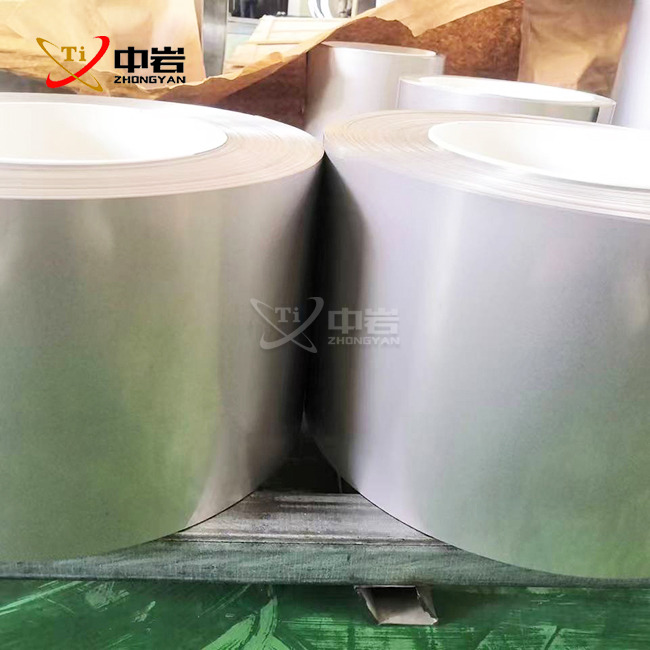
GR5 titanium foil is the best of the best when it comes to modern metalworking. It has strength-to-weight ratios and corrosion protection that no other material can match. This high-performance Ti-6Al-4V metal foil has great mechanical qualities that are needed for important jobs in the electronics, aircraft, and medical fields. When engineers and procurement professionals look for materials that are biocompatible, stable at high temperatures, and good at precision manufacturing, gr5 titanium foil stands out as the best choice for today's and tomorrow's industrial problems that need dependability and high performance.
Understanding GR5 Titanium Foil: Composition, Properties, and Advantages
Chemical Composition and Metallurgical Structure
Ti-6Al-4V foil is a carefully designed alpha-beta titanium metal that has about 6% aluminum and 4% vanadium in it. With this exact mix, a two-phase substructure is made that makes the material as strong and flexible as possible. The aluminum presence makes it more stable at high temperatures while lowering its general density. This makes it much lighter than steel alternatives. Vanadium is a beta stabilizer that helps the alloy's great mechanical qualities and makes it respond better to heat treatment methods.
Superior Material Properties
There are special metal qualities that give Grade 5 titanium foil its amazing properties. The main things that make this material better than other options are listed below:
• Exceptional strength-to-weight ratio: this metal has a density of only 4.43 g/cm³ but has tensile strengths of over 895 MPa, giving engineers the best structural efficiency for uses that need to be light.
• Outstanding corrosion resistance: the protective oxide layer that forms on the surface makes it more resistant to salt environments, acids, and acidic conditions that would break down stainless steel parts quickly.
• Biocompatibility excellence: The material meets ASTM F136 standards and is completely compatible with human cells. This makes it perfect for long-lasting medical implants and tools used in surgery.
• Thermal stability: It can keep its shape at temperatures up to 400°C and has low thermal expansion factors, which means it stays the same size even when the temperature changes.
All of these qualities work together to solve important technical problems where regular materials don't work well enough. Lightweight construction combined with high strength lets designers find the best shape for a part while still keeping the safety limits needed for medical and military uses.
Manufacturing Precision and Quality Control
At Zhongyan Titanium, we use advanced rolling methods and precise thickness control in our manufacturing processes to make sure that the material qualities stay the same. Our gr5 titanium foil goes through a lot of quality checks to make sure it meets the requirements for mechanical traits, surface finish, and measurement accuracy. The ASTM B265 compliance makes sure that every batch meets international standards for medical and aircraft uses. This gives buying teams peace of mind that the materials will be consistent and can be tracked.
Comparing GR5 Titanium Foil with Alternative Materials
Performance Against Other Titanium Grades
When looking at titanium choices, it's important to know the differences between the different types so you can choose the best material. While Grade 2 economically pure titanium is very easy to shape, it doesn't have the strength for high-stress uses. Tensile strengths for GR2 are usually around 345 MPa, which is about 60% less than what is required for Ti-6Al-4V.Palladium additions to grade 7 titanium make it more resistant to rust, but the material costs are much higher. Most of the time, GR5 is the best choice when normal corrosion protection meets the needs of the application. Grade 23 (Ti-6Al-4V ELI) has a little better flexibility but not as much strength. This means it is mostly good for medical implant uses where better shapeability is more important than strength.
Benchmarking Against Metallic Alternatives
Even though stainless steel foils are cheap, they are not very good for uses that need to be light. Because 316L stainless steel has a density of 8.0 g/cm³ and Ti-6Al-4V has a density of 4.43 g/cm³, it is possible to reduce weight by about 45%. This edge in weight is especially useful in flight, where every gram affects how much fuel is used and how much can be carried.Aluminum metal foils are very light, but they aren't very strong or resistant to high temperatures. The highest temperature that high-strength aluminum alloys can be used at is usually around 150°C. This makes them much less useful in thermal barrier uses, where titanium foil can keep its shape at much higher temperatures.
Medical Application Material Comparisons
Tantalum and niobium foils are high-quality options for biological uses because they are very compatible with living things. But these materials are much more expensive than GR5 titanium foil and don't offer many benefits over it for most medical gadget uses. There is a lot of biocompatibility data and a long clinical experience of Ti-6Al-4V, which helps the legal process for getting medical devices approved.
Procurement Guide for GR5 Titanium Foil: How to Make Smart Purchasing Decisions
Supplier Evaluation Criteria
To get high-performance titanium foil, you need to carefully evaluate suppliers by looking at their manufacturing skills, quality systems, and how reliable their supply chains are. Well-known companies with licenses in aircraft and medicine show that they can control their processes well enough to make sure that the properties of the materials are always the same. When you mix ISO 9001:2015 approval with AS9100 aerospace standards, you get strong quality management systems that can handle important tasks.The location of a production plant has a big effect on both cost and transportation reliability. Companies that make things in well-known titanium processing areas have access to integrated supply chains, specialty tools, and expert staff with a lot of experience. Baoji City, which is known as China's Titanium Valley, is one place where a lot of experts and equipment come together to help titanium processing go smoothly.
Quality Assurance and Testing Requirements
Comprehensive material testing procedures make sure that the foil you buy meets the standards for important uses. Some important tests are checking the chemical makeup, making sure the mechanical properties are correct, and looking at the microstructure. When using thin foil, it's especially important to check the quality of the surface because flaws on the surface can cause failures.Documentation that shows where raw materials came from and how they were processed is an important part of making sure the quality of produced goods. This paperwork helps with failure analysis and lets you quickly fix quality problems that might happen during production or service.
Commercial Considerations and Ordering Strategies
To find the best mix between inventory costs and buying efficiency, it's often necessary to plan ahead for minimum order numbers for specific thickness ranges. When compared to special requirements, standard thickness choices usually have better prices and faster lead times. Understanding how thickness accuracy standards affect manufacturing costs helps people come up with better specifications.Managing lead times becomes very important when buying titanium foil and making sure it arrives on time for production. Material availability can change with the demand cycles in the aircraft business. To make sure consistent material access, long-term supply deals are useful.
Application Scenarios of GR5 Titanium Foil in Advanced Industries
Aerospace Applications and Performance Requirements
In many important uses where weight reduction and temperature resistance give the aircraft industry a competitive edge, gr5 titanium foil is used. The low thermal transfer and high temperature stability of the material are used by thermal barrier systems to keep sensitive engine parts from getting too hot. When you combine lightweight building with the ability to protect against heat, you can make engines that work better and use less gas.Titanium foil is used in structural honeycomb sections to get the high stiffness-to-weight ratios needed for aircraft parts. To keep the structure's stability under dynamic loading conditions, these uses need precise thickness control and consistent material qualities. Ti-6Al-4V's resistance to wear is especially useful for parts that are stressed in cycles during an airplane's service life.
Medical Device Integration
Implantable medical equipment can benefit from Grade 5 titanium foil's unique mix of biocompatibility, hardness, and resistance to corrosion. Pacemaker covers are made of thin metal to keep the implant's volume as small as possible while still keeping body fluids out. Because it isn't magnetic, it can be used with magnetic resonance imaging treatments. This means that patients don't have to follow the limits that come with ferromagnetic implant materials.Specialized cutting tools and microsurgical devices made from surgical instruments use titanium foil. The material's ability to keep edges sharp and prevent corrosion caused by sterilization makes instruments last longer and improves the result of surgery.
Electronics and Industrial Applications
GR5 titanium foil is used in high-performance electronics to screen out electromagnetic radiation and control temperature. Because the material is both electrically conductive and resistant to rust, it can be used in places where normal materials would break down, like naval electronics and chemical processing equipment.The material is good for sputtering targets because it is pure and has a stable makeup. This makes sure that thin films are deposited evenly in semiconductor manufacturing processes. Being able to change the width of the foil and the way the surface is finished lets it be optimized for specific layering needs.
Future Trends and Innovations in GR5 Titanium Foil Usage
Technological Advancements in Manufacturing
Modern rolling methods keep making the thickness consistency and surface quality of gr5 titanium foil better. Precision cold rolling methods can now achieve thickness limits of less than 0.0025mm, which makes them useful for uses that need very tight control over dimensions. New developments in surface treatment, such as specialty annealing atmospheres and mechanical finishing methods, improve the quality of the surface while keeping the features of the material the same.Using titanium foil as a material for special 3D printing methods is a new trend called "additive manufacturing integration." To get repeatable printing results and part properties, this application needs precise control over chemical makeup and particle size distribution.
Market Demand Drivers and Growth Projections
Modernization in the aerospace business is still driving the need for lightweight materials that can save fuel and hurt the environment. Titanium parts are being used more and more by commercial aircraft makers to meet weight reduction goals while still meeting safety standards needed for passenger aircraft approval.More high-performance biocompatible materials are needed because the market for medical devices is growing. This is especially true for implantable technology and minimally invasive surgery tools. Medical device uses are growing because people around the world are living longer, and GR5 titanium foil is an important part of these uses.
Supply Chain Evolution and Strategic Partnerships
Sustainable manufacturing practices are becoming more and more important in purchasing choices. For example, makers are starting to recycle titanium scrap and find the best ways to use energy in their production processes. These projects have less of an effect on the environment and may even lower long-term material costs by making better use of resources.Strategic relationships between providers of materials and end users allow them to work together to create solutions that are perfect for their needs. These connections make it easy to respond quickly to changing technology needs and make sure that materials are always available for important uses.
Conclusion
GR5 titanium foil represents the optimal material choice for advanced industries requiring exceptional performance characteristics in lightweight, corrosion-resistant applications. The unique combination of high strength-to-weight ratio, biocompatibility, and thermal stability positions Ti-6Al-4V foil as an essential component across aerospace, medical, and electronics sectors. As technological advancement continues driving demand for high-performance materials, strategic partnerships with experienced suppliers become increasingly valuable for ensuring consistent access to quality gr5 titanium foil solutions that meet evolving industrial requirements.
FAQ
What thickness ranges are available for GR5 titanium foil?
Standard widths run from 0.025mm to 0.5mm, and custom thicknesses can be made to fit the needs of a particular purpose. Zhongyan Titanium can precisely control the width of its products to within ±0.0025mm, meeting the strict requirements of aircraft and medical uses.
How does the corrosion resistance compare to stainless steel?
Gr5 titanium foil is better at resisting rust in salt environments, acidic environments, and high-temperature oxidizing environments. While still being much lighter, the passive oxide layer offers the same level of safety as much thicker stainless steel parts.
Can custom sizes be manufactured for specialized applications?
Yes, our OEM cutting and packing services can meet the specific size needs of different uses. We work closely with our customers to make sure that the foil dimensions are best for their unique production processes while still keeping costs low and delivery times short.
What certifications ensure quality compliance?
Our gr5 titanium foil is made to meet ASTM B265 standards and goes through a lot of tests to make sure it has the right mechanical qualities, chemical makeup, and surface quality. Our ISO 9001:2015 certification makes sure that we handle quality consistently throughout all of our production processes.
How does temperature affect performance characteristics?
At temperatures up to 400°C, Grade 5 titanium foil keeps its shape and mechanical qualities. Its low thermal expansion rate keeps its shape even when temperatures change, which makes it perfect for use as a thermal shield and in high-temperature structures.
Partner with Zhongyan for Premium GR5 Titanium Foil Solutions
Zhongyan Titanium offers top-notch gr5 titanium foil options that are designed to meet your most specific needs. Our cutting-edge factory in Baoji's Titanium Valley uses cutting-edge processing technology and strict quality control to make sure that all of our materials always work the way they're supposed to. As a reliable gr5 titanium foil manufacturer, we offer a range of thickness choices that can be customized, precise cutting services, and full expert support to help you make the best decisions about how to buy things. Our team of experienced engineers works with your technical needs to create custom solutions that meet ASTM B265 standards and go above and beyond what the industry normally does. Get in touch with our experts at sales@titaniumstudy.com to find out how our quality titanium foil solutions can make your next project run better and last longer.
References
1. Boyer, R.R., "An Overview on the Use of Titanium in the Aerospace Industry," Materials Science and Engineering A, Vol. 213, 1996.
2. Niinomi, M., "Mechanical Biocompatibilities of Titanium Alloys for Biomedical Applications," Journal of the Mechanical Behavior of Biomedical Materials, 2008.
3. Donachie, M.J., "Titanium: A Technical Guide," ASM International Materials Park, Second Edition, 2000.
4. Peters, M., Kumpfert, J., Ward, C.H., and Leyens, C., "Titanium Alloys for Aerospace Applications," Advanced Engineering Materials, Vol. 5, 2003.
5. Rack, H.J. and Qazi, J.I., "Titanium Alloys for Biomedical Applications," Materials Science and Engineering C, Vol. 26, 2006.
6. Lütjering, G. and Williams, J.C., "Titanium: Engineering Materials and Processes," Springer-Verlag Berlin Heidelberg, Second Edition, 2007.

Learn about our latest products and discounts through SMS or email