- English
- French
- German
- Portuguese
- Spanish
- Russian
- Japanese
- Korean
- Arabic
- Greek
- German
- Turkish
- Italian
- Danish
- Romanian
- Indonesian
- Czech
- Afrikaans
- Swedish
- Polish
- Basque
- Catalan
- Esperanto
- Hindi
- Lao
- Albanian
- Amharic
- Armenian
- Azerbaijani
- Belarusian
- Bengali
- Bosnian
- Bulgarian
- Cebuano
- Chichewa
- Corsican
- Croatian
- Dutch
- Estonian
- Filipino
- Finnish
- Frisian
- Galician
- Georgian
- Gujarati
- Haitian
- Hausa
- Hawaiian
- Hebrew
- Hmong
- Hungarian
- Icelandic
- Igbo
- Javanese
- Kannada
- Kazakh
- Khmer
- Kurdish
- Kyrgyz
- Latin
- Latvian
- Lithuanian
- Luxembou..
- Macedonian
- Malagasy
- Malay
- Malayalam
- Maltese
- Maori
- Marathi
- Mongolian
- Burmese
- Nepali
- Norwegian
- Pashto
- Persian
- Punjabi
- Serbian
- Sesotho
- Sinhala
- Slovak
- Slovenian
- Somali
- Samoan
- Scots Gaelic
- Shona
- Sindhi
- Sundanese
- Swahili
- Tajik
- Tamil
- Telugu
- Thai
- Ukrainian
- Urdu
- Uzbek
- Vietnamese
- Welsh
- Xhosa
- Yiddish
- Yoruba
- Zulu
High-Quality Titanium Tube Adapter for Long-Term Durability
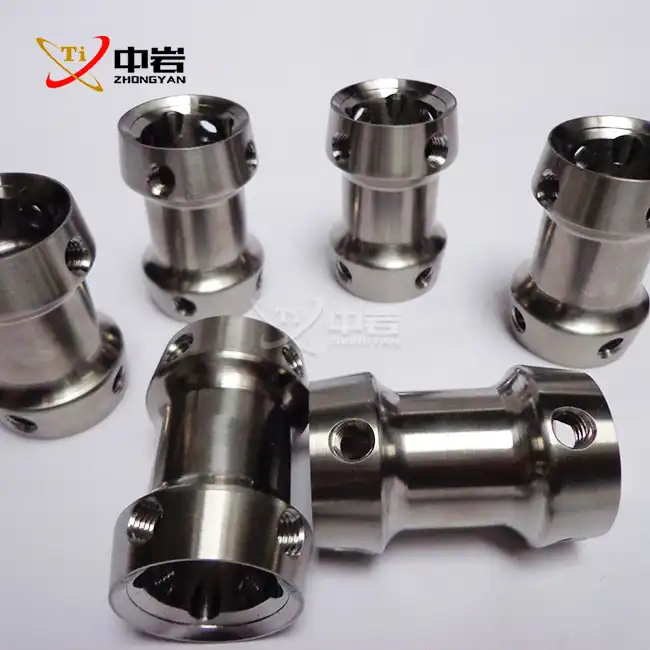
The Titanium Tube Adapter is a key part for mission-critical uses in the aircraft, chemical processing, and medical device industries when high-quality manufacturing meets new ideas in the field. These precision-engineered connections are the peak of materials science. They use titanium's high resistance to corrosion, high strength-to-weight ratio, and biocompatibility to provide unmatched performance in the harshest working conditions. These adapters keep links leak-proof, can handle high pressures, and don't break down when exposed to chemicals. They also keep system weight and upkeep needs to a minimum.
Understanding Titanium Tube Adapters: Features and Benefits
Titanium tube fittings are necessary parts for connecting different pieces of tubing, hydraulic lines, and pipe systems where other materials don't work well enough. When these specialized parts are used, they follow basic engineering rules that put structure integrity, chemical resistance, and dimensional stability at the top of the list.
Core Design Principles and Operational Excellence
Titanium adapters are based on their engineering ability to keep their closing performance even when they are loaded and unloaded quickly. These fittings are different from others because they are made of titanium, which has a unique crystalline structure that makes it resistant to stress corrosion cracking and wear failure. Due to its naturally occurring oxide layer, the material can protect itself from harsh chemicals, saltwater, and acidic acids that are often found in industrial processes.For different working needs, different adapter combinations are used. Threaded adapters work best in situations where parts need to be taken apart often for repair, while compression-type fittings are better at handling vibrations in aircraft settings. Weld-in adapters are fixed installation options that don't put the functionality of the system at risk.
Superior Material Properties Driving Performance
Titanium is better than other materials in important situations because it has better performance qualities. The material has a tensile strength of more than 895 MPa and a mass of only 4.43 g/cm³, which means it is 45% lighter than stainless steel versions. This strength-to-weight advantage directly leads to better fuel economy in aircraft uses and less stress on the structure of chemical processing equipment.Titanium Tube Adapters are better at resisting corrosion than stainless steel types in chloride settings. This makes them essential for use in the sea environment and chemical processing plants. Independent tests show that titanium stays strong in 35% hydrochloric acid solutions, while stainless steel parts break in just a few hours. This chemical resistance makes operations last from months to decades, which greatly lowers the total cost of ownership.
Choosing the Right Titanium Tube Adapter: A Decision Support Framework
When buying titanium fittings, it's important to think carefully about the factors that are specific to the application and affect how well they work and how much they cost over time. Engineers and purchase managers can choose parts that make systems more reliable while staying within their budgets if they know about these important factors.
Application-Driven Specification Requirements
To choose the right adapter, you must first carefully look at the operating conditions, such as the pressure levels, temperature changes, chemical exposure, and shaking patterns. Adapters that can handle temperatures from -196°C to 400°C and pressures greater than 5,000 PSI are often needed in aerospace uses. In chemical processing settings, corrosion resistance may be more important than pressure rates. On the other hand, biocompatibility and sterilization compatibility are more important in medical device uses.Thread specs are very important for putting together a system. NPT (National Pipe Thread) configurations work well in most industrial settings, while AN (Army-Navy) fittings are the best for hydraulic systems in spacecraft. Custom thread shapes can be made to fit specific assembly needs and make sure they work with current infrastructure.
Supplier Evaluation and Quality Assurance Criteria
To find trustworthy suppliers, you need to look at their production skills, quality certifications, and expert help systems. Leading sellers keep both ISO 9001:2015 certification and AS9100 approval for aerospace products. As required by ASTM B348 and AMS 4928, material tracking documents should include heat numbers, chemical composition analyses, and checks of mechanical properties.For high-volume uses, figuring out the production ability is very important. When compared to general machine shops, suppliers with facilities just for titanium machining can offer stable quality and faster wait times. Shipping prices and delivery times for global activities are affected by where manufacturing sites are located.
Installation and Maintenance for Ensuring Long-Term Durability
Installing and maintaining Titanium Tube Adapter parts correctly has a direct effect on how long they last and how reliably they work. By extending service gaps, best practices that have been used for a long time can stop frequent failure modes and maximize return on investment.
Step-by-Step Installation Guidelines
The success of the installation rests on how well you prepare and how well you follow the torque specs. First, check the adapter holes for any damage or contamination that might affect how well they close. Use recommended chemicals to clean all mating surfaces and get rid of production oils and other debris. To keep titanium from galling during assembly, use anti-seize additives that are specifically made for that material.The formulas for thread contact make sure that there are enough safety factors and that parts are not over-torqued, which could damage them. Because titanium tends to cold weld, it needs force values that are usually 20–30% lower than those needed for steel. To get the right preload without going over the limits of the material, use measured torque tools and gradual tightening methods.
Preventive Maintenance and Monitoring Protocols
The frequency of routine inspections should match how important the system is and how bad the working setting is. By looking at something closely, you can find surface flaws, stress concentration places, and early signs of rust or wear. Ultrasonic testing can find flaws below the surface in high-stakes situations where a broken part could be dangerous.Environmental tracking programs keep an eye on the conditions of contact that affect how well adapters work. Recording pH levels, salt concentrations, and temperatures gives information that can be used to plan maintenance ahead of time. By taking baseline data, you can use trend analysis to find patterns of degradation before they affect the stability of the system.
Titanium Tube Adapter Applications: Tailoring Solutions to Industry Needs
Because Titanium Tube Adapter technology is so flexible, it can be used in many fields where a broken part could have serious practical and safety effects. Each industry has its own problems that can be solved by using different parts of titanium's great qualities.
Aerospace and Defense Applications
The most difficult place for titanium adapters to be used is in aircraft hydraulic systems, where reducing weight has a direct effect on fuel economy and payload capability. Hydraulic systems in commercial aircraft work at up to 5,000 PSI and temperatures that range from -55°C at cruise level to 150°C in the engine rooms. These standards are pushed even further for military airplanes, which have to handle pressure spikes of more than 8,000 PSI during combat maneuvers.Titanium fittings are needed for landing gear control systems to keep the hydraulic pressure stable during the heavy loads that come with flying an airplane. Because Grade 5 titanium is so resistant to wear, these parts can go through millions of pressure cycles without cracking. This keeps passengers safe throughout the life of the airplane.
Chemical Processing and Industrial Manufacturing
Chemical processing plants use titanium fittings in places where other materials can't handle the harsh chemicals that are used. These parts are used in chlorine gas handling systems in chlor-alkali factories because stainless steel parts break quickly because of stress corrosion cracking. Unplanned shutdowns in these facilities often cost more than $100,000 per day, so investing in titanium adapters is a good way to save money and make sure things work.Pharmaceutical manufacturing cleanrooms need adapters that keep things germ-free and don't corrode when cleaned with cleaning agents. Adapter parts are put under a lot of heat during steam sterilization processes at 134°C, and validation methods require them to work the same way for long periods of time. Titanium is biocompatible, so there are no worries about metals getting into the methods used to make drugs.
Medical Device and Biotechnology Sectors
Titanium's unique mix of biocompatibility, rust resistance, and mechanical strength makes it useful for medical devices. Titanium adapters are used in blood circuit links on dialysis machines because they are very good at working with biological fluids. Titanium is best for uses that come into touch with patients because it doesn't contain nickel or other possibly harmful elements.Titanium adapters are used in irrigation systems and suction devices that are used to make surgical instruments because other materials would break down after many cleaning rounds. Titanium's ability to keep its shape even when heated and cooled repeatedly guarantees that the instrument will work correctly for its entire useful life.
Where and How to Procure High-Quality Titanium Tube Adapters
To successfully buy Titanium Tube Adapter parts, you need to carefully consider the skills, quality systems, and global transportation networks of your suppliers. When you know about the titanium supply chain, you can make smart choices that combine quality, cost, and shipping needs.
Supplier Assessment and Qualification Criteria
A full review of a provider starts with checking out their ability to find raw materials and keep an eye on quality. Leading makers have direct connections with the main producers of titanium. This makes sure that the materials can be tracked and have the same chemical make-up. When machining processes are vertically integrated, quality control is better and wait times are faster than when suppliers outsource important manufacturing steps.Industry-specific standards, such as ISO 9001:2015 for general manufacturing and AS9100 for aircraft uses, should be met by quality management systems. Supplier audit programs make sure that statistical process control, preventive maintenance, and ongoing quality improvement programs are being followed. These things keep quality performance high over time.Zhongyan Titanium is a leader in making titanium adapters because we have a wide range of production options and quality control programs. Our factory in Baoji, China, uses the area's many titanium materials and state-of-the-art working facilities to make precision-machined parts that meet the highest international standards.
Global Procurement Strategies and Logistics Considerations
When you want to buy titanium adapters from another country, you need to carefully consider trade laws, shipping processes, and inventory management strategies. When it comes to defense uses, export control classifications can affect delivery times, and for business projects, duty rates affect the total landed costs.Carrying costs and reducing supply chain risk are both factors that inventory placement tactics take into account. For critical uses, strategically placing goods in more than one place may be necessary to ensure a steady supply. Supplier-managed inventory plans can lower the costs of buying things while still making sure there are enough supplies for regular upkeep.
Conclusion
Choosing high-quality Titanium Tube Adapter parts is an investment in the long-term stability of the system, the speed of operations, and the control of costs. Because titanium is a very special material and can be made using very advanced methods, these precisely engineered parts work better than any others in the toughest industrial settings. Procurement pros can get the best value while making sure mission-critical systems work well by learning about application needs, supplier capabilities, and best installation practices. Titanium adapters are highly valued in aerospace, chemical processing, and medical device industries where component failure is not an option. This is because they are resistant to corrosion, have a high strength-to-weight ratio, and are biocompatible.
FAQ
What factors determine the lifespan of titanium tube adapters?
The operational lifespan of titanium adapters depends primarily on environmental exposure conditions, installation quality, and maintenance protocols. Properly installed adapters in non-corrosive environments can operate for decades without replacement, while aggressive chemical exposure may require periodic inspection and replacement based on usage patterns.
Can titanium adapters be customized for specific applications?
Yes, titanium adapters can be fully personalized. This includes choosing the metal, thread specs, and dimensional limits. Custom production usually takes between 4 and 6 weeks, but this depends on how complicated it is and how many are needed.
How do titanium adapters compare economically to stainless steel alternatives?
Even though titanium adapters cost more at first, they usually have a 40–60% lower total cost of ownership over the life of a system than stainless steel components because they last longer, need less upkeep, and work better in corrosive conditions.
Partner with Zhongyan for Premium Titanium Tube Adapter Solutions
Zhongyan is a reliable company that makes titanium tube adapters. They make high-quality parts that go above and beyond industry standards and are used in aircraft, chemical processing, and medical devices. Our advanced CNC cutting and thorough quality control systems make sure that every adapter meets your exact needs while still having the great performance properties that titanium offers. We offer cost-effective solutions without sacrificing quality because we are located in China's titanium valley and have decades of experience in metalworking and state-of-the-art production facilities. Get in touch with our engineering team at sales@titaniumstudy.com to discuss your custom requirements and find out how our Grade 5 titanium adapters can enhance your system reliability while reducing long-term operational costs.
References
1. Davis, J.R. "Titanium and Titanium Alloys: Properties, Applications, and Manufacturing Processes." ASM International Materials Handbook, 2019.
2. Peters, M., Kumpfert, J., Ward, C.H., and Leyens, C. "Titanium Alloys for Aerospace Applications." Advanced Engineering Materials, Vol. 5, No. 6, 2018.
3. Schutz, R.W. and Thomas, D.E. "Corrosion of Titanium and Titanium Alloys in Industrial Applications." Corrosion Engineering, Science and Technology, 2020.
4. American Society for Testing and Materials. "Standard Specification for Titanium and Titanium Alloy Bars and Billets." ASTM B348-19, 2019.
5. Society of Automotive Engineers. "Titanium Alloy Bars and Wire for Aerospace Applications." AMS 4928M-2020, 2020.
6. International Organization for Standardization. "Quality Management Systems for Aerospace Manufacturing." ISO 9001:2015 Implementation Guide, 2018.
Learn about our latest products and discounts through SMS or email