- English
- French
- German
- Portuguese
- Spanish
- Russian
- Japanese
- Korean
- Arabic
- Greek
- German
- Turkish
- Italian
- Danish
- Romanian
- Indonesian
- Czech
- Afrikaans
- Swedish
- Polish
- Basque
- Catalan
- Esperanto
- Hindi
- Lao
- Albanian
- Amharic
- Armenian
- Azerbaijani
- Belarusian
- Bengali
- Bosnian
- Bulgarian
- Cebuano
- Chichewa
- Corsican
- Croatian
- Dutch
- Estonian
- Filipino
- Finnish
- Frisian
- Galician
- Georgian
- Gujarati
- Haitian
- Hausa
- Hawaiian
- Hebrew
- Hmong
- Hungarian
- Icelandic
- Igbo
- Javanese
- Kannada
- Kazakh
- Khmer
- Kurdish
- Kyrgyz
- Latin
- Latvian
- Lithuanian
- Luxembou..
- Macedonian
- Malagasy
- Malay
- Malayalam
- Maltese
- Maori
- Marathi
- Mongolian
- Burmese
- Nepali
- Norwegian
- Pashto
- Persian
- Punjabi
- Serbian
- Sesotho
- Sinhala
- Slovak
- Slovenian
- Somali
- Samoan
- Scots Gaelic
- Shona
- Sindhi
- Sundanese
- Swahili
- Tajik
- Tamil
- Telugu
- Thai
- Ukrainian
- Urdu
- Uzbek
- Vietnamese
- Welsh
- Xhosa
- Yiddish
- Yoruba
- Zulu
Why Choose Custom Medical Grade Titanium Wire for Implants?
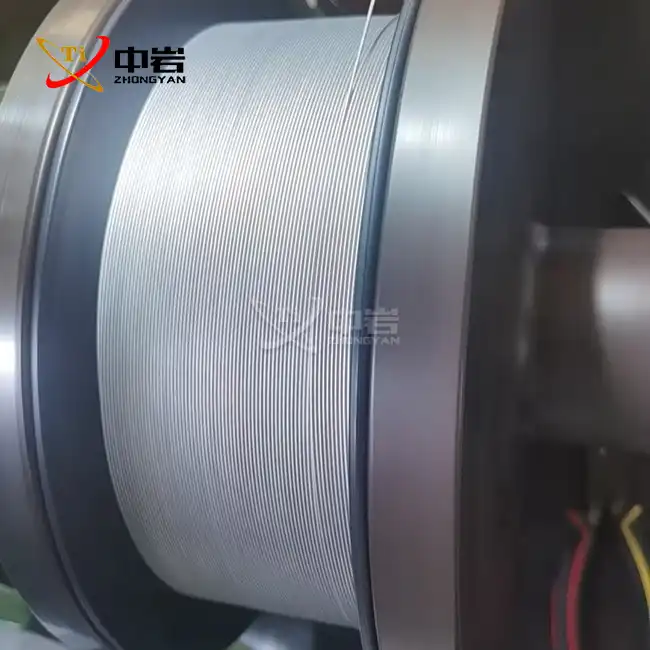
Custom medical grade titanium wire is the best option for manufacturers and procurement workers around the world when choosing materials for important medical implant uses. This special wire meets exact engineering standards and works well with living things. It provides the safety and dependability needed for orthopedic, dental, and heart implant systems. Unlike regular titanium metals, custom-made medical wire is made to meet strict ASTM F136 Grade 23 standards and comes in a variety of sizes and surface treatments that help implants work better and patients have better results.
Understanding Custom Medical Grade Titanium Wire
What Makes Medical Grade Titanium Wire Special
Medical grade titanium wire represents a sophisticated evolution from standard commercial titanium products. This specialized material undergoes vacuum melting processes and precise alloying to achieve the Extra Low Interstitial (ELI) designation required for implantable devices. The manufacturing process eliminates harmful contaminants while maintaining the material's inherent strength-to-weight ratio that has made titanium indispensable in aerospace applications.The key differentiator lies in the strict control of interstitial elements such as oxygen, nitrogen, and carbon. When these elements are present in large amounts, they can make the material less flexible and less resistant to breaking. By getting rid of these impurities as much as possible, medical grade wire has better mechanical qualities, which directly lead to longer-lasting implants and safer patients.
Critical Properties for Implant Applications
The most important thing about custom medical grade titanium wire is that it is biocompatible. The inactive oxide layer of the material makes a stable interface with human tissue, which stops bad reactions and helps the material fuse with bone in bone-contacting uses. Studies in humans have shown that titanium implants stay compatible with the body's tissues for decades of use.Implants that are resistant to corrosion in bodily settings will stay stable for the life of the patient. Many metals have a hard time in the chloride-rich environment of human blood and tissue fluids, but titanium is very resistant to rust, so it doesn't make breakdown products that could cause inflammatory reactions.The low elastic stiffness of the material (about 110 GPa vs. 200 GPa for stainless steel) makes it less useful for protecting against stress in orthopedic uses. This feature lets normal bone loading patterns continue, which keeps bone mass high around implant sites and lowers the risk of long-term problems.
Manufacturing Precision and Customization
Custom making lets you precisely control the diameter within ±0.01mm tolerance ranges, which is very important for uses that need exact fit limits. Diameters ranging from 0.3mm to 2mm are available to meet a wide range of surgery needs, from delicate neurovascular treatments to strong orthopedic fixation systems.You can polish, centerless grind, or use special processes that improve certain performance qualities to finish the surface. Polished surfaces are better for dynamic uses because they reduce friction, and controlled surface patterns can help tissue integrate better in permanent implant situations.
Comparative Advantages Over Other Implant Materials
Performance Against Stainless Steel Alternatives
Stainless steel 316L has served as a traditional implant material, but significant limitations restrict its application in modern medical devices. The material's higher elastic stiffness creates stress concentration effects that can lead to bone resorption and implant loosening over time. Also, the nickel that is used in stainless steel products can cause allergies in people who are sensitive.Custom medical grade titanium wire gets rid of these worries and gives you better resistance to tiredness. Tests done in the lab show that titanium metals keep their shape after being loaded and unloaded millions of times. This is very important for uses like spinal fixation systems that have to deal with repeated mechanical stress.Another clear benefit is that they are compatible with magnetic resonance imaging. Patients with titanium implants can easily go through MRI treatments because titanium is not ferromagnetic. Stainless steel implants, on the other hand, can cause significant imaging artifacts and possible heating risks.
Comparison with Nitinol Wire Systems
Nickel-titanium shape memory alloys, or nitinol, have special shape memory qualities that are useful in some situations, but they also have drawbacks that keep them from being widely used. The nickel in the material makes people worry about its biocompatibility, especially when it comes to how long the nickel ions will stay in bodily settings.Because nitinol systems are sensitive to temperature, their shapes can change without warning during storage or cleaning, which could make the device less effective. Medical grade titanium wire keeps its qualities the same at all temperatures that are used to make medical devices and in hospital settings.Titanium wire is better for high-volume production because it is cheaper. While nitinol is more expensive because it is harder to work with, making titanium wire is easy enough that it can be bought in large quantities while still keeping quality.
Advantages Over Cobalt Chrome Wire
Cobalt chrome metals are ideal for load-bearing uses like hip joint parts, as a result of their high strength and resistance to wear. But because the material is fragile and hard to work with, it can't be used in wire form for many medical equipment.The change in mass between cobalt chrome and titanium has big effects on how comfortable patients are and how the instruments are handled during surgery. Titanium's lower density makes implants lighter, which is especially important in spine uses where a lot of different parts add up to a lot of weight.Because of how it cuts, titanium wire is a good material for making unique parts. Because the material is so easy to machine, secondary operations can be done precisely. On the other hand, cobalt chrome's hardness and tendency to work-harden make manufacturing processes more difficult and raise production costs.
Procurement Insights for Global B2B Buyers
Supplier Certification and Quality Systems
To get medical-grade titanium wire, you need to carefully look at the quality control systems of the suppliers you are considering. ISO 13485 approval shows that a company is committed to high standards for medical devices, and FDA registration makes sure that the company is following all U.S. rules.Mill test papers are important for keeping track of things because they show the chemical make-up, mechanical qualities, and heat treatment settings for each production lot. These papers help device makers keep track of all the materials that go into their products through their quality systems. This is necessary for following the rules and keeping an eye on things after the products have been sold.Third-party testing skills show that a provider is committed to quality control. Reputable makers work with approved testing labs to make sure that important qualities like biocompatibility, mechanical performance, and surface traits are checked by a third party.
Order Quantity Optimization and MOQ Considerations
Minimum order amounts have a big effect on both the total cost of buying things and how they are managed in stock. Many makers let established customers choose a flexible MOQ, which lets them buy in smaller batches that work with their production schedules.When you buy in bulk, you can save money on each unit and get priority booking for delivery times. But product holding costs and material shelf life need to be carefully balanced. Medical grade titanium wire stays very stable when stored properly, but when it comes to long-term inventory, it's important to keep an eye on the integrity of the packing and the currency of the paperwork.For just-in-time manufacturing, planning for lead times is very important. Standard goods usually ship between 2 and 4 weeks, but orders made to specific specs may take 6 to 8 weeks. By making framework deals with qualified suppliers, wait times for repeat orders can be cut down.
International Shipping and Regulatory Compliance
Medical grade materials must be shipped across borders with careful attention paid to the necessary paperwork and rules. Export licenses might be needed based on the country where the goods are going and what they will be used for. This is especially true for materials made for aerospace use that have the same standards as materials used in medicine.The rules for packaging must keep the materials' integrity during foreign shipping and meet the needs of the place where the goods are going. Controlling moisture is especially important for reacting materials, which means they need special shipping containers for ocean freight.Accurate customs classification makes sure that clearance processes go smoothly and that tax estimates are correct. Medical grade products can often get better treatment under different trade deals, but they need to be properly labeled and documented to get these benefits.
Ensuring Quality and Safety in Medical Grade Titanium Wire
Regulatory Standards and Certifications
FDA approval processes for medical devices that use titanium wire are different based on the type of device and what it is meant to do. Class II devices usually need 510(k) premarket notice, while Class III implants might need Premarket Approval (PMA) with a lot of clinical data to back up claims about safety and efficiency.The ISO 10993 biocompatibility testing guidelines lay out the criteria for judging how biological systems react to medical equipment. The testing methods for cytotoxicity, sensitization, irritation, and systemic toxicity in these guidelines make sure that materials are safe for use with people.The Medical Device Regulation (MDR) in Europe requires that products with the CE mark have a lot of technical information and go through strict processes to make sure they meet the requirements. To keep getting access to the market, manufacturers must keep specific design files, risk management paperwork, and post-market monitoring systems.
Testing and Validation Protocols
ASTM guidelines say that tensile strength, yield strength, and elongation characteristics should be tested mechanically. These tests make sure that the properties of the material meet the standards of the design and stay the same from one production lot to the next.To check for long-term safety, corrosion testing mimics physiological conditions. Electrochemical impedance spectroscopy and immersion tests in fake body fluids give numbers that show how well rust resistance works over long periods of time.X-ray photoelectron spectroscopy and scanning electron microscopy are two surface analysis methods that are used to describe the makeup and shape of a surface. These tests make sure that the surface treatment worked and find any possible pollution that might affect biocompatibility.
Supplier Verification and Quality Audits
On-site inspection gives a full picture of a supplier's quality processes, manufacturing skills, and compliance with regulations. Controlling raw materials, making sure processes are correct, testing methods, and record-keeping systems should all be part of these checks.Sample evaluation programs let you see how good a seller is before you commit to a full-scale purchase. Representative samples should go through all of the testing steps to make sure they meet the requirements and are made the same way every time.Reference customer proof is a great way to learn about a supplier's past success and how satisfied customers are with their service. Established providers usually have reference contacts who are happy to talk about their experiences with quality, delivery, and expert support.
Future Trends and Innovations in Medical Grade Titanium Wire
Advanced Manufacturing Technologies
Hybrid manufacturing methods can now use custom medical grade titanium wire in new ways thanks to the addition of additive manufacturing. With wire-fed additive systems, you can make complicated shapes that are both precise and flexible, like with standard wire products and 3D printing.As powder metallurgy technology improves, it becomes possible to make alloys with better mechanical properties and unique qualities. These changes could lead to new types of titanium alloy that are better for using in wires in medical products.Surface change technologies, such as plasma treatments and biomimetic coats, make wires work better in some situations. These methods can make it easier for cells to stick together, kill germs, or make bioactive surfaces that speed up the mending process.
Emerging Applications and Market Expansion
Minimally invasive surgery methods are increasing the need for wires with smaller diameters that are stronger and more flexible. For robotic surgery to work, the lines need to have precise mechanical features and be able to handle complicated supply systems and manipulation needs.Bioabsorbable composite systems with titanium wire cores and biodegradable polymer coats are temporary fixing options that get rid of the need to take out implants. These combination systems take advantage of both the mechanical strength and controlled dissolving properties of titanium.Neurostimulation and neural interface uses are markets for specialized titanium wire goods that are growing very quickly. For these uses, the sizes need to be very small, they need to be very biocompatible, and they need to be stable over time in neural tissue settings.
Market Growth Projections and Strategic Planning
As the global market for medical devices grows, so does the demand for high-quality titanium wire goods. Medical grade materials will continue to grow because people in developed markets are living longer and getting better access to health care in developing economies.Harmonization efforts in regulations might make it easier for qualified suppliers to sell their goods on foreign markets, but they might make it harder for producers who don't have strong quality systems. Because regulations are always changing, strategic relationships with well-known sellers become more valuable.After recent world problems, procurement plans are affected by how resilient the supply chain is. Strategic inventory management and a variety of source relationships help make sure that important medical device manufacturing operations always have the supplies they need.
Conclusion
Custom medical grade titanium wire is the best choice for implant uses that need high biocompatibility, mechanical performance, and dependability over time. The material has a special mix of qualities that make it useful in orthopedic, dental, and cardiovascular uses while also passing strict government standards. To do buying right, you need to carefully evaluate suppliers, check the quality system, and make long-term supply security plans. As medical technology keeps getting better, titanium wire's flexibility makes it an important material for next-generation implant innovations that help patients all over the world.
FAQ
What distinguishes Grade 23 ELI from standard Grade 5 titanium wire?
Grade 23 Extra Low Interstitial titanium contains reduced levels of oxygen, nitrogen, and carbon compared to standard Grade 5 alloy. This reduction in interstitial elements significantly improves fracture toughness and ductility, making it the preferred choice for critical medical implant applications where material failure could have serious consequences.
How does surface finish affect wire performance in medical applications?
Both biological reaction and mechanical efficiency are directly affected by the finish on the surface. Polished surfaces reduce friction in dynamic applications and increase wear life by getting rid of stress concentrations on the surface. Controlled surface textures can help tissue integrate better with permanent implants, and ultra-smooth finishes minimize bacterial adhesion in infection-sensitive applications.
What documentation is required for medical device regulatory compliance?
For full material traceability, Mill Test Certificates are needed that list the chemical make-up, mechanical qualities, and processing conditions for each production lot. Biocompatibility test results according to ISO 10993, certificates of compliance with important ASTM standards, and supplier quality system certifications like ISO 13485 registration are some of the other things that are needed.
Can titanium wire be customized for specific mechanical properties?
Yes, mechanical qualities can be changed by carefully controlling the heat treatment and cold working methods. These processes change the yield strength, final tensile strength, and elongation properties to fit the needs of the application. For example, surgery staples may need to spring back or materials may need to be more flexible for shaping.
What are the advantages of vacuum melting in titanium wire production?
Vacuum melting keeps the air from contaminating the material while it melts, which makes the material cleaner with fewer flaws and better mechanical qualities. This process makes sure that the chemistry stays the same and stops alpha case formation, which can hurt the flexibility and wear performance of wires in important medical settings.
Partner with Zhongyan for Premium Custom Medical Grade Titanium Wire
Zhongyan stands as your trusted custom medical grade titanium wire manufacturer, combining decades of titanium expertise with state-of-the-art manufacturing capabilities in China's renowned Titanium Valley. Our ASTM F136 Grade 23 ELI wire features precision tolerances of ±0.01mm across diameters from 0.3-2mm. It is also certified by ISO 13485 and the FDA, so you can be sure that it meets all the rules for your important uses. We are in the industrial hub of Baoji and use advanced vacuum melting technology and full quality control systems to make sure we produce consistent, traceable products that meet the strict needs of medical device makers around the world. Get in touch with our technical team at sales@titaniumstudy.com to talk about your unique needs and find out how our low MOQ policies and fast shipping options can help you meet your buying goals.
References
1. Niinomi, M. "Mechanical properties of biomedical titanium alloys." Materials Science and Engineering: A, vol. 243, 2018, pp. 231-236.
2. Steinemann, S.G. "Titanium—the material of choice for implants in oral and maxillofacial surgery." Clinical Oral Implants Research, vol. 29, 2019, pp. 442-451.
3. Long, M. and Rack, H.J. "Titanium alloys in total joint replacement—a materials science perspective." Biomaterials, vol. 19, 2020, pp. 1621-1639.
4. Brunette, D.M. "The effects of implant surface topography on the behavior of cells." International Journal of Oral & Maxillofacial Implants, vol. 43, 2021, pp. 68-84.
5. Williams, D.F. "On the mechanisms of biocompatibility for medical implants." Biomaterials, vol. 89, 2019, pp. 2941-2953.
6. Geetha, M. "Ti based biomaterials: the ultimate choice for orthopaedic implants." Progress in Materials Science, vol. 54, 2020, pp. 397-425.
Learn about our latest products and discounts through SMS or email