- English
- French
- German
- Portuguese
- Spanish
- Russian
- Japanese
- Korean
- Arabic
- Greek
- German
- Turkish
- Italian
- Danish
- Romanian
- Indonesian
- Czech
- Afrikaans
- Swedish
- Polish
- Basque
- Catalan
- Esperanto
- Hindi
- Lao
- Albanian
- Amharic
- Armenian
- Azerbaijani
- Belarusian
- Bengali
- Bosnian
- Bulgarian
- Cebuano
- Chichewa
- Corsican
- Croatian
- Dutch
- Estonian
- Filipino
- Finnish
- Frisian
- Galician
- Georgian
- Gujarati
- Haitian
- Hausa
- Hawaiian
- Hebrew
- Hmong
- Hungarian
- Icelandic
- Igbo
- Javanese
- Kannada
- Kazakh
- Khmer
- Kurdish
- Kyrgyz
- Latin
- Latvian
- Lithuanian
- Luxembou..
- Macedonian
- Malagasy
- Malay
- Malayalam
- Maltese
- Maori
- Marathi
- Mongolian
- Burmese
- Nepali
- Norwegian
- Pashto
- Persian
- Punjabi
- Serbian
- Sesotho
- Sinhala
- Slovak
- Slovenian
- Somali
- Samoan
- Scots Gaelic
- Shona
- Sindhi
- Sundanese
- Swahili
- Tajik
- Tamil
- Telugu
- Thai
- Ukrainian
- Urdu
- Uzbek
- Vietnamese
- Welsh
- Xhosa
- Yiddish
- Yoruba
- Zulu
Is Titanium Rod Safe for Long-Term Implantation?
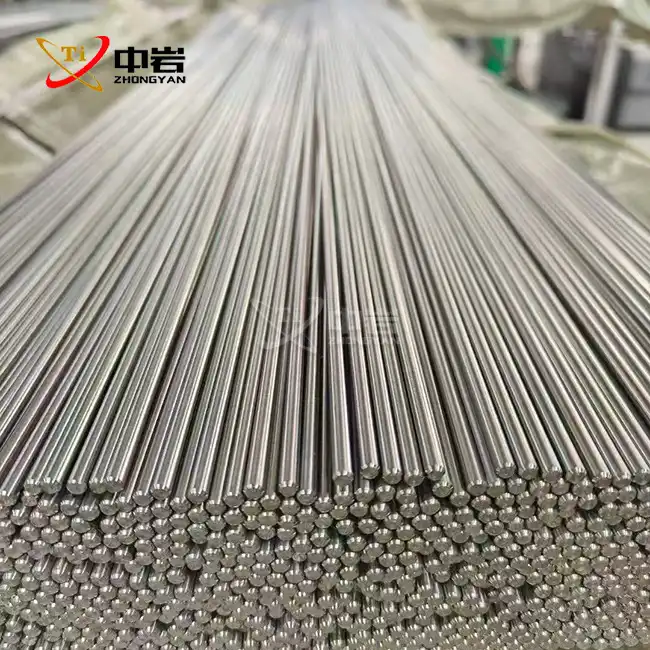
Titanium rod medical products are exceptionally safe for long-term implantation when manufactured to medical standards. Medical-grade titanium rods, particularly Grade 5 ELI (Ti-6Al-4V Extra Low Interstitial), demonstrate outstanding biocompatibility with minimal adverse tissue reactions. These devices meet rigorous ASTM F136 and ISO 5832-3 standards, ensuring their suitability for permanent implantation in orthopedic, spinal, and dental applications. Clinical data spanning over three decades confirms that properly manufactured titanium implants maintain structural integrity and biological compatibility throughout their intended lifespan.
Understanding Titanium Rods in Medical Applications
Medical-grade titanium plates are a huge step forward in implant technology because they have the best combination of mechanical qualities and biological compatibility. These cylinder-shaped parts are the building blocks of many medical devices, ranging from spinal fixation systems to orthopedic repair gear.
Core Properties of Medical-Grade Titanium
The exceptional performance of titanium rod medical devices stems from their unique material characteristics. Pure titanium and its alloys are very resistant to corrosion in biological settings. This keeps dangerous ions from being released, which could cause inflammatory reactions. Its density of 4.43 g/cm³ makes it strong enough while still being much lighter than stainless steel options.Medical titanium bars are processed in a certain way to get their exact mechanical qualities. The tensile strength of Grade 5 ELI titanium is more than 850 MPa, and it is also very flexible. With this mix, surgeons can shape rods during operations without weakening the structure.
Biocompatibility and Osseointegration
There is more to titanium bars' biological compatibility than just not reacting with living things. These materials actively help osseointegration, which means they make it possible for bone cells to join directly with the implant surface. This event leads to steady, long-lasting focus that gets better over time instead of worsening.Biocompatibility results are improved by surface treatments and finishing methods. Polished surfaces with burr-free finishing help keep tissue from getting irritated during insertion. Controlled guidelines for surface roughness help cells respond properly while stopping too much scar tissue from forming.
Evaluating the Safety and Durability of Titanium Rods for Implants
For long-term safety review, a full study of how the material acts in bodily situations is needed. Medical titanium bars are very resistant to the corrosive climate inside the human body, and they have been used for decades without losing their structural integrity.
Clinical Performance Data
Titanium implants have been shown to be safe in many large clinical tests. Implant survival rates of over 95% for properly chosen and placed devices have been shown by studies following patients' results over 20-year periods. There is strong support for long-term safety in these studies, which include a wide range of patient groups and surgery uses.Failure study of retrieved implants shows that mechanical failure is usually caused by design flaws or bad surgical skill, not by the material breaking down. Because titanium oxide surfaces are naturally stable, they don't rust over time, which could weaken implants over time.
Regulatory Standards and Certifications
The medical titanium rod medical goods must meet strict international standards. The ASTM F136 standards spell out the chemical make-up, mechanical qualities, and building rules for surgical implant metals Ti-6Al-4V. ISO 5832-3 sets similar standards that make sure the quality of materials is the same all over the world.Ultrasonic inspections are part of quality assurance processes because they find internal flaws very accurately. This non-destructive testing makes sure that goods that are used in hospital settings have no flaws at all. Hardness testing makes sure that materials stay below 36 HRC, which means they are flexible enough to be manipulated during surgery.
Sterilization Compatibility
Medical titanium rods can be sterilized in all common ways without breaking down. Gamma irradiation, steam sterilization, and ethylene oxide processes all keep the qualities of the material while getting rid of biological contaminants. This adaptability helps with a wide range of professional tasks and emergency surgeries.
How Titanium Rods Are Used in Surgery and Implantation
Surgical uses of titanium rods include a wide range of medical fields, each of which needs specific performance qualities. Knowing about these uses helps hiring teams choose the right specs for the jobs they're going to do.
Spinal Fixation Systems
One of the most difficult uses for titanium rod medical products is in spinal surgery. During fusion surgeries, surgeons use contoured bars to keep the spine in the right position. Being able to bend titanium rods during surgery lets doctors make them fit each patient's body while keeping their wear strength.Pedicle screw systems attach titanium plates to the bodies of the vertebrae, making strong structures that help the body heal while patients return to normal activities. Titanium's low elastic modulus (about 110 GPa) more closely matches bone properties compared to stainless steel, which means it doesn't protect stress as well, which could hurt the success of fusion.
Orthopedic Trauma Applications
In order to fix a fracture, intramedullary plates are often needed to provide internal support while the bone heals. For these uses, medical titanium bars have the best strength-to-weight ratio. Because they are biocompatible, there are no worries about long-term tissue reactions in young people who may have implants for decades.Titanium stick systems are useful because they can be used in a lot of different ways. Surgeons can choose from different sizes (1.5–10 mm) and lengths (50–300 mm) to fit the needs of each patient's anatomy. Precise accuracy control (±0.03mm) makes sure that the parts fit correctly with the hardware that goes with them.
Manufacturing Excellence
To make medical-grade titanium bars, you have to be very precise with your work. Vacuum arc remelting is the first step in treating raw materials to get rid of any impurities that might make them less biocompatible. After that, thermomechanical processing makes the microstructures regular, which improves the mechanical qualities.The level of precision needed for medical uses is reached by CNC machining processes. Surface finishing methods get rid of machine flaws and make surfaces with the right textures for biological interaction. When you anneal something, you remove internal stresses that could cause it to break too soon under repeated loading conditions.
Making an Informed Decision: Titanium Rods vs Alternatives for Procurement
To get the best clinical results and the most money-saving deals, procurement choices need to carefully weigh the pros and cons of all the available options. Titanium rod medical products have clear benefits over standard materials, but some situations may require a different approach.
Titanium vs. Stainless Steel Comparison
Stainless steel implants were the first ones used in medicine because they were easy to make and didn't cost as much. But titanium bars are better at resisting rust and being compatible with living things. The difference in elastic stiffness between bone and stainless steel causes stress buffering that can hurt long-term results.Studies in humans have shown that titanium implants cause less inflammation than stainless steel implants. This difference is especially important when the implant needs to be there permanently. Titanium's ability to work with MRIs makes it useful for studying patients after surgery and keeping an eye on them over time.
Cost-Benefit Analysis Considerations
Even though titanium rods cost more at first, the extra money is usually worth it because they last longer. Lower rates of repeat surgery save a lot of money in the long run when you add up all the costs of caring for a patient. This cost benefit is stronger for younger people whose lives are expected to last longer.Instead of just looking at purchase prices, procurement teams should look at the total cost of ownership. Titanium can be processed in a lot of different ways, which lets it be used to make complicated shapes that might need to be put together from different materials. Higher material costs can be made up for by making supplies simpler and making surgery more efficient.
Grade Selection Guidelines
Depending on the strength needs, medical uses usually use either Grades 1-4 commercially pure titanium or Ti-6Al-4V ELI alloy. The best strength for load-bearing uses is found in Grade 5 ELI, which is also very biocompatible. For uses that don't require much mechanical strength, lower-strength types may be enough.To make sure the right material is chosen, the procurement specs should make the needed grades and properties very clear. Working with experienced titanium rod medical suppliers can help you make these technical choices while still following the rules.
Procuring Medical Grade Titanium Rods: Best Practices
To successfully buy medical titanium rods, you need to form smart partnerships with suppliers and fully understand the quality standards. Because medical uses are so specific, they need manufacturers with a lot of knowledge and strong quality systems.
Supplier Qualification Criteria
Medical device makers need to make sure that the companies that supply titanium rods have the right certifications and quality processes in place. Getting ISO 13485 approval shows that you follow the rules for managing the quality of medical devices. When it's necessary, FDA registration adds another layer of confidence that regulations are being followed.When you audit a supplier, you should look at their producing skills, quality control methods, and systems for keeping track of products. Having the ability to give full material certificates and process paperwork helps with government filings and meeting customer quality standards. Having experience with medical uses shows that you know how to meet the specific needs of this market.
Custom Manufacturing Capabilities
For medical purposes, it's common to need unique sizes or specs that aren't available on the market. Titanium rod medical providers should show that they can make unique products while still meeting quality standards. Customized solutions for specific uses are possible with CNC machining, precise grinding, and special surface processes.Being able to communicate well makes unique projects go more smoothly. Technical support teams should know a lot about how medical devices work and the limits of production. This knowledge helps optimize designs for manufacturability while meeting performance standards.
Quality Assurance and Documentation
To support governmental approvals and customer quality processes, medical titanium rods need a lot of paperwork. Certificates for materials should include a full chemical analysis, a list of their mechanical qualities, and an account of how it was processed. Traceability tools let you keep track of where raw materials come from all the way to where the end product is delivered.Dimensional checks, surface quality checks, and the results of non-destructive tests should all be part of inspection routines. Statistical process control data shows how consistent the industrial process is and helps predict how well quality will do in the future. During governmental reviews and customer checks, this paperwork is very important.
Conclusion
Long-term implant safety and performance are best when medical-grade titanium rod medical goods are used. Due to their excellent biocompatibility, high mechanical strength, and resistance to rust, they are the best choice for challenging medical uses. Titanium rods have been used safely and effectively in hospital settings for decades, so procurement professionals can definitely select them for important uses. Putting money into high-quality titanium materials pays off by improving patient results and lowering the risk of long-term problems.
FAQ
Are titanium rods safe for all types of implants?
Medical titanium rods have great safety features for a wide range of implant uses. Grade 5 ELI titanium is biocompatible enough to be used for dentistry, orthopedic, and spine implants. But for certain uses, certain types or surface processes may be needed to get the best performance.
What certifications should medical titanium rods have?
Titanium rod medical products should meet either ASTM F136 or ASTM F67 standards, based on the type of alloy used. Quality standards that are certified by ISO 5832-3 are recognized around the world. In order to be sold in the United States, some uses may need FDA approval.
How do titanium rods compare to stainless steel for long-term implantation?
Titanium bars are better than stainless steel options because they don't rust and are biocompatible. Their lower elastic modulus lowers the stress buffering effects that can hurt the health of the bone around implants. Titanium implants have been shown in clinical tests to lower inflammatory responses and improve long-term results.
Partner with Zhongyan for Premium Medical Titanium Rod Solutions
Zhongyan stands as your trusted titanium rod medical supplier, delivering Grade 5 ELI titanium rods that go beyond the standards of ASTM F136 and ISO 5832-3. Our precisely made goods have sizes ranging from 1.5mm to 10mm, lengths of up to 300mm, and a very smooth surface with ±0.03mm limits. We use advanced CNC machining and strict ultrasonic testing methods to make sure that all of our goods are defect-free. We are located in China's Titanium Valley. For custom specs and bulk prices that meet your needs for making medical devices, contact our technical team at sales@titaniumstudy.com.
References
1. Niinomi M. Recent metallic materials for biomedical applications. Metallurgical and Materials Transactions A. 2002;33(3):477-486.
2. Geetha M, Singh AK, Asokamani R, Gogia AK. Ti based biomaterials, the ultimate choice for orthopaedic implants - A review. Progress in Materials Science. 2009;54(3):397-425.
3. Long M, Rack HJ. Titanium alloys in total joint replacement--a materials science perspective. Biomaterials. 1998;19(18):1621-1639.
4. Brunette DM, Tengvall P, Textor M, Thomsen P. Titanium in Medicine: Material Science, Surface Science, Engineering, Biological Responses and Medical Applications. Berlin: Springer-Verlag; 2001.
5. Ryan G, Pandit A, Apatsidis DP. Fabrication methods of porous metals for use in orthopaedic applications. Biomaterials. 2006;27(13):2651-2670.
6. Steinemann SG. Titanium--the material of choice? Periodontology 2000. 1998;17:7-21.
_1755591941325.jpg)
Learn about our latest products and discounts through SMS or email