- English
- French
- German
- Portuguese
- Spanish
- Russian
- Japanese
- Korean
- Arabic
- Greek
- German
- Turkish
- Italian
- Danish
- Romanian
- Indonesian
- Czech
- Afrikaans
- Swedish
- Polish
- Basque
- Catalan
- Esperanto
- Hindi
- Lao
- Albanian
- Amharic
- Armenian
- Azerbaijani
- Belarusian
- Bengali
- Bosnian
- Bulgarian
- Cebuano
- Chichewa
- Corsican
- Croatian
- Dutch
- Estonian
- Filipino
- Finnish
- Frisian
- Galician
- Georgian
- Gujarati
- Haitian
- Hausa
- Hawaiian
- Hebrew
- Hmong
- Hungarian
- Icelandic
- Igbo
- Javanese
- Kannada
- Kazakh
- Khmer
- Kurdish
- Kyrgyz
- Latin
- Latvian
- Lithuanian
- Luxembou..
- Macedonian
- Malagasy
- Malay
- Malayalam
- Maltese
- Maori
- Marathi
- Mongolian
- Burmese
- Nepali
- Norwegian
- Pashto
- Persian
- Punjabi
- Serbian
- Sesotho
- Sinhala
- Slovak
- Slovenian
- Somali
- Samoan
- Scots Gaelic
- Shona
- Sindhi
- Sundanese
- Swahili
- Tajik
- Tamil
- Telugu
- Thai
- Ukrainian
- Urdu
- Uzbek
- Vietnamese
- Welsh
- Xhosa
- Yiddish
- Yoruba
- Zulu
Why Choose Custom Hex Titanium Bolts for Your Application?
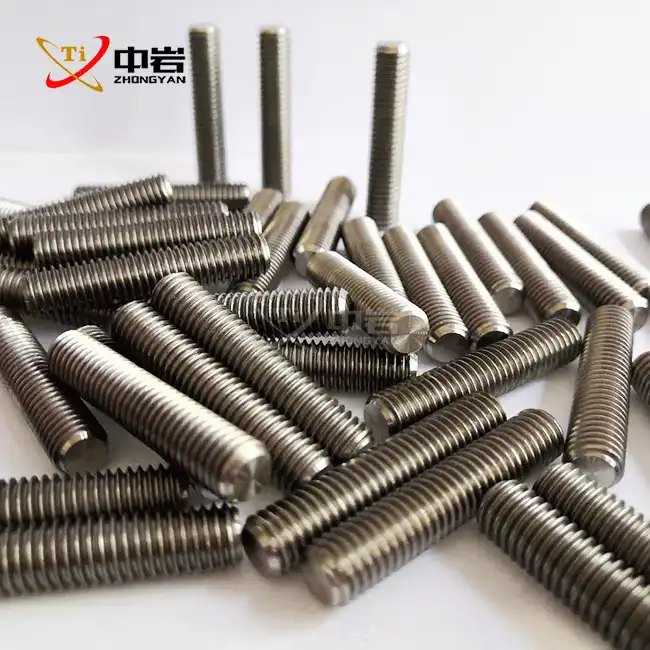
Choosing the right fix can have a big effect on how well a product works, how much it costs to run, and how reliable it is in the long run. Custom Hex Titanium Bolts are a better option than regular fasteners because they have the best strength-to-weight ratio and the best corrosion protection. These precisely designed parts are made from high-quality titanium and are made to meet exact mechanical and dimensional requirements for important uses in chemical processing, medical devices, spacecraft, and marine equipment. Custom Hex Titanium Bolts, on the other hand, solve long-standing engineering problems like extra weight, damage from the environment, and problems with fitting. They also make systems more efficient and last longer in harsh operating settings.
Understanding Custom Hex Titanium Bolts: Characteristics and Benefits
What Makes Titanium Hex Bolts Unique
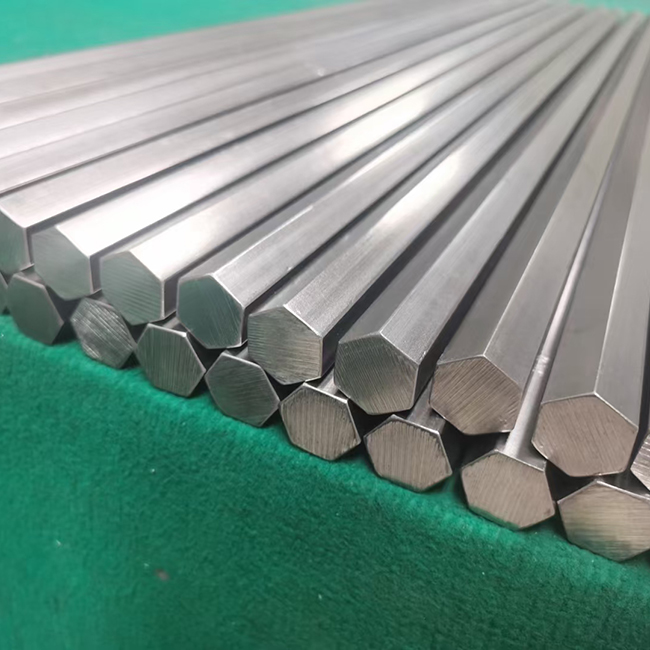
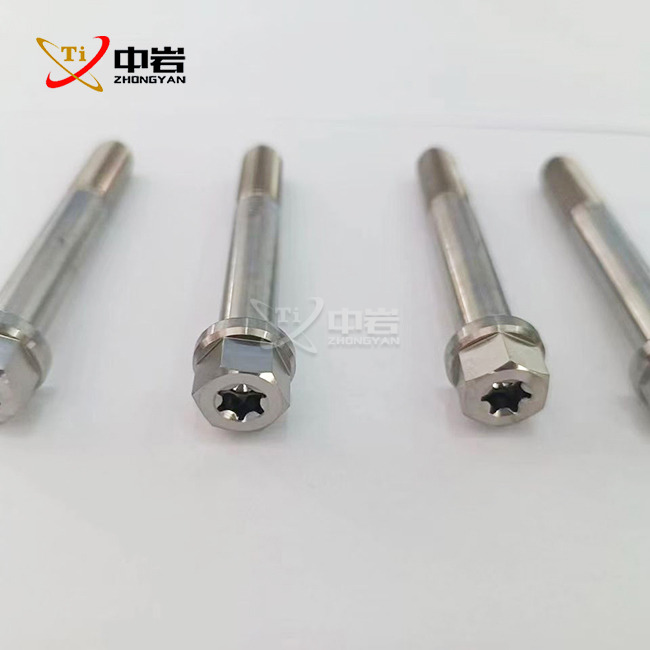
Titanium hex bolts are a special kind of fastener that can be told apart from other types by their six-sided hexagonal heads and designed threading systems. These parts are unique because they are made from titanium alloys, mostly Grade 5 (Ti-6Al-4V) or commercially pure Grade 2. These alloys give the parts qualities that can't be found in regular steel or aluminum bolts. The hexagonal head makes it easier to apply pressure, so you can tighten the bolt precisely without breaking the head or pulling the threads.
Material Properties That Drive Performance
The better performance of titanium screws comes straight from the way its atoms are arranged. Titanium naturally makes a passive oxide layer (TiO2) when it comes into contact with oxygen. This layer protects the metal from corrosive substances like seawater, chlorides, and acidic conditions and heals itself. Grade 5 titanium bolts have compressive strengths between 860 and 1100 MPa and a mass of only 4.43 g/cm³, which is about 45% less than steel bolts of the same size. This mix is very helpful in weight-critical systems, where each gram changes how much fuel is used, how much weight can be carried, or how well the machine works. Titanium is very strong and light, and it also stays very stable at high temperatures. These bolts keep their structural integrity from -252°C (very cold) to 400°C (very hot), so they can be used in places with very high or very low temperatures. The low thermal expansion rate of the material makes stress cracking less likely during thermal cycling. This is a typical way for standard fasteners to fail when temperatures change.
Why Customization Matters
Standard fasteners have strict size requirements, but complicated systems often need thread pitches, grip lengths, or head shapes that aren't standard. Precision CNC cutting and advanced forging methods are used to make Custom Hex Titanium Bolts that meet these needs. Engineers can choose exact thread class standards (often 4H or 6H), add special surface treatments like PVD coating or anodizing, and change the bolt's size to fit their own mechanical designs. This customization gets rid of the trade-off that comes with using standard parts in unique situations.
Comparing Titanium Grades
To choose the right material, you need to know the difference between the different types of titanium. Grade 2 titanium is very good at resisting rust and being shaped, but it has a lower mechanical strength (340 MPa tensile strength). This grade is good for chemical handling equipment where protecting against rust is more important than building strength. Grade 5 titanium is an alloy with 6% aluminum and 4% vanadium. It is much stronger than Grade 4 titanium and is usually used for structural aerospace parts, high-performance racing, and medical implants that need to be biocompatible and able to hold weight.
How to Choose the Right Custom Hex Titanium Bolt for Your Application
Evaluating Mechanical Requirements
Before choosing the right titanium screws, you should figure out how much mechanical stress your system will be under. The amount of weight that a bolt can hold relies on both the type of material and its size. It is common for a Grade 5 titanium bolt with M10 threading to be able to handle tensile loads greater than 25 kN, but exact estimates are needed to take into account the thread contact depth, bolt preload, and dynamic loading conditions. Specifications for torque are also important. Because titanium tends to gall (cold welding between threads), torque needs to be managed carefully, and anti-seize chemicals or special coatings are often needed.
Environmental conditions significantly influence material selection for a Custom Hex Titanium Bolt. Titanium's exceptional resistance to pitting and crevice corrosion makes it ideal for coastal applications. For chemical processing equipment, bolts must withstand exposure to hydrochloric acid, sulfuric acid, or organic solvents. Extreme operating temperatures determine whether standard Grade 5 titanium suffices or if specialized near-alpha titanium alloys are required. Each of these factors must be balanced against operational requirements and budget constraints.
Dimensional Considerations and Thread Types
Choosing the right thread type affects both the reliability of the fitting and the speed of the machine. UNC (Unified Coarse) threads are good for field setups because they are easy to put together and can handle more contamination. UNF (Unified Fine) threads are better at resisting vibration and have a larger tensile stress area, so they are chosen in precision systems that are subject to dynamic loads. Metric threading is based on ISO standards and makes it easier for parts from different countries to work together. For custom uses, different thread pitches may be needed to fit current assemblies or make the load spread better.
The lengths of the bolts and grips need to be carefully calculated. Not enough thread contact weakens the joint and raises the risk of failure, while too long a bolt adds weight and cost that aren't needed. The best grip length is usually at least 1.5 times the width of the bolt. This makes sure that there is enough holding force across the joined parts and that the threads stay engaged in the nut or tapped hole.
When Custom Solutions Justify Investment
Custom Hex Titanium Bolts cost more than regular steel screws, but there are several reasons why this is a good investment. Cutting down on the weight of aerospace parts directly improves fuel economy. According to data from the industry, every kilogram taken off of an aircraft's structure saves the company about $3,000 a year in fuel costs over the life of the aircraft. Longer service life cuts down on repair breaks and costs related to replacement. Titanium bolts that last 20 years or more without failing because of rust are more cost-effective than stainless steel bolts that need to be replaced every 3 to 5 years in naval settings.
Fitment accuracy is another reason for this. Custom bolts that are cut to exact specs get rid of the need for shims, washers, or changed fastening points that are often needed to make do with standard fasteners and weaken the structure. With this level of accuracy, assembly time is cut down, quality control is improved, and guarantee claims related to failed fasteners are kept to a minimum.
Comparing Titanium Hex Bolts with Other Bolt Materials
Strength and Weight Performance
The strength-to-weight ratio is the most important performance measure for fastener materials. Grade 5 titanium bolts have tensile strengths about the same as high-strength steel alloys (950 MPa), but they are 45% lighter. This benefit is huge in situations where reducing mass is key to improving system performance. In race cars, titanium screws in the suspension systems lower the unsprung weight, which makes the car easier to control and lowers its rotational inertia. When titanium nuts are used instead of steel ones all over an aerospace assembly, the payload goes up by a lot.
Corrosion Resistance Comparison
Stainless steel has been the standard for corrosion-resistant screws for a long time, but in harsh conditions, titanium works better than even the best types of stainless steel. Even though 316 stainless steel is pretty resistant to corrosion in normal air, it can still be damaged by chloride, which can cause pitting and crevice corrosion in saltwater settings. Titanium's inactive oxide layer protects it from all of these types of failure. Tests done in the field on offshore platforms show that titanium bolts kept their structural integrity after 15 years of being exposed to saltwater, while nearby stainless steel screws had serious pitting and lost 30 to 40 percent of their strength.
Lifecycle Cost Analysis
Custom Hex Titanium Bolts usually cost three to five times more to buy at first than steel screws that do the same job, but titanium usually ends up being cheaper in the long run. Avoiding maintenance costs is the main way that people save money. In a recorded marine application case study, replacing all the fasteners on a yacht's deck with titanium bolts instead of stainless steel ones stopped happening after 10 years of ownership. This saved the owner about $12,000 in parts and labor costs, even though the starting costs were higher.
Procurement Guide for Custom Hex Titanium Bolts
Supplier Selection Criteria
To find high-quality titanium screws, you have to evaluate sellers in a number of important ways. It is very important to follow the rules for getting certified. Reliable makers use ISO 9001:2015 quality management systems and give material certifications that link each batch of bolts to a specific titanium mill heat number. The materials' make-up, their mechanical qualities, and their ability to meet ASTM B348 or AMS standards are all checked by these certificates. Suppliers who can't provide full paperwork on how materials can be tracked pose unacceptable quality risks.
How well providers can offer true custom solutions depends on how well they can make things. Modern CNC machining centers, thread rolling machines, and heat treatment facilities make it possible to precisely control the dimensions and get the best mechanical qualities. We have a wide range of machining skills, such as CNC turning, CNC milling, precise grinding, and wire EDM, which lets us make Custom Hex Titanium Bolts to exact specifications, down to ±0.02mm. This level of accuracy makes sure that parts fit perfectly in complex systems where normal tolerances are not enough.
Understanding Lead Times and MOQ
Custom fastener production has a set schedule that buying teams have to plan their projects around. Titanium billets come from certified mills, so getting them usually takes two to three weeks. Another three to four weeks are needed for machining and quality control, and one more week is needed for finishing surface processes like anodizing, passivation, or coating application. Total lead times for unique titanium hex bolts are usually between 6 and 8 weeks, but for important projects, faster production may be possible.
The economics of custom making mean that minimum order amounts are necessary. The costs of setting up CNC programming, tools, and quality documents are spread out over several production runs. Most of the time, we suggest placing orders for at least 100 to 500 pieces, but we can work with smaller amounts for prototypes or other unique uses. Volume pricing is available for larger sales, and when you buy more than 1,000 pieces, you can get big price cuts.
Customization Options Available
Custom titanium hex bolts can be used in a wide range of settings and lengths. Customizing a thread means adding non-standard pitches, left-hand threads, or special thread shapes that are best for certain fitting torques. The shape of the head can be changed to fit wrench clearance limits or to add features like locking mechanisms or built-in washers. There are different ways to treat the surface, such as standard passivation (which makes it more resistant to rust), Type II or Type III anodizing (which gives it color coding and better wear resistance), and modern DLC coatings (which almost eliminate galling during installation).
Material standards can be changed to fit the needs of a certain business. For aerospace uses, it may be necessary to meet AMS 4967 or AMS 4928 standards and keep full records of their compliance. Medical device makers need materials that are FDA-approved and meet ASTM F136 standards for surgery implant-grade titanium. For sour gas service, chemical manufacturing plants can say that they follow NACE MR0175. Qualified providers easily meet these regulatory requirements and provide paperwork that makes quality checks and regulatory reports easier for customers.
Real-World Applications and Case Studies
Aerospace Structural Applications
Aircraft makers face constant pressure to reduce structural weight while keeping safety margins. A big commercial airplane program switched from regular steel bolts to Custom Hex Titanium Bolts for the whole wing attachment system. This made each plane 180 kilograms lighter. At normal fuel prices and usage rates, this change saves about $540,000 in fuel over the plane's 25-year service life. This is a return on investment of over 1,200%, even when the higher cost of titanium screws is taken into account. When used for engine fitting, the standards are very strict. Bolts have to be able to handle large static loads as well as being worn down by constant shaking and temperature changes of -55°C at cruise altitude and 200°C+ in the engine bay. In these conditions, Grade 5 titanium hex bolts with rolled threads show great wear resistance and have been known to last more than 30,000 flight hours without needing to be replaced.
High-Performance Motorsport
When used in racing, reducing weight is most important for unsprung parts because their weight directly affects how the car moves. A professional race team found that replacing steel suspension bolts with custom titanium ones cut the amount of unsprung mass in each car by 2.3 kilograms. This change made the suspension respond faster by measurable amounts and helped the car go 0.15 seconds faster around a normal track, giving it a huge competitive edge worth millions of dollars in sponsorships and title points. The fitting of brake calipers is another important use. Titanium doesn't carry heat well, so heat doesn't move from brake parts to nearby structures as easily. This makes it easier to control the temperature of the brake fluid and lowers the risk of brake fade during endurance races. Corrosion resistance is also useful in race settings, where brake dust and road salt would quickly break down steel bolts.
Marine and Subsea Engineering
Offshore oil platforms and underwater equipment work in a climate that is probably the most corrosive you can imagine. They are constantly exposed to saltwater, high pressures, and animals that are very mean. A North Sea platform operator wrote that all the screws that could be reached were changed to titanium hex bolts, which got rid of a whole group of maintenance jobs. Over a decade, this change cut the costs of maintaining fasteners by 78% and increased safety by getting rid of sudden bolt failures that needed emergency fixes. Titanium screws are being used more and more by yacht makers for deck gear, rigging attachments, and hull fittings. In this market area, high prices are reasonable because the product is resistant to rust, very strong, and looks good. Owners like that titanium bolts never lose their good looks because they don't get the ugly rust stains that happen with stainless steel screws in marine settings.
Conclusion
Custom Hex Titanium Bolts work better than regular fasteners in vital industry situations where regular fasteners fail. Their high strength-to-weight ratio, complete resistance to corrosion, and ability to be customized make them perfect for the toughest engineering tasks in aircraft, racing, marine, and chemical processing settings. Even though they cost more at first than normal steel options, lifecycle analysis always shows that they are more valuable because they last longer, don't need as much upkeep, and are more reliable in the workplace. To make implementation work, you need to work with skilled makers who have modern machining tools, complete quality systems, and a lot of experience with the materials. Precision-engineered titanium fasteners are an investment that pays off in the form of better system performance, less downtime, and higher safety margins in difficult situations where fastener failure would have unacceptable results.
FAQ
How can I verify the authenticity of titanium bolts?
Genuine titanium bolts should have material certifications that show their makeup, how they were heated, and their mechanical qualities. These certifications should be able to be tracked back to the original titanium mill. Suppliers with a good reputation give out certificates of conformance that show agreement with ASTM or AMS standards. Density testing (titanium has a density of 4.43 g/cm³, which makes it different from steel) and spark testing are two physical verification methods. However, these destructive methods are better for incoming checking than for everyday verification. Titanium doesn't draw magnets like steel screws do, so it can be quickly tested in the field.
Are custom titanium bolts cost-effective compared to steel?
A lifecycle cost study usually favors titanium, even though it costs more at first. Titanium bolts that last 15 to 20 years or more without needing to be replaced are more cost-effective than stainless steel bolts that need to be replaced every 3 to 5 years. In aircraft uses where weight is very important, fuel savings are greater than the cost of the fasteners within two to three years. Applications that need maintenance access on a regular basis save a lot of money on labor costs when replacement times are pushed back. The estimate of cost-effectiveness depends on the specifics of the operation, but titanium is usually a better choice for tough jobs.
What are typical lead times for custom orders?
Standard custom titanium hex bolt orders usually take between 6 and 8 weeks to arrive after the order is placed. This schedule covers getting the materials (2–3 weeks), precision cutting (4–5 weeks), and finishing the surface and checking for quality (1 week). For important tasks, expedited production can cut wait times down to 4 to 5 weeks, but it usually costs more. Usually, prototypes or engineering samples can be sent within three to four weeks. To meet these deadlines and avoid output delays, we suggest that you involve providers early on in the planning process.
Partner with Zhongyan for Premium Custom Hex Titanium Bolt Solutions
Zhongyan stands as a trusted Custom Hex Titanium Bolt supplier, combining advanced manufacturing capabilities with rigorous quality standards. Located in Baoji—recognized globally as China's Titanium Valley—we leverage unparalleled access to premium titanium resources and cutting-edge research institutions. Our comprehensive production system integrates CNC turning, CNC milling, precision grinding, and wire EDM machining, enabling us to manufacture titanium hex bolts meeting the most exacting specifications for aerospace, medical device, chemical processing, and industrial machinery applications. We manufacture custom titanium fasteners from Grade 2 and Grade 5 titanium in complete compliance with ASTM, AMS, and ISO international standards. Our quality management system maintains ISO 9001:2015 certification, ensuring consistent excellence from raw material selection through final delivery. Whether you require standard configurations or highly specialized OEM/ODM solutions with unique threading, surface treatments, or dimensional specifications, our experienced engineering team provides expert guidance throughout the procurement process.
Contact our technical specialists at sales@titaniumstudy.com to discuss your custom titanium hex bolt requirements. We provide comprehensive material certifications, competitive pricing for both prototype and high-volume production orders, and reliable delivery schedules that keep your projects on track. Discover how partnering with a dedicated titanium fastener manufacturer delivers the precision components your critical applications demand.
References
1. American Society for Testing and Materials. (2021). ASTM B348: Standard Specification for Titanium and Titanium Alloy Bars and Billets. West Conshohocken: ASTM International.
2. Boyer, R., Welsch, G., & Collings, E.W. (2019). Materials Properties Handbook: Titanium Alloys. Materials Park: ASM International.
3. Lutjering, G., & Williams, J.C. (2020). Titanium: Engineering Materials and Processes. Berlin: Springer-Verlag.
4. SAE International Aerospace Materials Specifications. (2022). AMS 4967: Titanium Alloy Bars, Wire, and Forgings 6Al-4V. Warrendale: SAE International.
5. Donachie, M.J. (2018). Titanium: A Technical Guide for Engineers and Designers. Materials Park: ASM International.
6. International Organization for Standardization. (2020). ISO 9001:2015 Quality Management Systems — Requirements. Geneva: ISO Central Secretariat.
Learn about our latest products and discounts through SMS or email