- English
- French
- German
- Portuguese
- Spanish
- Russian
- Japanese
- Korean
- Arabic
- Greek
- German
- Turkish
- Italian
- Danish
- Romanian
- Indonesian
- Czech
- Afrikaans
- Swedish
- Polish
- Basque
- Catalan
- Esperanto
- Hindi
- Lao
- Albanian
- Amharic
- Armenian
- Azerbaijani
- Belarusian
- Bengali
- Bosnian
- Bulgarian
- Cebuano
- Chichewa
- Corsican
- Croatian
- Dutch
- Estonian
- Filipino
- Finnish
- Frisian
- Galician
- Georgian
- Gujarati
- Haitian
- Hausa
- Hawaiian
- Hebrew
- Hmong
- Hungarian
- Icelandic
- Igbo
- Javanese
- Kannada
- Kazakh
- Khmer
- Kurdish
- Kyrgyz
- Latin
- Latvian
- Lithuanian
- Luxembou..
- Macedonian
- Malagasy
- Malay
- Malayalam
- Maltese
- Maori
- Marathi
- Mongolian
- Burmese
- Nepali
- Norwegian
- Pashto
- Persian
- Punjabi
- Serbian
- Sesotho
- Sinhala
- Slovak
- Slovenian
- Somali
- Samoan
- Scots Gaelic
- Shona
- Sindhi
- Sundanese
- Swahili
- Tajik
- Tamil
- Telugu
- Thai
- Ukrainian
- Urdu
- Uzbek
- Vietnamese
- Welsh
- Xhosa
- Yiddish
- Yoruba
- Zulu
Why Are Titanium Rods Considered Standard in Spinal Fixation Devices?
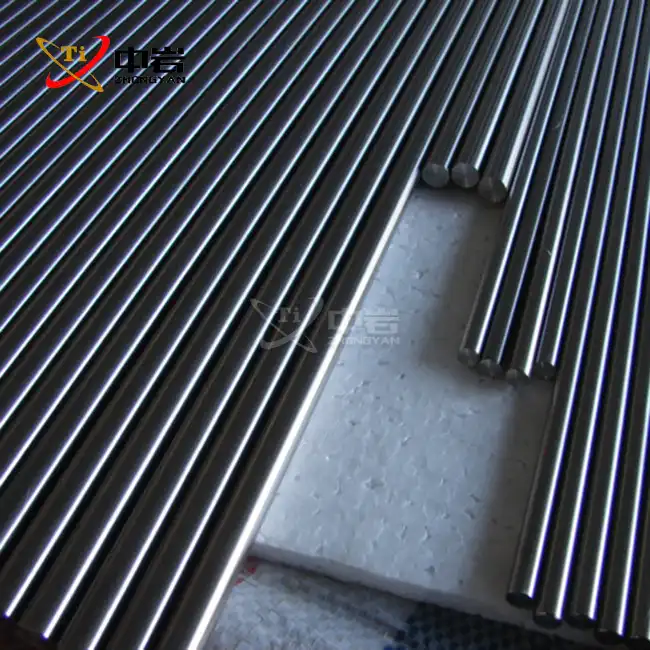
When looking at the results of current spinal surgery, one material stands out as the best: the titanium rod medical implant. Over the past 30 years, these precision-engineered parts have changed the way spinal fixation is done. They offer a unique mix of biomechanical fit, structural stability, and patient safety that no other material can match. Surgeons all over the world use medical-grade titanium rods to fix deformities, stabilize vertebrae, and make fusion procedures easier. This is because these devices distribute loads evenly while minimizing stress shielding, which happens when implants are too rigid and stop the bone from remodeling naturally. The common use of titanium in spinal surgery is based on decades of clinical evidence showing better osseointegration rates, fewer surgeries that need to be redone, and better long-term patient results.
Understanding Titanium Rods in Medical Applications
Titanium is the only material that can be used for load-bearing implants in the medical device business, especially in spine reconstruction. As the base of pedicle screw systems, medical titanium rods act as horizontal connections that connect different vertebral segments during fusion treatments.
Defining Medical-Grade Titanium Specifications
Medical titanium rods are mostly made from Ti-6Al-4V ELI, which is also known as Grade 5 ELI or Grade 23 according to ASTM F136 standards. This metal is made up of about 6% aluminum and 4% vanadium. It was carefully adjusted to have a tensile strength of more than 850 MPa while still being flexible enough for intraoperative shaping. The term "extra low interstitial" refers to tightly managed levels of oxygen, nitrogen, and carbon, with oxygen levels usually below 0.13%. This keeps the material from breaking easily when it is loaded and unloaded over and over again. Grades 1-4 of commercially pure titanium are better at resisting corrosion than Grades 0–4, but they are not strong enough for main load-bearing spinal uses. At Zhongyan, we make our products by vacuum arc remelting them and then controlling the thermomechanical process. This makes sure that the microstructure of every stick is the same.
Mechanical Properties Critical to Spinal Fixation
For spine fixation to work, the materials used need to be able to handle repeated bodily loads while also having a behavior similar to bone. Titanium has a modulus of elasticity of about 110 GPa, which is much lower than stainless steel's 200 GPa but still stiff enough to support the spine. This middle level of stiffness lowers the stress shielding effects that lead to neighboring section degeneration. Our titanium rod medical goods have hardness values below 36 HRC, which is the best mix between the ability to resist lasting deformation and the freedom surgeons need to shape rods to each patient's anatomy. With a density of 4.43 g/cm³, these implants are much lighter than steel ones. This means that the total weight of the implants is lower without affecting their skeletal performance. TiN rods can smartly share pressure because of these qualities, making them more useful than rigid supports.
Biocompatibility and Osseointegration Advantages
Titanium's surface chemistry makes a random oxide layer that is 5–10 nanometers thick and mostly made up of TiO₂. This passivation layer is very chemically neutral in physiological settings, so it stops the release of ions that could cause allergic reactions or inflammatory pathways. According to clinical studies, more than 98% of titanium implants are biocompatible. Rejections are mostly caused by the way the surgery was done, not the material itself. The osseointegration process—a direct structural link between bone tissue and the implant surface—happens as expected with titanium because the oxide layer works well with osteoblasts. Within weeks of implantation, bone cells produce mineralized matrix directly onto titanium surfaces. This makes the titanium pieces mechanically connect, which makes the fixation more stable over time. Titanium is different from neutral plastics that stay inside fibrous tissue because of this biological bonding process.
Why Titanium Rods Are Preferred Over Other Metals in Spinal Fixation
Choosing the right material for spine implants can have a big effect on how well the surgery goes, how long the implants last, and the quality of life of the patient. Knowing the pros and cons of titanium compared to other materials helps purchasing managers and gadget designers make choices based on facts.
Titanium Versus Stainless Steel: Clinical Distinctions
In the beginning, spine instruments were mostly made of stainless steel, especially 316L. However, titanium has slowly taken over most of those uses. The difference in weight is a big functional benefit—titanium structures lower implant mass by about 45% compared to similar steel designs, which means less irritation to soft tissues and less pain for patients. Tests of corrosion protection show that titanium works better in biological settings that are high in chloride. Stainless steel relies on chromium oxide passivation, which can break down when it's worn down by machinery, but titanium's oxide layer can grow back on its own when it gets damaged. Nickel in stainless steel can cause allergic reactions in about 10 to 15 percent of patients. titanium rod medical implants, on the other hand, don't contain nickel, so there are no hypersensitivity issues. Another important difference is that titanium produces few imaging flaws, which lets doctors accurately evaluate the patient after surgery, while steel produces large distortions that hide internal detail.
Comparing Titanium to Carbon Fiber Composite Rods
Carbon fiber reinforced polymer composites were created as radiolucent options that were meant to make images clearer and make the materials less stiff. These materials have great strength-to-weight ratios and are almost completely clear on X-rays, which makes it easier to check for fusion after surgery without implant shading. Even with these benefits, carbon fiber rods have some problems that make it hard to use them. Because fiber composites' mechanical properties aren't uniform, their strength changes depending on the direction they're pushed. This makes surgery planning more difficult and could cause surprising failure modes when loaded in complex ways. Titanium has isotropic behavior, which means that its performance is stable no matter which way the load is applied. Another worry is that the environment will get worse over time. Polymer structures can soak up liquids and break down over decades, but titanium will stay chemically stable forever. Precision in manufacturing and quality stability are harder to achieve with composite materials because they can have flaws in their structure that can't be seen with a normal microscope. Titanium has a proven track record of millions of successful implants and decades of clinical data, which gives people trust that carbon fiber materials have not yet reached.
Long-Term Stability and Implant Longevity
Spinal fixation devices must work regularly for the whole lives of their patients, which could be up to 40 to 50 years after they were implanted. In fatigue testing methods, titanium rods are put through millions of load cycles that mimic bodily stresses. The rods always show endurance limits that are safe for permanent implantation. When titanium touches other titanium parts or bone, there is no galvanic rusting, so there is no grinding wear that can damage other materials. When titanium implants are taken out years after they were put in, clinical recovery studies show that the material hasn't broken down much, with surface oxide layers still intact and no signs of bulk rusting. Because of this, properly made titanium structures will stay mechanically sound for the rest of a patient's life without needing to be replaced regularly.
Selecting the Right Titanium Rod for Spinal Fixation
To make smart buying choices about spinal implant parts, you need to know a lot about material grades, size requirements, and quality standards. Manufacturers of medical devices have to find a mix between meeting performance standards, following regulations, and cutting costs.
Grade Comparison: Grade 5 ELI Specifications
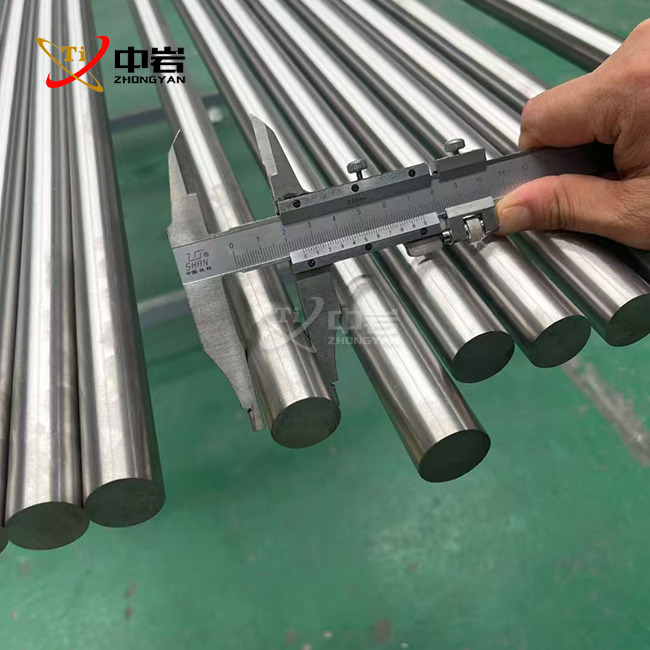
When it comes to medical titanium grades, Grade 5 ELI is the best choice for spine fixation uses that need the most strength. This material has a tensile strength of 850 to 930 MPa and a yield strength of more than 780 MPa. This gives it enough safety against physiological stress that rarely goes above 200 MPa in most spinal segments. The extra low interstitial label makes sure that the oxygen content stays below 0.13%, which is much lower than the highest of 0.20% in normal Grade 5. This makes the material much more flexible and resistant to fatigue crack propagation. Our factory makes titanium rod medical goods with diameters from 1.5 mm to 10 mm and lengths from 50 mm to 300 mm. These rods can be used for a wide range of surgery methods, from minimally invasive procedures to complex deformity repairs. Precision sanding is part of the surface finishing process to get rid of any surface imperfections. Tolerances must be kept within ±0.03mm to ensure consistent mechanical qualities and device assembly compatibility.
ASTM F136 and ISO 5832-3 Compliance
Medical device materials must meet strict chemical and mechanical standards set by regulatory systems. ASTM F136 sets the chemical composition limits for Ti-6Al-4V ELI. It includes the highest amounts of iron (0.25%), oxygen (0.13%), nitrogen (0.05%), carbon (0.08%), and hydrogen (0.012%), as well as the required numbers for aluminum (5.5–6.5%) and vanadium (3.5–4.5%). ISO 5832-3 gives parallel specifications that are accepted around the world, making it easier to reach markets around the world. To prove compliance, strict testing procedures must be followed, such as spectrographic chemical analysis, tension testing according to ASTM E8, and microstructural study. In our manufacturing process, all of the bars are inspected with ultrasound waves to find any internal flaws bigger than 0.4 mm that could become crack start points. These quality control steps make sure that every titanium rod medical part that leaves our plant meets or beats international standards. This gives device makers reliable raw materials that don't have any flaws.
Dimensional Considerations and Load-Bearing Requirements
The width of the spinal fixation rod is chosen based on the deformity's intensity, the patient's anatomy, and the expected mechanical demands. Smaller rod diameters (3.5–4.5mm) are best for infant use and minimally invasive methods that prioritize protecting soft tissue. Larger diameters (5.5–6.5mm), on the other hand, offer better stiffness for correcting deformities in adults or building multilayer fusion structures. The link between rod diameter and bending stiffness follows fourth-power scaling, which means that doubling the rod diameter makes it sixteen times more rigid. Choosing the right diameter is therefore very important for getting the physical behavior you want. Zhongyan makes standard sizes, such as 4mm choices, in 120mm lengths that are best for thoracolumbar fusion procedures. The surface quality is kept free of burrs, and the dimensions stay the same throughout production runs. After cold working, annealing heat processes remove any remaining stresses. This makes sure that the metal will behave predictably during surgery shaping.
Procurement Insights for Medical-Grade Titanium Rods
Setting up reliable supply lines for medical implant raw materials takes a close look at each supplier, strict rules for checking quality, and ongoing relationship management. Professionals in procurement have to deal with complicated licensing standards while also trying to keep costs as low as possible.
Evaluating Supplier Credentials and Manufacturing Capabilities
Before choosing a supplier, it's important to check that they have the right regulatory certifications. For example, ISO 13485 for medical device quality management systems shows that the company can regularly make materials that meet regulatory standards. The place where the products are made is very important. Places like Baoji, China (also called "China Titanium Valley") that are well-known for titanium production have connected supply chains, skilled workers, and easy access to raw materials. Because Zhongyan is in this industrial area, it has easy access to high-tech melting facilities, precise machining centers, and analytical testing labs that help with strict quality control. A production capacity review should make sure that providers can handle both small batches of prototypes and large production runs, with lead times that work with the plan for device development. Customization options, such as OEM and ODM services, let you get solutions that are made just for your designs, and well-established expert support teams make it easier to choose the best materials.
Certification Documentation and Traceability Requirements
Medical device laws require full traceability from the ingot of raw materials to the finished implant. This means that sellers must keep a lot of paperwork. Material approvals need to have heat lot numbers, chemical composition analysis results, mechanical test data, and an account of how the material was processed. Registration with the FDA and regular inspections give buyers even more trust in the quality systems of their suppliers. According to ISO 10993 guidelines, procurement deals should list the paperwork that is needed, such as material test reports, certificates of conformance, and the results of biocompatibility tests. At Zhongyan, we keep records by marking each group of rods with a unique identification number. This lets us fully trace back to the original batch of vacuum arc remelting ingots. This documentation system helps medical device makers keep track of their design history files and regulatory applications, which speeds up the approval process.
Cost Factors and Value Optimization Strategies
titanium rod medical prices depend on many factors, such as the cost of the raw materials, the difficulty of the processing, the cost of licensing, and the number of orders. Due to the higher cost of alloying elements and stricter processing needs, Grade 5 ELI is more expensive than widely pure grades. Pricing is affected by the dimensions; tighter precision and custom surface finishes raise the cost per unit but may lower the cost of cutting later on. Price cuts are usually possible when you commit to a certain amount of goods; setting up blanket purchase orders with planned releases combines the costs of keeping inventory with the benefits of unit price optimization. A total cost of ownership study should look at more than just the buy price. It should also look at how much the material yields during machining, how much it is rejected because of quality issues, and how the supplier's dependability affects the production schedule. Zhongyan has competitive pricing because we have efficient production processes and direct access to titanium smelting capacity. This gives customers value without lowering the high-quality standards needed for medical uses.
Real-World Performance and Case Studies of Titanium Rods in Spinal Fixation
Titanium is the best material for spinal stabilization devices, as shown by clinical proof and performance data. Decades of surgical experience and recorded results give surgeons faith in their choices of materials.
Clinical Outcomes and Performance Metrics
Longitudinal studies that follow spine fusion patients over time show that titanium constructs have success rates of more than 95% at five years. Fusion success is strongly linked to good surgical skill rather than material factors. The number of complications linked to titanium rod medical implants is still less than 3%. Most of the time, these complications are caused by mechanical loosening at the bone-screw contacts rather than rod failure. According to patient-reported outcome measures, titanium-instrumented fusions have an average happiness score of 8.2 out of 10. Patients also report less pain and better function even after long follow-up times. Over ten years, about 4 to 6 percent of titanium implants need to be replaced. This is a much lower rate than the rate of revision surgeries for stainless steel implants in the past. These results show that titanium is biologically compatible, mechanically reliable, and resistant to rust, all of which have real benefits for patients.
Innovations in Surface Treatment and Design
As titanium rod medical technology moves forward, it works on changing the surface and making the geometry better. Porous coating methods create a controlled surface pattern that encourages bone growth at the places where the rod meets the bone, which could make the attachment more stable. Anodization methods create colored oxide layers that do two things: they make the rods more resistant to rust and make it easier to tell which rods are which during surgery. Anatomically contoured rod designs that are already made to match sagittal spine alignment reduce the amount of bending that needs to be done during surgery. This keeps cold-work effects to a minimum, which could hurt performance after being tired. At Zhongyan, we do research and development to find surface treatments that make biocompatibility even better while keeping the mechanical qualities that doctors need. These new developments are small steps toward making titanium even better, building on its already strong performance base.
Evidence Supporting Material Selection Decisions
The ASTM F1717 biomechanical testing procedures set up standard ways to compare the performance of spine constructs. In these tests, completed implant systems are loaded in three ways: compression, twisting, and fatigue. This gives us numbers that show how hard they are, where they break, and how long they can last. Comparative studies regularly show that titanium structures meet or beat performance standards in all types of stress. The stress distributions in inserted structures can be predicted using finite element analysis modeling. This proves that titanium's elastic stiffness creates good load-sharing patterns between the implant and bone. Using this wide range of evidence—including clinical results, lab tests, and computer models—to help with material selection gives us faith that titanium is the best choice for modern spinal fixation uses.
Conclusion
Titanium rod medical is the most common material used in spine fixation devices because it has good qualities, has been used in a lot of clinical trials, and is easy to make. Other materials can't compare. Titanium rod medical implants have the right mix of strength, biocompatibility, and mechanical action to keep the spine stable over time. When purchasing titanium, procurement professionals should give top priority to makers that show strict quality control, full certification compliance, and technical knowledge to help with gadget development. As spine surgery moves toward less invasive methods and custom-made device designs, titanium will continue to be the material of choice because it is flexible and has been shown to work well. There is a lot of proof that titanium is safe and effective. This gives companies that make medical devices faith that the choices they make about materials will lead to the best outcomes for patients.
FAQ
What makes titanium rods safer than stainless steel for long-term implantation?
titanium rod medical rods get rid of the nickel that is in stainless steel alloys, which stops allergic sensitivity that happens in 10-15% of patients. The naturally occurring titanium oxide layer protects against rust better than chromium passivation in steel, keeping ions from entering surrounding tissues. The lower elastic modulus of titanium lowers the stress shielding effects that cause bone resorption next to stronger steel implants. This leads to better long-term bone rebuilding.
How do I verify the authenticity and grade of medical titanium rods from suppliers?
Ask for full test results on the material that show its chemical makeup according to ASTM F136 standards. Pay special attention to the oxygen content being less than 0.13% for the ELI designation. Ask for proof that the tensile strength, yield strength, and elongation numbers meet the grade standards through mechanical testing. Check that the seller has ISO 13485 certification and ask for proof that finished rods can be tracked back to lots of vacuum arc remelting ingots. When setting up new supply ties, data given by suppliers can be checked by a third party.
What diameter titanium rod is appropriate for multilevel lumbar fusion procedures?
Multilevel lumbar fusion usually uses rods with a diameter of 5.5mm or 6.0mm. These rods are stiff enough to fight forces that try to fix deformities and hold long construct lengths. The best width to use depends on a patient's bone quality, body mass index, and how bad the abnormality is. Check out the biomechanical material and surgery method guides that are special to your implant system. The design of the pedicle screw and the geometry of the interface between the rod and screw affect the overall performance of the build.
Partner With Zhongyan for Certified Medical-Grade Titanium Rod Solutions
Our Baoji plant is in China's top titanium production hub, and it's where Zhongyan makes precision-engineered titanium rod medical parts that meet ASTM F136 and ISO 5832-3 standards. Our Grade 5 ELI rods have a tensile strength of more than 850 MPa, a hardness of less than 36 HRC, and measurement accuracy of within ±0.03mm. They are also 100% ultrasonically inspected to make sure they are delivered without any defects. As a well-known titanium rod medical source that works with medical device makers all over the world, we offer OEM and ODM customization services for rods with sizes from 1.5mm to 10mm and lengths from 50mm to 300mm. Our ISO 9001:2015-certified operations include study, production, and quality control. This lets us offer flexible production schedules and technical support as you create your device. You can email our team at sales@titaniumstudy.com to talk about your unique needs, get material certifications, or get quotes for your next spine fixation device project.
References
1. Niinomi, M. (2008). "Mechanical biocompatibilities of titanium alloys for biomedical applications." Journal of the Mechanical Behavior of Biomedical Materials, Vol. 1, Issue 1, pp. 30-42.
2. Long, M. and Rack, H.J. (1998). "Titanium alloys in total joint replacement—a materials science perspective." Biomaterials, Vol. 19, Issue 18, pp. 1621-1639.
3. Steinemann, S.G. (1998). "Titanium—the material of choice?" Periodontology 2000, Vol. 17, Issue 1, pp. 7-21.
4. Rack, H.J. and Qazi, J.I. (2006). "Titanium alloys for biomedical applications." Materials Science and Engineering C, Vol. 26, Issue 8, pp. 1269-1277.
5. Geetha, M., Singh, A.K., Asokamani, R., and Gogia, A.K. (2009). "Ti-based biomaterials, the ultimate choice for orthopaedic implants—A review." Progress in Materials Science, Vol. 54, Issue 3, pp. 397-425.
6. Elias, C.N., Lima, J.H.C., Valiev, R., and Meyers, M.A. (2008). "Biomedical applications of titanium and its alloys." Journal of the Minerals, Metals and Materials Society, Vol. 60, Issue 3, pp. 46-49.
Learn about our latest products and discounts through SMS or email