- English
- French
- German
- Portuguese
- Spanish
- Russian
- Japanese
- Korean
- Arabic
- Greek
- German
- Turkish
- Italian
- Danish
- Romanian
- Indonesian
- Czech
- Afrikaans
- Swedish
- Polish
- Basque
- Catalan
- Esperanto
- Hindi
- Lao
- Albanian
- Amharic
- Armenian
- Azerbaijani
- Belarusian
- Bengali
- Bosnian
- Bulgarian
- Cebuano
- Chichewa
- Corsican
- Croatian
- Dutch
- Estonian
- Filipino
- Finnish
- Frisian
- Galician
- Georgian
- Gujarati
- Haitian
- Hausa
- Hawaiian
- Hebrew
- Hmong
- Hungarian
- Icelandic
- Igbo
- Javanese
- Kannada
- Kazakh
- Khmer
- Kurdish
- Kyrgyz
- Latin
- Latvian
- Lithuanian
- Luxembou..
- Macedonian
- Malagasy
- Malay
- Malayalam
- Maltese
- Maori
- Marathi
- Mongolian
- Burmese
- Nepali
- Norwegian
- Pashto
- Persian
- Punjabi
- Serbian
- Sesotho
- Sinhala
- Slovak
- Slovenian
- Somali
- Samoan
- Scots Gaelic
- Shona
- Sindhi
- Sundanese
- Swahili
- Tajik
- Tamil
- Telugu
- Thai
- Ukrainian
- Urdu
- Uzbek
- Vietnamese
- Welsh
- Xhosa
- Yiddish
- Yoruba
- Zulu
What Makes Titanium Threaded Adapters Corrosion-Resistant?
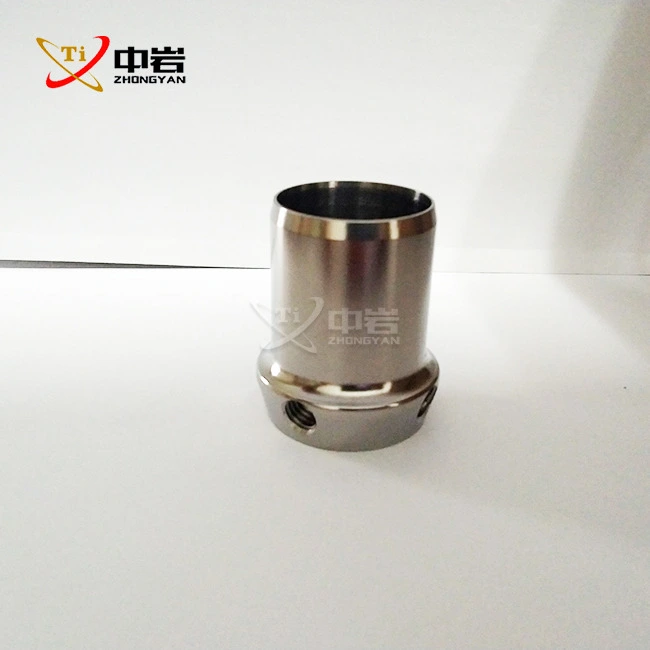
When Titanium Threaded Adapters are exposed to air, they can form a self-healing oxide layer (TiO₂) that protects them from rusting. This passive film is only a few nanometers thick, but it blocks chlorides, acids, and alkaline solutions completely. Titanium oxide regenerates quickly when scratched or damaged, providing constant security in aggressive media. Stainless steel fittings, on the other hand, depend on chromium content and can fail in low-oxygen environments.
Understanding Titanium Threaded Adapters and Their Corrosion Resistance
What Are Titanium Threaded Adapters?
Titanium Threaded Adapters are precision-engineered connections that are used in monitoring networks, fluid control units, and piping systems. These parts make it easier to connect different kinds of tools safely and keep their integrity even in tough situations. We can make these adapters with threads that meet NPT, BSP, Metric, UNF, and UNC standards, and they can fit sizes from 1/8 inch to 2 inches (3mm to 50mm). The adapters fill in gaps in systems' compatibility, letting developers easily combine different parts.
The Role of Corrosion in Component Failure
Threaded parts are vulnerable to rust in many ways in industrial settings. Pitting rust makes small holes in metal that go deep into the metal's surface and often cause huge leaks. When metals that are not the same touch each other in electrical solutions, galvanic corrosion happens, which speeds up the breakdown at the connection points. Crevice rusting happens in tight areas where fluid stays still, like inside thread profiles. These ways of breaking down systems make them less reliable, cost more to maintain, and put people's safety at risk in serious situations.
How Titanium Differs from Traditional Materials
By comparing how well different materials work, titanium's clear benefits become clear. In naval settings, especially those with grade 304 and 316 versions, stress corrosion cracking caused by chloride can happen in stainless steel adapters. In acidic water, brass valves lose their zinc, which makes them less strong over time. Aluminum metals break down quickly in alkaline solutions and aren't strong enough for use in high-pressure situations. Our Grade 5 titanium fittings (Ti-6Al-4V) have a tensile strength of more than 895 MPa and are completely resistant to most harmful substances. Grade 2 commercially pure titanium is more flexible and resistant to chemicals, making it better for certain working conditions.
The Science Behind Titanium's Superior Corrosion Resistance
The Protective Oxide Film Formation
Titanium is very durable because it reacts with other things. When titanium atoms come into contact with oxygen or water in the air, they quickly join with oxygen molecules to form a stable titanium dioxide layer. The film sticks to the base metal very firmly because of strong ionic bonds. The oxide gets to a thickness of about 1.5 to 10 nanometers, which depends on the temperature and factors in the surroundings. We use this natural process all the way through the production process to make sure that the surface passivation of every Titanium Threaded Adapter is just right before it is sent out.
Self-Healing Mechanism Under Stress
The amazing thing about titanium's oxide layer is that it can grow back. If there is mechanical wear, chemical attack, or physical damage that goes through the film, it reforms right away. When fresh titanium surfaces come in contact with trace oxygen in gases or liquids, the protective shield is restored in seconds. This ability to fix itself stops the gradual breakdown that happens with other materials. Studies in the lab show that titanium's rust rates stay the same even after the surface is damaged over and over again. This is in contrast to stainless steel, where the protective chromium oxide can fail forever once it is broken.
Performance in Harsh Chemical Environments
Titanium Threaded Adapters work well in a wide range of acidic circumstances. When used in salt water, the chloride content that destroys stainless steel doesn't affect the safety of titanium. Oxidizing acids, such as nitric acid, chromic acid, and aqua regia, can't damage the material at high temperatures. Using reducing acids is more difficult, but if you choose the right titanium alloys, they will stay strong in places where other metals break down quickly. These adapters can work with acidic processing lines because they don't break down much in alkaline conditions up to pH 14. Our CNC-machined adapters are put through strict corrosion tests that meet ASTM G48 standards. These tests prove that they are resistant to pitting and crevice corrosion.
Temperature changes make titanium's protective coat stronger, not weaker. When the temperature goes up, the oxide layer gets stronger, which makes it better for thermal cycle uses. This thermal stability means that our adapters can work reliably from very cold (-320°F) situations to high temperatures (800°F) for long periods of time, without changing their mechanical features.
Applications Highlighting the Need for Corrosion-Resistant Titanium Threaded Adapters
Critical Use Cases Across Industries
Aerospace fluid systems need hydraulic lines that work reliably even when the pressure and temperature change a lot. Our precision-threaded Titanium Threaded Adapters connect hydraulic devices to control surfaces. Even though they are constantly vibrating and heating up, they keep working without any leaks. The nonmagnetic qualities are very important near sensitive avionics because they keep navigational tools from being harmed.
Offshore petrochemical sites have to deal with environments that are always exposed to saltwater and are used to handle hydrocarbons. Titanium is resistant to both sweet and sour gas rust, which is good for subsea equipment that uses our connections in wellhead control systems. Because they are lighter than similar steel fittings, they lower the structural pressure on mobile production platforms. This is a benefit that grows as more connection points are added.
Titanium Threaded Adapters are used at key transfer places in chemical processing plants that work with corrosive media. Heat exchanger links, instrumentation ports on reactor vessels, and sample system interfaces are all places where standard materials are likely to fail early. Our custom-threaded adapters can be used to connect pipes made of unusual alloys to standard stainless steel instruments without making galvanic couples that speed up corrosion in one area.
Marine engineering is used for a lot of different things, from ROV hydraulic systems to desalination plant pipe networks. Because the material doesn't collect biofouling, it needs less upkeep than brass or bronze. Our lightweight threaded adapters are used by naval builders in underwater ballast control systems that must be reliable under pressure and resistant to corrosion.
Installation Best Practices
When you attach a Titanium Threaded Adapter correctly, you can make it last longer and avoid common failure causes. Before putting the parts together, you should use molybdenum disulfide or nickel-based anti-seize chemicals on the thread surfaces. Titanium tends to gall when it is being installed, so precise tools must be used to apply pressure in a controlled way. For links that can handle pressure, the threads should engage at least 4.5 to 6 full turns. When you connect titanium parts to stainless steel fittings, you need to know about galvanic compatibility. These two materials are close to each other on the galvanic series, which lowers the risk of rusting in most situations.
Customization for Specialized Requirements
Baoji Zhongyan Titanium Industry Co., Ltd. provides full OEM and ODM services that are customized to meet the needs of each project. Specialized surface treatments improve certain performance qualities, and custom thread forms fit private equipment interfaces. When the needs of the application call for it, we make Titanium Threaded Adapters with non-standard pressure values, unusual size combinations, and constructions made of a mix of materials. The ability to place bulk orders helps with big projects that need thousands of similar parts, and the dimensions stay the same from one production run to the next.
How to Choose and Procure Corrosion-Resistant Titanium Threaded Adapters
Material Grade Selection
Which grade of titanium to use varies depending on the needs of the product. Grade 2 commercially pure titanium is the most resistant to rust and is very easy to shape. It is best for moderate-pressure chemical processes. Grade 5 titanium metal (Ti-6Al-4V) has the high mechanical strength and fatigue resistance needed for structural aircraft uses and high-pressure hydraulic systems. We help buying teams choose materials based on their working pressure, temperature range, chemical exposure, and how much they need to be loaded mechanically.
Evaluating Manufacturer Credentials
Suppliers you can trust show that they follow world standards for materials and production. ASTM B348 sets the rules for the makeup of titanium alloys, and ASTM F67 and F136 set the rules for medical-grade materials. According to ANSI/ASME B1.20.1, thread precision is needed to make sure proper bonding and stop premature wear. Having ISO 9001:2015 approval means that quality is managed in a planned way throughout the whole production process. From certifying the raw materials to the final inspection, we keep a full track of everything. With every package, we include mill test results and material certificates.
Balancing Cost and Lifecycle Value
Titanium Threaded Adapters are more expensive to buy at first than options like stainless steel or brass. Lifecycle analysis, which includes replacement frequency, maintenance work, system downtime, and failure effects, shows that the economic case is strong. A stainless steel adapter that needs to be replaced every 18 months in a seawater situation costs a lot more over time than a Titanium Threaded Adapter that lasts decades. Our sourcing experts help buyers figure out the total cost of ownership, which shows how choosing high-quality materials will save them money in the long run.
Optimizing Bulk Orders and Logistics
When you buy a lot of something, you can save money by producing and sending it all at once. We make framework deals with big industry clients that promise stable prices and priority ordering for production. We are in Baoji City, which is in China's Titanium Valley. From there, we can get to a lot of production facilities and raw materials for titanium. This geographical edge means that prices are lower and lead times are shorter. Individual protective wrapping and moisture-proof packing are used for each Titanium Threaded Adapter. Bulk packages are kept safe in reinforced export containers that can be used for both ocean and air freight transport.
Case Studies and Verification of Titanium Threaded Adapter Performance
Field Performance Data
A big offshore company changed all of its stainless steel hydraulic fittings with Grade 5 Titanium Threaded Adapters on all of their platforms in the Gulf of Mexico. After five years of continual work in hydraulic fluid that had been tainted with saltwater, an inspection showed that there was no corrosion, and the sealing performance had not changed. It is thought that the platform fleet will save more than $340,000 a year on repair costs, and the lack of downtime will keep output from dropping.
At a chlor-alkali plant, chemical processing equipment used to have adapters break every 8 to 12 months because of crevice rust in wet chlorine service. When our economically pure Titanium Threaded Adapters were used, the service life went beyond seven years without needing to be replaced. This proved that the choice of material was the right one for this harsh setting. After being exposed for a long time, pressure tests showed that the structure stayed the same at 150% of working pressure.
Laboratory Testing Validation
Titanium is resistant to pitting corrosion, as shown by ASTM G48 Method A accelerated corrosion tests. Titanium Threaded Adapters can be exposed to a 6% ferric chloride solution at 50°C for 72 hours without any pitting showing up. In contrast, 316 stainless steel samples break down within 24 hours of being exposed to the same conditions. Electrochemical impedance spectroscopy shows that the inactive film is stable from pH 2 to 12.
According to ASTM B117, salt spray testing shows that no corrosion happens after 2,000 hours of contact. However, brass and aluminum samples show serious degradation within 500 hours. These uniform tests give us measurable proof to back up choices about what materials to use in serious situations.
Compliance and Certification
All of the Titanium Threaded Adapters that are made at our Baoji factories are inspected for size using measured thread testers to make sure they meet certain thread standards. Positive Material Identification using X-ray fluorescence shows that the grade standards are met for the elemental makeup. Along with ASTM and AMS aircraft material standards, we keep up with ISO 5832-3 for biocompatible uses. Sample lots are put under hydrostatic pressure to make sure the structure is strong at the rated working pressures. If you need proof of a burst pressure, you can ask for it.
Conclusion
Titanium Threaded Adapters are a well-thought-out way to deal with corrosion problems in a wide range of challenging industrial settings. The self-renewing oxide layer of the material continuously protects in places where regular fittings fail, turning technical advantages into measured practical benefits. When lifetime cost analysis is used to make purchasing choices, it's clear that titanium is the better choice, even though it costs more at first. Our production skills in China's Titanium Valley combine knowledge of the materials with precise CNC machining. We can make parts that meet strict international standards and also support custom specs for unique needs.
FAQ
How does service life compare between titanium and stainless steel adapters?
Titanium Threaded Adapters usually last three to ten times longer than stainless steel ones, but this depends on how harsh the setting is. Both materials work well in neutral pH industrial water, which makes the benefit less clear. Chloride levels above 200 ppm, on the other hand, cause stainless steel to char more quickly while not affecting titanium. Marine settings and chemical handling operations show the biggest changes in lifespan, with Titanium Threaded Adapters often lasting 20 years or more and stainless steel parts needing to be replaced every two to three years.
Can these adapters be used in pure oxygen systems?
Titanium grades 2 and 5 can catch fire in settings with only air when certain pressure and temperature conditions are met. Aerospace oxygen systems usually call for different materials or use special titanium alloys that are less likely to catch fire. For oxygen service uses that need a full risk assessment and material choice advice based on operating conditions, we suggest that you talk to our technical team.
What customization options support unique project requirements?
Our OEM services can handle thread shapes that aren't standard, builds made of hybrid materials, unusual surface treatments, and custom size requirements. Order minimums for unique setups depend on how complicated they are, but for specialized thread forms, they usually start at 100 pieces. During the planning phase, we work with engineering teams to help them choose materials and make sure they can be made in a way that maximizes both performance and output efficiency.
Partner with Zhongyan for Premium Titanium Threaded Adapter Solutions
Zhongyan is ready to help you meet your buying needs by giving you straight access to precision-engineered Titanium Threaded Adapters. Our Baoji production complex has high-tech CNC lathes and strict quality control procedures that make sure every adapter meets the exact requirements for your important uses. We know how hard it is for buying managers to meet quality standards while also staying within budget and meeting delivery dates. As a well-known Titanium Threaded Adapter manufacturer, we can offer you reasonable prices for large orders without sacrificing the quality of the materials or the accuracy of the measurements your projects need. Contact our technical sales team at sales@titaniumstudy.com to discuss your specific requirements, request detailed specifications, or obtain quotations for standard and custom configurations.
References
1. Boyer, R., Welsch, G., & Collings, E. W. (1994). Materials Properties Handbook: Titanium Alloys. ASM International, Materials Park, Ohio.
2. Schutz, R. W., & Thomas, D. E. (1987). "Corrosion of Titanium and Titanium Alloys," ASM Handbook, Volume 13: Corrosion, ASM International, pp. 669-706.
3. Donachie, M. J. (2000). Titanium: A Technical Guide, 2nd Edition. ASM International, Materials Park, Ohio.
4. ASTM International (2021). ASTM B348-21: Standard Specification for Titanium and Titanium Alloy Bars and Billets, West Conshohocken, Pennsylvania.
5. Cotton, J. B. (1970). "The Corrosion Resistance of Titanium," Platinum Metals Review, Volume 14, Issue 4, pp. 136-142.
6. Peters, M., Kumpfert, J., Ward, C. H., & Leyens, C. (2003). "Titanium Alloys for Aerospace Applications," Advanced Engineering Materials, Volume 5, Issue 6, pp. 419-427.
Learn about our latest products and discounts through SMS or email