- English
- French
- German
- Portuguese
- Spanish
- Russian
- Japanese
- Korean
- Arabic
- Greek
- German
- Turkish
- Italian
- Danish
- Romanian
- Indonesian
- Czech
- Afrikaans
- Swedish
- Polish
- Basque
- Catalan
- Esperanto
- Hindi
- Lao
- Albanian
- Amharic
- Armenian
- Azerbaijani
- Belarusian
- Bengali
- Bosnian
- Bulgarian
- Cebuano
- Chichewa
- Corsican
- Croatian
- Dutch
- Estonian
- Filipino
- Finnish
- Frisian
- Galician
- Georgian
- Gujarati
- Haitian
- Hausa
- Hawaiian
- Hebrew
- Hmong
- Hungarian
- Icelandic
- Igbo
- Javanese
- Kannada
- Kazakh
- Khmer
- Kurdish
- Kyrgyz
- Latin
- Latvian
- Lithuanian
- Luxembou..
- Macedonian
- Malagasy
- Malay
- Malayalam
- Maltese
- Maori
- Marathi
- Mongolian
- Burmese
- Nepali
- Norwegian
- Pashto
- Persian
- Punjabi
- Serbian
- Sesotho
- Sinhala
- Slovak
- Slovenian
- Somali
- Samoan
- Scots Gaelic
- Shona
- Sindhi
- Sundanese
- Swahili
- Tajik
- Tamil
- Telugu
- Thai
- Ukrainian
- Urdu
- Uzbek
- Vietnamese
- Welsh
- Xhosa
- Yiddish
- Yoruba
- Zulu
Why Are GR23 Titanium Bars Ideal for Surgical Implants?
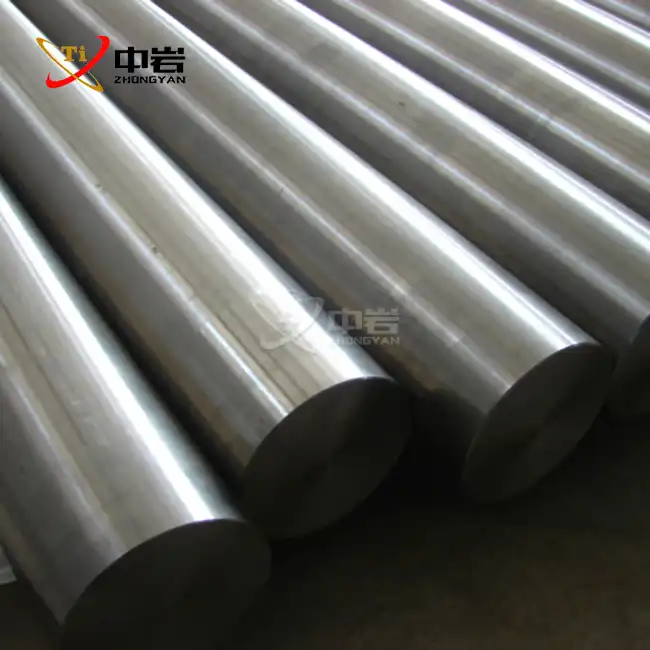
The gr23 titanium bar is the best material for medical implants because it is biocompatible, doesn't rust, and has mechanical qualities that are very close to those of human bone. This biomedical-grade metal, which is officially called Ti-6Al-4V ELI (Extra Low Interstitial), solves the important problem of how to make implants last for a long time inside the body. Controlled reduction of interstitial elements like oxygen and iron gives it better flexibility and fracture toughness, which keeps load-bearing uses from failing in disastrous ways. Ti-6Al-4V ELI is the best material for mechanical joints, oral implants, and heart devices because of its unique mix of properties.
Understanding GR23 Titanium Bar: Composition and Properties
Chemical Composition and Manufacturing Standards
Strict international standards, such as ASTM F136, ASTM B348, and ISO 5832-2, are used to make the gr23 titanium bar. The main alloying elements in this metal are aluminum (5.5–6.5%) and vanadium (3.5–4.5%). Titanium makes up the rest. The strict control of intermediate elements is what makes this grade different from regular Grade 5 titanium. The highest amount of oxygen allowed is 0.13%, and the lowest amount of iron allowed is 0.25%. These close limits directly fix the problems with material weakness that were present in early implant designs.
As part of the manufacturing process, vacuum arc remelting (VAR) is often used first, followed by hot working and cooling. The annealed state makes the architecture better by balancing the alpha and beta grains, which gives the material strength and flexibility. We use cold-drawn methods and precise annealing steps at Zhongyan Titanium to get better control over the dimensions, with errors as low as h9 and surface finishes that meet the needs of medical devices.
Mechanical and Physical Characteristics
Medical-grade titanium bars are unique because of their mechanical qualities, which make them ideal for tough jobs. Our Ti-6Al-4V ELI material has a tensile strength of over 900 MPa and a yield strength of over 850 MPa, which means it meets the strictest requirements for medical implants. At least 10% elongation makes sure that the material is flexible enough to stop cracks from spreading during cycle stress. With a mass of 4.43 g/cm³, this metal has a great strength-to-weight ratio, which means it puts less stress on the bone tissue around it.
The modulus of elasticity, which was found at 114 GPa, is a very important benefit. This number is in the middle of the range for widely pure titanium (105 GPa) and stainless steel (200 GPa), making a material that bends more like human bone. This feature stops "stress shielding," a problem that happens when implants are too stiff and weaken the bone. The hardness of HRC 36 makes it resistant to wear while still being easy enough to machine for CNC processes that need to be precise. Temperature stability stays the same across metabolic ranges, which guarantees accurate measurements for the life of the implant.
Corrosion Resistance and Biocompatibility
The long-term success of any transplant material depends on how well it resists corrosion in body fluids. When the gr23 titanium bar is put in water, it forms a solid, inactive titanium dioxide layer that protects it from pitting and crevice corrosion. This oxide film heals itself if it gets broken, so it can protect even when it is worn down by mechanical means. Over decades of exposure to salty liquids that mimic body chemistry, this metal shows almost no corrosion.
Biocompatibility testing according to ISO 10993 standards shows that Ti-6Al-4V ELI causes very little inflammation when it comes into contact with live flesh. The substance doesn't give off cytotoxic ions, doesn't cause mutations, and keeps most people from having allergic responses. Comparing implant materials has shown that this type has osseointegration qualities, which means that bone cells grow straight onto the titanium surface, making a strong biological anchor. This quality is very important for tooth implants and joint replacements that need to be fixed permanently.
Why GR23 Titanium Bars Are Preferred for Surgical Implants
Superior Strength-to-Weight Ratio and Fatigue Performance
During their useful life, surgical implants must be able to handle millions of filling cycles. With every step, hip replacements are put through forces that are several times their own weight, and tooth implants are put through forces that are repeated eating. The gr23 titanium bar meets these needs because it has a high tolerance to wear and can hold its shape under cyclic forces that would break other materials. According to research, Ti-6Al-4V ELI parts that are made correctly can last more than 10 million loading cycles without starting to crack from wear.
The fact that titanium bars are light directly affects how comfortable patients are and how well the surgery goes. When compared to the cobalt-chromium metals that are usually used in orthopedics, titanium implants are about 40% lighter while still being just as strong. This decrease is very important for spine implants, where too much weight can cause neighboring segment degeneration. In the same way, cardiovascular stents are better because their lighter shapes are less likely to irritate the walls of blood vessels while still providing the necessary lateral strength.
Enhanced Corrosion Protection in Physiological Environments
Body fluids are one of the harshest conditions for building materials to work in because they corrode quickly. Proteins, enzymes, chloride ions, and changing pH levels are all problems that metals can't always solve. Because their oxide layer is so strong, medical-grade titanium bars work best in these circumstances. Titanium's surface is always protected, unlike stainless steel, which can rust in certain places where the grains meet or where welds are made.
The Extra Low Interstitial label lowers the chance of hydrogen embrittlement, a failure mode in which hydrogen is absorbed, and cracks form. Titanium can absorb hydrogen during the making and sterilizing processes if the right safety measures are not taken. This weakness isn't as big a problem with the gr23 titanium bar because they are made with a refined makeup and controlled processes. Electrochemical tests in Ringer's solution show that the protection is stable in all physiological situations because the corrosion potentials are in the passive region.
Precision Manufacturing and Customization Capabilities
Implants that are created from CT scan data and made using advanced production methods are becoming more and more important for modern surgery. The gr23 titanium bar is perfect for CNC cutting because it can handle the complicated shapes needed for reconstructing the human body. At our Baoji center, we use multi-axis CNC turning and grinding tools that can keep tolerances within 0.01mm even on complicated implant features.
Because heat treatment is responsive, makers can change the mechanical qualities to fit different uses. Solution treatment and aging can make something stronger for high-load uses, while stress relief annealing makes it more flexible for complicated shaping tasks. Surface processes like passivation, electropolishing, and controlled oxidation make the material more biocompatible and resistant to wear. With these customization choices, medical device engineers can make implants work better for a wide range of clinical needs, from cranial plates that need to be able to adjust to the skull to acetabular cups that need to be resistant to wear.
Comparing GR23 with Other Titanium Grades for Medical Use
GR23 versus GR5 Titanium Alloy
The chemicals that make up both types are similar and are in the Ti-6Al-4V family, but they work very differently in medical uses. Standard Grade 5 titanium focuses on being as strong as possible, with tensile strengths close to 950 MPa thanks to its higher oxygen level. But this strength comes at the cost of being less flexible and tougher to break. The gr23 titanium bar's higher damage tolerance gives surgeons important safety gaps when using implants in situations where cracks could spread and cause the implant to fail catastrophically.
Rates of fatigue crack growth are a key way to tell them apart. Testing with artificial physiological stress shows that cracks in Ti-6Al-4V ELI spread much more slowly than in standard Grade 5 material. This quality is very important for hip implants that are loaded and unloaded millions of times. The lower interstitial content also makes it easier to weld and lowers the risk of cold cracking during fabrication, which makes it easier to make complex implant systems.
Performance Advantages over Commercially Pure Titanium
Commercially pure titanium types (GR1, GR2, GR3, and GR4) are very good at resisting rust and working well with living things, but they are not strong enough to be used for load-bearing implants. These types can't handle the forces that come from hip or knee replacements because their tensile strengths are between 240 and 550 MPa. The gr23 titanium bar is almost twice as strong and has the same or better corrosion protection, which means it can be used in more medical situations.
The alpha-beta lattice of Ti-6Al-4V ELI also makes it more resistant to wear than commercially pure alpha grades. Surface wear can create tiny particles that can cause inflammatory reactions in movable implant parts like acetabular cups. Medical-grade titanium bars have a harder, more wear-resistant surface that stops debris from building up.
Titanium Advantages over Stainless Steel and Other Alloys
316L stainless steel has been used in orthopedics for many years because it is strong and not too expensive. But it can't be used for long-term devices because of a number of major problems. The 200 GPa elastic stiffness of stainless steel provides a lot of stress shielding, which causes bone loss around implants. Nickel level, usually between 10 and 14 percent, makes people allergic. Even though corrosion protection is good, it is not as good as titanium. For example, crevice rust has been seen in modular implant joints.
Procurement Insights for GR23 Titanium Bars in the Medical Industry
Certification Requirements and Quality Assurance
To get medical-grade titanium bars, you have to pay close attention to paperwork and licensing. Each batch needs to have a Mill Test Certificate (MTC) that meets EN 10204 3.1 standards and clearly states that it meets ASTM F136 or an ISO 5832-2 version. The results of the chemical study should list all the major and trace elements and show that the interstitial content stays within the Extra Low Interstitial bounds. Each package must include mechanical test data, such as tensile strength, yield strength, elongation, and decrease of area.
Supplier Selection and OEM Customization Options
To find trusted Gr23 titanium bar suppliers, you need to look at their specialized skills beyond just making materials. Leading providers offer a wide range of services, such as precise cutting, customized heat treatment, and surface finishing, that are all made to fit the needs of medical devices. Being able to provide material in different shapes and sizes, like bars, plates, tubes, and wire, makes purchasing easier for companies that make a wide range of implants. Custom standards for width, length, and surface conditions should be easy to get without having to wait for long lead times.
Cost Considerations and Volume Planning
The high costs of materials for medical-grade titanium bars are due to the strict quality standards and thorough tests that go into making them. Prices are usually higher than for industrial titanium grades because they are purer and have better mechanical features. Pricing structures that are good for large agreements can be reached, especially for companies that make a lot of implants and need a steady supply. Long-term supply deals keep prices stable and make sure that supplies are distributed evenly during times when the market is short on supplies.
Real-World Applications and Case Studies of GR23 Titanium Bars
Orthopedic Joint Replacements and Bone Fixation
The gr23 titanium bar is used more and more in trauma stabilization devices like plates, screws, and intramedullary nails because it is strong and works with MRIs. Stainless steel fixation gear usually needs to be taken out after healing, but titanium implants can stay in place forever without any problems. Spinal fusion cages made of titanium bars support interbody fusion while letting bone grow through holes in the structures. The fact that titanium is radiolucent makes imaging after surgery easier, so doctors can see how the healing is going without any metal artifacts getting in the way.
Dental Implants and Maxillofacial Reconstruction
Titanium is used almost entirely in dental implants because it has been shown to be able to fuse with bone. Implant fixings made from Gr23 titanium bar hold false teeth in place by connecting directly with the bone. In well-planned cases, success rates are above 97%. Acid etching and grit blasting are surface processes that improve bone apposition, which speeds up the fusion process. The gr23 titanium bar is strong enough for narrow-diameter implants that are needed when bone thickness is limited.
Cardiovascular and Emerging Applications
Titanium is good for cardiovascular equipment because it is strong, doesn't rust, and is compatible with blood. Ti-6Al-4V ELI is used in heart valve frames, pacemaker housings, and vascular tubes because it works well in blood-contact situations. The non-magnetic qualities make sure that the device can work with MRIs, which is very important for people who need diagnostic imaging. Thin-walled tubes made from the Gr23 titanium bar allow slightly invasive delivery systems, which lowers the risk of surgery and shortens the time it takes to heal.
Conclusion
A 23 titanium bar has become the standard material for surgical implants after decades of being tested in patients and constantly improved by technology. Its unique mix of biocompatibility, resistance to corrosion, mechanical properties, and production flexibility meets the complex needs of current medical equipment. When compared to other materials, Ti-6Al-4V ELI performs better over time in the harsh natural conditions of the human body.
When choosing titanium providers, people in charge of purchasing must put competitive pricing, quality systems, certification compliance, and expert support skills at the top of their lists. Investing in high-quality medical-grade materials pays off by making implants last longer, lowering the number of revisions needed, and improving patient results. As surgical methods get better and personalized medicine grows, high-quality titanium bars will play an even bigger role in healthcare. This is because makers are dedicated to making the best biomedical materials.
FAQ
What makes the Gr23 titanium bar superior to Grade 5 for implants?
The "Extra Low Interstitial" label lowers the amount of oxygen, nitrogen, and iron in the material, which makes it much more flexible and difficult to break. Even though Grade 5 is stronger, the Gr23 titanium bar is better at handling damage, which is very important for medical implants where cracks could spread and cause them to fail catastrophically under repeated loads.
Can medical-grade titanium bars be customized for specific implant designs?
Of course. Suppliers you can trust give a wide range of customization options, such as precise diameter control, custom lengths, changes to the heat treatment process, and surface finishes. CNC machines can make blanks that are very close to a net form, which cuts down on the time it takes for customers to handle them. Different types of heat treatment make it possible to change the mechanical qualities to fit the needs of a particular purpose.
How does corrosion resistance compare between titanium and stainless steel implants?
The stable, self-healing titanium dioxide layer on the surface of the gr23 titanium bar makes it more resistant to rust. At module joints, crevice corrosion can happen in stainless steel, which lets out nickel ions that can cause allergic reactions. Titanium keeps protecting the body at all pH levels and salt amounts that are normal for the body.
What certifications should procurement managers require when ordering?
The material must have Mill Test Certificates (MTC) that clearly show that it meets ASTM F136 or ISO 5832-2 standards, as required by EN 10204 3.1. Each package should have records of the chemical analysis, mechanical tests, and heat treatment. To support quality management systems for medical devices, suppliers should keep their ISO 9001 or ISO 13485 certifications up to date.
Partner with Zhongyan for Premium Medical-Grade Titanium Solutions
Zhongyan Titanium provides approved Gr23 titanium bar that is made to the strict standards needed for surgical implant uses. Our position in Baoji gives us access to high-quality raw materials and specialized processing tools, which allows us to offer low prices without lowering the quality of our products. As a provider of gr23 titanium bars with a lot of experience, we keep all of our certifications up to date, including ISO 9001:2015, and we offer full material traceability to support regulation applications around the world.
Our expert team works with medical device engineers to make sure that the specs of the materials are as good as they can be. We offer unique heat treatments, precise tolerances, and surface finishes that are made to fit the designs of your implants. Whether you need standard diameter bars or special CNC-machined blanks, our combined production skills make sure that the quality is always the same and that we always meet our delivery dates. Email our team at sales@titaniumstudy.com to talk about your medical-grade titanium needs and find out how Zhongyan's knowledge can help your implants work better and make the buying process more efficient.
References
1. American Society for Testing and Materials. "ASTM F136-13: Standard Specification for Wrought Titanium-6Aluminum-4Vanadium ELI Alloy for Surgical Implant Applications." ASTM International, 2013.
2. Long, Marc and H.J. Rack. "Titanium Alloys in Total Joint Replacement: A Materials Science Perspective." Biomaterials, vol. 19, 1998, pp. 1621-1639.
3. International Organization for Standardization. "ISO 5832-3: Implants for Surgery - Metallic Materials - Part 3: Wrought Titanium 6-Aluminum 4-Vanadium Alloy." ISO Standards, 2016.
4. Niinomi, Mitsuo. "Mechanical Biocompatibilities of Titanium Alloys for Biomedical Applications." Journal of the Mechanical Behavior of Biomedical Materials, vol. 1, 2008, pp. 30-42.
5. Steinemann, S. G. "Corrosion of Titanium and Titanium Alloys for Surgical Implants." Titanium in Medicine: Material Science, Surface Science, Engineering, Biological Responses and Medical Applications, Springer-Verlag, 2001, pp. 359-379.
6. Geetha, M., et al. "Ti-Based Biomaterials: The Ultimate Choice for Orthopedic Implants - A Review." Progress in Materials Science, vol. 54, 2009, pp. 397-425.
(1)_1755593289268.jpg)
Learn about our latest products and discounts through SMS or email