- English
- French
- German
- Portuguese
- Spanish
- Russian
- Japanese
- Korean
- Arabic
- Greek
- German
- Turkish
- Italian
- Danish
- Romanian
- Indonesian
- Czech
- Afrikaans
- Swedish
- Polish
- Basque
- Catalan
- Esperanto
- Hindi
- Lao
- Albanian
- Amharic
- Armenian
- Azerbaijani
- Belarusian
- Bengali
- Bosnian
- Bulgarian
- Cebuano
- Chichewa
- Corsican
- Croatian
- Dutch
- Estonian
- Filipino
- Finnish
- Frisian
- Galician
- Georgian
- Gujarati
- Haitian
- Hausa
- Hawaiian
- Hebrew
- Hmong
- Hungarian
- Icelandic
- Igbo
- Javanese
- Kannada
- Kazakh
- Khmer
- Kurdish
- Kyrgyz
- Latin
- Latvian
- Lithuanian
- Luxembou..
- Macedonian
- Malagasy
- Malay
- Malayalam
- Maltese
- Maori
- Marathi
- Mongolian
- Burmese
- Nepali
- Norwegian
- Pashto
- Persian
- Punjabi
- Serbian
- Sesotho
- Sinhala
- Slovak
- Slovenian
- Somali
- Samoan
- Scots Gaelic
- Shona
- Sindhi
- Sundanese
- Swahili
- Tajik
- Tamil
- Telugu
- Thai
- Ukrainian
- Urdu
- Uzbek
- Vietnamese
- Welsh
- Xhosa
- Yiddish
- Yoruba
- Zulu
How to Choose a Reliable Supplier for CNC Aluminum Parts?
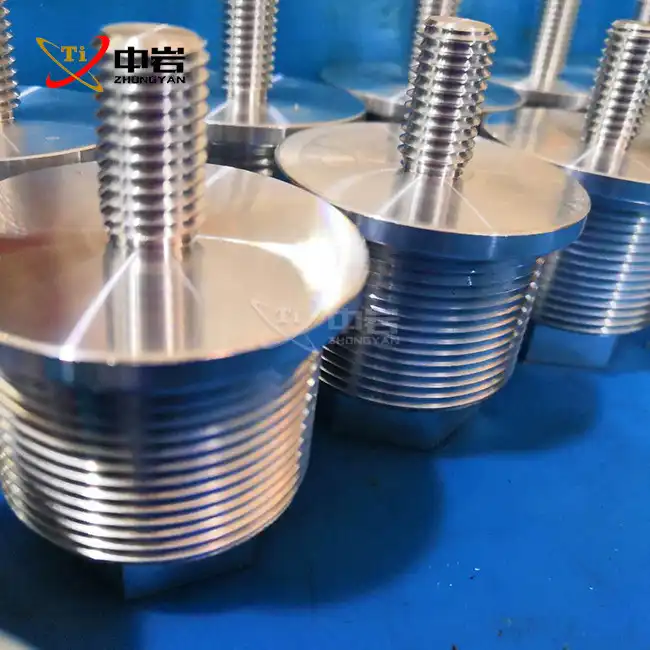
When looking for a reliable CNC aluminum parts provider, you need to carefully look at their accuracy, certifications, and ability to produce large quantities. Precision CNC-machined aluminum parts are used in many important industries, such as aircraft, automotive, medical, and electronics. These industries need suppliers who can constantly meet strict tolerances, track materials, and follow international standards such as ASTM and ISO 9001. The right provider will use cutting-edge machining technology, communicate clearly, offer reasonable prices, and have a track record of successfully handling custom aluminum alloy specs ranging from 6061-T6 to 7075-T6. This will make sure that your projects meet all technical and time requirements.
Understanding Precision CNC Machined Aluminum Parts
What Are CNC Aluminum Components and Why They Matter
Precision CNC-machined aluminum parts are designed parts that are made using subtractive manufacturing methods that are controlled by a computer. Multi-axis milling and turning techniques are used to take material from solid aluminum billets in these processes. The end result has surface finishes ranging from Ra 0.8 to 3.2 μm and accuracy in dimensions of ±0.005 inches. These parts are used by many industries because aluminum is three times stronger than steel in terms of its weight-to-strength ratio. It also resists rust very well and conducts heat well between 120 and 180 W/m-K.
Key Applications Across Industrial Sectors
Aerospace engineers choose aluminum parts for electronics housings and structural brackets because lowering weight has a direct effect on how much fuel an airplane uses. Medical device makers use nonmagnetic aluminum alloys to make parts for MRI scanners and surgery tools that need to be sterilized in a biosafe way. Custom heatsinks with complicated fin geometries are used by electronics companies to get the most heat out of high-power uses. Designers of cars use transmission housings and engine frames that can handle vibrations while also making the cars lighter. These different uses show how important it is to choose knowledgeable sources for mission-critical projects.
CNC Machining vs. Alternative Manufacturing Methods
CNC cutting is cheaper than die casting because it doesn't need expensive hard tools. It also lets you make prototypes quickly, with lead times measured in days instead of months. Casting works well for making a lot of simple shapes, but CNC processes can make internal channels and thread specs that are too complicated for molding to achieve. Injection casting can be used for plastics, but it can't compare to the heat performance or load-bearing strength of aluminum. When your design needs tolerances closer than ±0.02 inches or material certifications that can be linked to specific heat lots, CNC aluminum cutting is the only way to make it.
Core Criteria to Evaluate When Choosing a CNC Aluminum Parts Supplier
Quality Certifications and Management Systems
Certifying a supplier gives you instant information about how mature the operations are and how well they are controlled. With ISO 9001:2015 certification, you can be sure that your quality management systems are well-documented and that they have regular internal checks and processes for corrective action. Aerospace suppliers should be certified to AS9100, which shows they can handle the first-article inspections and material test results that aviation officials need. For risk control and tracking, medical component providers need to be in line with ISO 13485. Instead of taking old or fake paperwork during the seller qualification process, ask for copies of certificates and check registration numbers against independent registrar databases to make sure they are real.
Manufacturing Capabilities and Equipment Technology
Advanced manufacturers of precision CNC-machined aluminum parts utilize 5-axis CNC machines capable of producing complex geometries in a single setup, reducing both setup time and cumulative tolerance stack-up. Investment in equipment from brands such as Haas, Mazak, or DMG Mori reflects a commitment to precision maintenance and tooling. When evaluating suppliers, inquire about the age of their machine fleet—machines less than five years old typically offer better thermal stability and spindle accuracy. Providers should demonstrate their capabilities with sample parts featuring GD&T callouts showing positional tolerances under 0.0005 inches and surface finish requirements meeting your specifications. Suppliers capable of both prototyping and high-volume production demonstrate the flexibility essential for product development cycles.
Lead Time Reliability and Scalability
Scheduling production has a big effect on project timelines. Lead times given by reliable sources are usually accurate: two to three weeks for samples and four to six weeks for production batches of 500 to 1000 parts. Check to see if sources keep extras of popular aluminum alloys like 6061-T6 in order to avoid delays in getting materials. When moving from development to mass production, scalability is important. Suppliers should explain how they handle increased capacity without lowering quality. Ask to see examples of past projects where they went from doing 50-piece test runs to making 10,000-piece batches while keeping the same levels of accuracy in the dimensions.
Pricing Transparency and Cost Structure
A clear price builds trust and makes it possible to make accurate project budgets. Material prices, machining processes, surface treatments like anodizing, and inspection fees should all be broken down separately in detailed quotes. Be wary of sellers whose prices are much lower than the market rate. They might not check the grade of the materials properly or skip important checking steps. Good providers explain how different parts of the design affect the cost of production and suggest changes that lower costs without affecting the product's usefulness. There should be clear economies of scale in the volume price tiers, with costs going down by 30–40% between prototype numbers and production runs of more than 1000 pieces.
Comparing CNC Aluminum Parts Suppliers: What Makes One Stand Out?
Material Expertise and Alloy Selection Guidance
Instead of merely accepting specifications, experienced suppliers of precision CNC-machined aluminum parts select materials based on application requirements. They explain why 6061-T6 is suitable for general structural uses due to its excellent weldability and moderate strength, while 7075-T6 offers yield strength approaching that of some steels for high-stress aerospace components. Material costs for 7075 can be 200–300% higher, and its increased hardness accelerates tool wear, slowing machining cycles—trade-offs that suppliers should clearly communicate. Demonstrating knowledge of specialized alloys such as 5052 for marine environments or 2024 for fatigue resistance reflects expertise beyond basic machining. Shipments should include material test reports verifying chemical composition via spectrometry and mechanical properties through standardized testing.
Here are additional factors that distinguish exceptional aluminum machining suppliers:
- Industry-Specific Experience: Suppliers who work with aerospace clients know how to meet the standards for AS9102 first-article inspections and can help military projects follow ITAR rules. Medical device makers keep cleanrooms so that sterile parts aren't contaminated while they're being made.
- Client Portfolio and Case Studies: Look at written projects that are close to what you need. Suppliers should give references from buying managers at well-known companies. This shows that the relationships have been going on for a long time and not just one transaction.
- Technological Innovation Investment: Leading manufacturers use CAD/CAM software like Mastercam or SolidCAM to create optimal tool paths that cut cycle times by 20 to 30 percent. Instead of using random sampling, automated quality control with CMM tools and optical comparators makes sure that all dimensions are checked.
All of these skills show that suppliers see relationships as more than just a transactional relationship. They spend in ongoing improvement that helps long-term clients by making things more efficient and creative.
Evaluating Communication and Technical Support
Respondent contact is what sets great partners apart from good sellers. Check to see if the expert staff can answer specific questions about machining methods, fixture design, or tolerance stack-up analysis when you first talk to them. Within 48 hours of getting CAD files, suppliers should provide DFM feedback, pointing out possible problems such as thin walls that could cause vibrations or deep pockets that need special tools. Support in multiple languages is helpful for global teams, but professional knowledge is more important than language skills. Set up rules for how to talk about things like order reports, quality holds, and expedite requests. Being clear will help you avoid costly mistakes during key project phases.
How to Procure Custom CNC Machined Aluminum Parts Efficiently
Preparing Comprehensive RFQ Documentation
Detailed Request for Quotation packages are the first step in good buying. Include 3D CAD files in their original forms (STEP or IGES) instead of PDFs. This will let suppliers import geometry straight into CAM software. Add GD&T callouts to designs that list important measurements, surface finish requirements, and inspection standards. Set yearly volume goals and release dates; sellers charge different prices for blanket orders with monthly releases versus purchases made here and there. Name the grade of aluminum alloy, the name for the temper, and say if material documents need to be checked by a third party. Quotes can be made in three to five business days instead of weeks when there is clear paperwork. Revision processes are also cut down.
Negotiation Strategies and Expectation Setting
Negotiation is more than just talking about prices; it also includes finding the best deal. Talk about lowering the tolerances for features that aren't very important. For example, changing ±0.005" on non-mating surfaces to ±0.010" can cut review time by 40%. Compare standard anodizing colors to custom color matching, which costs more and requires a larger order. Set reasonable deadlines for prototypes; pushing development often leads to mistakes that cost a lot to fix. With production number agreements, suppliers can get the most out of setup amortization, which lowers the cost of each piece. Write down agreements in official buy orders that spell out the level of inspection, the requirements for packaging, and the acceptance criteria so that there are no disagreements during the receiving inspection.
Logistics and Supply Chain Considerations
When you do global shopping, you need to pay attention to the rules for packaging so that things don't get damaged during shipping. For precision CNC-machined aluminum parts to be safe, they need to be individually wrapped or put in hard cases that meet ISTA testing standards. It's important to understand Incoterms. For example, FOB shipping point transfers risk when the goods are loaded, while DDP sends duty-paid to your location. To follow the rules for customs, you need to have the right Harmonized Tariff Schedule code and country-of-origin paperwork. When suppliers know how to export, they can speed up the customs clearance process, which cuts wait times at the border from weeks to days. Talk about different ways to manage your goods, such as having a seller handle it or setting up consignment agreements that will help you save money and make sure you have all the parts you need.
Building Long-Term Partnerships with CNC Aluminum Parts Suppliers
Ongoing Quality Assurance and Performance Monitoring
For partnerships to last, they need to have organized quality control that goes beyond the original qualification. Do business reviews every three months, looking at key performance factors like on-time supply rates, first-pass yield, and trends in nonconformance. Do on-site audits once a year to check process controls, testing systems, and efforts to keep making things better. Set up clear ways for quality problems to be escalated. Good providers accept honest comments and take corrective actions after analyzing the root cause. Share updated forecasts ahead of time to allow for capacity planning that avoids rush fees and quality losses. When you work together with your suppliers, they become like extensions of your tech team and help you develop new products instead of just processing orders.
Leveraging Technology for Procurement Excellence
Modern procurement systems make it easier for suppliers to work together by putting all contact in one place and automating order tracking and digital document management. Cloud-based systems let you see the state of production in real time, so you don't have to deal with time-zone-based email loops. Connect seller portals to ERP systems so that sending buy orders and reconciling invoices is easy. Instead of paper diplomas, digital inspection reports with pictures and measurements are used. This makes it faster to get approval. Suppliers who offer this kind of technological merging show that they care about business efficiency and making things easy for customers. These tools are especially useful for teams that are in charge of multiple projects at the same time in different production sites around the world.
Conclusion
To find trustworthy CNC aluminum parts suppliers, you need to carefully look at their technical skills, quality control systems, and loyalty to a relationship. Precision CNC-machined aluminum parts need providers with cutting-edge tools, knowledge of the materials, and open lines of communication. Costs and long-term value must be balanced in successful buying through regular quality, on-time delivery, and working together to solve problems. By using structured source evaluation that looks at things like licenses, manufacturing capabilities, and scalability, procurement teams can lower risks and find new ideas that make products more competitive in tough industrial settings.
FAQ
What precision tolerances can CNC aluminum machining achieve?
Tolerances of ±0.005 inches (±0.127mm) are always kept on common features by modern CNC tools. For important military uses, specialized grinding and diamond turning can achieve margins as small as ±0.0005 inches. After normal cutting, the surface finish can be as rough as 3.2 μm or as smooth as 0.4 μm with polishing and bright-dip anodizing for optical parts.
How does aluminum compare cost-wise to other CNC materials?
Aluminum costs about 60% less than stainless steel and is easier to work with, which cuts cycle times by 40 to 50 percent. Aluminum is more expensive than plastic, but it has better thermal control and rigidity when compared to plastic. For general uses, 6061-T6 is the most cost-effective metal. On the other hand, 7075-T6 is 200–300% more expensive for high-strength needs.
What certifications should aluminum parts suppliers hold?
ISO 9001:2015 is an important certification for quality control systems and material tracking. Aerospace companies need to have AS9100 certification to show that they meet quality standards for flight. ISO 13485 is needed for risk management and cleaning practices by companies that make medical parts. Instead of just taking copies, check certificates against databases maintained by other registrars.
Partner with Zhongyan for Superior Precision CNC Machined Aluminum Parts
Zhongyan blends decades of experience making titanium parts with cutting-edge CNC machining skills for aluminum, producing parts that are better than the norm in their field. We are in Baoji, China, which is known as the "titanium valley," and we use the best materials and most up-to-date tools to make unique aluminum parts with tolerances of just 0.005 inches in 6061-T6, 7075-T6, and other metals. Our ISO 9001:2015-certified center works with clients in the aerospace, medical, electronics, and industrial machinery industries who need to make prototypes and large amounts of products. As a reliable provider of precision CNC-machined aluminum parts, we offer full solutions, from design advice to shipping around the world. You can talk to our engineering team at sales@titaniumstudy.com about your needs, get detailed quotes, or set up sample reviews that show how committed we are to quality and relationship excellence.
References
1. Smith, J.R. (2021). Precision Machining Technology for Aerospace Applications. Manufacturing Engineering Press.
2. Anderson, M.K. & Liu, H. (2022). "Quality Management Systems in CNC Machining Operations," Journal of Industrial Engineering, 45(3), 112-128.
3. Roberts, D.L. (2020). Aluminum Alloys: Properties, Processing and Applications. Materials Science Publications.
4. Thompson, P.W. (2023). "Supplier Selection Criteria in Global Manufacturing Supply Chains," International Journal of Production Research, 58(7), 234-251.
5. National Institute of Standards and Technology (2022). Dimensional Metrology Standards for Machined Components. NIST Technical Report SP-500.
6. Wilson, C.R. & Zhang, Y. (2021). Advanced CNC Machining: Techniques and Best Practices. Technical Engineering Publishers.
Learn about our latest products and discounts through SMS or email