- English
- French
- German
- Portuguese
- Spanish
- Russian
- Japanese
- Korean
- Arabic
- Greek
- German
- Turkish
- Italian
- Danish
- Romanian
- Indonesian
- Czech
- Afrikaans
- Swedish
- Polish
- Basque
- Catalan
- Esperanto
- Hindi
- Lao
- Albanian
- Amharic
- Armenian
- Azerbaijani
- Belarusian
- Bengali
- Bosnian
- Bulgarian
- Cebuano
- Chichewa
- Corsican
- Croatian
- Dutch
- Estonian
- Filipino
- Finnish
- Frisian
- Galician
- Georgian
- Gujarati
- Haitian
- Hausa
- Hawaiian
- Hebrew
- Hmong
- Hungarian
- Icelandic
- Igbo
- Javanese
- Kannada
- Kazakh
- Khmer
- Kurdish
- Kyrgyz
- Latin
- Latvian
- Lithuanian
- Luxembou..
- Macedonian
- Malagasy
- Malay
- Malayalam
- Maltese
- Maori
- Marathi
- Mongolian
- Burmese
- Nepali
- Norwegian
- Pashto
- Persian
- Punjabi
- Serbian
- Sesotho
- Sinhala
- Slovak
- Slovenian
- Somali
- Samoan
- Scots Gaelic
- Shona
- Sindhi
- Sundanese
- Swahili
- Tajik
- Tamil
- Telugu
- Thai
- Ukrainian
- Urdu
- Uzbek
- Vietnamese
- Welsh
- Xhosa
- Yiddish
- Yoruba
- Zulu
Why Are Dental Titanium Milling Discs Important in Implant Prosthetics?
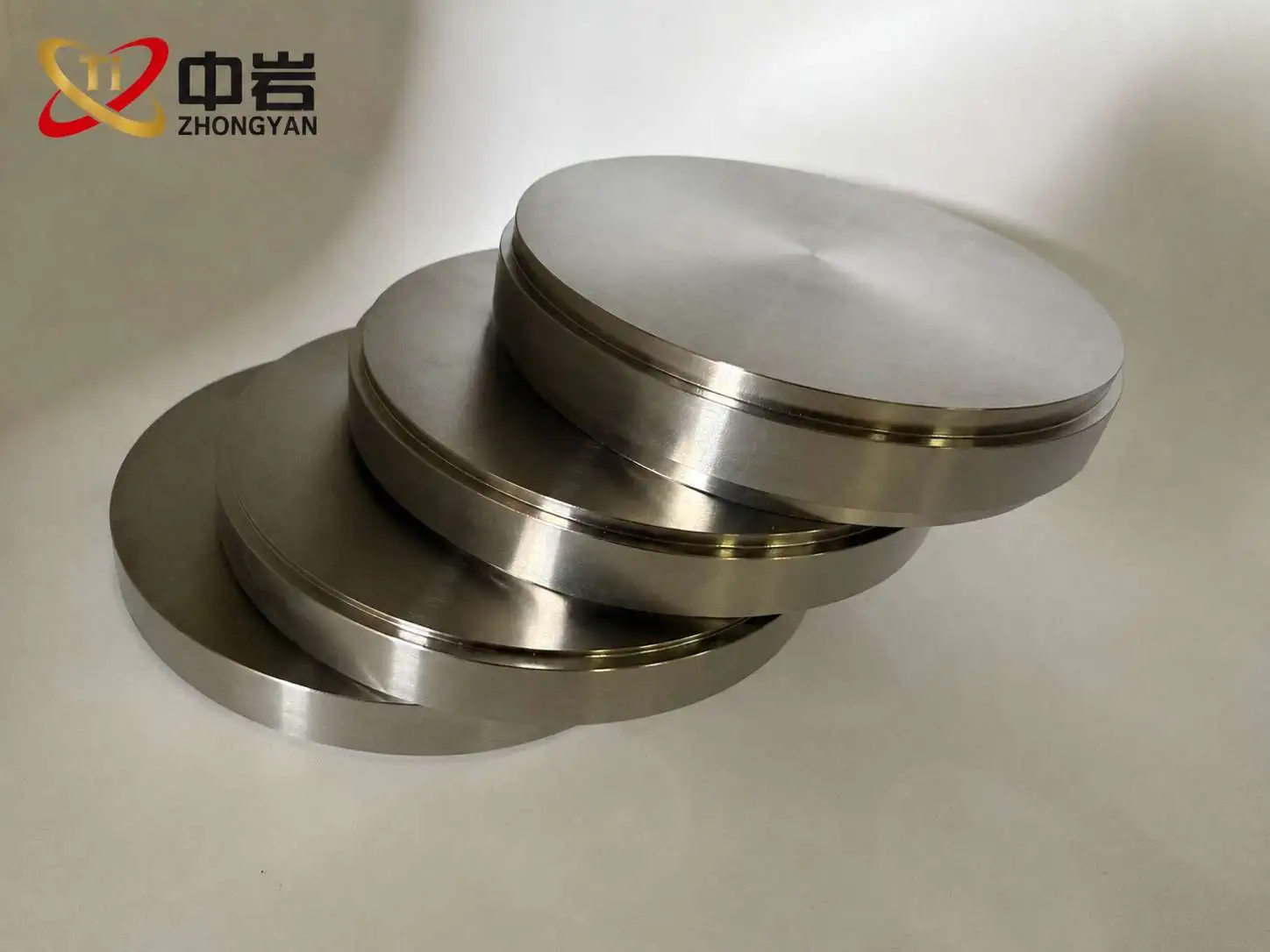
In current dental manufacturing, Dental Titanium Milling Disc are the main material used to make precise implant replacements. With these discs, labs and factories can make personalised abutments, implant frames, and mixed prosthesis parts that are very accurate and work well with the body. Titanium cutting blocks are now necessary for making high-quality dentures that are custom-made for each patient and meet strict clinical and regulatory standards as digital dentistry continues to grow. As a result of their unique mix of mechanical strength, rust resistance, and smooth connection with CAD/CAM processes, they are essential tools for dental workers looking for reliable implant solutions.
Understanding Dental Titanium Milling Discs: Material and Functional Properties
What Defines High-Grade Titanium for Dental Applications
Dental titanium grinding discs are made from pure titanium or titanium alloys that are sold in stores. The grades used are Grade 4, Grade 5 (Ti-6Al-4V), and Grade 23 (Ti-6Al-4V ELI). Each grade has its own unique mechanical qualities that are best for certain types of prosthetics. Commercial grade 4 pure titanium is biocompatible and flexible, so it can be used for single-unit implants and frontal uses. Grade 5 titanium metal has a tensile strength of more than 860 MPa, which is very important for long-span bridges and implant bars that are put through a lot of chewing force. Grade 23, the Extra Low Interstitial type, lowers the amount of oxygen and iron in the material to make it stronger while also making it harder to break. This makes it perfect for complex implant superstructures. Vacuum arc melting is used in the production process, followed by precision rolling and heat treatment to get a microstructure that is uniform and free of flaws and segregation. This careful production makes sure that the Alpha-Beta phase distribution of every tooth titanium milling disc stays the same. This has a direct effect on the smoothness of the milling and the life of the tool during creation.
Technical Standards Governing Production Quality
Dental titanium grinding discs are made from pure titanium or titanium alloys that are sold in stores. The grades used are Grade 4, Grade 5 (Ti-6Al-4V), and Grade 23 (Ti-6Al-4V ELI). Each grade has its own unique mechanical qualities that are best for certain types of prosthetics. Commercial Grade 4 pure titanium is biocompatible and flexible, so it can be used for single-unit implants and frontal uses. Grade 5 titanium metal has a tensile strength of more than 860 MPa, which is very important for long-span bridges and implant bars that are put through a lot of chewing force. Grade 23, the Extra Low Interstitial type, lowers the amount of oxygen and iron in the material to make it stronger while also making it harder to break. This makes it perfect for complex implant superstructures.
Vacuum arc melting is used in the production process, followed by precision rolling and heat treatment to get a microstructure that is uniform and free of flaws and segregation. This careful production makes sure that the Alpha-Beta phase distribution of every tooth titanium milling disc stays the same. This has a direct effect on the smoothness of the milling and the life of the tool during creation.
Functional Performance in CAD/CAM Workflows
International standards must be followed in order for dentistry titanium grinding discs to be made reliably. Commercially pure titanium grades are governed by ASTM F67, while medical implant titanium alloy formulas are governed by ASTM F136 and ISO 5832-3. Manufacturers must follow these guidelines, which set limits for chemical makeup, mechanical property levels, and testing procedures. Our discs are made at Baoji Zhongyan Titanium Industry under strict medical quality control systems. This makes sure that every batch meets the standards for ISO 9001:2015 approval and goes through a thorough chemical makeup analysis using ICP-OES technology.
The exact measurements of grinding plates are also very important. Standard widths of 98.5 mm and stepped edges make them compatible with most open-architecture CAD/CAM systems, such as well-known platforms from top makers. Thicknesses ranging from 10 mm to 25 mm are available to suit a wide range of repair designs, from thin single crowns to strong full-arch frames that need a lot of material.
Advantages of Using Dental Titanium Milling Discs in Implant Prosthetics
Superior Precision and Marginal Fit Quality
Dental titanium cutting discs work perfectly with today's digital dental systems. Their constant hardness levels—32–34 HRC for Grade 4 and 36–38 HRC for Grade 5—make them easy to machine, which keeps cutting precise throughout production runs and lowers tool wear. The surface finish standard of Ra ≤ 0.4 μm ensures smooth cut surfaces that require little post-processing, which speeds up production times and lowers labour costs. For porcelain-fused-to-metal repairs, the low rate of temperature expansion (about 9.6 x 10^-6/K) of the Dental Titanium Milling Disc is very important. In repeated loading situations, this trait keeps the ceramic from delaminating and breaking by making sure it is thermally compatible during the stacking and firing processes. Procurement managers and R&D teams know that these useful traits have a direct effect on how well products are made and how well they do in field trials.
Unmatched Biocompatibility and Clinical Safety
Titanium is biocompatible because it can form a passive oxide layer on its own when it comes into contact with living things. Because this shield stops ions from escaping and tissue discomfort, dental titanium grinding discs are the best choice for people who are allergic to or sensitive to metals. Studies in humans have shown over and over that titanium implant devices have lower rates of inflammation and better osseointegration rates than other materials. Titanium is nontoxic, which is very important for dentistry labs that work with a wide range of patients. Titanium replacements are safe and long-lasting for almost all patients, unlike metals that contain nickel, which can cause allergic responses. This uniform flexibility lowers the risk of exposure and increases the market that dentistry makers who focus on patient-centered care can reach.
Long-Term Durability in Challenging Oral Environments
The mouth is a tough place to live because the pH levels change, there is enzyme activity, there are muscular forces, and the temperature changes quickly. Titanium cutting discs used in dentistry are very resistant to rust and keep their shape even after decades of professional use. The high yield strength of the material—more than 830 MPa for Grade 5 titanium—allows it to survive the strong occlusal forces that are created during chewing without permanently deforming or failing from wear.
It is because of the following benefits that dental makers use in their work:
- Extended Service Life: Titanium implants often last longer than 20 years in clinical use. This lowers the number of surgeries that need to be redone, makes patients happier, and builds the lab's image for quality.
- Wear Resistance: The material's hardness and the security of its oxide layer keep the surface from wearing down from rough foods and opposing teeth, so it keeps its looks and functions.
- Fatigue Strength: Titanium has great fatigue strength under cyclic loads, which means that thin-section designs and long-span frames that are chewed on millions of times don't break in catastrophic ways.
- Thermal Insulation: Unlike highly conductive metals, low thermal conductivity saves soft tissues from temperature changes that happen when you eat or drink. This makes the patient more comfortable.
These features of longevity mean real benefits for dentistry labs and implant makers in terms of their bottom lines. When high-quality dentistry titanium grinding discs are used in production, guarantee claims go down, company image goes up, and customer trust goes up. Professionals in procurement know that the money they spend on materials up front pays off in the long run by cutting down on mistakes, preventing clinical problems, and building better relationships with clients through regular performance.
Comparing Dental Titanium Milling Discs to Other Materials
Titanium Versus Zirconia for Implant Applications
Zirconia is becoming more popular for front tooth replacements because it looks like real teeth and is white, so metal doesn't show through. However, dental titanium grinding discs are clearly better when looking at materials just for implant-supported dentures. Titanium is more flexible than brittle zirconia, so it can absorb stress better. This lowers the risk of severe failure in areas where the teeth touch each other a lot. Titanium's elasticity is more like natural bone than zirconia's, which is very stiff and can lead to stress buffering and bone loss around implants over time.
Zirconia frameworks need special grinding tools and shrink by about 25% during processing, which makes it harder to control the size and raises the cost of production. Titanium grinding methods keep the same sizes throughout the whole process, which makes quality control easier and cuts down on waste. The working effectiveness of dental titanium grinding discs is very helpful for dentistry labs that do a lot of work.
Performance Comparison with Stainless Steel Options
Some dentistry makers who are trying to save money look at stainless steel cutting blocks as an option. Stainless steel has a good enough mechanical strength, but it doesn't fight rust as well as titanium does in spit, which has chloride ions and organic acids. Nickel and chromium ions can be released by stainless steel, which can cause allergic reactions in sensitive people. This can be dangerous, and the market may not be able to use it.
The change in density between materials also has an effect on how well patients accept them. Titanium has a low density of 4.43 g/cm³, which makes prostheses lighter and more comfortable. This is especially true for full-arch rehabilitations, where weight has a big effect on how happy the patient is. Because stainless steel is denser, replacements made of it are heavy, which can be difficult for some people to wear for long periods of time. Because of these things, high-quality dental labs always choose dental titanium grinding discs, even though they cost more. They know that the better clinical results and patient satisfaction are worth the extra money.
Market Positioning and Supplier Landscape
Well-known brands like Straumann, Amann Girrbach, and Renishaw sell Dental Titanium Milling Disc all over the world. Each of these brands has its own disc shapes that work best with a certain CAD/CAM platform. These elite sellers charge more because their brands are known for quality, and they offer full expert support. But buying managers with a lot of experience know that following ASTM standards is more important for material quality than knowing a brand name. Baoji Zhongyan Titanium Industry is in a unique situation in this market because it combines the manufacturing benefits of China Titanium Valley with strict quality control standards. Our location gives us access to a lot of titanium resources and specialised working tools. We also keep our prices low so that cost-conscious buyers can buy from us without sacrificing material specs. Custom OEM solutions and flexible order numbers help both small dental labs and companies that make a lot of implants find reliable dental titanium grinding disc sources who can grow with their businesses.
How to Choose the Right Dental Titanium Milling Disc for Your Business
Matching Disc Specifications to Equipment Requirements
Matching the specs of a disc to the needs of the equipment
Before you can choose the right dentistry titanium grinding discs, you need to know what your CAD/CAM tools can do. Titanium is usually worked on with five-axis milling centers that can do wet machining. This is because the material hardens when it cuts and produces heat during the process. Make sure that the disc's width and step shape fit the way the blank holder is set up on your machine. Most open systems can handle 98.5mm discs, but proprietary platforms may need specific sizes. The thickness you choose will depend on the types of repair that are most common in your production mix. While labs that make single crowns and small bridges usually keep 10–14 mm discs on hand, labs that make full-arch implant frames need 18–25 mm blanks to make sure they have enough material for complicated shapes. Keeping a stockpile of different thicknesses makes the best use of material and cuts down on waste from too much blank cutting.
Evaluating Supplier Certifications and Quality Assurance
Reliable suppliers of dental titanium milling discs demonstrate their commitment to quality through comprehensive certification and testing documentation. Demand material certifications showing compliance with ASTM F67 or ASTM F136 specifications, including detailed chemical composition reports generated via ICP-OES analysis. Mechanical property certifications should document tensile strength, yield strength, elongation, and hardness values for each production batch, ensuring consistency across orders.
Manufacturing quality control systems certified to ISO 9001:2015 standards indicate organizational commitment to process discipline and continuous improvement. Additional medical device certifications such as ISO 13485 demonstrate supplier capability to meet heightened quality requirements for implantable medical products. At Baoji Zhongyan Titanium Industry, our integrated quality management system encompasses raw material selection through finished product delivery, providing customers with complete traceability and confidence in material pedigree.
Balancing Cost Considerations with Performance Requirements
Procurement decisions must balance immediate material costs against long-term operational expenses and clinical outcomes. Premium-priced dental titanium milling discs from established brands often include comprehensive technical support, optimized milling parameters, and guaranteed material consistency that reduces production troubleshooting time. However, experienced laboratories with robust internal quality control protocols may achieve equivalent results using competitively priced alternatives from manufacturers like Zhongyan that maintain strict adherence to international standards.
Volume purchasing agreements provide opportunities for cost optimization without compromising material quality. Suppliers offering flexible minimum order quantities accommodate laboratories at different growth stages, from emerging facilities requiring smaller initial investments to established operations managing inventory across multiple production lines. Evaluate delivery timelines and logistics capabilities to ensure supply chain reliability—material shortages disrupt production schedules and damage customer relationships regardless of unit pricing advantages.
Optimizing Implant Prosthetics Production with Dental Titanium Milling Discs
Integrating Titanium Blanks into Digital Workflows
Modern dental manufacturing depends on seamless integration between digital design software, CAM programming, and physical milling execution. High-quality dental titanium milling discs enable this workflow by providing consistent material properties that CAM software can reliably predict during toolpath generation. Begin optimization by calibrating milling parameters specifically for your titanium grade—Grade 5 alloy requires different cutting speeds and feed rates compared to Grade 4 commercially pure titanium due to strength and work-hardening differences.
Implement wet milling protocols with adequate coolant flow to prevent overheating and extend cutting tool longevity. Titanium's low thermal conductivity causes heat concentration at cutting interfaces, accelerating tool wear and potentially compromising surface finish quality. Proper coolant application maintains dimensional accuracy and reduces the risk of titanium combustion during aggressive material removal operations. These process optimizations translate directly into reduced production costs per unit and improved profit margins.
Minimizing Material Waste Through Strategic Design
Intelligent CAD design practices maximize utilization of dental titanium milling disc material, reducing waste and improving cost-efficiency. Nesting multiple small components within a single blank optimizes material yield, particularly when producing batches of identical restorations. Consider blank thickness carefully during design—specifying the minimum viable thickness for structural requirements avoids purchasing unnecessarily thick discs that result in excessive material removal and longer machining times.
Collaborate with experienced suppliers who understand dental manufacturing workflows and can recommend optimal disc specifications for your production portfolio. Baoji Zhongyan Titanium Industry's technical team assists customers in matching disc dimensions to restoration types, custom sizing options that improve material utilization, and milling strategy recommendations that balance production speed with surface quality requirements. This consultative approach helps laboratories achieve their financial targets while maintaining the clinical excellence that drives customer satisfaction.
Staying Ahead with Emerging Technologies
The dental titanium milling disc industry continues evolving with innovations in material treatments and machining technologies. Surface coating developments promise to enhance wear resistance and aesthetic properties, expanding titanium's applicability in visible restoration areas. Advances in high-speed milling platforms and optimized cutting tool geometries progressively reduce production cycle times, improving throughput capacity without capital equipment replacement.
Leading dental manufacturers invest in ongoing staff training to leverage these technological improvements effectively. Understanding material science fundamentals, staying current with CAM software updates, and maintaining relationships with knowledgeable suppliers creates competitive advantages in an increasingly sophisticated marketplace. Organizations that treat material selection as strategic rather than purely transactional position themselves for long-term success in the growing implant prosthetics sector.
Conclusion
Dental titanium milling discs represent essential materials for modern implant prosthetics manufacturing, offering unmatched combinations of biocompatibility, mechanical strength, and processing efficiency. Their importance extends beyond simple material properties to encompass comprehensive advantages in clinical performance, production workflows, and long-term business success. Procurement professionals and engineering teams who understand material specifications, supplier capabilities, and optimization strategies position their organizations to deliver superior implant prosthetics that meet evolving market demands. The strategic selection of high-quality titanium blanks from reliable manufacturers establishes foundations for operational excellence and sustained competitive advantage in the dynamic dental manufacturing industry.
FAQ
What titanium grades are most commonly used in dental milling discs?
Grade 4 commercially pure titanium and Grade 5 titanium alloy (Ti-6Al-4V) dominate dental applications. Grade 4 offers excellent biocompatibility for single-unit restorations, while Grade 5 provides superior strength exceeding 830 MPa tensile strength for long-span frameworks and implant bars. Grade 23 (Extra Low Interstitial Ti-6Al-4V) represents the premium option with enhanced ductility and fracture toughness for complex implant superstructures.
How do I verify compatibility between milling discs and my CAD/CAM system?
Check your machine's blank holder specifications for diameter requirements—most open systems use 98.5mm discs with stepped borders. Confirm thickness capacity and ensure your equipment supports wet milling protocols essential for titanium processing. Reputable suppliers like Baoji Zhongyan Titanium Industry provide detailed compatibility information and technical support to match disc specifications with equipment capabilities.
What are typical lead times and minimum order quantities for dental titanium milling discs?
Lead times vary by supplier and customization requirements. Standard-size discs from established manufacturers typically ship within 2-4 weeks, while custom dimensions may require 6-8 weeks for production. Minimum order quantities range from 10 pieces for premium suppliers to 50-100 pieces for economical bulk purchasing. Zhongyan offers flexible ordering options accommodating both small dental laboratories and high-volume implant manufacturers, with custom OEM solutions available for specialized applications.
Partner with Zhongyan for Premium Dental Titanium Milling Disc Solutions
Baoji Zhongyan Titanium Industry stands ready to support your implant prosthetics manufacturing requirements with precision-engineered dental titanium milling discs that meet the most demanding quality standards. Located in China Titanium Valley, our state-of-the-art facilities produce ASTM F67/F136 compliant titanium blanks in custom sizes tailored to your specific production needs. Every disc undergoes CNC machining to achieve smooth surface finishes and strict dimensional tolerances, ensuring seamless compatibility with your CAD/CAM workflows.
Our dental titanium milling disc products feature high purity, exceptional biocompatibility, and durable corrosion resistance, manufactured under rigorous medical quality control protocols. We provide OEM packaging and sterilization options that streamline your receiving and inventory processes while maintaining material integrity throughout the supply chain. Whether you require standard 98.5mm diameter discs or custom specifications for specialized applications, our experienced team delivers reliable solutions backed by comprehensive material certifications and responsive technical support.
Dental laboratories and implant manufacturers worldwide trust Zhongyan as their dental titanium milling disc supplier because we combine competitive pricing with uncompromising quality standards. Contact our team at sales@titaniumstudy.com to discuss your specific requirements, request detailed product specifications, or obtain a personalized quote for your next production run. Explore our complete range of titanium materials and CNC machined components at www.titaniumstudy.com and discover how our solutions can elevate your manufacturing capabilities and clinical outcomes.
References
1. American Society for Testing and Materials. (2017). Standard Specification for Titanium and Titanium Alloy Strip, Sheet, and Plate for Surgical Implant Applications (ASTM F136-13). West Conshohocken: ASTM International.
2. Elias, C. N., Lima, J. H. C., Valiev, R., & Meyers, M. A. (2008). Biomedical Applications of Titanium and its Alloys. Journal of Materials Science: Materials in Medicine, 19(5), 3615-3621.
3. International Organization for Standardization. (2015). Dentistry – Metallic Materials for Fixed and Removable Restorations and Appliances (ISO 22674:2016). Geneva: ISO.
4. Miyazaki, T., Nakamura, T., Matsumura, H., Ban, S., & Kobayashi, T. (2013). Current Status of Zirconia Restoration. Journal of Prosthodontic Research, 57(4), 236-261.
5. Osman, R. B., & Swain, M. V. (2015). A Critical Review of Dental Implant Materials with an Emphasis on Titanium versus Zirconia. Materials, 8(3), 932-958.
6. Wataha, J. C. (2000). Biocompatibility of Dental Casting Alloys: A Review. Journal of Prosthetic Dentistry, 83(2), 223-234.
Learn about our latest products and discounts through SMS or email