- English
- French
- German
- Portuguese
- Spanish
- Russian
- Japanese
- Korean
- Arabic
- Greek
- German
- Turkish
- Italian
- Danish
- Romanian
- Indonesian
- Czech
- Afrikaans
- Swedish
- Polish
- Basque
- Catalan
- Esperanto
- Hindi
- Lao
- Albanian
- Amharic
- Armenian
- Azerbaijani
- Belarusian
- Bengali
- Bosnian
- Bulgarian
- Cebuano
- Chichewa
- Corsican
- Croatian
- Dutch
- Estonian
- Filipino
- Finnish
- Frisian
- Galician
- Georgian
- Gujarati
- Haitian
- Hausa
- Hawaiian
- Hebrew
- Hmong
- Hungarian
- Icelandic
- Igbo
- Javanese
- Kannada
- Kazakh
- Khmer
- Kurdish
- Kyrgyz
- Latin
- Latvian
- Lithuanian
- Luxembou..
- Macedonian
- Malagasy
- Malay
- Malayalam
- Maltese
- Maori
- Marathi
- Mongolian
- Burmese
- Nepali
- Norwegian
- Pashto
- Persian
- Punjabi
- Serbian
- Sesotho
- Sinhala
- Slovak
- Slovenian
- Somali
- Samoan
- Scots Gaelic
- Shona
- Sindhi
- Sundanese
- Swahili
- Tajik
- Tamil
- Telugu
- Thai
- Ukrainian
- Urdu
- Uzbek
- Vietnamese
- Welsh
- Xhosa
- Yiddish
- Yoruba
- Zulu
How Easy Is It to Install Titanium Tube-to-Tube Connectors in Pipelines?
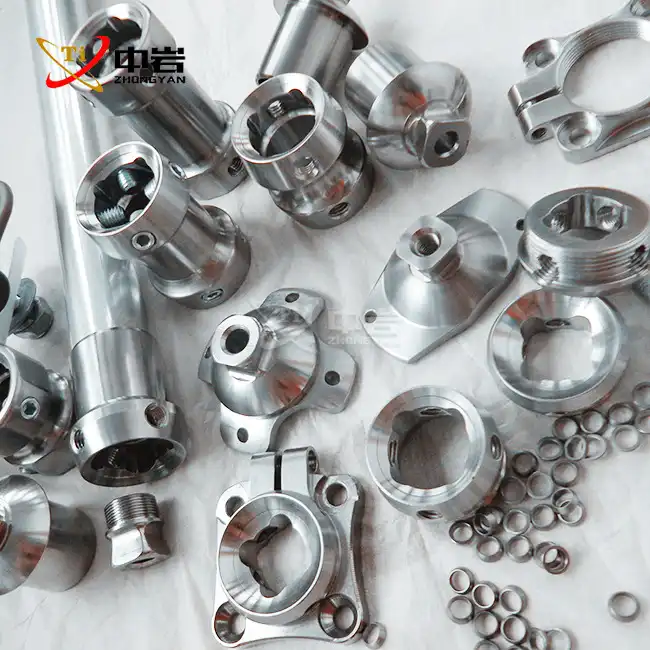
It's surprisingly easy to install a Titanium Tube-to-Tube Connector in industrial plumbing systems, especially when compared to parts made of stainless steel. Titanium metals are easy to handle because they are light, and fine CNC cutting ensures that the tolerances are tight, which makes assembly quick and safe. Titanium fittings are a good choice for many businesses because most trained repair workers can do normal installs without special tools. The steps in the process are proper surface preparation, alignment, torque application, and checking. These steps protect the long-term health of the joint and keep important operations running as smoothly as possible.
Understanding Titanium Tube-to-Tube Connectors
Titanium tube-to-tube connections are important parts that connect titanium tubes in complex pipeline networks. They make it possible to safely move fluids or gases in industries like aerospace, chemical processing, medical device manufacturing, and naval engineering. Depending on the needs of the system and the conditions of use, these connections work with precision-engineered threads, compression seals, or soldered joints.
Design Fundamentals and Material Choices
The connections made by Baoji Zhongyan Titanium Industry Co., Ltd. are made from high-quality titanium alloys, mostly Grade 2 and Grade 5 (Ti6Al4V). The dual-phase alpha-beta microstructure of Grade 5 metal is stable because it has 6% aluminium and 4% vanadium in it. This mix has a maximum tensile strength of 895 MPa and a yield strength of 828 MPa, which are both much higher than commonly pure grades. The material stays structurally sound at temperatures from -320°F to 1000°F (-196°C to 538°C), which makes it useful for settings that are both cold and hot.
Titanium connectors don't need chromium to be passivated as stainless steel connectors do. Titanium makes a stable oxide layer on its own, and if it gets scratched, it grows back right away. This passive film doesn't get damaged by chlorides, wet chlorine, or acidic media, which are things that would normally cause rival materials to split or crack. Even though aluminium connections are light, they are not as strong as titanium ones, and they rust quickly in saltwater or chemical streams. Titanium is the better choice for harsh industrial settings.
Critical Specifications and Industry Standards
All of the titanium tube joints we make are made in strict accordance with ISO 9001:2015 quality management standards and ASTM B381 (forged fittings) and ASTM B861 (seamless pipe). There are two types of threads: NPT and BSP. For special OEM projects, custom threading is also possible. Pressure values go up to 10,000 PSI, but this depends on the size of the connection and the grade of titanium used. Electropolishing can make the surface 32 Ra or better. These specs make sure that the new system works with the old one and give procurement managers a way to prove their work in case of a legal check.
Following the AMS 4911 guidelines makes sure that all production batches have the same material qualities and microstructure. This standardisation makes it easier for engineers to build systems with known safety margins and lifetime costs because installation force requirements and joint performance are less likely to vary.
Benefits of Titanium in Pipeline Applications
There are more benefits to titanium connections than just not rusting. Titanium is about 45% lighter than steel versions, with a density of 4.43 g/cm³. This means that support frames don't have to carry as much weight and fitting is easier when titanium is used. This trait is very useful in remote platforms and fuel systems for aeroplanes, where every kilogram affects how well they work.
Titanium Tube-to-Tube Connector's low thermal expansion rate keeps stress levels low at joints when temperatures change, which keeps the seal intact and stops leaks. Its high wear resistance means that it can withstand millions of cycles of pressure and shaking without cracking. This is an important property for hydraulic lines and semiconductor ultra-pure fluid delivery systems. Together, these qualities of the material shorten the time between repair visits, lower the total cost of ownership, and make pipelines more reliable in mission-critical situations.
The Installation Process Explained: How Easy Is It?
The installation of titanium tube connectors follows a systematic approach that balances simplicity with precision, ensuring durable connections that withstand operational stresses over decades.
Step-by-Step Installation Guide
Step 1: Get ready by checking the ends of the tubes for burrs, scratches, or contamination. To get rid of oils or dust, use clean, lint-free cloths and rubbing alcohol. Check that the tube's dimensions match the connector's. Our unique sizes range from 1/4" to 2" in diameter, and for special projects, we can make the specs even tighter. To make sure that NPT or BSP designs meet ASME standards, use accurate tools to check the thread strength.
Alignment and Fitting: Slide the connection onto the ready end of the tube, making sure the threads contact smoothly without crossing. When things are lined up correctly, loads are spread out evenly, which keeps the seal from failing. For large-diameter links in aircraft or industrial machinery systems, where rotational error greater than 0.5 degrees can cause joints to fail early, use alignment supports or laser guides.
Tightening Instructions: Use a thread lubricant that works with titanium metals, like PTFE tape or anaerobic substances that can handle high pressure. Tighten connections with measured torque tools to the values given by the maker, which are usually between 15 and 60 ft-lbs for each size and pressure grade. If you over-torque, you could cause galling, which happens when titanium's low thermal conductivity compresses frictional heat, joining threads that are supposed to be separate. When you don't torque something enough, it can leak or separate when the joint is vibrated.
Common Installation Challenges and Solutions
High humidity or salt spray from the air can speed up rust on wires that are not kept properly. Keep titanium parts in places with controlled temperatures and check the surface for rust before using them. Some mistakes that can happen during installation are using tools that aren't suitable, which can scratch the protected oxide layers, or applying too much power, which can bend precision-machined threads.
Troubleshooting tips include spotting the first signs of a bad operation. If resistance quickly rises while tightening, stop right away and look for trash or cross-threading. In chemical processing plants that work with acidic media, check the seal surfaces every three months for crack rust. However, titanium's durability usually takes care of this issue compared to stainless steel options.
Real-World Case Studies Across Industries
Our Grade 5 titanium tube connectors were used to replace damaged stainless steel parts in the seawater intake systems of a desalination plant for a marine engineering client. Installation teams said that the lighter weight and easier handling made the building process 40% faster. After two years of constant use in high-salinity conditions, there were no leaks or signs of wear and tear. This proved that the materials used and the fitting procedures were correct.
Custom-threaded titanium fittings were used by an aerospace OEM maker for hydraulic line systems in business aeroplanes. The lightweight design helped meet total fuel economy goals, and the easier fitting steps cut 25% of the cost of labour on the assembly line. Thorough vibration testing proved the joint's stability under realistic flight loads. This showed titanium's ability to fight wear and be reliable in safety-critical situations.
Titanium vs. Stainless Steel and Other Tube Connectors: Installation and Performance Comparison
Selecting the optimal connector material requires evaluating installation complexity, operational performance, and lifecycle economics across diverse industrial environments.
Corrosion Resistance Under Varying Conditions
Titanium tube connections work better than stainless steel in places with a lot of salt, acidic media, and oxidising atmospheres. Some types of stainless steel, like 316L, are resistant to rust because they contain 16–18% chromium and 10–14% nickel. However, they can still get pits in saltwater that doesn't move or sulphuric acid amounts above 10%. Titanium's spontaneous oxide layer protects it from these conditions and keeps the joint strong without cathodic protection or inhibitor injection.
When mixed with molybdenum and nickel, Grade 12 titanium works great in situations where the temperature goes over 150°C (300°F). This metal is resistant to microbiologically influenced corrosion (MIC), a type of corrosion that happens a lot in systems with biofilm. This makes it useful for chemical processing plants that work with hot brine or chlorate solutions. The installation benefit is that defensive coats or frequent repair processes that get in the way of production plans are not needed.
Weight Impact on Handling and Installation Labour
A titanium connection with a width of 2 inches weighs about 0.5 kg, while the same-sized stainless steel gear weighs 0.9 kg. This 44% weight loss means that installation workers won't have to work as hard, parts will be easier to place during assembly, and big orders will cost less to ship. Offshore platform projects value this feature a lot, since helicopter loading limits make it hard to send large amounts of materials.
Lighter connections also make it easier to add on to existing piping systems in tight areas or in high places. Titanium fittings can be handled by maintenance staff by themselves, while stainless steel fittings usually need team lifts or motorised hoists. This increase in efficiency cuts the time needed for installation by 15–30%, which directly lowers project costs and speeds up the time it takes to start using new equipment for industries that need to grow quickly.
Long-Term Durability and Maintenance Requirements
Total cost of ownership (TCO) is based on how long a cable lasts after installation (20 to 30 years). Titanium tube-to-tube connections don't corrode very much in service, so they don't need to be replaced as often as stainless steel connectors do in harsh media. A pharmaceutical company said that over 15 years, no titanium connectors had failed in ultrapure water systems. In contrast, stainless steel fittings had to be replaced every two years because they formed rust and shed particles.
Downtimes for maintenance with Titanium Tube-to-Tube Connectors are another thing that sets material decisions apart. In chemical handling, stainless steel links often need to be checked once a year for stress corrosion cracks or pits. This means that the system has to be depressurised and taken apart. Titanium is resistant to these types of failure, which means that inspections can be done more often, keeping production running continuously. When procurement managers figure out TCO, they find that titanium's higher initial cost is more than offset by its lower production losses and higher upkeep costs over its useful life.
Cost-Benefit Analysis for Procurement Professionals
Titanium connections cost two to three times as much at first as stainless steel ones, but they are more cost-effective over their entire life in high-performance or acidic environments. Take a look at the ultrapure chemical distribution system in a semiconductor factory. The stainless steel parts need to be replaced every three to five years because they could get contaminated, which costs $50,000 per event for labour and lost production time. Titanium links that cost $120,000 to install last for 20 years or more without breaking down, saving $180,000 in costs and preventing contamination that can't be measured.
Energy projects in geothermal or nuclear power plants also gain. Titanium's resistance to radiation and temperature stability mean that you don't have to worry about it becoming weak or losing its properties in high-flux settings. Because of these benefits, engineering teams that put safety, efficiency, and following the rules ahead of minimising short-term capital expenditures can afford to pay more.
Procurement Insights: How to Choose and Source Titanium Tube-to-Tube Connectors
Selecting a reliable titanium tube connector supplier involves evaluating manufacturer capabilities, quality systems, and supply chain responsiveness to ensure project success.
Manufacturer Certifications and Quality Assurance
Reputable suppliers maintain ISO 9001:2015 certification, demonstrating documented quality management processes from raw material receipt through final inspection. At Zhongyan, our production facilities in Baoji—China's Titanium Valley—leverage regional titanium smelting expertise and integrated supply chains to deliver consistent material chemistry and mechanical properties. We conduct spectroscopic analysis on each titanium ingot batch, verifying Grade 2 and Grade 5 alloy compositions match ASTM B381 requirements before CNC machining begins.
Comprehensive warranty coverage signals supplier confidence in product durability. Inquire about warranty terms extending 2-5 years against manufacturing defects, including thread tolerance deviations or surface finish non-conformities. Manufacturers offering extended warranties typically invest in advanced metrology equipment and rigorous process controls, reducing defect rates and ensuring dimensional accuracy critical for leak-free installations.
Custom Engineering Versus Stock Connectors
Off-the-shelf titanium connectors suit standard pipe sizes and common thread configurations, offering shorter lead times of 2-4 weeks and lower tooling costs. Stock connectors prove ideal for maintenance inventory replenishment or small-scale projects with defined specifications. However, custom-engineered solutions deliver optimised performance for specialised applications requiring unique geometries, exotic alloy blends, or integrated features like flow sensors or pressure taps.
Custom connector development at Zhongyan involves collaborative design review with client engineering teams. We provide 3D CAD models and finite element analysis simulations predicting stress distributions under operating pressures and temperatures. This iterative process refines connector geometry, balancing material efficiency with structural margins. Lead times extend to 8-12 weeks for prototypes, with production volumes scaling efficiently once designs are validated through installation testing.
Verifying Supplier Reliability and Logistics Management
Client testimonials and case studies provide insight into supplier performance consistency. Research online reviews highlighting delivery punctuality, technical support responsiveness, and post-sale service quality. Engage potential suppliers in discussions about their production capacity—a manufacturer producing 10,000+ connectors monthly demonstrates scalability to support expanding operations or emergency replacement demands.
Logistics management capabilities impact project timelines significantly. Inquire about international shipping partnerships, customs documentation expertise, and expedited delivery options. Zhongyan maintains relationships with freight forwarders specialising in aerospace and medical device logistics, ensuring temperature-controlled transport and shock-resistant packaging that preserves connector integrity during transcontinental shipments. Delivery speed commitments, such as 5-day express service for stock items, minimise inventory holding costs and support just-in-time manufacturing philosophies.
Installation Best Practices and Aftercare for Long-Term Performance
Maximising the operational lifespan of titanium tube connectors requires disciplined installation techniques and proactive maintenance strategies that preserve joint integrity across decades.
Essential Installation Tools and Techniques
Proper tooling for Titanium Tube-to-Tube Connector simplifies assembly while protecting precision-machined surfaces. Use torque wrenches with digital readouts calibrated annually to ±2% accuracy, ensuring repeatable tightening forces that prevent under-torquing or galling. Adjustable wrenches with smooth jaw surfaces avoid scratching titanium's protective oxide layer, which could initiate localised corrosion in extreme chemical environments.
Thread preparation involves applying PTFE tape in a clockwise direction, wrapping 2-3 layers without overlapping onto tube ends. Anaerobic sealants rated for titanium compatibility cure in oxygen-free environments within threads, forming resilient seals resistant to thermal cycling and vibration. Avoid petroleum-based lubricants that degrade elastomeric seals or contaminate process fluids in pharmaceutical or semiconductor applications.
Inspection and Quality Control Checkpoints
Post-installation inspections verify joint integrity before system pressurisation. Visual checks confirm uniform sealant application, full thread engagement, and absence of surface defects like scratches or dents. Dimensional verification using callipers ensures proper assembly torque achieved specified compression without deforming tube ends—critical for maintaining flow path geometry in precision fluid delivery systems.
Non-destructive testing methods provide deeper assurance. Ultrasonic inspection detects internal voids or incomplete thread contact that visual examination misses. Radiographic testing, though expensive, validates weld penetration in fusion-welded titanium connections used in nuclear or aerospace applications where failure consequences are catastrophic. Leak testing under 1.5x operating pressure for 30 minutes confirms seal effectiveness before introducing hazardous or valuable process media.
Preventative Maintenance Strategies
Routine inspection schedules extend connector service life by identifying early degradation signs before catastrophic failures occur. Quarterly visual inspections in corrosive environments monitor for unusual discolouration, crevice buildup, or fastener loosening from vibration. Annual pressure tests during scheduled maintenance windows verify seal integrity without unplanned production interruptions.
Preventative maintenance includes periodic re-torquing of threaded connections after initial thermal cycling settles joints. Temperature fluctuations cause microscopic material movement that can relax torque values by 10-15% during the initial operating months. Re-tightening to specification after 3-6 months compensates for this relaxation, ensuring long-term seal reliability without requiring complete disassembly.
Conclusion
The straightforward installation of titanium tube-to-tube connectors, combined with their exceptional corrosion resistance, lightweight construction, and long-term durability, positions them as optimal solutions for demanding pipeline applications across aerospace, chemical processing, medical devices, and industrial machinery sectors. Proper material selection, adherence to installation best practices, and proactive maintenance strategies maximize connector performance while minimising total cost of ownership. Procurement professionals benefit from partnering with certified manufacturers who deliver precision CNC-machined components meeting ASTM and ISO standards, ensuring project success through reliable supply chains and comprehensive technical support.
FAQ
Does titanium connector installation require specialist training?
Standard titanium tube connector installation can be performed by experienced maintenance personnel familiar with torque wrench operation and thread sealing techniques. The process resembles stainless steel fitting assembly but requires awareness of titanium-specific considerations like galling prevention through proper lubrication and torque control. Most teams adapt quickly after initial training sessions covering material properties and assembly protocols. Complex applications involving exotic alloys or high-pressure systems may warrant specialised training or certified installer involvement to ensure compliance with industry safety standards.
How does titanium's corrosion resistance reduce maintenance frequency?
Titanium's passive oxide layer regenerates spontaneously when damaged, providing continuous protection against chlorides, acids, and oxidising media that degrade stainless steel. This inherent resistance eliminates periodic inspections for pitting or crevice corrosion common in aggressive environments. Systems using titanium connectors extend maintenance intervals from annual to multi-year schedules, reducing downtime and labour costs while improving operational efficiency. The material's immunity to stress corrosion cracking further enhances reliability in high-pressure applications subject to cyclic loading.
Can titanium connectors integrate with existing stainless steel pipelines?
Titanium tube-to-tube connectors readily interface with stainless steel piping through proper thread compatibility and galvanic corrosion prevention. Using dielectric unions or insulating gaskets at dissimilar metal junctions eliminates electrochemical reactions in conductive fluids. Engineering teams design hybrid systems leveraging each material's advantages—stainless steel for cost-effective straight runs and titanium connectors at corrosion-critical points like chemical injection sites or seawater interfaces. This approach optimises system economics while maintaining reliability and compliance with pressure vessel codes.
Partner with Zhongyan for Precision-Engineered Titanium Tube-to-Tube Connectors
Zhongyan stands as a trusted titanium tube connector manufacturer delivering custom solutions that meet the rigorous demands of aerospace, chemical processing, and medical device industries. Our Grade 5 titanium alloy connectors, CNC-machined to exacting tolerances at our Baoji facility in China's Titanium Valley, ensure leak-free performance under extreme pressures and corrosive conditions. We offer comprehensive OEM customisation, including unique thread configurations, custom sizes from 1/4" to 2" diameter, and electropolished surface finishes that support your most challenging pipeline projects. Backed by ISO 9001:2015 certification and strict quality control processes, Zhongyan provides fast delivery and dedicated technical support to streamline your procurement experience. Contact our team at sales@titaniumstudy.com to discuss your titanium tube connector requirements and discover how our precision-engineered components can enhance your system reliability while reducing total cost of ownership.
References
1. Boyer, R., Welsch, G., & Collings, E. W. (1994). Materials Properties Handbook: Titanium Alloys. ASM International, Materials Park, Ohio.
2. Schutz, R. W., & Watkins, H. B. (1998). Recent developments in titanium alloy application in the energy industry. Materials Science and Engineering: A, 243(1-2), 305-315.
3. American Society for Testing and Materials. (2020). ASTM B381-20: Standard Specification for Titanium and Titanium Alloy Forgings. ASTM International, West Conshohocken, Pennsylvania.
4. Donachie, M. J. (2000). Titanium: A Technical Guide (2nd Edition). ASM International, Materials Park, Ohio.
5. Peters, M., Kumpfert, J., Ward, C. H., & Leyens, C. (2003). Titanium alloys for aerospace applications. Advanced Engineering Materials, 5(6), 419-427.
6. International Organisation for Standardisation. (2015). ISO 9001:2015: Quality Management Systems—Requirements. ISO, Geneva, Switzerland.
_1755674651182.jpg)
Learn about our latest products and discounts through SMS or email