- English
- French
- German
- Portuguese
- Spanish
- Russian
- Japanese
- Korean
- Arabic
- Greek
- German
- Turkish
- Italian
- Danish
- Romanian
- Indonesian
- Czech
- Afrikaans
- Swedish
- Polish
- Basque
- Catalan
- Esperanto
- Hindi
- Lao
- Albanian
- Amharic
- Armenian
- Azerbaijani
- Belarusian
- Bengali
- Bosnian
- Bulgarian
- Cebuano
- Chichewa
- Corsican
- Croatian
- Dutch
- Estonian
- Filipino
- Finnish
- Frisian
- Galician
- Georgian
- Gujarati
- Haitian
- Hausa
- Hawaiian
- Hebrew
- Hmong
- Hungarian
- Icelandic
- Igbo
- Javanese
- Kannada
- Kazakh
- Khmer
- Kurdish
- Kyrgyz
- Latin
- Latvian
- Lithuanian
- Luxembou..
- Macedonian
- Malagasy
- Malay
- Malayalam
- Maltese
- Maori
- Marathi
- Mongolian
- Burmese
- Nepali
- Norwegian
- Pashto
- Persian
- Punjabi
- Serbian
- Sesotho
- Sinhala
- Slovak
- Slovenian
- Somali
- Samoan
- Scots Gaelic
- Shona
- Sindhi
- Sundanese
- Swahili
- Tajik
- Tamil
- Telugu
- Thai
- Ukrainian
- Urdu
- Uzbek
- Vietnamese
- Welsh
- Xhosa
- Yiddish
- Yoruba
- Zulu
What Are the Advantages of Using GR2 Titanium Round Bar in Manufacturing?
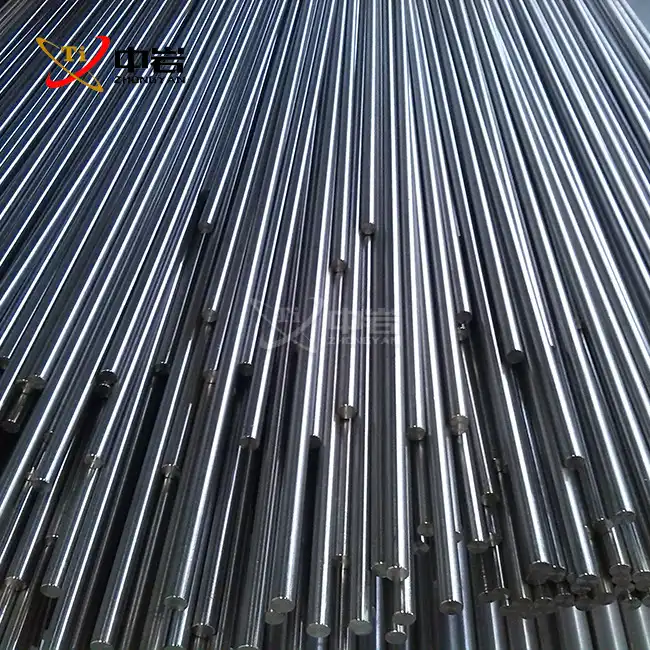
The GR2 titanium round bar has unique benefits in production thanks to its high resistance to rust, high strength-to-weight ratio, and high biocompatibility. This widely pure titanium material meets ASTM B348 standards and gives makers a safe option that lowers upkeep costs, increases service life, and meets strict industry standards in the medical, aircraft, chemical processing, and industrial machinery sectors. Because it is easy to machine and can be customised, GR2 titanium round bars are a smart choice for precision manufacturing tasks that need to be both high-performing and low-cost.
Understanding GR2 Titanium Round Bar: Composition and Key Properties
Chemical Composition and Purity Standards
The GR2 titanium round bar is commercially pure titanium that has had its chemical makeup carefully managed. The ASTM B348 standard says that this type has at least 99.2% titanium and small amounts of oxygen, iron, nitrogen, and carbon. The oxygen level is usually between 0.18 and 0.25%, which has a big effect on the strength without lowering the resistance to rust.
This level of purity sets grade 2 apart from grades of titanium that have more alloys added to them. It is a cost-effective option for uses where extreme strength is not as important as rust resistance and formability. The managed makeup makes sure that all production runs work the same, meeting the ISO 5832-2 standards needed for medical and aircraft uses.
Mechanical Properties and Performance Metrics
Our titanium Gr2 round bars have great mechanical properties that meet a wide range of industrial needs. These materials are strong enough to keep structures together because their tensile strength is over 900 MPa and their yield strength is over 850 MPa. A 10% or higher stretch rate makes sure that the material is flexible enough for making.
The hardness grade of HRC 36 means that it will not wear down easily in many industrial settings, and the elastic stiffness of 114 GPa means that it will bend in a known way when it is loaded. The material's high strength-to-weight ratio, which is helped by its density of 4.43 g/cm³, makes it more efficient for building than many common metals.
Another important feature of Gr2 titanium round bar is temperature stability. The mechanical qualities of grade 2 titanium bars stay the same over a wide temperature range, from very cold temperatures to high temperatures close to 300°C. This material is great for precision parts that are subject to changes in temperature because it is thermally stable and has a low thermal expansion rate.
Certification and Quality Verification
For titanium round bar grade 2 to be authentic, it needs to be fully documented and tested according to specific rules. Material test records (MTRs) from legitimate sellers show the chemical make-up, mechanical qualities, and agreement with international standards of the goods they sell. These documents make sure that the goods can be tracked all the way through the supply chain, which is very important for medical and military uses.
Some types of physical inspection are checking the surface finish, making sure the dimensions are within range, and testing the stiffness. Our h9 tolerance cold-drawn bars show that we can make things with the level of accuracy needed for CNC milling. The shiny, smooth surface finish cuts down on the need for extra work, which speeds up production times while keeping the accuracy of the measurements.
Core Advantages of Using GR2 Titanium Round Bar in Manufacturing
Manufacturing excellence depends on selecting materials that deliver measurable performance benefits. The titanium bar GR2 offers a compelling value proposition through multiple competitive advantages that directly impact production efficiency and product quality.
Superior Corrosion Resistance Across Challenging Environments
Most industrial settings don't rust as easily with grade 2 titanium round bars as with stainless steel 316 or aluminium alloys. This substance creates a strong, defensive oxide layer that heals itself when it gets broken, leaving it safe from chemical attack. In marine settings with salt, stainless steel parts usually break after a few years, but titanium parts stay strong for decades.
Chemical processing plants can get a lot out of this trait. Acids, alkaline solutions, and organic chemicals that break down metals quickly don't have much of an effect on grade 2 titanium bars. This resistance lowers the total cost of ownership over the lifetime of the component, cuts down on unexpected downtime, and lowers the number of times it needs to be replaced.
The oxidation layer stays steady from pH 1 to 12, so it can be used in a variety of process streams without needing any protective coatings. Because of this feature, coating application costs and coating failure risks are eliminated, which are common problems with coated steel parts in tough settings.
Exceptional Strength-to-Weight Ratio for Performance Applications
Getting lighter is what drives progress in the aircraft, car, and personal equipment industries. The Gr2 titanium round bar is about 60% lighter than many steel metals but has the same level of strength. Because of this density benefit, designers can make systems lighter without losing their strength.
Fuel economy gains and greater loading capacity are two benefits of aerospace parts made from titanium grade 2 bars. A part of the landing gear that weighs 15 kg when made of steel can be remade to weigh only 9 kg while still being able to hold the same amount of weight. When there are hundreds of these kinds of parts in an airplane's frame, the weight savings add up.
When you compare grades, it's easier to see what to choose. For example, GR2 is good for structural parts, bolts, and pressure tanks because it doesn't rust and isn't too strong. The higher oxygen level in GR4 makes it stronger, but it costs more. GR5 (Ti-6Al-4V) is the strongest material, but it costs more and is harder to machine. The GR2 titanium bar is the best combination of qualities and price for many commercial uses.
Outstanding Biocompatibility for Medical Applications
When making medical devices, you need to use materials that can safely bond with human flesh. It is very biocompatible, so the immune system doesn't react too much, and the titanium round bar grade 2 works very well with bone. Because of this, it is the best material for surgical tools, oral implants, and orthopaedic devices.
Because the material is bioinert, it doesn't cause the rejection reactions that can happen with some metal alloys. Grade 2 bars are used to make titanium tooth plates that can stay in the body forever without causing inflammation or other bad tissue reactions. The oxide layer stops the release of ions that could cause biological reactions. This keeps patients safe in the long run.
Another important benefit is that it is compatible with sterilisation. Grade 2 titanium bars don't lose their properties when they are put through multiple autoclave processes, chemical sterilisation, or radiation treatment. This makes sure that medical tools keep working well throughout their useful lives, even after being sterilised many times.
Excellent Machinability and Custom Fabrication Flexibility
How efficiently a product is made depends on how easily it can be machined and how it can be customised. When compared to stronger titanium alloys, our cold-drawn titanium gr2 round bars in an annealed state cut more consistently and with less tool wear. With the right tools and cutting settings, CNC turning, milling, and grinding work goes smoothly.
Because the material is flexible, it can be cold-formed in ways like rolling, folding, and drawing. With tolerances as small as h9, parts can be made to exact specs, meeting the needs for precision assemblies. This ability to be shaped cuts down on extra processes, which speeds up production and lowers the cost of making the product.
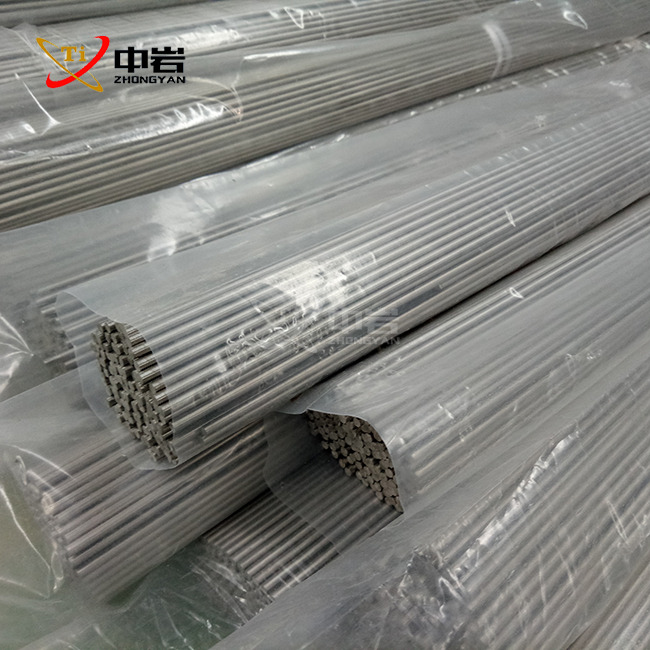
Custom cutting services offer big benefits when it comes to buying things. Buyers can select exact measures instead of buying standard lengths and dealing with extra material. Customers can cut our 1000mm standard length bars to the length they need, which cuts down on loss and the cost of keeping inventory. This adaptability is especially helpful for making prototypes and small batches, where the cost-effectiveness of materials has a direct effect on the project's overall cost.
Comparing GR2 Titanium Round Bar with Alternative Materials
Performance Comparison with Stainless Steel
Compared to stainless steel in terms of performance
Most of the time, stainless steel 316 is used instead of titanium in places where it will rust. While rust protection is good and the original cost is lower, stainless steel has a lot of problems. In places with a lot of salt, pitting and crevice rust weaken stainless steel, but grade 2 titanium bars are not affected. Because stainless steel is almost twice as thick as titanium, it is not useful for uses that need to be light.
Lifecycle cost analysis often chooses titanium over other materials, even though it costs more up front. A titanium shaft can last for decades, while a stainless steel shaft for a chemical processing pump might need to be replaced every three to five years because of rust. The total cost of ownership is lower because upkeep is done less often, technology is up and running for longer, and repair costs are removed.
Titanium Grade Comparisons: GR2 vs. GR5
Understanding the differences between grades helps you choose the best materials. The GR2 titanium round bar is made of commercially pure titanium with few alloying elements. It has good resistance to rust and can be shaped easily. GR5 titanium (Ti-6Al-4V) is made of aluminium and vanadium alloys. It is much stronger than pure titanium, but it costs more and is less resistant to rust in some conditions.
When users don't need maximum strength, GR2's lower cost is good for projects on a budget. A piece of marine gear that works under mild stress does a great job with grade 2 material, which costs 40% less than GR5. Instead of automatically choosing higher-strength grades, engineering teams should look at what the real stress needs are. This is because over-specification raises project costs without need.
Different sizes are very different in how easy they are to machine. It's easier to make the titanium round bar GR2 because it has smaller cutting pressure and less tool wear. When compared to GR5 grinding processes, production rates go up, and equipment costs go down. These are two factors that affect the economics of high-volume manufacturing.
Procurement Insights: How to Source GR2 Titanium Round Bars Effectively
Supplier Evaluation and Certification Verification
To make sure that the titanium bar grade 2 you're buying is real and of consistent quality, you need to carefully check out each seller. Verified makers should have ISO 9001:2015 approval, which shows that they handle quality in a structured way. Sellers of aerospace materials usually have AS9100 approval, while sellers of medical materials make sure they follow ISO 13485 rules.
Ask for material test results for every batch to make sure that the chemical make-up and mechanical qualities meet the requirements of ASTM B348. Reliable sources give full tracking paperwork, including heat numbers that show where the material has been from the raw ingot to the finished product. This paperwork is very important for controlled businesses that need to see the whole supply line.
Pricing Strategy and Cost Optimization
Titanium round bar GR2 pricing depends on diameter, quantity, surface finish, and delivery requirements. Bulk purchases typically reduce per-kilogram costs by 15-25% compared to small orders. Our standard 10mm diameter bars weighing approximately 2.5 kg per meter provide efficient material utilization for many machining applications.
Comparing quotes requires evaluating total delivered cost rather than merely material price. Factor in cutting services, certification documentation, packaging, and shipping when assessing supplier proposals. Custom cutting to specified lengths eliminates waste and reduces handling costs, often offsetting slightly higher per-kilogram pricing.
Custom Specifications and Technical Support
OEM and ODM customers require suppliers capable of delivering customized solutions. Beyond standard dimensions, we provide titanium gr2 round bars with various surface finishes including polished, pickled, and machined conditions. Surface treatment affects subsequent machining operations and final component appearance, making finish selection an important specification consideration.
Technical support distinguishes exceptional suppliers from commodity vendors. Engineering teams benefit from collaborating with suppliers who understand application requirements and can recommend optimal specifications. Our technical staff assists with material selection, machining parameter development, and quality assurance protocols, functioning as an extension of customer engineering departments.
Application Areas Highlighting the Advantages of GR2 Titanium Round Bar
Aerospace and Automotive Manufacturing
Aerospace components manufactured from grade 2 titanium round bars include hydraulic fittings, valve bodies, and structural fasteners. The material's corrosion resistance proves critical in aircraft operating environments exposed to moisture, temperature extremes, and chemical exposure from fuels and hydraulic fluids. Weight reduction contributes directly to fuel efficiency and emissions reduction, priorities driving aerospace material selection.
Automotive applications increasingly incorporate titanium components in high-performance and luxury vehicles. Exhaust system components fabricated from titanium bar Gr2 resist corrosion from combustion byproducts while reducing system weight. Racing applications exploit the strength-to-weight advantage for connecting rods, valve retainers, and suspension components where reduced unsprung mass improves handling dynamics.
Medical and Dental Equipment Manufacturing
Medical device manufacturers rely on titanium round bar grade 2 for surgical instruments, dental implants, and orthopedic hardware. The biocompatibility eliminates risks associated with less compatible metals, while sterilization resistance ensures instruments maintain integrity through repeated processing cycles. Our precision-machined titanium dental discs provide dental laboratories with consistent material quality for manufacturing crowns, bridges, and implant components.
Orthopedic applications include bone plates, screws, and joint replacement components. The material's modulus closely matches bone, reducing stress shielding effects that can lead to bone resorption around implants. This mechanical compatibility contributes to superior long-term clinical outcomes compared to alternative biomaterials.
Chemical Processing and Marine Engineering
Chemical processing equipment utilizes Gr2 titanium round bars for pump shafts, valve stems, heat exchanger components, and reactor internals. The material withstands exposure to chlorine, sulfuric acid, phosphoric acid, and organic solvents that rapidly corrode stainless steel. Equipment longevity increases dramatically, with some titanium components operating continuously for 20-30 years in severely corrosive environments.
Marine applications exploit corrosion resistance in seawater, which contains high chloride concentrations that attack most structural metals. Propeller shafts, seawater cooling system components, and offshore platform hardware manufactured from titanium grade 2 bars eliminate the galvanic corrosion issues common with dissimilar metal combinations in marine structures.
Industrial Machinery and Equipment
Industrial machinery manufacturers incorporate titanium bar grade 2 into specialized equipment requiring corrosion resistance, weight reduction, or non-magnetic properties. Food processing equipment benefits from titanium's FDA compliance and resistance to cleaning chemical exposure. The material's non-magnetic characteristic proves essential in electronics manufacturing equipment and medical imaging systems where magnetic interference cannot be tolerated.
Custom OEM components span diverse applications including semiconductor manufacturing equipment, printing press components, and textile processing machinery. The combination of corrosion resistance, moderate strength, and excellent fatigue properties enables long service life in demanding production environments.
Conclusion
The gr2 titanium round bar delivers measurable advantages that directly impact manufacturing efficiency, product performance, and total cost of ownership. Its exceptional corrosion resistance eliminates premature failure in aggressive environments, while the superior strength-to-weight ratio enables innovative designs across aerospace, automotive, and industrial applications. Outstanding biocompatibility makes it indispensable for medical device manufacturing, and excellent machinability ensures efficient production.
Comparing grade 2 titanium bars against alternative materials reveals compelling lifecycle cost advantages despite higher initial material costs. The combination of durability, minimal maintenance requirements, and extended service life provides return on investment that justifies specification in critical applications. Procurement success depends on partnering with qualified suppliers who provide certified materials, technical support, and customization capabilities aligned with manufacturing requirements.
FAQ
What specific advantages does GR2 have over GR5 titanium for manufacturing applications?
GR2 titanium round bars offer superior corrosion resistance in most environments compared to GR5, particularly in acidic and chloride-rich conditions. The commercially pure composition provides better formability and weldability, making fabrication processes more straightforward. GR2 also costs significantly less than GR5, making it economically preferable for applications where ultra-high strength isn't required. The easier machinability of grade 2 material reduces production time and tooling costs in CNC operations.
Can manufacturers request custom dimensions for GR2 titanium round bars to minimize material waste?
Reputable suppliers provide custom cutting services for titanium GR2 round bars, delivering precise lengths that match production requirements. This service eliminates excess material waste and reduces inventory carrying costs. Custom diameters, surface finishes, and even specialized heat treatments can be specified for OEM applications. Working with experienced manufacturers enables procurement teams to optimize material specifications for specific manufacturing processes, improving overall production efficiency.
How can buyers verify the authenticity and quality of GR2 titanium round bars from suppliers?
Quality verification requires comprehensive material test reports documenting chemical composition and mechanical properties per ASTM B348 standards. Legitimate suppliers provide heat traceability certificates and ISO certification documentation. Physical inspection should confirm dimensional tolerances, surface finish quality, and hardness testing results. Requesting sample materials for independent laboratory analysis provides additional assurance for high-value orders or critical applications where material integrity directly impacts safety and performance.
Partner with Zhongyan for Premium GR2 Titanium Round Bar Supply
Zhongyan delivers certified GR2 titanium round bars manufactured to exacting ASTM B348 and ISO 5832-2 standards in our advanced Baoji facilities. Our cold-drawn bars feature bright polished surfaces, H9 tolerances, and verified mechanical properties including tensile strength ≥900 MPa and yield strength ≥850 MPa. As an experienced titanium round bar manufacturer, we provide comprehensive OEM/ODM solutions with custom cutting services, CNC machining capabilities, and full material traceability documentation.
Our technical team collaborates with engineering departments to optimize material specifications for aerospace components, medical devices, chemical processing equipment, and industrial machinery applications. We maintain a substantial inventory of standard dimensions, including 10mm diameter bars in 1000mm annealed lengths, enabling rapid fulfillment of urgent requirements. Volume pricing and long-term supply agreements deliver cost advantages while ensuring consistent material availability.
Contact our procurement specialists at sales@titaniumstudy.com to discuss your titanium bar grade 2 requirements. We provide detailed technical consultations, material test reports, and competitive quotations tailored to your manufacturing specifications. Visit www.titaniumstudy.com to explore our complete range of titanium materials and precision machined components.
References
1. ASTM International. "Standard Specification for Titanium and Titanium Alloy Bars and Billets" ASTM B348-19, West Conshohocken, PA, 2019.
2. Donachie, Matthew J. "Titanium: A Technical Guide, 2nd Edition" ASM International, Materials Park, Ohio, 2000.
3. International Organization for Standardization. "Implants for Surgery - Metallic Materials - Part 2: Unalloyed Titanium" ISO 5832-2:2018, Geneva, Switzerland, 2018.
4. Boyer, Rodney, Gerhard Welsch, and E.W. Collings. "Materials Properties Handbook: Titanium Alloys" ASM International, Materials Park, Ohio, 1994.
5. Schutz, R.W. and Thomas, D.E. "Corrosion of Titanium and Titanium Alloys" in ASM Handbook Volume 13B: Corrosion: Materials, ASM International, 2005.
6. Veiga, C., Davim, J.P., and Loureiro, A.J.R. "Properties and Applications of Titanium Alloys: A Brief Review" Reviews on Advanced Materials Science, Vol. 32, 2012, pp. 133-148.
_1755652624199.jpg)
Learn about our latest products and discounts through SMS or email