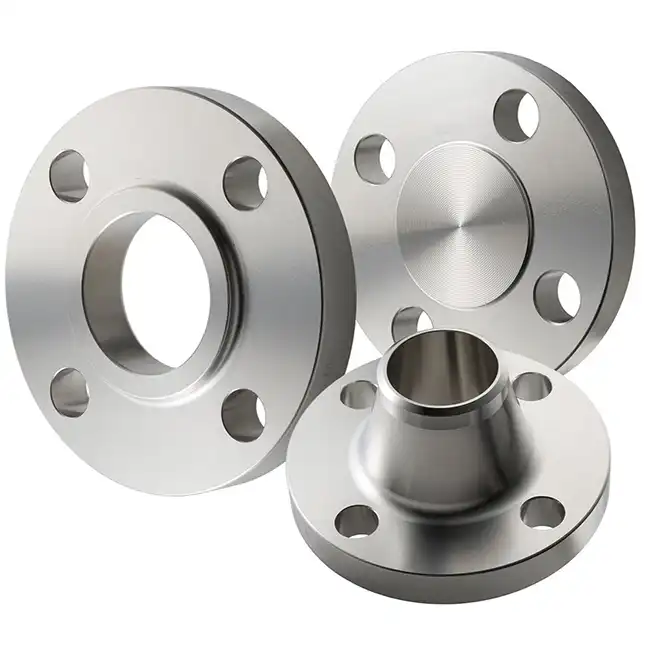
The right Chinese custom titanium flange manufacturer can increase project success and efficiency. Baoji (China's Titanium Valley), Xi'an, and other industrial cities have several specialist producers. These companies make ANSI, DIN, and aerospace-grade titanium flanges. Leading supplier Baoji Zhongyan Titanium Industry Co., Ltd. offers design consulting, precise machining, and worldwide quality assurance.
Understanding Custom Titanium Flange Applications and Benefits
Superior Material Properties Drive Industry Adoption
Titanium flanges outperform stainless. Chemical processing requires corrosion-resistant materials since harsh acids and alkalis would quickly destroy conventional materials. Aviation uses titanium flange components for their strength-to-weight ratio, boosting fuel efficiency and performance.
Critical Applications Across Multiple Industries
Implantable and surgical device manufacturers increasingly request precise titanium flanges from a custom titanium flange manufacturer. Titanium alloys' biocompatibility assures patient safety and structural integrity under physiological settings. Titanium flanges are ideal for offshore platforms and subsea equipment due to their seawater corrosion resistance.
Ultra-high purity titanium flanges are used in electronics, especially in sputtering target manufacture. Under severe temperatures, these components must maintain dimensional stability and provide hermetic vacuum seals. The semiconductor industry's strict cleanliness requirements match titanium's non-contaminating characteristics.
Custom Design Capabilities Meet Specialized Needs
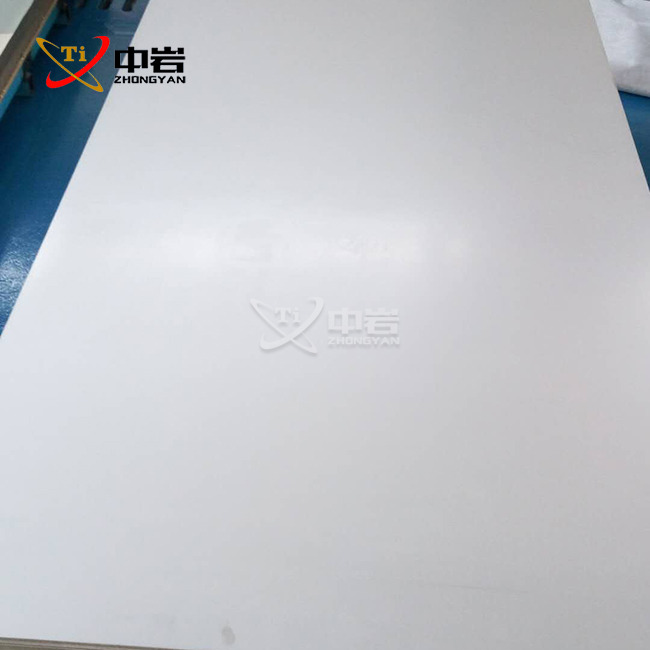
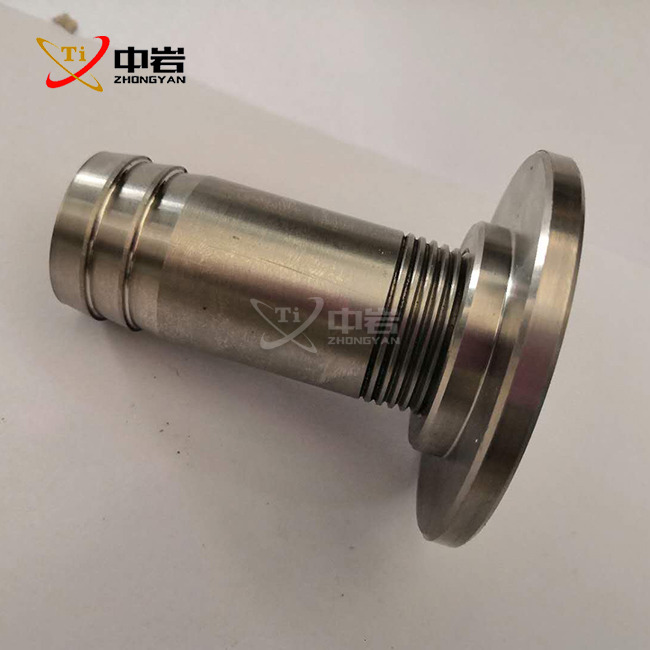
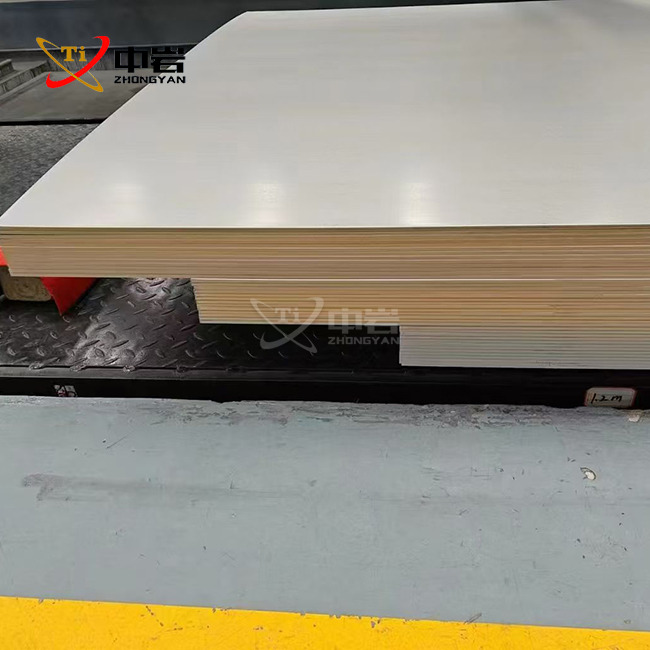
These days, titanium plate makers offer a lot of ways to make their products just how you want them. Engineers can request unique sizes, surface treatments, and mechanical properties that are perfect for certain uses. When CNC machining is done at a high level, it can create complicated shapes that can't be made with older manufacturing methods.
Global Market Analysis: Supply and Demand Dynamics
China's Dominance in Titanium Processing
China has about 60% of the world's titanium production capacity under its control, and almost 80% of the country's titanium production comes from the Baoji area. International buyers looking for titanium flange solutions can get them much cheaper when they come here, where there are a lot of experts and tools. Chinese manufacturers can offer good prices without lowering quality because they are close to sources of raw materials and supply lines.
Rising Demand from Emerging Technologies
The green energy industry is a major factor behind the growing demand for titanium pipe flanges. For offshore installations, wind turbine makers need parts that won't rust. At the same time, solar panel production equipment depends on titanium's ability to stay stable at high temperatures. The growth of electric vehicles also helps the market grow, especially the market for high-performance battery cooling systems.
Aerospace industry projections indicate a 15% annual increase in titanium component demand through 2028. Commercial aviation recovery combined with space exploration initiatives creates sustained pressure on manufacturing capacity. This trend particularly benefits Chinese suppliers who have invested heavily in advanced production capabilities.
Quality Standards Shaping Market Preferences
International buyers are putting more and more value on sellers with a lot of different kinds of certifications. ISO 9001:2015 quality control systems have become basic requirements, and customers in the aerospace industry want compliance with AS9100. ISO 13485 certification is needed for medical device applications because it makes sure that the way things are made follows the rules for parts that are important to life.
Comprehensive Sourcing Channel Comparison
Direct Factory Partnerships
| Advantages | Disadvantages |
|---|---|
| Lowest pricing due to the elimination of intermediaries | Higher minimum order quantities are typically required |
| Direct communication with engineering teams | Language barriers may complicate technical discussions |
| Customization, flexibility,y and rapid prototyping | Limited support for small volume orders |
| Quality control, transparency,y and factory auditing | Extended payment terms are often necessary |
Trading Company Intermediaries
Buyers who don't have direct sourcing knowledge can benefit from the services that trading companies offer. These middlemen usually keep in touch with a lot of different makers, which helps them quickly find the right kinds of titanium flanges. But the extra markup can raise costs by 15% to 25% more than if you buy directly from the plant.
Experienced trading companies offer logistics coordination, quality inspection services, and consolidated shipping options. They often maintain inventory for common flange specifications, reducing lead times for urgent orders. The trade-off involves reduced customization flexibility and potential communication delays between end users and manufacturers.
B2B Platform Utilization
Online B2B platforms facilitate initial supplier identification and comparison shopping. These platforms provide standardized supplier profiles, customer reviews, and basic capability overviews. However, complex custom flange projects typically require direct negotiation beyond platform limitations.
Verification of supplier credentials becomes crucial when using B2B platforms. Many manufacturers maintain premium profiles showcasing certifications and customer testimonials. Smart buyers use these platforms for initial screening before transitioning to direct communication channels.
Supplier Evaluation and Verification Best Practices
Technical Capability Assessment
Evaluating a titanium alloy flange manufacturer requires a thorough examination of their machining capabilities. CNC equipment specifications directly impact achievable tolerances and surface finish quality. Modern manufacturers should possess 5-axis machining centers capable of maintaining ±0.05mm tolerances for critical dimensions.
Material traceability systems ensure compliance with aerospace and medical industry requirements. Reputable suppliers maintain comprehensive documentation linking finished products to raw material certifications. This documentation proves essential for regulatory compliance and failure analysis if issues arise.
Quality Control Infrastructure
Professional makers use advanced quality control systems that set them apart from basic fabrication shops. Coordinate measuring machines (CMMs), testers for surface roughness, and material testing tools make it possible for thorough checking routines to be used. Suppliers should give thorough inspection reports that show how accurate the dimensions and material properties are.
Third-party certification from recognized bodies adds credibility to supplier quality claims. NADCAP accreditation for special processes demonstrates commitment to aerospace industry standards. Medical device manufacturers should verify FDA registration status for suppliers targeting regulated markets.
Production Capacity and Scalability
Understanding supplier production capacity prevents delivery disappointments during peak demand periods. Established manufacturers typically maintain backup equipment and cross-trained personnel to handle unexpected capacity requirements. Site visits reveal actual production capabilities versus marketing claims.
Scalability becomes critical for projects with growth potential. Suppliers should demonstrate the ability to increase production volumes without compromising quality or extending lead times. This capability often requires established relationships with raw material suppliers and flexible manufacturing processes.
Procurement Strategy and Risk Management
Minimum Order Quantities and Economic Considerations
Most custom flange machining operations require minimum order quantities ranging from 10 to 100 pieces, depending on complexity. Simple standard flanges may have lower MOQs, while highly customized aerospace components typically require larger commitments. Buyers should factor tooling costs and setup time into economic calculations.
Volume pricing structures reward larger orders with significant per-piece cost reductions. However, carrying costs and inventory risks must balance against unit price savings. Many buyers establish annual agreements with graduated pricing tiers to optimize the total cost of ownership.
Payment Terms and Financial Risk Mitigation
Standard payment terms for custom titanium components typically involve 30-50% deposits with the balance due upon completion. Letters of credit provide protection for large orders while maintaining supplier cash flow requirements. Established relationships often enable net-30 payment terms for qualified customers.
Currency fluctuation risks affect international titanium purchases due to extended production lead times. Forward contracts or currency hedging strategies help stabilize costs for budget-sensitive projects. Some suppliers offer pricing in the customer's local currency to eliminate exchange rate uncertainty.
Delivery Timeline Management
Custom titanium flange manufacturing lead times typically range from 4-12 weeks, depending on complexity and order size. Raw material procurement often represents the longest component of total lead time. Suppliers maintaining a titanium inventory can significantly reduce delivery schedules for urgent projects.
Rush order capabilities vary significantly between manufacturers. Well-equipped facilities may accommodate expedited delivery for premium pricing, while smaller shops lackthe flexibility for schedule acceleration. Emergency production capacity should be verified during supplier qualification processes.
Quality Control and Common Pitfalls
Dimensional accuracy represents the most critical quality parameter for flange applications. Sealing surface flatness and concentricity directly impact assembly performance and leak prevention. Buyers should specify tolerance requirements clearly and verify supplier measurement capabilities.
Surface finish specifications require careful definition to avoid misunderstandings. Ra values must align with sealing requirements and downstream processing needs. Some applications demand electropolished surfaces while others accept standard machined finishes.
Material certification documentation prevents costly field failures and regulatory compliance issues. Suppliers must provide mill test certificates linking finished products to raw material sources. Heat treatment records and mechanical property test results complete the quality documentation package.
Conclusion
China has better cost, quality, and manufacturing potential when it comes to custom titanium flange manufacturers. Experts are concentrated in places like Baoji, which gives people access to high-tech production methods and full supply lines. Success needs clear specification communication, strong quality control rules, and careful supplier assessment. Buyers who take the time to build strategic relationships with their suppliers get better prices, priority scheduling, and better technical help. The key is to find a balance between cutting costs and managing risk while keeping the goal of building long-term partnerships in mind.
FAQ
Q: What are the typical lead times for custom titanium flange orders from Chinese manufacturers?
A: Standard lead times range from 4-8 weeks for simple designs and 8-12 weeks for complex custom flanges. Lead times depend on order quantity, material availability, and manufacturing complexity. Expedited production may be available for 20-30% premium pricing.
Q: How can I verify the quality standards of a titanium flange manufacturer?
A: Request copies of quality certifications (ISO 9001, AS9100, ISO 13485), review customer references, and examine sample inspection reports. Site audits provide the most comprehensive verification but may not be practical for all buyers. Third-party inspection services offer alternative verification methods.
Q3 What minimum order quantities should I expect for custom titanium flanges?
A: MOQs typically range from 10-100 pieces depending on design complexity and manufacturing requirements. Simple standard designs may have lower minimums, while complex aerospace components require larger orders to justify tooling costs. Annual agreements often reduce effective MOQs through consolidated ordering.
Partner with Zhongyan for Superior Custom Titanium Flange Solutions
Zhongyan Titanium is China's best custom titanium flange manufacturer, with decades of relevant experience and modern production technology. We are in Baoji's Titanium Valley, which gives us direct access to high-quality raw materials and cutting-edge processing technologies. This helps us provide excellent value for high-demand uses. We meet a wide range of titanium flange standards, including ASTM, AMS, and ISO. This makes sure that they fit perfectly with your important systems.
Our modern building has CNC machining centers that are very accurate, quality control tools that are high-tech, and teams of engineers whose only job is to work on difficult flange design problems. We still have ISO 9001:2015 approval, and we work with businesses in the aerospace, medical, chemical processing, and industrial machinery sectors around the world. From the start of prototype development to production of a large amount, Zhongyan always provides on time and with good quality.
Experience the advantage of working with a trusted titanium flange manufacturer who understands your technical requirements and business objectives. Our custom flange machining capabilities encompass everything from standard ANSI configurations to specialized geometries meeting unique application demands. Contact us at sales@titaniumstudy.com to discuss your project requirements and discover how Zhongyan can optimize your titanium flange procurement strategy.
References
1. Boyer, R.R. "An Overview on the Use of Titanium in the Aerospace Industry." Materials Science and Engineering: A, Vol. 213, 1996.
2. Leyens, C. and Peters, M. "Titanium and Titanium Alloys: Fundamentals and Applications." Wiley-VCH, 2003.
3. ASM International. "Properties and Selection: Nonferrous Alloys and Special-Purpose Materials." ASM Handbook Volume 2, 1990.
4. Donachie, Matthew J. "Titanium: A Technical Guide, 2nd Edition." ASM International, 2000.
5. Peters, M., Kumpfert, J., Ward, C.H., and Leyens, C. "Titanium Alloys for Aerospace Applications." Advanced Engineering Materials, Vol. 5, 2003.
6. Rack, H.J. and Qazi, J.I. "Titanium Alloys for Biomedical Applications." Materials Science and Engineering: C, Vol. 26, 2006.
(1)_1755588522797.jpg)