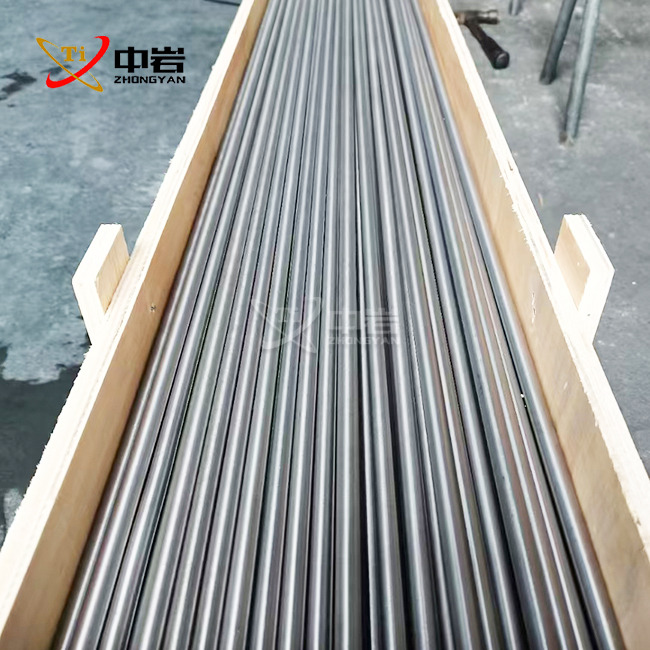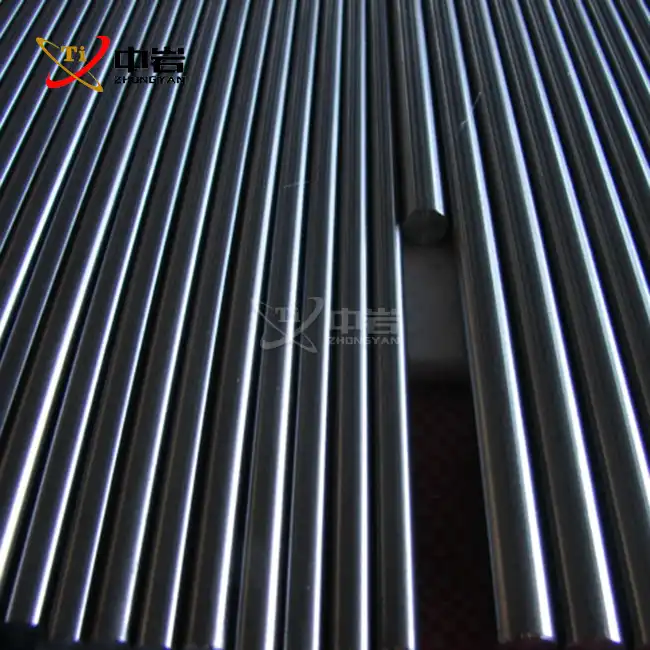
By providing superior corrosion resistance, high strength-to-weight ratios, and outstanding durability in difficult operating environments, grade 4 titanium bars offer exceptional performance advantages in oil and gas industry projects. These advantages include the capacity to produce exceptional durability. When it comes to important applications, such as offshore drilling equipment, pipeline components, and processing facilities, where dependability and lifespan are of the utmost importance, the gr4 titanium bar stands out as a premium material choice. These pure titanium bars offer solutions that are both cost-effective and reduce the amount of maintenance that is required, all while guaranteeing that operational safety is maintained under the rigorous conditions of the petroleum sector.
Understanding Gr4 Titanium Bar Properties and Specifications
Review 4 titanium is the most strong of all the commercially unadulterated titanium grades. It is composed of 99.5% immaculate titanium and has fair a little sum of alloying components. great mechanical qualities are displayed by the fabric, which makes it a great choice for applications including oil and gas segments. A least abdicate quality of 485 MPa and a malleable quality that ranges from 550 to 750 MPa are among the key parameters. These details guarantee that the fabric keeps up its auxiliary judgment indeed when subjected to unforgiving conditions.
The gr4 titanium rod demonstrates remarkable temperature resistance, maintaining performance from cryogenic conditions up to 315°C. This temperature range covers most oil and gas operational requirements, from deep-sea drilling to refinery processing units. The material's density of 4.51 g/cm³ offers significant weight savings compared to traditional steel components while delivering superior performance characteristics.
There is a significant relationship between the chemical composition of the material and its performance. Titanium used in Grade 4 has a maximum oxygen content of 0.50%, 0.30% iron content, and 0.015% hydrogen content, all of which contribute to the material's enhanced strength capabilities. In order to meet strict quality criteria for essential oil and gas infrastructure, these controlled impurity levels ensure that the performance of the various production batches is consistent.
Exceptional Corrosion Resistance in Harsh Environments
Oil and gas work puts materials in very damaging conditions that have hydrogen sulfide, chlorides, and other acidic chemicals. The gr4 titanium bar does well in these tough situations because its natural oxide layer protects it from corrosion. This protective barrier automatically rebuilds itself after being damaged, which protects the material in the long run.
Seawater applications particularly benefit from titanium's corrosion resistance properties. Offshore platforms and subsea equipment face constant exposure to saltwater environments that rapidly degrade conventional materials. Pure titanium bar maintains structural integrity for decades in marine conditions, significantly reducing replacement costs and operational downtime.
The material shows great resistance to pitting and crevice corrosion, which are common failure causes in oil and gas equipment. In most settings of the petroleum business, grade 4 titanium has corrosion rates of less than 0.025 mm/year, which is much lower than those of stainless steel, according to lab tests.
Cost-Effectiveness and Long-Term Value Proposition
While initial material costs for gr4 titanium bars may exceed conventional options, the total cost of ownership presents compelling advantages. Extended service life, reduced maintenance requirements, and improved operational reliability contribute to significant long-term savings. Engineering studies demonstrate that titanium components often provide 3-5 times longer service life compared to steel alternatives in corrosive environments.
Weight reduction benefits translate to substantial cost savings in offshore applications where every kilogram affects platform design and installation costs. The aerospace titanium bar technology applied to oil and gas projects enables lighter structures without compromising strength requirements, reducing transportation and handling expenses.
Maintenance cost reductions represent another significant advantage. The material's resistance to fatigue and stress corrosion cracking minimizes unplanned shutdowns and emergency repairs. Oil and gas operators report up to 70% reduction in maintenance-related expenses when switching from conventional materials to grade 4 titanium in critical applications.
Zhongyan's Gr4 Titanium Bar Advantages Over Competitors
Our manufacturing facility in Baoji, known as China's Titanium Valley, provides unique advantages in producing high-quality gr4 titanium bars. The location offers direct access to premium titanium resources and advanced processing technologies, enabling superior material properties and competitive pricing structures.
By getting ISO9001:2015 certification and following ASTM rules, Zhongyan's quality control processes go above and beyond what is normal in the business. For important oil and gas uses, our precision machining services include CNC milling, grinding, and turning, which meet the strict limits needed. Each titanium bar is sure to meet the required mechanical and dimensional property standards thanks to the use of advanced testing tools.
Custom processing capabilities distinguish our offerings from standard suppliers. We provide specialized surface treatments, precision cutting, and dimensional modifications tailored to specific project requirements. This flexibility reduces customer processing costs while ensuring optimal material performance in end-use applications.
Optimal Usage Guidelines and Procurement Recommendations
Successful implementation of gr4 titanium bars in oil and gas projects requires careful consideration of design parameters and application requirements. Material selection should account for operating temperatures, pressure conditions, and expected service life. Engineering consultation during the design phase ensures optimal material utilization and performance optimization.
Proper handling and storage procedures maintain material integrity throughout the supply chain. Titanium bar surfaces require protection from contamination that could affect welding or machining operations. Clean storage environments and appropriate packaging prevent surface oxidation that might impact final component performance.
Welding requires special methods and people who know how to work with titanium. Inert gas shielding and controlled cooling rates make sure that the weld joint strength is about the same as the properties of the base material. Following the right steps for welding stops contamination that could hurt how well the metal resists rust.
Machining operations benefit from specific cutting parameters and tool selections optimized for titanium processing. Appropriate cutting speeds, feed rates, and coolant applications prevent work hardening and maintain dimensional accuracy. Our technical support team provides detailed machining guidelines to ensure optimal results.
Conclusion
For oil and gas industry projects, the use of GR4 titanium bars has benefits that go beyond the material's properties. These bars help projects succeed by giving them long-term operating benefits. Grade 4 titanium is a smart buy for important building projects because it doesn't corrode easily, is very strong for its weight, and has been shown to last a long time even in tough conditions. When you work with well-known manufacturers like Zhongyan, you can be sure you will get high-quality materials along with technical help and advice from people who know the industry well.
FAQ
Q: How does gr4 titanium bar performance compare to stainless steel in oil and gas applications?
A: Grade 4 titanium bars offer superior corrosion resistance, particularly in chloride and hydrogen sulfide environments common in oil and gas operations. While stainless steel may corrode and require replacement within 5-10 years, gr4 titanium maintains integrity for 20-30 years in similar conditions. The higher initial investment typically recovers within 3-5 years through reduced maintenance and replacement costs.
Q: What are the temperature limitations for gr4 titanium bars in petroleum industry applications?
A: Grade 4 titanium bars maintain excellent mechanical properties from cryogenic temperatures up to 315°C, covering most oil and gas operational requirements. Beyond 315°C, consideration should be given to titanium alloys with enhanced high-temperature capabilities. The material's thermal expansion coefficient requires accommodation in design calculations for temperature cycling applications.
Q: Can gr4 titanium bars be welded to other materials in oil and gas equipment?
A: While possible, welding titanium to dissimilar materials requires careful consideration of galvanic corrosion potential and thermal expansion differences. Welding to other titanium grades or using mechanical joining methods typically provides better long-term performance. Our engineering team can recommend optimal joining techniques based on specific application requirements.
Partner with Zhongyan for Premium Gr4 Titanium Bar Solutions
Zhongyan stands as your trusted gr4 titanium bar supplier, combining decades of titanium manufacturing expertise with cutting-edge production capabilities. Our comprehensive understanding of oil and gas industry requirements enables us to deliver precisely engineered solutions that exceed performance expectations while optimizing project economics.
Located in Baoji's titanium manufacturing hub, we leverage advanced processing technologies and rigorous quality control systems to produce gr4 titanium bars that meet the most demanding specifications. Our technical support team works closely with customers throughout the procurement process, ensuring optimal material selection and application guidance.
Ready to enhance your oil and gas projects with premium grade 4 titanium solutions? Our experienced sales engineers stand ready to discuss your specific requirements and provide customized recommendations. Contact us at sales@titaniumstudy.com to explore how our gr4 titanium bar for sale can deliver superior performance and long-term value for your critical applications.
References
1. American Society for Testing and Materials. "Standard Specification for Unalloyed Titanium for Surgical Implant Applications." ASTM F67-13, 2018.
2. Donachie, Matthew J. "Titanium: A Technical Guide, 2nd Edition." ASM International Materials Park, Ohio, 2000.
3. Boyer, Rodney R. "An Overview on the Use of Titanium in the Aerospace Industry." Materials Science and Engineering A, Vol. 213, 1996.
4. Schutz, Robert W. "Corrosion of Titanium and Titanium Alloys." ASM Handbook Volume 13B: Corrosion Materials, 2005.
5. Peters, Manfred, et al. "Titanium Alloys for Aerospace Applications." Advanced Engineering Materials, Vol. 5, No. 6, 2003.
6. Lutjering, Gerd and Williams, James C. "Titanium, 2nd Edition: Engineering Materials and Processes." Springer-Verlag Berlin Heidelberg, 2007.