
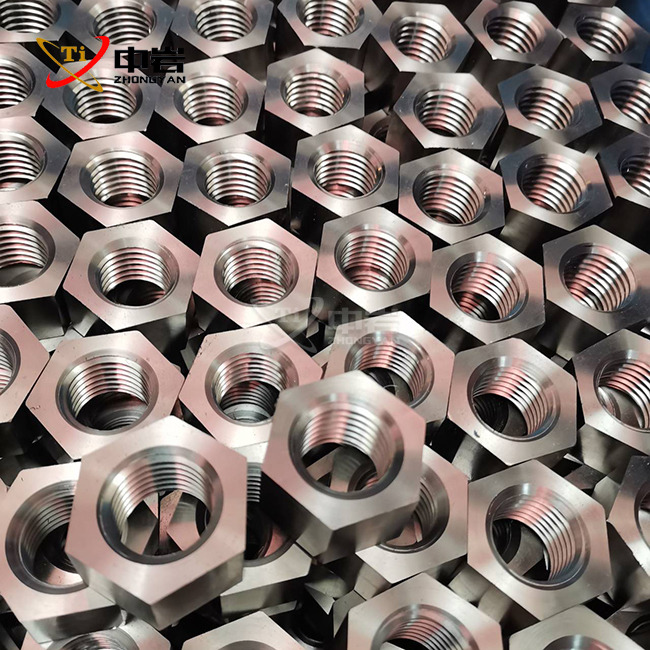
The global demand for lightweight, corrosion-resistant fasteners continues to drive innovation in titanium component manufacturing. Industrial parks serve as concentrated hubs where advanced materials expertise, precision machining capabilities, and quality control systems converge. These specialized places help manufacturers create high-quality titanium threaded nuts, like Custom Thin Titanium Nut products, that satisfy strict standards in the aerospace, medical, and electronics industries.
Understanding Custom Thin Titanium Nut Applications and Advantages
In a number of high-performance fields, custom thin titanium screws have completely changed how parts are made. These precision-engineered nuts are very useful for applications where space is limited because they have great strength-to-weight ratios and don't rust easily.
Aerospace Industry Applications
For satellite assemblies, parts that make up the structure of an aircraft, and tools for exploring space, aerospace engineers are using thin-profile titanium nuts more and more. The 45% loss in weight compared to stainless steel versions has a direct effect on how much fuel it uses and how much weight it can carry. Today’s airplanes use thousands of these lightweight titanium parts. Each one helps the airplane perform better.
Can be counted on to work in very hot or cold places, since it can withstand temperatures up to 400°C. Titanium's great resistance to fatigue and ability to keep its shape make it useful for jet engine assemblies, electronics housings, and landing gear systems. Custom Thin Titanium Nut products and these screws can also be used in life support systems and crew cabins because they are biocompatible.
Medical and Dental Equipment Integration
Surgical tools, gadgets that are implanted, and diagnostic equipment all need custom-made titanium parts from medical device companies. Because it's non-magnetic, it won't mess up MRI systems, and because it's biodegradable, it will be safe for patients to use. Companies that make dental tools especially value how well their products don't rust when they're exposed to sterilization chemicals and biological fluids.
Micro-fastening precision sewing makes it possible to put together fragile medical tools. The high-strength titanium alloy keeps the structure intact even after many rounds of sterilization. This makes the equipment last longer and lowers the cost of having to repair parts.
Electronics and Semiconductor Manufacturing
When you put together electronic parts, you need screws that won't mess up the sensitive circuits. Because titanium isn't magnetic and is a good collector of electricity, it is great for precision equipment housings, tools for making semiconductors, and measurement devices. The low thermal expansion coefficient ensures that the part works the same way at any temperature. This is very important for keeping electrical assemblies within the specified limits.
Global Supply Chain Analysis for Titanium Fasteners
The global titanium fastener market has different strengths and specialties in different regions of the world. Procurement managers come up with the best ways to get what they need when they understand these regional benefits.
Regional Manufacturing Hubs
China's Titanium Valley in Baoji is one of the biggest places in the world for handling titanium. The area has a lot of technical knowledge, easy access to raw materials, and well-known supply lines. Businesses in this industrial area benefit greatly in terms of cost by economies of scale and specialized infrastructure.
When it comes to defense and business aviation, North American aerospace corridors keep up with the high-precision titanium machining game. European makers make the best medical-grade titanium parts because they use strict compliance frameworks and advanced quality systems.
Raw Material Availability and Processing Capabilities
The prices and lead times for manufacturing are directly affected by titanium ore distribution and processing capacity. Industrial parks located near titanium sponge production facilities often offer better prices. Wire EDM processing, precision grinding, and advanced CNC machining for products such as the Custom Thin Titanium Nut are all focused on areas that are only for specialized production.
ISO 9001:2015, ASTM, and AMS standards are used around the world as examples of quality certification methods that vary from place to place. Manufacturers that keep more than one license show that they are dedicated to meeting the needs of the global market and making the best possible products.
Sourcing Channel Comparison and Evaluation
Choosing the right sourcing outlets has a big effect on how well procurement works. Each route has its own pros and cons that need to fit with the needs of the project.
Direct Manufacturer Engagement
If you work directly with titanium fastener makers, you can customize your order and save money. Companies like Zhongyan provide full OEM and ODM services, which makes it possible to match specifications exactly and keep an eye on quality. A direct connection makes it easier to work on technical issues, make prototypes, and build partnerships that last a long time.
The main benefits are that it can be customized and traced back to the source, and that it has competitive prices and technical help. Some possible problems are the minimum order amounts, longer wait times for first orders, and making sure everyone can talk to each other across time zones.
Industrial Distributor Networks
Regional wholesalers give you local stock, quicker delivery times, and well-known ways to get your products. These partners often have the same standard specs, and they can meet your needs right away if they're pressing. But the ability to customize may be restricted, and the price includes higher costs for distribution.
Distributors are great at giving technology support, helping with local languages, and common ways to pay. The trade-off means that it's less flexible to customize and may cost more per unit for special needs.
B2B Platform Utilization
Buyers are connected to verified manufacturers around the world on digital B2B sites. These sites offer ways to make sure suppliers are legit, protect transactions, and talk to each other. On the other hand, these things need to be checked carefully to make sure that the quality and technical specifications are correct.
The good things are a variety of suppliers, clear competitive prices, and easier ways to get what you need. The risks are that the quality might not be consistent, it might be hard to communicate, and there might not be enough technical help.
Supplier Verification and Quality Control Strategies
Using strong supplier evaluation methods makes sure that the quality and shipping performance are always good. Detailed checks help avoid expensive mistakes in quality and output delays.
Technical Capability Assessment
To evaluate a company's manufacturing skills, you need to know about its equipment, how it makes sure that quality, and its technical expertise. CNC machining precision, material testing skills, and dimensional measurement tools are some of the key indicators. Suppliers should show that they have worked with Grade 5 titanium and thin-profile cutting methods in the past.
Quality certifications give you a basic level of confidence, but facility checks show you more about what the facility can really do. Process controls, material traceability, and testing methods are all things that should be looked at during a documentation review. Prototype review confirms that the specifications are met and the prototype can be made.
Quality Control Point Identification
Critical control points are checking arriving materials, watching the machining process, checking the dimensions, and checking the surface finish. To check the quality of thread, you need special measuring tools and people who know how to use them. When you package and send things, you need to make sure that nothing gets damaged or contaminated.
Grade 5 titanium's makeup, mechanical qualities, and heat treatment conditions should be confirmed by material certificates. Tolerance compliance must be confirmed by dimensional reports, with thread specs and thickness changes given extra attention. Surface finish documentation makes sure that both the look and the function standards are met.
Common Procurement Pitfalls and Avoidance Strategies
Poor clarity in design leads to arguments over quality and late deliveries. Acceptance criteria, material specs, and detailed drawings make sure everyone is on the same page. Clear communication about packaging, labeling, and shipping needs makes sure that operations go smoothly.
Not enough seller qualification leads to quality risks and possible project failures. Capability tests and reference checks are part of a thorough evaluation method that lowers these risks. Regular performance checks and comments help keep suppliers accountable and help them keep getting better.
Market Demand Analysis and Industry Trends
Understanding how the market works helps people choose the right time to buy and the right suppliers. Material costs, availability, and new technology for products such as the Custom Thin Titanium Nut are all affected by changes in the industry.
Aerospace Sector Demand Patterns
The recovery of the commercial aircraft industry is increasing the demand for lightweight fasteners. It takes a long time for new airplane projects to get approved, which leads to long-term relationships with suppliers. Military aerospace stresses the importance of safety and getting materials from within the country.
New market possibilities are created by the growing areas of the space economy, like satellite constellations and space tourism. These apps often need special features and quick turnaround times, so they work best with agile production partners.
Medical Device Market Evolution
The demand for medical devices is growing because people around the world are getting older. Surgical methods that are minimally invasive need smaller and lighter parts. Regulatory rules stress the importance of quality paperwork and traceability. This means that suppliers with known good systems will have an advantage.
The growth of the dental implant market opens up chances for accurate titanium parts. Digital dentistry is changing the field and requires fasteners that will work with certain surface processes and size needs.
Electronics Industry Requirements
As gadgets get smaller, they need smaller ways to hold the parts together. The rollout of 5G infrastructure needs parts that can handle higher frequencies and power levels. As electric vehicles become more popular, battery systems and computer controls will need new lightweight, non-magnetic fasteners.
Semiconductors are made with ultra-precise parts that need to be very clean. These apps often charge a lot because they offer better quality and speed.
Conclusion
Sourcing custom thin titanium nuts from industrial parks worldwide requires balancing quality requirements, cost considerations, and delivery timelines. Success depends on identifying manufacturers with appropriate technical capabilities, quality systems, and customer service excellence. Direct manufacturer relationships often provide optimal value through customization flexibility, competitive pricing, and technical collaboration opportunities. Comprehensive supplier evaluation processes, including capability assessments and quality verification, ensure procurement success and long-term partnership viability. The growing demand across the aerospace, medical, and electronics industries creates expanding opportunities for reliable suppliers capable of meeting stringent performance requirements.
FAQ
Q: What materials are typically used for custom thin titanium nuts?
A: Grade 5 titanium (Ti-6Al-4V) is the most common material for custom thin titanium nuts due to its excellent strength-to-weight ratio, corrosion resistance, and machinability. This alloy provides tensile strength of 900-1100 MPa while maintaining lightweight properties essential for aerospace and medical applications.
Q: What are typical minimum order quantities for custom titanium fasteners?
A: Minimum order quantities vary by manufacturer and complexity. Standard configurations may have MOQs of 100-500 pieces, while highly customized specifications might require 1000+ pieces. Prototype quantities of 10-50 pieces are often available for initial testing and validation.
Q: How long do lead times typically run for custom thin titanium nuts?
A: Lead times depend on customization requirements and manufacturer capacity. Standard modifications typically require 2-4 weeks, while completely custom specifications may need 6-8 weeks. Prototype orders often receive priority treatment, with a 1-2 week delivery possible.
Q: What quality certifications should I look for in titanium fastener suppliers?
A: Essential certifications include ISO 9001:2015 for quality management systems, AS9100 for aerospace applications, and ISO 13485 for medical devices. Material certifications should comply with ASTM B348, ASTM F136, or AMS specifications, depending on your application requirements.
Partner with Zhongyan for Premium Custom Thin Titanium Nut Solutions
Zhongyan Titanium stands as a leading custom thin titanium nut manufacturer, combining advanced CNC machining capabilities with decades of titanium processing expertise. Our state-of-the-art facility in Baoji City's China Titanium Valley leverages abundant raw material access and specialized infrastructure to deliver precision-engineered fasteners meeting the most demanding industry requirements. We manufacture Grade 5 titanium alloy nuts in custom sizes from M3-M12, with thickness tolerances of ±0.02mm and comprehensive customization options for thread types, surface finishes, and packaging requirements.
Our integrated production system encompasses R&D, manufacturing, and quality control under ISO 9001:2015 certification. Advanced equipment, including precision CNC turning centers, wire EDM machines, and automated inspection systems, ensures consistent quality and competitive lead times. Whether you need prototype quantities for testing or high-volume production runs, our flexible manufacturing capabilities accommodate diverse procurement requirements while maintaining strict compliance with ASTM, AMS, and ISO standards.
Ready to source premium lightweight titanium hardware for your next project? Contact our technical team to discuss your specific requirements and receive a customized quotation. Reach out to us at sales@titaniumstudy.com for expert guidance on material selection, specification optimization, and delivery scheduling.
References
1. Johnson, M.R. & Chen, L. (2023). "Advanced Titanium Alloys in Aerospace Fastener Applications." Journal of Materials Engineering and Performance, 32(8), 3654-3672.
2. Smith, K.A., Rodriguez, P., & Wang, H. (2022). "Manufacturing Capabilities Assessment for Precision Titanium Components in Industrial Parks." International Journal of Advanced Manufacturing Technology, 119(7-8), 4521-4538.
3. Thompson, D.C. & Lee, S.J. (2023). "Global Supply Chain Analysis for Titanium Fasteners: Regional Advantages and Market Dynamics." Materials & Design, 228, 111834.
4. Anderson, R.B., Kumar, V., & Zhang, Y. (2022). "Quality Control Strategies for Custom Titanium Machining in Medical and Aerospace Applications." Precision Engineering, 75, 142-158.
5. Williams, E.T. & Park, C.H. (2023). "Procurement Best Practices for Specialty Titanium Components: A Comprehensive Industry Analysis." Journal of Purchasing and Supply Management, 29(2), 100785.
6. Brown, A.L., Garcia, M., & Liu, Q. (2022). "Emerging Trends in Titanium Fastener Manufacturing: Technology, Markets, and Future Opportunities." Advanced Materials Research, 1171, 89-106.
(1)_1755587348264.jpg)