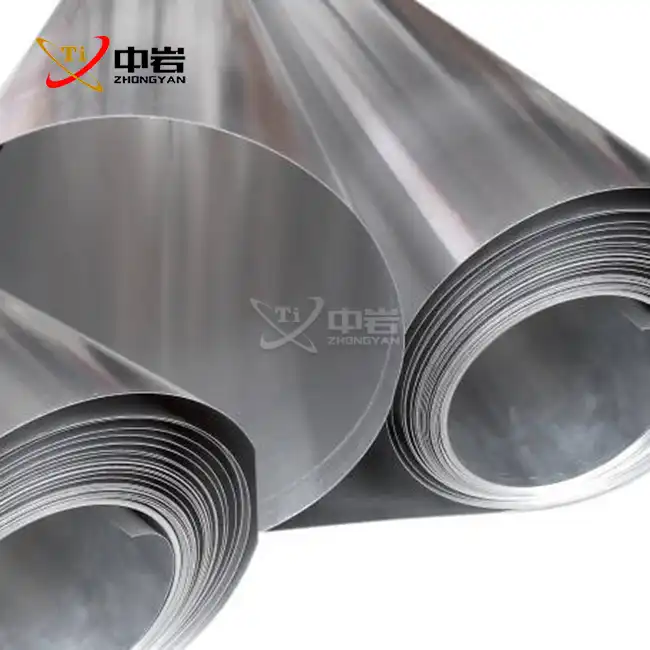
Grade 4 titanium foil plays a crucial role in French medical device manufacturing, where precision and biocompatibility are paramount. This commercially pure titanium material offers exceptional strength, corrosion resistance, and biocompatibility that make it indispensable for creating surgical instruments, implantable devices, and diagnostic equipment. French medical manufacturers rely on this titanium alloy for its superior formability and consistent quality standards that meet strict regulatory requirements across Europe.
Understanding the Properties of Medical-Grade Titanium Materials
When looking at how titanium metal is used in making medical devices, Grade 4 titanium is the strongest of the commercially pure types. This titanium sheet has a tensile strength of over 550 MPa and great flexibility. This material is useful because it resists corrosion very well in biological settings, it isn't magnetic, and it works well with biological systems.
French makers of medical devices love this strip of titanium because its mechanical qualities don't change. The material stays strong when the temperature changes between −200°C and 300°C. This makes it a good choice for using in ways to kill all the germs on something. Its low thermal expansion rate keeps it stable in size during production and use. The titanium purity level meets the ASTM B265 standards, which makes sure that the medical field gets the steady quality it needs.
In production, precision rolling is used to get the right thickness and keep the quality of the surface. This method of working with grade 4 titanium foil keeps the nanoscale intact, which makes sure that it works best for medical uses. The titanium coil that comes out can be made into different shapes to meet the needs of different production processes.
Core Applications in French Medical Device Manufacturing
Surgical Instrument Components
French makers make a lot of surgical instruments out of this material. Titanium welding makes it possible to build complicated structures while keeping them clean. Surgeons count on tools made from this aerospace-grade titanium because they are reliable and accurate. Because it can stand up to multiple cycles of sterilisation, the material is perfect for surgical tools that can be used again and again.
Precision cutting, forming, and welding are all manufacturing methods that are used to make scalpel handles, forceps, and other specialised tools for surgery. Thanks to titanium's resistance to rust, these tools will keep working even after being sterilised thousands of times. French hospitals say that the cost of replacing instruments is much lower when they use devices made with this high-quality titanium metal.
Implantable Device Manufacturing
Cardiovascular implants are a big thing that French makers do really well in. Because this titanium metal is safe, it is ideal for use in cardiovascular stents and housings for pacemakers. The strength-to-weight ratio of the material makes it possible to make lightweight implants that patients can easily carry for the rest of their lives.
This material is also very helpful for orthopedic implant making. This titanium material, which is safe for use in hospitals, is used in spine rods, hip joints, and dental implants. The osseointegration properties help bone grow around implants, which leads to better results for patients. French makers of orthopedic devices say that implants made with this certain strength of titanium work very well in the long run.
Diagnostic Equipment Components
Because MRI-compatible parts need to be made of materials that aren't magnetic, grade 4 titanium foil is perfect for making MRI machines. French businesses make specific housings, brackets, and shielding parts from this material that won't get in the way of magnetic imaging systems. The dimensional stability of grade 4 titanium foil makes sure that it always works the same way, no matter what the external conditions are.
X-ray equipment makers also use this material to make clear parts that won't get in the way of images while giving them support. The titanium's ability to resist heat means that these parts can handle the temperature changes that are normal when testing equipment is working.
Pharmaceutical Processing Equipment
Pharmaceutical manufacturing takes place in clean rooms that need materials that don't get dirty and can handle cleaning chemicals. While keeping the surface clean, this titanium mesh and solid parts offer great chemical protection. French companies that make pharmaceutical tools use this material to make mixing vessels, filtration systems, and transfer parts.
Titanium surface treatment can make very smooth finishes that stop bacteria from growing and make cleaning easier. These are very important for equipment that is used in clean places where drugs are made.
Prosthetic Device Manufacturing
External replacements are made easier by these titanium rods and sheets because they are light. French makers of prosthetics make custom arms and joint replacements that are more comfortable and last longer. The material's ability to fight fatigue makes sure it lasts a long time, even when it's used under stress cycles.
Electromagnetic protection is needed for the electronics in advanced prosthetics. The titanium bar materials keep the lightweight features that are important for making prosthesis devices comfortable while also making sure that they can be used as shielded.
Dental Device Applications
Making dental implants is a market that is growing, and French businesses are the best at using this high-quality material. The osseointegration features help bones grow around implants in a healthy way, which leads to better results for patients. This material's biocompatibility makes it good for dental crowns, bridges, and orthodontic tools.
The precise machining features make it possible to build the complicated shapes that are needed for new dental devices. This method of titanium manufacturing can be used to make custom implant abutments and surgery guides.
Laboratory Equipment Components
It is necessary for research labs to have tools that can withstand chemicals and keep its accuracy. These titanium uses go as far as making parts for centrifuges, scientific instruments, and equipment that moves samples around. The steadiness of the material guarantees that the results of delicate testing methods are always the same.
Specialised heating parts and furnaces for laboratory use because some materials stay stable at high temperatures. These parts keep the right amount of length, width, and height even when they are subjected to extreme thermal cycling conditions that are common in study settings.
Manufacturing Excellence and Quality Standards
French makers of medical devices keep strict quality standards at every stage of production. Each batch of material is thoroughly tested to make sure the surface quality, chemical makeup, and mechanical qualities are right. Systems for traceability keep track of materials from the first steps of making them to the last steps of putting together the gadget.
Quality management systems follow ISO 13485 standards for medical devices and also follow extra rules from France. Manufacturing plants keep clean rooms that are suitable for making medical devices. Statistical process control keeps an eye on all parts of production to make sure the quality stays the same.
Ultrasonic testing, surface analysis, and dimensional verification are all advanced checking methods that make sure each part is up to spec. These quality checks give medical apps the trust they need.
Advantages of Grade 4 Titanium in Medical Applications
When thinking about internal medical devices, the benefit of biocompatibility is very important to keep in mind. Grade 4 titanium foil can be safely used in the body without any problems. Long-term tests show that patients do very well with devices made from this titanium alloy.
One economic gain is that devices don't have to be replaced as often because they are more durable. Because the material lasts a long time, there are fewer revision surgeries, and healthcare costs are cheaper. When these high-quality gadgets are used, French healthcare systems report saving a lot of money.
The material can be recycled, and it can be made in a way that is good for the environment. French makers are using more and more eco-friendly methods, so this recyclable titanium metal is a great choice for making medical devices for people who care about the environment.
Market Trends and Future Developments
The French medical device business is still growing, and more people want to use advanced materials. More and more older people are driving up the demand for implantable devices, and new technologies are making it possible for doctors to use new kinds of medical tools. This material has the right properties to do well in a field that is expected to grow.
Surface modification methods may make things more biocompatible and functional. French study labs work with manufacturers to make new medical devices that use this material in the best possible ways.
Regulatory trends stress the importance of quality documentation and being able to track where materials come from. French makers use advanced tracking systems that give them the full history of materials from production to device implantation.
Conclusion
Grade 4 titanium foil continues driving innovation in French medical device manufacturing through its unique combination of strength, biocompatibility, and corrosion resistance. The material's versatility enables applications ranging from surgical instruments to complex implantable devices, supporting France's position as a leader in medical technology. As medical device requirements become increasingly sophisticated, this premium titanium material provides the reliability and performance that French manufacturers need to create life-saving medical devices. The investment in quality titanium materials translates directly to improved patient outcomes and reduced healthcare costs, making it an essential component in modern medical device manufacturing strategies.
FAQ
Q: What makes Grade 4 titanium suitable for French medical device manufacturing?
A: Grade 4 titanium offers the highest strength among commercially pure titanium grades while maintaining excellent biocompatibility. Its superior corrosion resistance, non-magnetic properties, and ability to withstand repeated sterilisation cycles make it ideal for French medical device applications that must meet strict European regulatory standards.
Q: How does the material perform in sterilisation processes commonly used in French medical facilities?
A: This titanium material excels in all standard sterilisation methods, including autoclave, gamma radiation, and chemical sterilisation. It maintains its mechanical properties and surface integrity through thousands of sterilisation cycles, making it cost-effective for reusable medical devices in French healthcare systems.
Q: What thickness ranges are available for medical device manufacturing applications?
A: Medical-grade titanium foil is available in thickness ranges from 0.025mm to 1.0mm, with custom dimensions possible based on specific application requirements. French manufacturers can specify exact dimensions, surface finishes, and mechanical properties to meet their precise manufacturing needs.
Partner with Zhongyan for Premium Grade 4 Titanium Foil Solutions
Medical device manufacturers seeking a reliable grade 4 titanium foil supplier can depend on Zhongyan's expertise and quality commitment. Our manufacturing facility in Baoji, China's Titanium Valley, provides access to premium titanium resources and advanced processing capabilities. We understand the critical requirements of medical device manufacturing and deliver materials that exceed industry standards.
Our comprehensive quality management system ensures every shipment meets ASTM B265 specifications while providing complete traceability documentation. French medical device manufacturers trust our consistent quality and reliable delivery schedules for their critical production needs. We offer custom cutting, surface treatments, and packaging solutions tailored to specific manufacturing requirements.
Quality certifications include ISO 9001:2015 standards with specialised processes for medical-grade materials. Our technical team provides engineering support throughout the design and manufacturing process, ensuring optimal material selection and processing parameters. Contact us at sales@titaniumstudy.com to discuss your specific requirements and discover how our premium titanium solutions can enhance your medical device manufacturing capabilities.
References
1. Brunette, D.M., Tengvall, P., Textor, M., & Thomsen, P. (2001). Titanium in Medicine: Material Science, Surface Science, Engineering, Biological Responses and Medical Applications. Springer-Verlag Berlin Heidelberg.
2. Rack, H.J. & Qazi, J.I. (2006). Titanium alloys for biomedical applications. Materials Science and Engineering: C, 26(8), 1269-1277.
3. Niinomi, M. (2008). Mechanical biocompatibilities of titanium alloys for biomedical applications. Journal of the Mechanical Behaviour of Biomedical Materials, 1(1), 30-42.
4. Liu, X., Chu, P.K., & Ding, C. (2004). Surface modification of titanium, titanium alloys, and related materials for biomedical applications. Materials Science and Engineering: R: Reports, 47(3-4), 49-121.
5. Geetha, M., Singh, A.K., Asokamani, R., & Gogia, A.K. (2009). Ti-based biomaterials, the ultimate choice for orthopaedic implants – A review. Progress in Materials Science, 54(3), 397-425.
6. Elias, C.N., Lima, J.H.C., Valiev, R., & Meyers, M.A. (2008). Biomedical applications of titanium and its alloys. JOM, 60(3), 46-49.