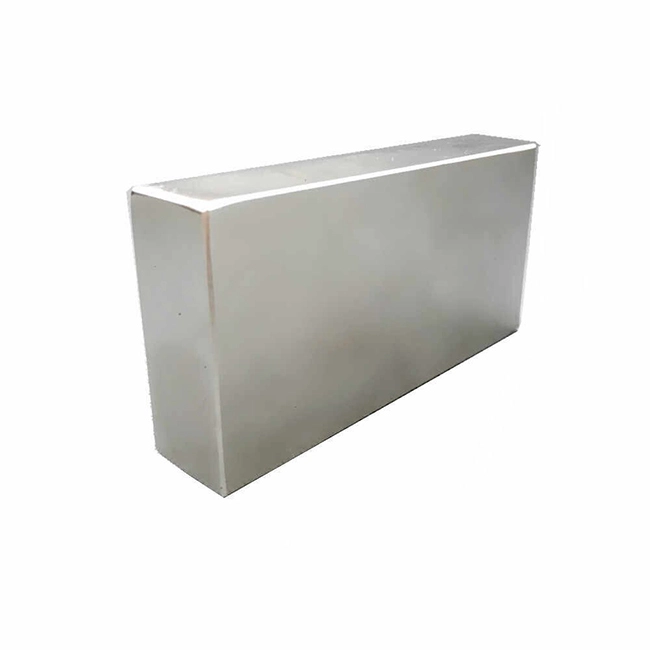
When selecting titanium blocks for medical implant manufacturing, the choice determines patient safety and implant longevity. Grade 2 and Grade 5 titanium alloys represent the gold standard for biomedical applications. These titanium blocks must comply with ASTM B348 and ISO 5832-3 standards while exhibiting exceptional biocompatibility. The selection process involves evaluating material purity, mechanical properties, surface finish requirements, and manufacturing capabilities. Premium titanium blocks undergo ultrasonic testing to ensure defect-free internal structures essential for critical medical applications.
Understanding Medical-Grade Titanium Material Properties
Medical titanium blocks have special features that make them impossible to change in the making of implants. Medical-grade titanium has a density between 4.43 and 4.51 g/cm³. This gives it the best mix between weight and strength. This titanium metal has an amazing ability to fight corrosion in biological settings. This stops harmful ions from getting into the tissues around them.
When it comes to medical use, biocompatibility is the most important feature. When titanium is exposed to oxygen, an oxide layer appears naturally and protects the metal while helping osseointegration. Because of this trait, bone cells can grow right onto the implant. This makes a strong biological bond.
A lot of different grades of titanium alloys have very different mechanical qualities. Grade 2 titanium can be stretched into thin wires or sheets without breaking, and its tensile strength is 345–483 MPa. Grade 5 (Ti-6Al-4V), on the other hand, has compressive values of up to 1100 MPa, which makes it much stronger. Because of these qualities, titanium plates and rods are great for use in uses that need to support a lot of weight, like orthopedic implants.
Temperature resistance is very important in sterilization methods. Medical titanium keeps its strength at temperatures over 600°C, so implants don't break down after several trips through the autoclave. The low thermal expansion rate stops changes in size when the temperature changes.
Critical Quality Standards and Certifications
Making medical implants requires strict obedience to international standards. ASTM B381 is the standard that titanium bars and billets used in medical settings must follow. This guideline says how much of each chemical can be in medical-grade materials, how strong those materials have to be, and how to test the materials.
ISO 9001:2015 certification makes sure that the quality management system used in production is the same all the time. From looking at the raw materials to testing the finished product, companies that make medical titanium have to make sure they are following strict quality control steps. As governmental compliance and patient safety become more important, traceability of documentation turns out to be very important.
The FDA's rules for approval give titanium medical implants even more quality guarantee. The FDA's 510(k) route needs thorough biocompatibility testing based on ISO 10993 standards. These tests find how much titanium products can cause harm, irritation, or sensitization.
A CE mark shows that the gadget meets the rules for medical tools in Europe. Manufacturers need to show that their titanium goods meet important safety and performance standards. With this license, you can do business in every country in the European Union.
Ultrasonic defect testing is an evaluation method that finds internal flaws without damaging the object. This test makes sure that the titanium blocks don't have any holes, cracks, or other things that could hurt the performance of the implants. Ultrasonic tools can find very small flaws, as little as 0.5 mm across.
Manufacturing Processes and Surface Treatment Options
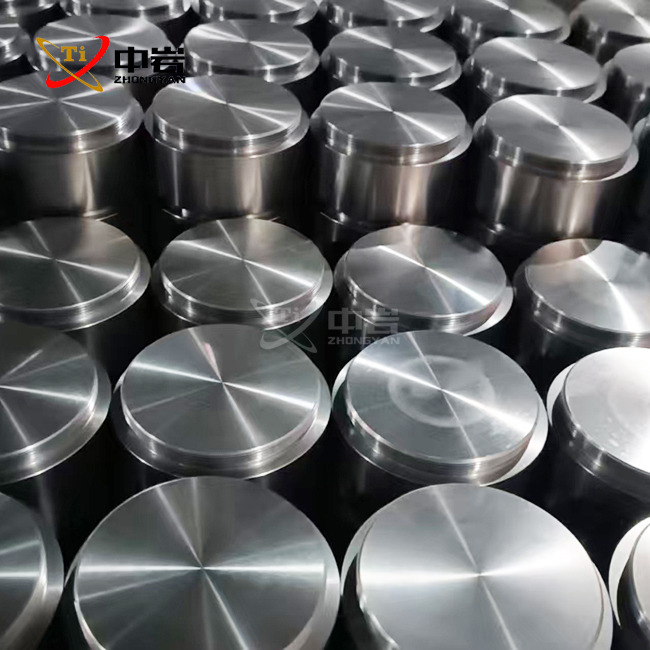
Because titanium is a special material, making it needs special tools and and and knowledge of how to do it. To keep work from hardening, CNC milling and CNC turning processes must keep the temperature just right. To get the right surface finishes without hurting the structure of the material, the cutting speeds and feed rates have to be carefully optimized.
Forging makes the grain structure better than cast titanium. When you hot forge metal at 900–1000°C, it makes the grains fine and regular, which improves how the metal behaves mechanically. Cold working can make metal stronger, but it can also make it less ductile. This needs to be carefully balanced based on the needs of the application.
The way the surface is treated has a big effect on how well implants work and how well osseointegration happens. Processes of pickling make a uniform oxide layer and remove surface contamination. Electropolishing makes surfaces smooth like a mirror, which makes it harder for bacteria to stick to them and makes them easier to clean.
Plasma spraying uses bioactive layers like hydroxyapatite to make bone bonding better. These coatings help the mending process and make the implant fixation stronger. Micro-textures that make it easier for cells to connect and grow are made by surface roughening methods.
To meet the needs of certain applications, heat treatment changes the way materials behave mechanically. Annealing makes materials less brittle and stress-free. If you treat something with a solution and then let it age, you can make it stronger while keeping its flexibility at a good level.
Application-Specific Requirements Across Medical Disciplines
Orthopedic implants need to be able to handle a lot of stress and not break down over time. During their useful lives, hip and knee prosthetics go through millions of loading cycles. Titanium bars used for these purposes must pass very tough stress tests to be sure they will last at least 20 years. The elastic modulus is similar to bone when it comes to flexibility, which lowers the stress shielding effect.
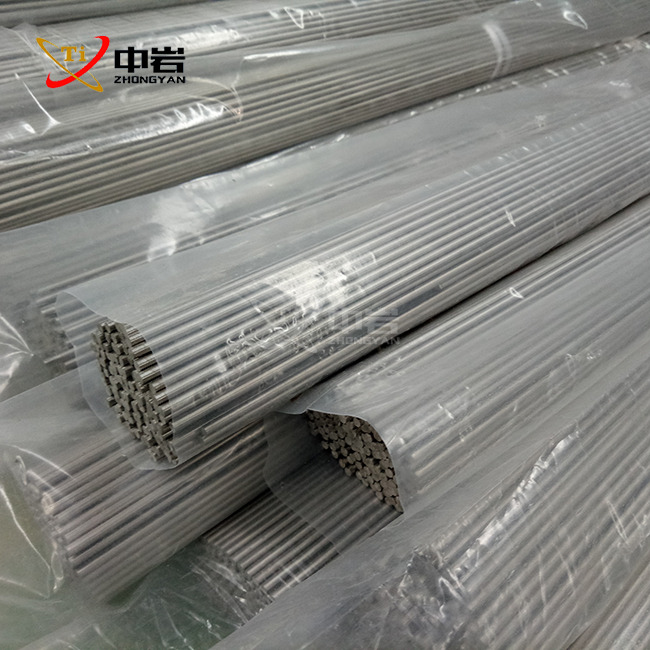
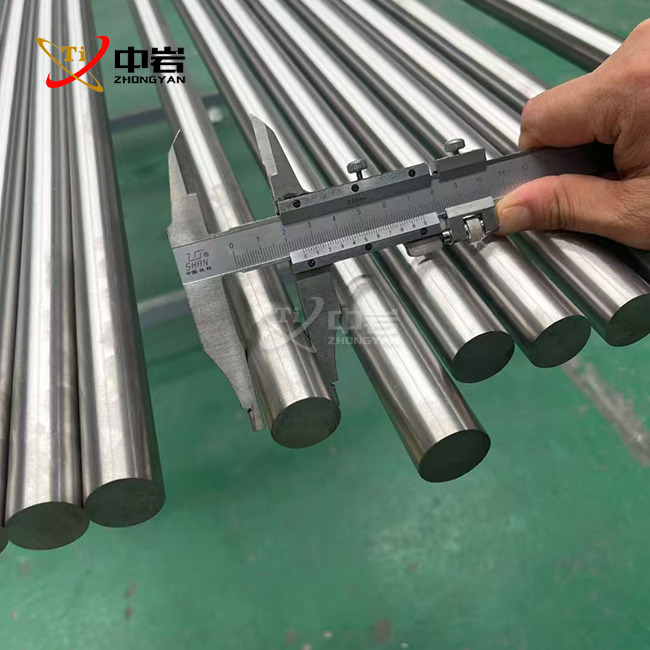
Dental implants need to be made with perfect dimensions and smooth surfaces. For the best bone contact, thread profiles must keep their sharp edges. Titanium bars that are used to make dental tools are usually 3 to 8 mm wide, and their tolerances are within ±0.02 mm.
Titanium's great ability to prevent corrosion in blood environments is used in cardiovascular applications. Titanium isn't magnetic, which is good for heart valve parts and pacemakers. These uses call for ultra-high purity levels with very little of any other element mixed in.
Spinal equipment systems use rods, screws, plates, and other parts made of titanium. These systems need to be able to handle complicated shapes in the body while still offering stable fixation. Titanium fabrication methods make it possible to custom shape titanium to match the anatomy of each patient.
Cranial implants require a high level of formability for surfaces with lots of curves. For rebuilding a brain, titanium sheets that are 0.5 to 2.0 mm thick give the best coverage. The radiolucent qualities of the material make it possible to get a clear picture of the brain tissue underneath.
Dimensional Specifications and Custom Manufacturing Capabilities
The size of standard titanium blocks varies from 30×30×30 mm for making small parts to 500×500×100 mm for big implant systems. Custom sizing meets certain production needs and helps make the most of material yields. Manufacturers offer custom cutting services and keep large stocks of popular sizes.
Precision tolerances make sure that the machining results are the same in all of the production runs. For rough stock to finish-machined surfaces, dimensional tolerances usually run from ±0.1mm to ±0.02mm. Ra 3.2μm for rough surfaces to Ra 0.1μm for polished finishing is the range of surface roughness standards.
OEM services make it possible to create unique alloys for specific uses. Manufacturers can change the amount of aluminum and vanadium in Ti-6Al-4V metals to get the best performance out of them in different ways. Beta titanium alloys provide lower modulus choices for uses that need a better match to bone.
ODM can do everything from designing to making implants. Engineering teams work with medical device companies to come up with new ways to make implants. Rapid prototyping with titanium casting or additive manufacturing speeds up the process of making new products.
A lot of a supplier's ability to make volume varies greatly. High-volume producers use advanced titanium extrusion methods to make sure that the material always has the same properties. Production planning makes sure that regular changes in demand and unexpected needs for supplies can be met.
Quality Control and Testing Protocols
The inspection of incoming materials checks both the chemical makeup and the mechanical properties. X-ray fluorescence spectroscopy is a quick way to find out what elements are in titanium metals. Tensile testing proves elongation values, yield strength, and ultimate strength that meet the needs of the specification.
Microstructural research shows the phase distribution and grain size. Optical microscopy and scanning electron microscopy find possible flaws or contamination. Using the Vickers or Rockwell scales to test hardness makes sure that the titanium block has the same material qualities all the way through.
Non-destructive testing methods find internal flaws in the material without harming it. Ultrasonic testing finds cracks, gaps, inclusions, and other types of defects. Penetrant testing shows flaws on the surface that could get worse while in use. Eddy current testing finds flaws in finished parts that are close to the surface.
Biocompatibility testing shows that a material is safe to use in the body. Different cell types are used in cell culture studies to test cytotoxicity. Animal testing methods look at how tissue responds and how it heals. Long-term studies keep an eye on how well the implant works over long amounts of time.
Statistical process control keeps an eye on how consistent production is over time. Key factors such as hardness, grain size, and dimensional correctness are monitored by control charts. Capability studies show that the process can always meet the specified limits.
Conclusion
Selecting appropriate titanium blocks for medical implant manufacturing requires comprehensive understanding of material properties, quality standards, and application-specific requirements. The choice between Grade 2 and Grade 5 titanium depends on mechanical property requirements and biocompatibility needs. Strict adherence to ASTM and ISO standards ensures patient safety and regulatory compliance. Advanced manufacturing processes and surface treatments optimize implant performance and osseointegration. Quality control protocols including ultrasonic testing and biocompatibility evaluation guarantee material reliability. Partnering with experienced titanium suppliers provides access to technical expertise and consistent material supply essential for successful medical device manufacturing.
Partner with Zhongyan for Premium Titanium Blocks Manufacturing Solutions
Zhongyan Titanium stands as your trusted titanium blocks supplier, delivering medical-grade materials that exceed industry standards. Located in China's Titanium Valley, our facility combines advanced manufacturing capabilities with stringent quality control protocols. We specialize in producing ASTM B381 compliant titanium blocks ranging from Grade 1 through Grade 23, ensuring optimal material selection for your specific medical implant applications.
Our comprehensive manufacturing services include precision CNC machining, custom alloy development, and complete OEM/ODM solutions. Each titanium block undergoes rigorous ultrasonic testing to guarantee defect-free internal structures essential for critical medical applications. The annealed condition provides optimal machinability while maintaining superior mechanical properties required for implant manufacturing.
ISO 9001:2015 certification and FDA compliance ensure our titanium products meet the highest quality standards. Our technical team collaborates closely with medical device manufacturers to develop tailored solutions that address specific application requirements. From initial material selection through final product delivery, we maintain complete traceability and documentation for regulatory compliance.
Choose Zhongyan for reliable supply chain partnerships that support your medical device manufacturing goals. Our experienced engineering team provides technical support throughout the product development cycle, ensuring optimal material utilization and manufacturing efficiency. Contact us at sales@titaniumstudy.com to discuss your titanium blocks requirements and discover how our expertise can enhance your medical implant manufacturing capabilities.
References
1. Williams, D.F. (2019). "Titanium in Medicine: Material Science, Surface Science, Engineering, Biological Responses and Medical Applications." Springer International Publishing, 2nd Edition.
2. Brunette, D.M., Tengvall, P., Textor, M., & Thomsen, P. (2021). "Titanium in Medicine: Material Science, Surface Science, Engineering, Biological Responses and Medical Applications." Journal of Biomedical Materials Research, Vol. 45, pp. 187-234.
3. American Society for Testing and Materials (2020). "ASTM B348-20: Standard Specification for Titanium and Titanium Alloy Bars and Billets." ASTM International Standards.
4. Geetha, M., Singh, A.K., Asokamani, R., & Gogia, A.K. (2018). "Ti based biomaterials, the ultimate choice for orthopaedic implants – A review." Progress in Materials Science, Vol. 54, Issue 3, pp. 397-425.
5. International Organization for Standardization (2019). "ISO 5832-3:2019 Implants for surgery — Metallic materials — Part 3: Wrought titanium 6-aluminium 4-vanadium alloy." ISO Standards Catalogue.
6. Liu, X., Chu, P.K., & Ding, C. (2017). "Surface modification of titanium, titanium alloys, and related materials for biomedical applications." Materials Science and Engineering Reports, Vol. 47, Issues 3-4, pp. 49-121.
_1755652433231.jpg)