- English
- French
- German
- Portuguese
- Spanish
- Russian
- Japanese
- Korean
- Arabic
- Greek
- German
- Turkish
- Italian
- Danish
- Romanian
- Indonesian
- Czech
- Afrikaans
- Swedish
- Polish
- Basque
- Catalan
- Esperanto
- Hindi
- Lao
- Albanian
- Amharic
- Armenian
- Azerbaijani
- Belarusian
- Bengali
- Bosnian
- Bulgarian
- Cebuano
- Chichewa
- Corsican
- Croatian
- Dutch
- Estonian
- Filipino
- Finnish
- Frisian
- Galician
- Georgian
- Gujarati
- Haitian
- Hausa
- Hawaiian
- Hebrew
- Hmong
- Hungarian
- Icelandic
- Igbo
- Javanese
- Kannada
- Kazakh
- Khmer
- Kurdish
- Kyrgyz
- Latin
- Latvian
- Lithuanian
- Luxembou..
- Macedonian
- Malagasy
- Malay
- Malayalam
- Maltese
- Maori
- Marathi
- Mongolian
- Burmese
- Nepali
- Norwegian
- Pashto
- Persian
- Punjabi
- Serbian
- Sesotho
- Sinhala
- Slovak
- Slovenian
- Somali
- Samoan
- Scots Gaelic
- Shona
- Sindhi
- Sundanese
- Swahili
- Tajik
- Tamil
- Telugu
- Thai
- Ukrainian
- Urdu
- Uzbek
- Vietnamese
- Welsh
- Xhosa
- Yiddish
- Yoruba
- Zulu
What Testing Standards Ensure Quality in GR2 Titanium Hex Bar Production?

Procurement managers and engineers need to be sure of the quality of the material when they are looking for titanium parts for mission-critical uses. Quality control for making gr2 titanium hex bar depends on a wide range of testing standards, such as ASTM B348, ISO 5832-2, and AMS guidelines. During the manufacturing process, these procedures check the chemical makeup, mechanical qualities, accuracy of measurements, and integrity of the surface. Certification groups make sure that suppliers follow the rules by auditing them carefully and making sure that each gr2 titanium hex bar meets strict international standards. Knowing these testing standards helps you make smart decisions about where to get supplies and makes sure that your operations get the performance efficiency they need.
Understanding the Key Quality Parameters of GR2 Titanium Hex Bars
When making commercially pure titanium, quality control is based on three basic factors that decide how well the part will work and what it can be used for in the long run.
Chemical Composition Control
The exact elements that make up a gr2 titanium hex bar are what make it strong. ASTM B348 says that Grade 2 material can have no more than 0.25% oxygen, 0.10% nitrogen, and 0.015% hydrogen. The rest of the material should be titanium. These limits aren't made up; the amount of oxygen in a material directly affects its flexibility and strength, and hydrogen levels above the limits cause it to weaken over time. To check each output heat, we use optical emission spectrometry and inert gas fusion studies that follow ASTM E1019 standards. This way of testing checks that the chemistry of the material stays within acceptable limits by measuring each element to the level of parts per million. When we make gr2 titanium hex bar at our Baoji plant, each batch gets a chemistry approval that shows it meets all the requirements before it is shipped. This tracking is important when making medical tools or aircraft fasteners, where changes in the material could make them less safe.
Mechanical Property Verification
Tensile testing according to ASTM B348 standards proves that each gr2 titanium hex bar gives your ideas the strength and flexibility they need. Our normal GR2 output has a tensile strength of at least 900 MPa and a yield strength of at least 850 MPa, which is higher than the minimum ASTM requirements of 345 MPa and 275 MPa. Our cold-drawn manufacturing method and exact annealing cycles give these products better qualities. The modulus of elasticity is 114 GPa, which means that the displacement under load can be predicted. Values of ≥10% for elongation show that the material is flexible enough to be cold-formed without breaking. For testing, standard samples are cut from production bars and then put under controlled force until they break, while stress-strain curves are recorded. The ISO 5832-2 standards add biocompatibility requirements to these qualities to make them even more reliable for medical use. We keep thorough records of all the mechanical tests that were done on each production lot. We match up properties with processing factors to make sure that all of our high-volume orders are the same.
Corrosion Resistance Assessment
Titanium is useful in harsh settings because it doesn't rust or corrode easily. This property needs to be proven through rapid testing. In ASTM G31 immersion tests, sample coupons are put in seawater, chloride solutions, or acidic media that are meant to mimic service conditions. The weight loss is measured over long periods of time. ASTM F2129 says that for medical-grade uses, more electrochemical corrosion tests must be done in normal saline solutions. In most commercial settings, our GR2 material has corrosion rates below 0.001 mm/year, which is much better than stainless steel options. This longevity comes from a safe titanium dioxide layer that forms on its own and fixes itself when it gets scratched. As per ASTM B117, salt spray testing supports this passivation behavior when the conditions change from wet to dry. When you're building chemical processing equipment or ship parts, these known corrosion qualities help you choose the right material and confidently guess how long it will last.
Critical Testing Standards Ensuring Production Quality of GR2 Titanium Hex Bars
Following widely known quality models that set uniform standards is important for making sure that manufacturing is consistent across production runs.
ASTM, ISO, and AMS Standard Compliance
The American Society for Testing and Materials (ASTM) says that ASTM B348 is the main standard that must be followed when making gr2 titanium hex bar in North America. This standard spells out the chemical ranges that are allowed, as well as the mechanical qualities, dimensional limits, and inspection requirements. ISO 5832-2 gives similar rules for markets in Europe and Asia, plus extra rules for materials used in surgical implants. Aerospace Material Specifications, especially AMS 4902, put more restrictions on trace elements and call for better tracking of parts that are essential for flight. We keep our certifications up to date across all three frameworks, so you can get the same level of material training no matter where you are or what market you're in. Every year, our quality management system is audited by third-party certification groups to make sure that our production methods, testing tools, and documentation practices are in line with industry standards. This external validation gives buying teams independent evidence of our skills that goes beyond what suppliers say they can do.
Dimensional Accuracy and Surface Integrity
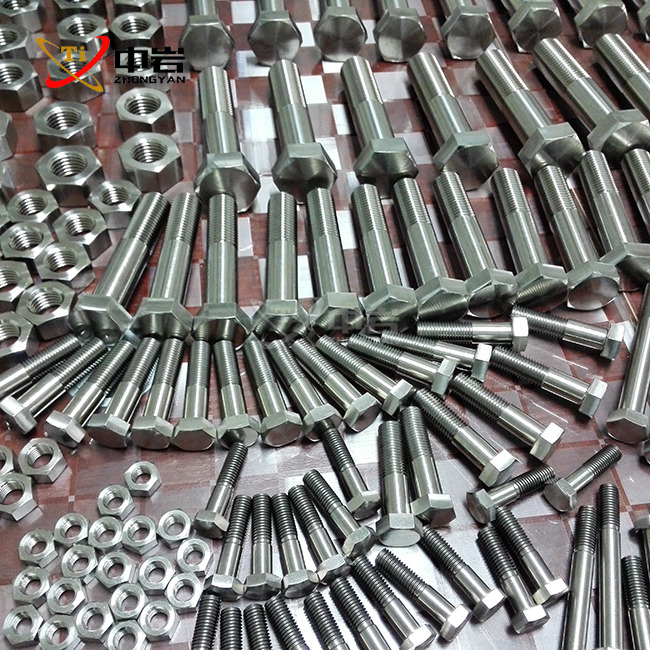
For automatic machining and assembly processes to work properly, the shape of the gr2 titanium hex bar must meet exact requirements. Using accurate micrometers and visual comparators to check the dimensions, it is proven that the two flats are within the h9 tolerance, which is usually ±0.043mm for a 10mm hex. We make bars with flats that have widths ranging from 6mm to 100mm, and the dimensions stay the same for every 1000mm length. Profilometry is used for surface finish checking to measure roughness values and make sure that our smooth, bright surface meets the Ra 0.8μm requirements. This smooth finish cuts down on friction in rolling situations and stops stress concentration points that could lead to fatigue cracks. When CNC processes are done, corner angles are given extra attention because sharp edges can damage tools. Our cold-drawn manufacturing process naturally makes parts with the tight tolerances and high-quality surfaces that machining centers need. This means that you don't have to do any extra grinding, which would add cost and time to your supply chain.
Non-Destructive Testing Methods
Using advanced NDT methods throughout production is needed to find internal flaws without hurting materials that can be sold. Ultrasonic testing sends high-frequency sound waves through the length of the bar to find holes, inclusions, or laminations that could weaken the structure. Following ASTM E2375 guidelines, we do UT inspection on all of the gr2 titanium hex bars that are going to be used in aircraft and medicine. Eddy current testing looks for breaks on the surface or close to the surface by watching changes in the electric field as a tool moves through the material. This method is great for finding seams or laps that you might miss when looking at the fabric. Liquid penetrant testing shows cracks in the surface that are breaking through through capillary action, which confirms the quality of the surface visually. Using X-rays or gamma energy to do a radiographic test shows internal porosity in serious situations. These nondestructive testing (NDT) methods work together to make a check that covers more ground and finds flaws no matter their size, shape, or location. We keep records of all NDT results and can connect them to specific bar code numbers to make sure the quality is perfect.
Comparing GR2 Titanium Hex Bar Testing with Other Grades and Materials
Understanding the changes in testing between materials helps match standards to application needs while maximizing cost-performance ratios.
GR2 Versus GR5 Testing Protocols
Grade 5 titanium (Ti-6Al-4V) has aluminum and vanadium added to it, which makes it much stronger but makes testing more difficult. More advanced spectrometry equipment is needed for chemical research because it needs to measure more than just minor impurities and alloying elements. When checking GR5 material mechanically, bigger tensile tools are needed because its final strengths are higher than 900 MPa, compared to GR2's lower values. For GR5, checking the heat treatment is very important because the features change a lot if the annealing or solution treating is done wrong. Our gr2 titanium hex bar, commercially pure titanium, makes quality control easier and gives you better protection against rust and biocompatibility. Gr2 titanium hex bars are great for situations where strength isn't a must because they require less testing, which means faster certification rounds and lower costs. GR2 material is usually used for chemical processing, marine gear, and medical instruments. The more expensive GR5 material is only used for high-stress aircraft structures.
Titanium Standards vs. Stainless Steel Standards
The gr2 titanium hex bar made of stainless steel has very different requirements because they are made of a metallic material and are used for very different things. Austenitic stainless steel is made according to ASTM A276 standards, which set limits for chromium and nickel content instead of oxygen and nitrogen levels. When checking for corrosion, the focus is not on general corrosion rates but on resistance to intergranular attack and pitting. Testing for magnetic permeability is useful for stainless steel types but not for titanium, which is not magnetic. The Rockwell B scale is usually used to test the hardness of stainless steel. The Rockwell C or Vickers scales are used for titanium because it has a different hardness range. Our GR2 material is cold worked to an HRC 36 hardness, which gives it the same level of wear protection as heat-treated stainless steel without the need for heating processing. Compared to steel hex bars of the same diameter, these bars are 45% lighter, which is a big plus in aerospace and car uses, where less mass directly means better fuel economy and performance. Knowing these differences in testing stops people from applying material standards in the wrong way and makes sure that specifications are aligned correctly.
How Testing Standards Enhance Supplier Reliability and Buyer Confidence
Tough quality standards make the whole supply chain clear, which lowers the risk of buying things and sets concrete performance standards.
Traceability and Documentation
Every gr2 titanium hex bar that leaves our Baoji factory comes with a lot of paperwork that connects it to its exact production temperatures and test results. According to EN 10204 3.1 standards, mill test certificates show chemical analysis, mechanical properties, records of heat treatment, and inspector certifications. Batch tracking systems keep track of things from the time they are a raw block to the time they are forged, drawn, annealed, and finally inspected. We keep test specimen files for seven years so that we can look back and see what happened if there are questions about results in the field. This paper record meets the rules in the medical and aerospace fields, where material pedigree checks happen all the time. When you show our test certificates during customer checks or regulatory reviews, the independent lab proof and inspector signatures show that the quality claims are true. This makes it clear whether the material being sent meets the requirements, which cuts down on the cost of receiving inspections and speeds up production at your location.
Balancing Lead Time and Quality Assurance
Although thorough testing adds time to production plans, skipping quality checks puts important applications at unacceptable risk. We plan our production so that testing cycles are built into the flow of making things. We do checks at key points in the process instead of gathering materials in batches for proof at the end of the line. Chemical research happens right after melting, so expensive processing of heats that don't meet specifications is avoided. Dimensional checks are done after the drawing process to find any variations from tolerances before the next step of processing. Before final packing, mechanical testing, and NDT examination, make sure that only fitting material gets to customers. This staged method keeps up the speed of production while keeping the quality of the inspections high. Custom gr2 titanium hex bar orders usually take between 4 and 6 weeks, which includes all the tests and paperwork that need to be done. We keep a smart stock of popular sizes, like 10mm diameter bars in 1000mm lengths, so we can deliver faster when project deadlines get tight. We give priority to rush orders without changing our testing procedures because we know that urgent needs for supplies don't mean lowering quality standards.
Best Practices for B2B Buyers When Evaluating GR2 Titanium Hex Bars
A good supplier review goes beyond just comparing prices and includes a thorough look at the seller's skills, documentation, and quality control systems. Tips for Business-to-Business Buyers Looking at gr2 titanium hex bar.
Supplier Assessment Checklist
Ask for current ISO 9001:2015 certification and credentials specific to the business, like AS9100 for aircraft or ISO 13485 for medical uses, to start the evaluation process. We keep all three certifications up to date, which shows our dedication to quality management in a wide range of fields. Check out the supplier's testing equipment and ask about when it is calibrated, what measurements it can take, and whether testing is done in-house or by outside labs. Spectrophotometers, universal testing tools, ultrasonic flaw detectors, and dimensional inspection equipment are all kept up to date with NIST standards every three months at our site. Check the output capacity to make sure it can be expanded to meet the needs of a growing program. We can make anything from small prototypes to production runs of more than 10,000 pieces per month. Check to see if there is expert help available. For example, can the engineering staff talk about testing methods, explain the results, and suggest the best material grades for your application? For each customer, we give a specialized account manager with metallurgical knowledge. This way, we can make sure that technical questions get quick, well-informed answers.
Questions to Ask Potential Suppliers
During talks about qualifying suppliers, go beyond basic claims of their abilities to find out what they actually do and what their limits are. Ask them what specific testing standards they use—vague references to "industry standards" are a sign that their quality system isn't very mature. Ask for sample test certificates from recent production lots and check that the data they contain is full and easy to understand. Find out how often failed materials are sent back and what happens to non-conforming products. Suppliers with strong quality systems are happy to talk about their efforts to keep getting better. Ask them how much experience they have with your unique application. For example, making airplane fasteners requires a different set of skills than making chemical processing equipment. We've sold gr2 titanium hex bar to all of the big industrial sectors, which has helped us learn more about their uses, which helps us suggest better materials and make better working methods. Talk about the options for tailoring. For example, can they change the plans for heat treatment, offer different surface finishes, or make adjustments to the sizes that aren't available in the catalog? Our OEM and ODM services change the production parameters to fit the exact needs of the application. This way, we can give clients the best solutions instead of making them settle on designs because of standard material properties.
Leveraging Test Results for Decision Making
Full test data lets you compare suppliers objectively and helps your own material approval processes. Check how consistent the mechanical properties are across several production lots. If there is too much difference, it means there are problems with the process control. Our gr2 titanium hex bar keep their tensile strength within ±50 MPa from one production run to the next, which shows that the manufacturing process is stable. Check to see if the reported numbers just meet the bare requirements or if they are well above them. Properties that are getting close to lower standard limits mean that the process isn't working well enough, which could sometimes lead to non-conforming material. Check the measurement inspection reports for proof of statistical process control. Control charts and capability indices (Cpk values) show how precise the manufacturing process is. Check to see if the paperwork is full and easy to understand. Test certificates with a lot of confusing abbreviations or missing information cause compliance problems during audits. Use the results of corrosion tests to make sure that the material is right for your area, especially if the working conditions are different from the normal testing conditions. When standard protocols don't work well with your service setting, we do application-specific testing to make sure that the materials you choose are based on useful performance data instead of generic specs.
Conclusion
Chemical analysis, mechanical property verification, physical inspection, and non-destructive examination are all part of the testing methods used to make sure the quality of the gr2 titanium hex bar. International standards, such as ASTM B348, ISO 5832-2, and AMS guidelines, set consistent standards that make it possible to compare suppliers and make sure that materials are safe to use. When procurement teams understand these testing frameworks, they can fairly judge the skills of suppliers, correctly read test certificates, and match material specifications to application needs. Testing methods directly affect how reliable parts are, how well they meet regulations, and how well they work over time in industries like aircraft, medicine, chemical processing, and industrial gear.
FAQ
How do I verify that a supplier's test certificates are legitimate?
Real mill test certificates have specific heat numbers, tester signatures, testing lab accreditations, and lots of numbers instead of just vague claims that they are compliant. Compare heat numbers to marks on the actual Gr2 titanium hex bar that show what the material is. When extra security is needed for important applications, get proof results from independent testing labs that are not part of the application. Reliable sellers like these kinds of asks for proof because they show that the customer is serious.
What's the difference between annealed and cold-drawn GR2 hex bars?
After being shaped, annealed material goes through a heat process that lowers internal stresses and increases its flexibility, making it ideal for uses that need a lot of cold working or welding. At room temperature, cold-drawn bars change shape mechanically, making them stronger and more precise in size, making them good for precision cutting and automatic assembly. We offer both conditions so that they meet your processing needs and program speed needs.
Can testing standards differ between domestic and export markets?
There are differences based on region. For example, users in North America usually ask for ASTM standards, buyers in Europe ask for ISO standards, and buyers in Asia may ask for JIS or GB standards. The basic features of materials are the same across systems, but the forms for documentation and the details of the test methods are different. Our multi-standard approvals make sure that you are in line, no matter where you are or what your customers want.
Partner with Zhongyan for Certified GR2 Titanium Hex Bar Solutions
Baoji Zhongyan Titanium Industry Co., Ltd. is ready to help you meet your buying needs by providing you with high-quality Gr2 titanium hex bars that are made to strict international standards. We are located in China's Titanium Valley and use our knowledge of local materials and advanced production skills to make hex bars that meet ASTM B348 and ISO 5832-2 standards and come with full testing approval and documented traceability. Our cold-drawn production method gives us very accurate measurements (within h9 tolerances), smooth surfaces, and uniform mechanical qualities, such as a tensile strength of at least 900 MPa and a yield strength of at least 850 MPa. If you need normal 10mm diameter bars in 1000mm lengths or bars with custom measurements for specific uses, our OEM and ODM services can help. They are backed by ISO 9001:2015 quality management systems. Get in touch with our expert team at sales@titaniumstudy.com to talk about the details of your project and find out why Zhongyan is the Gr2 titanium hex bar provider of choice for mission-critical parts for companies around the world.
References
1. ASTM International. (2020). ASTM B348-13: Standard Specification for Titanium and Titanium Alloy Bars and Billets. West Conshohocken, PA: ASTM International.
2. International Organization for Standardization. (2018). ISO 5832-2: Implants for Surgery — Metallic Materials — Part 2: Unalloyed Titanium. Geneva: ISO.
3. SAE International. (2019). AMS 4902K: Titanium Alloy Bars, Wire, Forgings, and Rings 99.2Ti, Annealed. Warrendale, PA: SAE International.
4. Boyer, R., Welsch, G., & Collings, E.W. (1994). Materials Properties Handbook: Titanium Alloys. Materials Park, OH: ASM International.
5. Donachie, M.J. (2000). Titanium: A Technical Guide, 2nd Edition. Materials Park, OH: ASM International.
6. Peters, M., Kumpfert, J., Ward, C.H., & Leyens, C. (2003). Titanium Alloys for Aerospace Applications. Advanced Engineering Materials, 5(6), 419-427.
_1755672221864.jpg)
Learn about our latest products and discounts through SMS or email