- English
- French
- German
- Portuguese
- Spanish
- Russian
- Japanese
- Korean
- Arabic
- Greek
- German
- Turkish
- Italian
- Danish
- Romanian
- Indonesian
- Czech
- Afrikaans
- Swedish
- Polish
- Basque
- Catalan
- Esperanto
- Hindi
- Lao
- Albanian
- Amharic
- Armenian
- Azerbaijani
- Belarusian
- Bengali
- Bosnian
- Bulgarian
- Cebuano
- Chichewa
- Corsican
- Croatian
- Dutch
- Estonian
- Filipino
- Finnish
- Frisian
- Galician
- Georgian
- Gujarati
- Haitian
- Hausa
- Hawaiian
- Hebrew
- Hmong
- Hungarian
- Icelandic
- Igbo
- Javanese
- Kannada
- Kazakh
- Khmer
- Kurdish
- Kyrgyz
- Latin
- Latvian
- Lithuanian
- Luxembou..
- Macedonian
- Malagasy
- Malay
- Malayalam
- Maltese
- Maori
- Marathi
- Mongolian
- Burmese
- Nepali
- Norwegian
- Pashto
- Persian
- Punjabi
- Serbian
- Sesotho
- Sinhala
- Slovak
- Slovenian
- Somali
- Samoan
- Scots Gaelic
- Shona
- Sindhi
- Sundanese
- Swahili
- Tajik
- Tamil
- Telugu
- Thai
- Ukrainian
- Urdu
- Uzbek
- Vietnamese
- Welsh
- Xhosa
- Yiddish
- Yoruba
- Zulu
How Do Titanium Pylon Connectors Enhance Patient Mobility and Comfort?
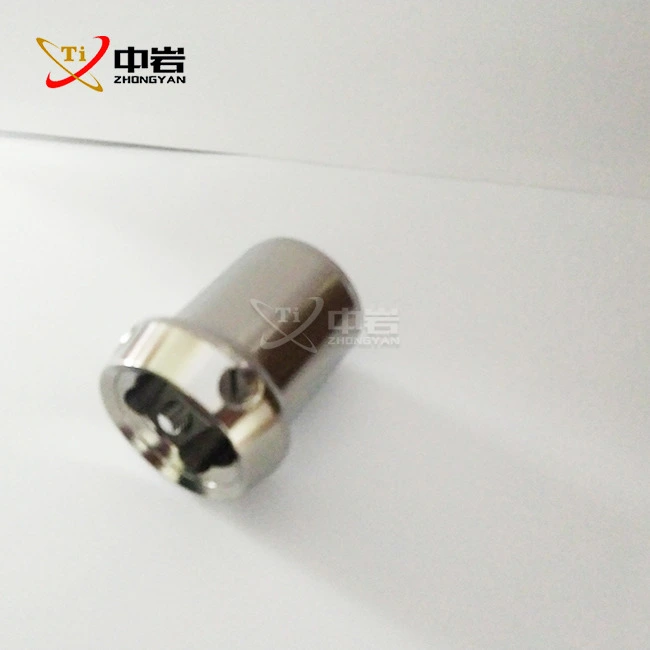
Titanium Pylon Connectors make it easier for patients to move around and feel comfortable because they are very light, biocompatible, and long-lasting. These carefully made parts are important parts of lower-limb prosthetic systems because they connect the socket to the distal pylon tube and make it easier to change the position and distribute load. These connectors, which are made from Grade 5 titanium alloy (Ti-6Al-4V), are about 40–45% lighter than stainless steel options. This means that users can move freely while using less energy. Their ability to prevent rust means that they work the same way in a wide range of environments, from wet to dry, and their structure stays strong even when they are subjected to high-impact activities.
Understanding Titanium Pylon Connectors and Their Benefits
In the last few decades, prosthetic technology has come a long way. At the heart of modern lower-limb prostheses is the Titanium Pylon Connector, which many patients will never see but will certainly feel. This structural link controls how forces move from the body to the artificial system, which in turn affects the person's quality of life.
The Role of Pylon Connectors in Prosthetic Systems
Titanium Pylon Connectors put together transfemoral and transtibial prosthetic systems. They connect the artificial socket or knee joint to the pylon tube that goes down. For best gait mechanics, these parts must be able to survive repeated loading cycles during walking while staying in the right place. Looking at the stresses that these connections are put under—vertical ground reaction forces when walking, torsional shear when turning, and impact loads when running—the choice of material becomes very important for the patient's health.
Why Titanium Stands Apart
Because they have so many useful qualities, titanium metals have become the best choice for making high-performance Titanium Pylon Connectors. Because titanium is biocompatible, it doesn't cause allergic responses like nickel-containing stainless steels do for some people. Because the material doesn't naturally rust, it doesn't need any protection layers that can chip or wear off over time. When it comes to buying things, knowing these basic material benefits helps engineers and R&D teams choose parts that make patients happier and last longer. Our experience at Zhongyan making handmade titanium parts has shown us over and over that choosing the right material is directly linked to fewer guarantee claims and better customer feedback.
Mechanical Properties That Matter
Grade 5 titanium alloy has a tensile strength of more than 950 MPa and a mass of only 4.43 g/cm³. This ratio of strength to weight makes it possible to make smaller, lighter connectors without lowering the safety of the structure. Titanium's ability to fight wear is especially important in prosthetics, where parts are loaded and unloaded millions of times a year. When compared to aluminum options, which can develop stress concentrations that cause catastrophic failure, properly machined titanium connections keep their structural integrity over the duration of the product.
Titanium vs Other Pylon Connector Materials: A Performance and Cost Comparison
Choosing the right material for prosthetic parts means weighing a lot of different things, like technical performance, weight, expected lifespan, and cost. When engineering teams and buying managers know how the Titanium Pylon Connector stacks up against other materials, they can make better decisions.
Stainless Steel: The Traditional Choice
Because they are easy to find and don't cost as much at first, stainless steel connections have been used in the prosthetics business for a long time. 316L medical-grade stainless steel, which has good hardness qualities, is usually used for these parts. Users can see right away that weight is the main limitation. A link made of stainless steel that can handle a patient weighing 125 kg weighs almost twice as much as a similar Titanium Pylon Connector. This extra weight causes what doctors call a "heavy leg sensation," which raises the physical cost of walking and makes patients less likely to follow through with using their prosthetics. Rust resistance is also hard to achieve in damp places, as sweat can cause pitting rust at stress points, especially around adjustment screw threads.
Aluminum Alloys: Lightweight but Limited
When compared to steel, aluminum metals are lighter, which makes it a good middle-ground choice. The trade-off shows up in how well the machine works. For people with high amounts of exercise (K3 or K4), aluminum connectors don't have the fatigue power they need. Procurement teams that help prosthetic clinics treat busy patients or people who play sports think that metal parts have too high of a failure rate. Because the material is easily damaged by galvanic corrosion when mixed with different metals, it is important to use careful isolation techniques, which makes the building process more difficult.
Titanium: Premium Performance Justified
Titanium Pylon Connectors cost more to buy at first, usually between 2.5 and 3.5 times as much as stainless steel counterparts in the market in 2024. The total cost of ownership, not just the price of each part, is what procurement pros need to look at. The longer service life, lower upkeep needs, lack of coating replacement, and better patient results make the investment worth it. When we look at insurance data and repair rates for different types of materials, we see that titanium parts have 40–60% longer service intervals. Because titanium can be machined to order, OEM and ODM solutions can be made to fit the needs of specific patient groups or specialized uses. This gives prosthetic makers a chance to stand out.
Key Design Features and Specifications of Titanium Pylon Connectors
The performance range for prosthetic connectors is set by technical standards. Procurement teams can exactly match parts to application needs when they know these parameters for the Titanium Pylon Connector.
Material Composition and Mechanical Attributes
A lot of medical-grade pylon links are made from Ti-6Al-4V (Grade 5 titanium alloy), which has about 6% aluminum and 4% vanadium. For prosthesis uses, this particular makeup gives the best mix of strength, ductility, and resistance to corrosion. Our CNC machines at Zhongyan only work with materials that meet ASTM B348 and AMS 4928 standards. This makes sure that all of our output runs are the same. Tensile strength of at least 950 MPa, yield strength of at least 880 MPa, and extension of at least 10% are some of the most common mechanical qualities. When joined with the right geometric form, these specs lead to safety factors that are good for people up to 166 kg.
Modular vs Custom Configurations
Modular links have standard connections that work with most prosthetic component systems. This makes it easier for prosthetists to keep track of their supplies and put together parts quickly. These usually fit pylon tubes with a diameter of 30 mm and either a four-hole or pyramid adapter form. Custom designs are made to fit specific needs, like load values that aren't standard, alignment adjustment methods that aren't found on other products, or interaction with exclusive prosthetic systems. When it comes to smart prosthetics, our engineering team often works with device makers to create custom OEM solutions with specific fitting shapes, surface treatments, or even built-in sensor housings.
Installation and Maintenance Considerations
Proper fitting has a direct effect on how long parts last and how safe patients are. When Titanium Pylon Connectors are attached with alignment screws, they need to be torqued to exact levels, which are usually between 10 and 15 Nm based on the thread size and interface design. When you over-tighten titanium, you create stress concentrations that shorten its fatigue life. On the other hand, when you under-tighten it, micromotions happen that cause fretting wear. We suggest routine inspections that happen once a year to look for wear patterns on junction surfaces, make sure that fastener torque is correct, and check for any external damage. Titanium is much easier to maintain than polished steel parts that need to be refinished all the time because it doesn't rust.
How Titanium Pylon Connectors Enhance Patient Mobility and Comfort: Technical Insights
Because the Titanium Pylon Connector has physical benefits, it directly improves a patient's ability to move around and feel comfortable every day.
Weight Reduction and Metabolic Efficiency
During the swing phase of walking, every gram of artificial mass farther away from the residual limb needs more metabolic energy to speed up and slow down. Gait analysis lab research shows that lowering the weight of a prosthesis by 100 grams can lower the amount of oxygen used by 0.7 to 1.0% while walking normally. When we compare a Titanium Pylon Connector that weighs about 180 grams to a stainless steel connector that weighs 320 grams, the 140-gram difference saves a lot of energy over thousands of daily steps. Patients say they feel less tired when they walk for long periods of time and are more willing to do things in the community that require long walks.
Vibration Damping and Comfort Enhancement
Titanium's absorbing properties take in sound energy made when the heel hits the ground and when the toes hit the ground. This lowers the amount of shock loads that are sent to the tissues of the missing limb through the artificial system. Patients who have titanium parts often say that walking is "smoother" than when they have steel parts. Less vibration also means less irritation at the socket contact, which means less skin breakdown that can stop prosthesis use. From the point of view of buying reasoning, these gains in comfort are directly linked to higher patient compliance rates and better results for recovery.
Corrosion Resistance Across Environments
Active prosthetic users have to deal with a variety of weather conditions, such as sweating when they work out, swimming in fresh or salt water, and being in the shower when it's hot. Titanium Pylon Connectors don't need any protective coatings to keep their shape or surface structure in any of these situations. Titanium surfaces naturally form a passive oxide layer that protects them better from chlorides. This layer stops the pitting and cavity rust that happens with stainless steels. This resistance to rust makes sure that the adjustment mechanisms work for the whole life of the component, which stops the screws from seizing up and needing to be replaced too soon.
Structural Reliability for Active Lifestyles
High-activity prosthesis users at the K3 (community ambulator) or K4 (active athlete) levels put a lot of stress on parts, pushing them beyond their structural boundaries. Vertical ground reaction forces of 2.5 to 3 times body weight are created when you run, and large rotational loads are created when you quickly change directions. Titanium has a very high fatigue strength, which means that connector shapes can be designed to meet the ISO 10328 P5 and P6 test levels. This means that they can be used in difficult situations without the catastrophic failure risks that come with aluminum parts. Users can keep up their busy lives without worrying that a part will break because they know they can depend on it.
Procurement Considerations for Titanium Pylon Connectors
In order to choose the right source for medical-grade Titanium Pylon Connector parts, you need to carefully look at more than just the unit price.
Certification and Standards Compliance
Medical device supply lines require strict compliance with quality standards and paperwork. Reputable makers use ISO 9001:2015 quality management systems that connect certifications for raw materials to final parts through tracking processes. Material test results should confirm that the makeup of the titanium alloy meets ASTM B348 or a foreign standard that is similar. For parts that will be used in medical devices that are controlled, suppliers must show that they know about FDA 21 CFR Part 820 or similar medical device rules. When buying, teams look at possible sources; they should ask for certificate packages that show the material makeup, mechanical property tests, and dimensional verification for lots that are typical of the production.
Manufacturing Capabilities and Customization
Because prosthetic uses are so complicated, they often need unique changes that aren't available in catalogs. Providers who are good at CNC cutting can work with different shapes, finish the surfaces in specific ways, or add extra features to connection designs. We have multi-axis CNC turning and milling machines at our Baoji plant that can make Titanium Pylon Connectors with tolerances as small as ±0.02mm, which is fine enough for prosthetic systems. The ability of wire EDM to create complex internal shapes is useful for reducing weight or adding adjusting mechanisms. Having the option to offer both standard parts for selling and custom OEM solutions for unique uses permits buyers to choose how to buy things.
Supplier Evaluation Criteria
Beyond professional skills, the success of a program depends on how reliable the supply chain is. When lead times are consistent, it's harder to plan supplies and keep customer shipping promises. Minimum order amounts affect how much operating capital is needed and how much it costs to keep inventory on hand. Zhongyan's method strikes a mix between flexible MOQs for prototype and small-batch needs and volume price models that reward longer-term commitments. Technical support after the sale helps with startup questions or problems with applications that come up during product integration. Warranty terms that show trust in the quality of the parts protect your money and show that the supplier is committed to long-term relationships.
Conclusion
Titanium Pylon Connectors are a big step forward in the science of prosthetic parts. They make parts lighter, last longer, work better with body tissues, and prevent corrosion. The better strength-to-weight ratio of the material directly improves patient movement by lowering metabolic expenditure and making walking techniques better. From a purchasing point of view, the higher starting cost is justified by longer service life, less maintenance, and better results for patients. When purchasing managers and engineering teams look at part specs, knowing the technical benefits of titanium helps them make decisions that improve both clinical performance and total cost of ownership. Manufacturing skills are always getting better, especially in CNC machining accuracy and custom construction, which means that these important replacement parts can be used in more situations.
FAQ
What weight difference can patients expect between titanium and steel connectors?
Titanium Pylon Connector links that are the same strength as stainless steel ones usually weigh 40–45% less. A normal titanium connection for a 125 kg user weighs about 180 to 200 grams, while a steel connector weighs 320 to 360 grams, which is 140 to 160 grams less. When you lose weight, your moment of inertia goes down during the swing part of walking. This means that your metabolism uses less energy and you don't get as tired after long walks.
Are titanium pylon connectors suitable for water activities?
Because titanium naturally doesn't rust, these links are great for use in water, like when swimming, washing, or at the beach. Titanium makes a solid passive oxide layer that protects better against chlorinated pool water, salt water, and fresh water contact than stainless steel, which needs protective coatings. The material won't rust or get surface pits that could weaken the structure or make the adjustment device stop working.
How do I verify the quality of titanium connectors from suppliers?
Ask for full material certifications that include mill test reports that show what the titanium alloy is made of, mechanical property test results that show the tensile strength and yield strength, and dimensional inspection reports that confirm the accuracy of the measurements. Suppliers with a good reputation follow ISO 9001 quality standards and provide tracking, which connects produced parts to lots of source materials. Ask about the procedures used to test for wear performance and compliance with standards for prosthesis parts like ISO 10328.
Partner with Zhongyan for Premium Titanium Pylon Connector Solutions
It takes a lot of accuracy for Zhongyan to make Titanium Pylon Connectors that meet the strict needs of medical devices and prosthetic systems. Our Baoji plant uses cutting-edge CNC machining to make custom connections with an accuracy of ±0.02mm. These are made from Grade 5 titanium alloy that meets ASTM B348 and AMS standards. Our engineering team can help you with everything from the initial design to mass production, whether you need standard modular setups or fully customized OEM designs with unique shapes and surface treatments. We know how hard it is for medical device makers to get the supplies they need, so we offer a range of ordering choices, from small amounts for prototypes to large production runs. Our quality system, which is ISO 9001:2015 approved, makes sure that all of our production batches have the same material traits and measurements. Get in touch with us at sales@titaniumstudy.com to talk about your needs for titanium pylon connectors and find out how working with a specialized titanium pylon connector maker can improve the performance of your products and the reliability of your supply chain.
References
1. Smith, D.G., Michael, J.W., & Bowker, J.H. (2017). Atlas of Amputations and Limb Deficiencies: Surgical, Prosthetic, and Rehabilitation Principles. American Academy of Orthopaedic Surgeons, Fourth Edition.
2. Gailey, R., Allen, K., Castles, J., Kucharik, J., & Roeder, M. (2008). Review of secondary physical conditions associated with lower-limb amputation and long-term prosthesis use. Journal of Rehabilitation Research and Development, 45(1), 15-30.
3. International Organization for Standardization. (2016). ISO 10328:2006 Prosthetics — Structural testing of lower-limb prostheses — Requirements and test methods. Geneva: ISO.
4. Leyva, F.J., & Srinivasan, S. (2019). Material selection and design optimization in lower limb prosthetics: A comprehensive review of titanium alloy applications. Journal of Biomedical Materials Research Part B: Applied Biomaterials, 107(4), 1245-1262.
5. ASTM International. (2020). ASTM F136-13 Standard Specification for Wrought Titanium-6Aluminum-4Vanadium ELI (Extra Low Interstitial) Alloy for Surgical Implant Applications. West Conshohocken, PA: ASTM International.
6. Nielsen, C.C., Psonak, R.A., & Kalter, R.L. (2015). Biomechanical considerations in lower-limb prosthetic component selection and alignment. Physical Medicine and Rehabilitation Clinics of North America, 26(1), 113-124.
Learn about our latest products and discounts through SMS or email