- English
- French
- German
- Portuguese
- Spanish
- Russian
- Japanese
- Korean
- Arabic
- Greek
- German
- Turkish
- Italian
- Danish
- Romanian
- Indonesian
- Czech
- Afrikaans
- Swedish
- Polish
- Basque
- Catalan
- Esperanto
- Hindi
- Lao
- Albanian
- Amharic
- Armenian
- Azerbaijani
- Belarusian
- Bengali
- Bosnian
- Bulgarian
- Cebuano
- Chichewa
- Corsican
- Croatian
- Dutch
- Estonian
- Filipino
- Finnish
- Frisian
- Galician
- Georgian
- Gujarati
- Haitian
- Hausa
- Hawaiian
- Hebrew
- Hmong
- Hungarian
- Icelandic
- Igbo
- Javanese
- Kannada
- Kazakh
- Khmer
- Kurdish
- Kyrgyz
- Latin
- Latvian
- Lithuanian
- Luxembou..
- Macedonian
- Malagasy
- Malay
- Malayalam
- Maltese
- Maori
- Marathi
- Mongolian
- Burmese
- Nepali
- Norwegian
- Pashto
- Persian
- Punjabi
- Serbian
- Sesotho
- Sinhala
- Slovak
- Slovenian
- Somali
- Samoan
- Scots Gaelic
- Shona
- Sindhi
- Sundanese
- Swahili
- Tajik
- Tamil
- Telugu
- Thai
- Ukrainian
- Urdu
- Uzbek
- Vietnamese
- Welsh
- Xhosa
- Yiddish
- Yoruba
- Zulu
What Should You Consider Before Choosing Titanium Blocks for Manufacturing?
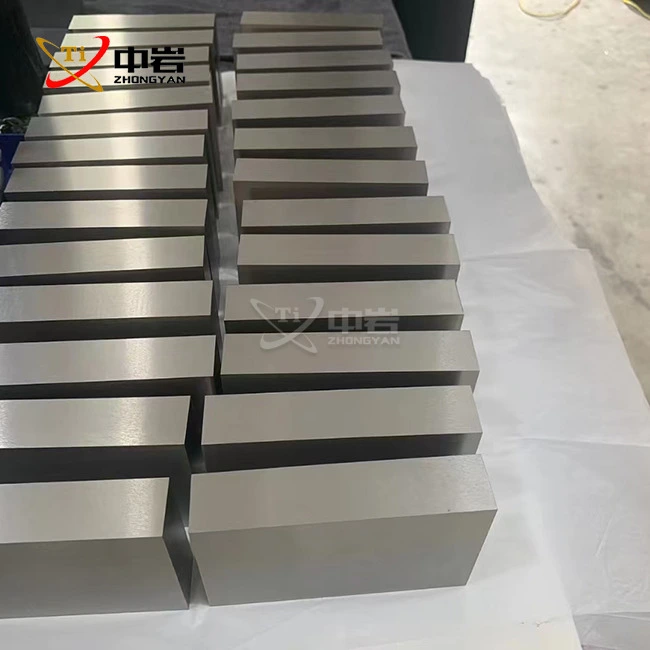
When choosing titanium blocks for precision manufacturing, you need to look at how well the material grade fits your needs, its mechanical properties (such as tensile strength and fatigue resistance), the supplier's certifications (such as ASTM, AMS, or ISO compliance), how easy it is to machine, how reliable the supply chain is, and the total cost of ownership. When it comes to structural stability, vacuum arc remelting and forging titanium blocks are better than cast options. This makes them ideal for use in aerospace bulkheads, medical implant stock, and subsea valve bodies where failure of the material is not an option.
Understanding Titanium Blocks and Their Key Properties
Titanium blocks are thick, rectangular, or cube-shaped pieces of titanium metal that are made by forging or rolling in more than one way. Unlike normal plate cutting, each of these forged blocks is handled in a way that ensures a specific grain flow orientation. This makes sure that safety-critical parts have the strongest structures possible. Vacuum arc remelted (VAR) ingots are usually the first step in the production process. These go through a lot of hot forging to get rid of any internal air pockets and make the microstructure regular.
What Makes Titanium Blocks Different from Other Metal Forms
The distinctive feature of titanium blocks is their highly polished grain structure, which is the result of careful casting. This process forms directional grain flow that is matched with the geometry of the part. This makes it much more resistant to impact and wear. Forged blocks don't have porosity problems like cast titanium or machined-from-bar stock, which can make a structure less reliable. The strength-to-weight ratio of titanium blocks is about 40% higher than that of steel. They are also very resistant to corrosion in chemical and sea conditions, where stainless steel can pit.
Critical Material Properties That Define Performance
Titanium blocks are exceptional in many ways that make them necessary in tough situations. The freezing point goes as high as 1,668°C (3,034°F), which makes it stable at high temperatures. Its density is about 4.5 g/cm³, which is almost half that of steel. This means that it is much lighter than steel without losing any of its power. The titanium dioxide layer forms a solid barrier against corrosion. If it gets broken, it fixes itself, keeping saltwater, acids, and industrial chemicals at bay. These features work together to solve three main problems: making flight structures lighter, keeping things from breaking down too soon in corrosive settings, and making sure that medical devices are biocompatible.
Titanium Grade Selection: Grade 2 Versus Grade 5
Understanding the changes between grades is an important part of choosing materials. Grade 2 (commercially pure titanium) is very strong, but not very strong (its tensile strength is about 345 MPa). It is also very resistant to rust and easy to shape. This grade is good for things like chemical processing equipment and heat exchanger parts that need to be resistant to rust more than they need to be strong. An alpha-beta metal called Grade 5 (Ti-6Al-4V) has a much higher tensile strength (about 895 MPa) and works well at high temperatures. This makes it the material of choice for high-performance racing and aircraft structural parts. The alloying elements—6% aluminum and 4% vanadium—make the metal stronger while keeping its machinability, but they come at a higher cost than commonly pure grades.
Key Factors to Evaluate When Choosing Titanium Blocks
To choose the right titanium blocks, you need to carefully look at a number of technical and business factors that have a direct effect on the final product and the overall cost of the project.
Material Grade and Alloy Composition Alignment
Your application setting determines which grade you get. Grade 5 titanium blocks are used in aerospace landing gear parts because they have better fatigue strength under cycle loading situations that range from very cold temperatures to 400°C. Medical implant makers usually choose Grade 23 (Ti-6Al-4V ELI, or "Extra Low Interstitial") blocks because they are better at integrating with the body and being biocompatible. Grade 2 titanium blocks are often used in subsea equipment because they are the most resistant to rust in saltwater and hydrogen sulfide, which are conditions where stress corrosion cracking kills less durable metals. In your industrial situation, the decision process should weigh the need for strength against the risk of corrosion and the wide range of temperatures that can happen.
Mechanical Properties and Structural Integrity Requirements
It's important to think about more than just tensile strength. You should also look at fracture hardness, fatigue crack spread resistance, and creep behavior at working temperatures. Because they have a more uniform grain structure and no internal breaks, forged titanium blocks have a longer wear life than cast plates. When building parts that will be loaded and unloaded dynamically, like compressor discs or connecting rods, the stress strength is what you need to keep in mind. To make sure they meet design requirements, material certificates should list the yield strength, final tensile strength, elongation percentage, and decrease of area numbers.
Machinability Considerations and Manufacturing Efficiency
Titanium is hard to machine because it doesn't conduct heat well and reacts chemically with cutting tool materials. This raises the cost of production. To keep the work from getting too hard and the tools from wearing out, titanium blocks need to be cut at slower speeds, with rigid machine setups, and with the right amount of water. Grade 2 is easier to make than Grade 5 because it is not as hard, but both grades can be improved by using the right tools. Think about the buy-to-fly ratio when looking at titanium blocks. This is the original block weight compared to the end component weight. Near-net-shape forged blocks cut down on cutting time and waste material, which improves the total economics of manufacturing even though the cost of raw materials is higher per kilogram.
Economic Factors: Pricing, Availability, and Supply Chain Logistics
Titanium blocks have a wide range of prices that depend on their grade, size, amount, and the state of the market. Prices for Grade 5 titanium blocks on the market right now run from $25 to $40 per kilogram, based on the amount being bought and the supplier. Lead times range from 8 to 16 weeks for normal sizes and up to 20 weeks or more for custom cast blocks that need to meet specific certification or size requirements. Transportation procedures, import taxes, and inventory carrying costs are all things that need to be thought about in a global supply chain. Building partnerships with suppliers in places like Baoji, China (Titanium Valley), or US-based mills can help with supply security and technical support as a product is being developed.
How to Match Your Manufacturing Needs with the Right Titanium Blocks
To match the right material specs to the right application needs, you need to know how different industries use titanium blocks and what performance metrics are used to make choices.
Aerospace Applications: Structural Components and Engine Parts
Critical load-bearing nodes, wing box parts, bulkheads, and landing gear fittings are made from titanium blocks by aerospace makers. For these uses, the material needs to be able to handle being loaded and unloaded many times at different temperatures while also meeting high standards for approval and traceability. Specifications for buying things usually include AMS standards, like AMS 4928 for Grade 5 bars and blocks, and ask for full test reports that include information on the material's chemistry, mechanical qualities, and ultrasonic inspection results. The aircraft industry gives more weight to suppliers that have AS9100 approval and a history of sending defect-free materials that keep production from being interrupted, which costs a lot of money.
Medical Device Manufacturing: Implants and Surgical Instruments
For patient-specific orthopedic implants, oral abutments, and surgery tools, the medical industry uses titanium blocks as milling stock. CAD/CAM machines take these blocks and use them to make unique limbs, knee and hip implants, and devices that fuse the spine. Grade 23 titanium blocks are better because they are more biocompatible and can osseointegrate with human bone tissue. This stops stress buffering effects that make implants weaken. Medical device makers need titanium blocks that have been proven to meet ASTM F136 standards and ISO 13485 quality management systems. This keeps the regulatory approval paths open.
Industrial Equipment: Valves, Pumps, and Chemical Processing Components
When titanium blocks are cut, they are used to make valve bodies, high-pressure pipes, pump impellers, and heat exchanger tube sheets in the oil and gas industries. These parts have to be able to withstand harsh chemicals, high pressures, and high temperatures while still staying the same size. Grade 2 titanium blocks offer the best balance of cost and performance for applications that need to resist corrosion. They are resistant to chloride stress corrosion cracking, which destroys stainless steel alternatives. In these industries, purchasing managers choose providers based on how easily they can track down materials, test them, and make custom block sizes that reduce waste during machining of big parts.
Evaluating Supplier Capabilities and Certifications
Choosing a supplier is more than just comparing prices. Titanium block providers you can trust have ISO 9001:2015 quality management certification, strong testing facilities (for example, spectrometry, tensile testing, and ultrasonic inspection), and full material certificates. Because Baoji Zhongyan Titanium Industry is in China's Titanium Valley, they have access to a lot of titanium materials, modern processing tools, and research institutions that help them keep the quality of their products high. When reviewing possible sources, check to see if they can do custom forging, CNC machining for near-net-shape delivery, and expert support to help you choose the right materials.
Procurement Best Practices for Titanium Blocks
To strategically source titanium blocks, you need to know about the different suppliers, the certification standards, and the best ways to balance quality, cost, and delivery trustworthiness.
Identifying Reputable Suppliers and Certification Standards
Suppliers of high-quality titanium blocks keep documents that show they follow international standards. Certifications like ISO 9001:2015 make sure that the quality management system is strict, and certifications for specific industries (like AS9100 for aircraft or ISO 13485 for medical products) show that the company has specialized knowledge. According to ASTM B381 (forged titanium blocks) or AMS standards, a material's chemical makeup and mechanical qualities can be trusted. When buying from sellers around the world, make sure they test their products with a third party and give you English-language test results that show how each lot can be tracked. As an example, Baoji Zhongyan Titanium Industry provides ASTM and AMS-compliant titanium blocks that are made using ISO 9001:2015-certified methods and come with full material paperwork.
Managing Lead Times, MOQ, and Custom Requirements
Lead times for standard titanium blocks are 8 to 12 weeks, but for custom-forged sizes, they are 16 to 20 weeks because they have to be made in small batches. Minimum order amounts range from one piece for specific uses to multiple tons for production plans and depend on the supplier and block size. When making your purchases, you should think about whether near-net-shape forging or extra CNC pre-machining services will make your own production easier. Suppliers that offer combined services, such as providing raw blocks and precision machining, can simplify supply lines and make it easier to work with fewer vendors. Custom needs, like a certain grain flow direction, approved test coupons, or special heat treatments, should be discussed during the quote phase to make sure that the lead time promises are true.
Building Strategic Supplier Partnerships
Having long-term ties with titanium block providers has benefits beyond just getting better prices. When the market is tight, preferred supplier deals can help make sure that capacity is allocated, give priority technical support for new product development, and allow joint efforts to lower costs through material optimization studies. Suppliers who can do a lot of different kinds of cutting, like Zhongyan's CNC turning, milling, and EDM services, can be more than just suppliers of materials. Regular performance reviews that look at things like on-time delivery, material conformance rates, and how quickly you respond to technical questions help you keep relationships that are good for both sides and help you reach your production goals.
Case Studies and Practical Examples of Titanium Blocks in Manufacturing
Real-world examples show how choosing the right titanium blocks and working with the right seller can give any industry real industrial benefits.
Aerospace Weight Reduction Success
A big aircraft company changed the design of landing gear beam parts by switching from steel forgings to Grade 5 titanium blocks. This cut the weight by 42% while still meeting the standards for structural strength. The forged titanium blocks made the grain run in a way that was aligned with the main load lines. This made the fatigue resistance better than the steel design. This saved weight spread through the plane's frame, allowing it to carry more cargo, which will be worth millions of dollars over the life of the plane. Material tracking and approval to AMS 4928 standards made sure that regulations were followed, and technical help from the seller during the qualification phase cut the program's timeline by six months.
Medical Device Customization Through Precision Machining
A company that makes orthopedic implants gets Grade 23 titanium blocks so that 5-axis CNC cutting can be used to make knee implants that are unique to each patient. The near-net-shape blocks, which were already made to within 5 mm of the end shape, cut the time it took to machine by 35% compared to starting with billets that were too big. Material biocompatibility approval to ASTM F136 and proof of compliance with ISO 13485 quality systems made it easier to send regulatory applications to the FDA. The supplier's ability to deliver uniform microstructure and mechanical qualities across production lots got rid of worries about batch-to-batch variability that used to require a lot of validation testing.
Chemical Processing Equipment Corrosion Resistance
After having early failures due to chloride pitting corrosion, a chemical processing business swapped out stainless steel valve bodies for parts made from Grade 2 titanium blocks. The titanium blocks worked well in the harsh bleach factory setting for over eight years without any upkeep. The stainless steel parts, on the other hand, only lasted 18 months. Even though the original cost of materials went up by 3.5 times, the savings from not having to pay for unplanned downtime and replacement labor paid off within the first year of operation. Suppliers working together on choosing materials and setting up protocols for stress corrosion testing gave trust in the choice to switch materials.
Conclusion
To choose the right titanium blocks for production, you need to look at a lot of things, like the material grades, mechanical qualities, source certifications, and the total cost. The grade you choose should depend on the needs of the product. For example, Grade 2 is best for maximum corrosion protection, Grade 5 is best for high-strength aircraft uses, and Grade 23 is best for medical biocompatibility. A good procurement process combines scientific requirements with the abilities, wait times, and quality assurance systems of the suppliers. Strategic relationships with approved providers like Baoji Zhongyan Titanium Industry give you access to knowledge, the ability to track materials, and production support that go beyond just getting materials. Choosing the right titanium blocks is important for production because they affect how fast and reliably parts are made and how much they cost in the long run. This is true whether you are making aerospace structural parts, medical implants, or tools for chemical processing.
FAQ
Which Titanium Grade Works Best for Aerospace Applications?
Grade 5 (Ti-6Al-4V) titanium blocks are used a lot in aircraft structures because they are stronger than they are light and don't wear down easily. This alpha-beta metal has a tensile strength of about 895 MPa and can be worked with in temperatures ranging from very cold to 400°C. For bars and blocks, aerospace standards usually refer to AMS 4928, which calls for full tracking and ultrasonic testing to get rid of any internal flaws. Grade 23 (Ti-6Al-4V ELI) is used in specific situations where better resistance to breaking and damage is needed.
How Can I Verify Titanium Block Quality Before Purchase?
Ask for full test results on the material that show its chemical makeup (using optical emission spectrometry), its mechanical qualities (using tensile testing according to ASTM E8), and its internal soundness (using ultrasonic inspection according to ASTM E2375). Check the certifications of the seller, such as ISO 9001:2015 and standards relevant to the business (for example, AS9100 for aerospace). Reliable sources give lot-specific paperwork that shows how the material was made, from melting the ingot to the final shaping steps. For important uses, you might want to ask for witness testing or a third-party review.
What Machining Challenges Should I Expect with Titanium Blocks?
Titanium doesn't transfer heat well, so heat builds up at the cutting edges, which speeds up tool wear. Work hardening during grinding can damage the surface if the cutting settings are not set correctly. To do machining well, you need rigid setups, sharp carbide or ceramic tools, lots of coolant, and slower cutting speeds (50 to 70% of steel rates). Forged titanium blocks with a more detailed microstructure are easier to make than cast ones. Work with providers that offer pre-machining services to make your own processes easier.
Source Certified Titanium Blocks from Zhongyan for Your Manufacturing Success
Zhongyan is a reliable company that makes titanium blocks. They can do a lot of different things, like making materials, using CNC machines to make precise shapes, and creating custom OEM solutions. We use cutting-edge working tools, quality systems that are ISO 9001:2015 approved, and a lot of material knowledge to make titanium blocks that meet ASTM, AMS, and ISO standards. We are located in Baoji, which is known as China's Titanium Valley. As part of our combined services, we offer forged titanium blocks in Grades 2, 5, and 23, CNC pre-machining to close-to-net-shape tolerances, and full material paperwork to meet your certification needs. In addition to normal titanium blocks, we also make high-purity planar titanium targets for sputtering, titanium dental discs, and special parts for the medical, military, and industrial fields. Contact our technical team at sales@titaniumstudy.com to talk about your unique needs and get quotes from a provider of titanium blocks with a track record of quality, accuracy, and on-time delivery.
References
1. Boyer, R., Welsch, G., & Collings, E.W. (1994). Materials Properties Handbook: Titanium Alloys. ASM International, Materials Park, Ohio.
2. Lutjering, G., & Williams, J.C. (2007). Titanium: Engineering Materials and Processes. Springer-Verlag, Berlin.
3. Donachie, M.J. (2000). Titanium: A Technical Guide, 2nd Edition. ASM International, Materials Park, Ohio.
4. ASTM International. (2021). ASTM B381: Standard Specification for Titanium and Titanium Alloy Forgings. West Conshohocken, Pennsylvania.
5. SAE International. (2019). AMS 4928: Titanium Alloy Bars, Forgings, and Rings 6Al-4V Annealed. Warrendale, Pennsylvania.
6. Peters, M., Kumpfert, J., Ward, C.H., & Leyens, C. (2003). Titanium Alloys for Aerospace Applications. Advanced Engineering Materials, Volume 5, Issue 6, pages 419-427.
_1755674651182.jpg)
Learn about our latest products and discounts through SMS or email