- English
- French
- German
- Portuguese
- Spanish
- Russian
- Japanese
- Korean
- Arabic
- Greek
- German
- Turkish
- Italian
- Danish
- Romanian
- Indonesian
- Czech
- Afrikaans
- Swedish
- Polish
- Basque
- Catalan
- Esperanto
- Hindi
- Lao
- Albanian
- Amharic
- Armenian
- Azerbaijani
- Belarusian
- Bengali
- Bosnian
- Bulgarian
- Cebuano
- Chichewa
- Corsican
- Croatian
- Dutch
- Estonian
- Filipino
- Finnish
- Frisian
- Galician
- Georgian
- Gujarati
- Haitian
- Hausa
- Hawaiian
- Hebrew
- Hmong
- Hungarian
- Icelandic
- Igbo
- Javanese
- Kannada
- Kazakh
- Khmer
- Kurdish
- Kyrgyz
- Latin
- Latvian
- Lithuanian
- Luxembou..
- Macedonian
- Malagasy
- Malay
- Malayalam
- Maltese
- Maori
- Marathi
- Mongolian
- Burmese
- Nepali
- Norwegian
- Pashto
- Persian
- Punjabi
- Serbian
- Sesotho
- Sinhala
- Slovak
- Slovenian
- Somali
- Samoan
- Scots Gaelic
- Shona
- Sindhi
- Sundanese
- Swahili
- Tajik
- Tamil
- Telugu
- Thai
- Ukrainian
- Urdu
- Uzbek
- Vietnamese
- Welsh
- Xhosa
- Yiddish
- Yoruba
- Zulu
Can Dental Titanium Milling Discs Be Used for Implant Abutments?
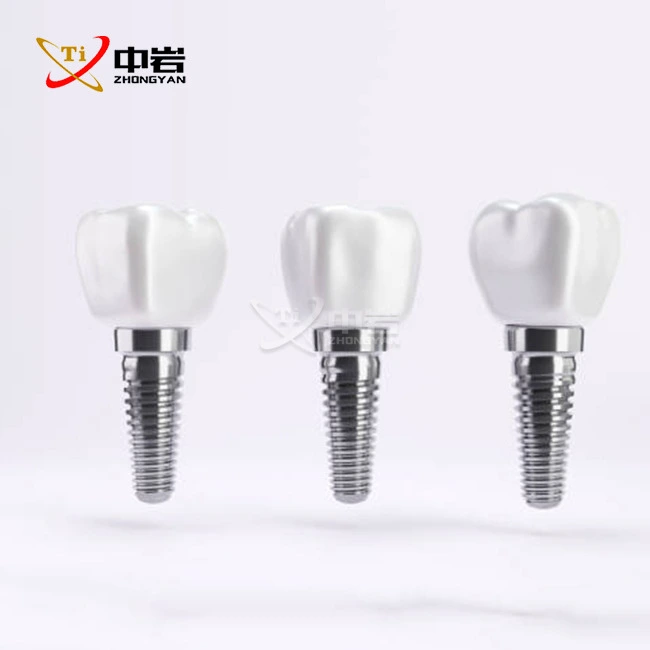
Of course. Dental Titanium Milling Discs are designed to be used with CAD/CAM milling tools to make implant abutments. These pre-made blocks are made from pure titanium that is safe or a Ti-6Al-4V alloy that meets ASTM F67 and F136 standards. They give custom abutment production the accuracy, strength, and tissue compatibility it needs. Titanium milling blocks are the best base for patient-specific implant superstructures because they have a uniform microstructure that gets rid of the porosity problems that come up with standard casting.
Understanding Dental Titanium Milling Discs and Their Suitability for Implant Abutments
Material Properties That Define Performance
To decide if titanium grinding discs are good for making implant abutments, it is important to know what the core material qualities are. Pure titanium used in commerce (Grade 2 and Grade 4) is very flexible and biocompatible, making it perfect for single-unit implants where soft tissue reaction is most important. The Grade 5 (Ti-6Al-4V) Dental Titanium Milling Disc has a tensile strength of over 900 MPa and a yield strength of over 830 MPa, which makes it ideal for multi-unit frames and load-bearing posterior uses. These mechanical features directly meet the clinical need for abutments that can handle biting forces of 200N to over 800N while they are working. The passive titanium dioxide layer that forms on these pieces on its own makes them very resistant to rust in the mouth. This oxide film quickly heals itself after being scratched, staying stable even when salivary electrolytes and pH changes happen. The coefficient of temperature expansion, which was found to be 9.8 x 10^-6/K, lets us know how the dimensions will change during milling and the sterilization steps that follow. After CNC machining, dental milling blanks keep their dimensions within ±5 microns, which is appreciated by engineering teams because it ensures a perfect fit at the implant-abutment contact, where microgaps must stay below 10 microns to keep germs from growing.
Critical Role in Precision Abutment Fabrication
To get the same clinical results over and over, modern CAD/CAM processes depend on titanium milling surfaces being consistent. The Dental Titanium Milling Disc is the base for making emerging patterns that help shape the soft tissue around implants. Unlike cast parts that might have gaps or divisions, industrial blocks made by Vacuum Arc Remelting have a consistent grain structure throughout their whole volume. This evenness makes it possible to predict how long a tool will last during 5-axis milling processes. This cuts down on production costs while still meeting the requirements for a surface finish of Ra ≤ 0.4 μm. Managers in charge of buying things know that titanium blanks that meet ASTM F136 standards get rid of factors that make minor adaptation harder. When abutments sit quietly on implant platforms, stress buildup at the screw joint goes down. This makes it less likely that mechanical problems like screws coming loose or fatigue fractures will happen. Titanium's low thermal conductivity (about 7 W/m·K) protects the bone and flesh around it during milling and clinical adjustment. This is a benefit that isn't found in metals that carry heat more easily.
Biocompatibility Standards for Implant Applications
How well tissue grows around implant abutments depends on how pure the material is and how the surface is chemically treated. Medical quality control makes sure that high-purity titanium grinding discs have very few interstitial elements. For Extra Low Interstitial (ELI) grades, the iron content is limited to 0.25%, the nitrogen content is limited to 0.05%, and the oxygen content is below 0.20%. These details have a direct effect on the inflammatory reaction at the transgingival contact, which is where the abutments go through the mucosa. Studies in humans show that Grade 5 ELI titanium (ASTM F136) has much lower levels of cytokine production than common dental metals that contain nickel or beryllium. The finish on cut titanium abutments affects how bacteria stick to them and how much plaque builds up on them. Surfaces that have been CNC made and have controlled roughness parameters (Ra 0.2–0.4 μm) stop biofilm from forming but allow epithelium attachment through hemidesmosomes. Dental companies say that titanium plates that can be used to make implants come with certificates of conformance that show how the material was made and how it was heated. This tracking meets the standards of ISO 13485 for making medical devices, which is important for OEM partners that work with controlled markets.
Comparative Analysis: Dental Titanium Milling Discs vs. Alternative Materials
Mechanical Strength and Wear Characteristics
To choose between titanium and other materials, you need to know how much weight they can hold when the teeth are moving together. Zirconia discs are famous for improving the look of the front of the teeth. They have a flexural strength of about 1,200 MPa, but they break down quickly at low temperatures and don't show any signs of plastic distortion. The Dental Titanium Milling Disc is very tough, and it doesn't break easily, so it can have very thin cross-sections (less than 0.5 mm) in connection areas. This isn't possible with ceramics, which need at least 0.8 to 1 mm of thickness to keep them from breaking. Engineering estimates show that Grade 5 titanium abutments can survive more than 5 million cycles of 300N loading, which is the same as 15-20 years of clinical use without cracks spreading. While cobalt-chromium metals are about as strong as titanium, they are not as good for making abutments. Their higher elastic stiffness (about 220 GPa compared to 110 GPa for titanium) causes stress shielding effects that may speed up bone loss around the implant. Manufacturing experts say that Co-Cr milling causes too much tool wear and needs more aggressive cutting settings, which makes the production time 30–40% longer than with titanium blanks. Even though stainless steel is cheap, it doesn't have the rust resistance needed for lasting dental implants. It also gives off nickel ions that can cause hypersensitivity reactions in people who are already sensitive.
Precision Milling Capability and Clinical Outcomes
It is always reported by CAD/CAM users that titanium milling blanks work regularly with a range of mill geometries. The middling hardness of the material (32–38 HRC based on grade) lets you remove stock quickly and easily without the burs becoming dull too quickly or leaving chatter marks from vibrations. Custom-sized dental milling discs can be used for a wide range of restoration designs, from simple stock abutments to complicated bar frames that connect multiple implants. Surface roughness tests show that titanium has uniform Ra values along its vertical walls, occlusal platforms, and screw access lines. This is important for keeping the cement in place and keeping soft tissues healthy. Comparing clinical data shows that the long-term life rates of different materials are not the same. Meta-analyses of randomized controlled studies show that titanium abutments have success rates higher than 97% after 5 years, with much lower rates of biological problems like mucositis or fistula formation compared to other materials. Pure titanium is nontoxic, which means it can be used on people who are known to be sensitive to metals. This makes treatment more accessible. When procurement experts look at different materials, they know that titanium has a track record of lowering risk and guaranteeing claims in implant practices.
Quality Benchmarks and Industry Certifications
Paying attention to manufacturing certificates and material paperwork is needed to tell the difference between high-quality milling blanks and cheaper options. Dental titanium disc providers that you can trust use ISO 9001:2015 quality management systems and give you material certificates that show the chemical makeup, mechanical test results, and heat treatment records for each production lot. As long as blanks are ASTM F67/F136-compliant, they meet strict standards for oxygen level, tensile qualities, and grain size distribution. To make sure that each batch is the same, buyers should make sure that the makers use statistical process control during the casting, machining, and finishing steps.
When looking for titanium milling surfaces, buying teams must look at these main quality indicators:
- Material Traceability: Full records connecting finished blanks to raw material bars, such as vacuum melt records and chemical analysis reports proving that the amount of interstitial elements is less than the maximum levels allowed.
- Dimensional Accuracy: Test results show that the disc's width, thickness, and step shape are all within ±0.05mm of each other. This means that it can be used with certain CAD/CAM chuck systems without any modifications.
- Surface Integrity: Checking for flaws on the surface, like alpha cases, laps, or inclusions that could spread during milling or clinical loading, using inspection methods that are proven to work by dye penetrant or ultrasonic testing.
- Mechanical Consistency: The mechanical consistency of the discs is shown by hardness maps that show similar properties across their surfaces, with no areas of different hardness, backed up by tensile test results from representative samples that meet minimum strength and elongation requirements.
These standards tell the difference between industrial-grade tooth milling blanks that are made in controlled conditions and common goods that don't have the right quality infrastructure. The engineering teams know that buying approved titanium discs cuts down on waste, simplifies milling, and protects the lab's image for making exact, biocompatible repairs.
Procurement Considerations for Dental Titanium Milling Discs
Supplier Selection Criteria and OEM Capabilities
To find trustworthy Dental Titanium Milling Disc suppliers, you need to look at more than just prices. You also need to see what specialized skills the suppliers have. In places like Baoji City in Shaanxi Province, which is known as China's Titanium Valley, where titanium is traditionally made, manufacturing facilities benefit from integrated supply chains, skilled workers, and being close to sources of raw materials that cut down on wait times and prices. Managers in charge of buying things should check to see if possible sellers have clean rooms specifically for medical-grade machining, follow strict inspection procedures, and keep their equipment calibrated to national standards.OEM and ODM skill set providers that can meet custom needs, apart from those that only sell catalog items. Advanced makers offer technical advice to make sure that the disc specs are best for each repair design. They do this by changing the discs' thickness ranges, diameter choices, and surface treatments to fit the processes of their clients. Titanium blanks can be made in any size needed to work with unique CAD/CAM tools and specific tasks like making bar frames or telescope copings. As added value services, suppliers that give OEM packing and sterilization make it easier for dentistry labs to manage their supplies and make sure they're following the rules.
Bulk Purchasing Strategies and Pricing Structure
Strategies for buying things based on volume have a big effect on the cost per unit of titanium grinding surfaces. Price levels set by manufacturers are usually based on how many discs you buy. At 50, 100, and 500+ disc volumes, manufacturers offer savings that range from 8% to 25% off of single-unit prices. Professionals in purchasing should work out yearly deals that lock in good rates while still allowing for changes to be made to the product mix as the needs of the repair project change. Payment terms often go from the usual 30 days net to 60 or 90 days for repeat customers. This makes it easier for laboratories with small profit margins to handle their cash flow. Knowing how the costs of dentistry grinding blanks are structured helps buyers figure out how competitive prices are. About 35 to 45 percent of the cost of a finished blank goes to buying raw materials. The rest goes to forging, machining, and quality control. When suppliers produce in large quantities, they can take advantage of economies of scale to offer lower prices without lowering the quality of their goods. Smart buyers don't just look at unit prices; they also look at the total costs of acquisition, which include freight, customs duties, and changes in the value of the currency. This is especially important when buying from foreign dental titanium disc makers.
Logistics, Storage, and Quality Verification
Titanium milling surfaces stay intact from the factory to the milling machine as long as they are handled correctly. These blanks come separately wrapped in protective cases that keep the surfaces from getting dirty or damaged during shipping. Protocols for storage say that things should be kept in climate-controlled spaces that keep the temperature between 15°C and 25°C and the relative humidity below 60%. This is to stop moisture buildup that could lead to surface rusting. Inventory management systems that use first-in-first-out rotation make sure that older stock runs out before there are worries about its shelf life. However, titanium blanks that are stored properly will stay stable forever without breaking down. Quality control checks are done as soon as the materials are received to keep labs safe from bad materials that could delay production. As part of the incoming checking process, calibrated micrometers should be used to make sure that the disc's width and thickness meet the requirements within the allowed ranges. Visual study under magnification finds surface irregularities, contamination, or damage to the package that needs to be thrown away. By asking sources for material certificates, you can get information about the chemical makeup and mechanical properties that can be linked to specific production lots. This makes it possible to find out what went wrong if there are problems with milling or repair. Setting up these verification processes with providers shows that you care about quality and makes it easier to solve problems quickly if they come up.
Practical Application: Optimizing the Use of Dental Titanium Milling Discs in Implant Abutment Production
Recommended Milling Parameters and CAD/CAM Integration
To get the best results from titanium grinding blanks, you need to be very careful about how you cut them and which tools you use. When working with titanium, five-axis CNC mills with high-speed spindles (40,000 to 60,000 RPM) and strong design keep vibrations to a minimum. Carbide burs with specific shapes—usually 2-4 flute designs with 30-38° helix angles—remove material efficiently while letting heat escape. For roughing passes, feed rates range from 800 to 1,200 mm/min with a step-over of 0.3 to 0.5 mm. For finishing passes, feed rates are lower (400 to 600 mm/min) and depths are shallower (0.1 to 0.2 mm) to meet the goal surface finish standards. Wet milling is still the usual way to work with dentistry titanium discs because the constant flow of coolant keeps the work from hardening, increases the life of the tools by 200 to 300 percent, and gets rid of the fire risks that come with fine titanium particles. Modern CAD/CAM software has libraries of titanium-specific tools and cutting techniques that work best with certain types of titanium. The software automatically changes the settings based on the complexity of the geometry and the quality of finish that is wanted. Milling machine operators should make sure that vacuum chucks or mechanical locking systems keep the discs in place properly. If there isn't enough holding force, the discs will chatter, and the measurements will be off. Regular testing makes sure that the machine axes keep their positioning accuracy within ±5 microns, which is important for getting implant platforms to fit passively.
Efficiency Gains and Quality Consistency
Some labs that switched from casting to cutting titanium abutments say they are much more productive and get better results. CAD/CAM milling cuts the time it takes to make unique abutments from two to three hours using lost-wax methods to twenty to thirty-five minutes, which includes drawing, machining, and finishing. By getting rid of the steps of waxing, investment, burnout, and casting that have to be done by hand, labor costs go down, and factors that affect accuracy go away. Milled parts have consistent dimensions that can't be achieved by casting. For example, the gaps between implants are less than 30 microns, while most cast abutments have gaps of 50 to 100 microns or more. Real-world implementations demonstrate measurable results. When a mid-sized dentistry lab switched to titanium milling blanks, the number of abutment remakes dropped from 8% to less than 2% per month. This saved the lab about $12,000 a year in material and labor costs related to fixing casting flaws. Production throughput went up by 40% because milling operations made it possible to handle designs in line overnight. This cut down on shipping times, which made customers happier and helped the company compete.
Troubleshooting Common Milling Challenges
Even though titanium is good for cutting, workers sometimes run into problems that need to be systematically diagnosed. Cutting methods that aren't right can cause tools to break too soon. For example, using standard milling instead of climb milling can cause too much heat and cutting forces. Lack of coolant pressure or clogged delivery tubes can lead to warming in certain areas, which speeds up wear and increases the chance of tool failure. Disc holding problems show up as chatter marks or dimensional mistakes. To fix them, check the performance of the vacuum pump, look for debris on the chuck surfaces, and make sure that the shape of the disc meets the machine's specs. Surface finish flaws like spiral marks, rough spots, or discoloration show that the grinding parameters for the Dental Titanium Milling Disc need to be adjusted. Usually, these problems can be fixed by slowing down the feed rate, shortening the step-over distance, and using new finishing burs. When quality titanium blanks don't have inconsistent material hardness across disc surfaces, cutting speeds need to be changed, and tool wear needs to be checked more often. Keeping detailed production logs that link milling factors to results lets the process be improved all the time. Dental milling disc manufacturers often offer technical support to help labs improve methods that work best with their tools and types of restorations.
Future Trends and Innovations in Dental Titanium Milling Discs for Implant Abutments
Advanced Titanium Alloys and Composite Materials
Further research into the next generation of titanium formulations should lead to better performance for tough implant uses. Beta-titanium alloys with niobium, tantalum, or zirconium have a smaller elastic modulus (55–85 GPa), which is more like bone qualities. This could make them less likely to cause stress shielding effects that lead to bone loss around implants. These new mixtures keep titanium's biocompatibility while giving it better spring-back properties that are good for clips and precision attachments. Beta metals are hard to machine, which means they aren't widely available yet. However, specialized suppliers are making milling blocks because demand warrants investing in better ways to make them. Composite metal designs are another way to come up with new ideas. Gradient density blanks with porous surfaces attached to solid cores might help osseointegration at transgingival zones while keeping mechanical strength in areas that hold weight. Surface changes made during blank production, like acid etching, sandblasting, or plasma treatment, make micro-topographies that help cells connect without needing any extra work in the lab. As digital manufacturing grows, Dental Titanium Milling Discs with built-in features like pre-formed screw channels or custom blank shapes that cut down on cutting time for standard high-volume designs are likely to become more common.
Digital Dentistry Integration and Workflow Automation
As intraoral scanning, implant planning software, and automatic milling systems continue to improve, they are changing the way that abutment manufacturing is done. Cloud-based platforms enable seamless data transfer from clinical acquisition to laboratory production. Artificial intelligence programs create abutment designs that are best for screw access, emergence profiles, and tissue support. Smart manufacturing systems with adaptive control and tracking of tool wear change milling settings in real time, so quality stays the same from batch to batch without any help from an operator. When dental titanium milling substrates are used in industrial settings with no lights on, labs can get the most out of their tools. Automated disc-filling systems and robotic part handling get rid of the need for humans to do work between grinding rounds, so the machine can run all night. Structured light scanning or coordinate measurement are two types of quality inspection technologies that can check all dimensions and instantly mark parts that aren't within range, so they can be looked over before they are sent out. These changes to the processes lower the cost of production per unit while speeding up the process. This gives labs that invest in new technologies a competitive edge.
Sustainability Initiatives and Regulatory Developments
Concern for the environment is changing how materials are sourced and how medical devices are made across all businesses. Titanium is better than throwaway options because it can be recycled. When titanium scrap is properly separated, remelting methods keep 95% or more of its material value. Modern makers are using closed-loop cooling systems, which cut the amount of water needed for wet milling by 60–80% and collect fine titanium particles for recycling. Abutment manufacturing leaves less of a carbon footprint thanks to CNC equipment that uses less energy and better timing of production. Regulatory standards for dentistry materials are always changing to keep up with new safety issues and technological advances. New biocompatibility testing methods based on the ISO 10993 set of standards make it harder to do research on cytotoxicity, sensitization, and long-term implantation. As standards grow, companies that make legal titanium blanks spend a lot of money to keep their licenses up to date. Procurement teams should know that sellers who can't show they're following the rules may have their access to the market limited. This highlights how important it is to work with well-known companies that have strong quality systems and legal knowledge.
Conclusion
Dental Titanium Milling Discs for dental implants are the best material for making implant abutments because they are biocompatible, strong, and can be machined precisely, which isn't possible with other materials. To get the most out of these important parts, engineering teams and buying managers need to know about the features of the materials, the best ways to buy them, and the best ways to use them. Titanium is becoming more important in implant dentistry as new alloys, digital processes, and environmentally friendly production methods are developed. Labs can stay ahead of the competition in terms of quality and speed by working with certified providers that offer compliant products, expert support, and on-time delivery.
FAQ
Can titanium milling discs be used for applications beyond implant abutments?
Of course. These pieces can be used to mill crowns, bridges, implant bars, telescope copings, and precision fasteners, as well as abutments. Their ability to work with different types of restorations makes inventory management easier because labs don't have to keep as many different types of materials on hand, but they can still handle a wide range of clinical cases.
How do titanium discs and zirconia discs compare in terms of how well they work in joint applications?
Titanium is stronger and more flexible than steel, so it can handle smaller parts and doesn't break easily. Zirconia looks better in thin-tissue biotypes than titanium, but it doesn't have the same gentle mechanical behavior. Choosing the right material depends on the individual clinical case. For example, zirconia may be better for anterior esthetics, while titanium is better for posterior load-bearing situations because it is more resilient. Material selection for a Dental Titanium Milling Disc depends on specific clinical scenarios.
What methods verify the titanium disc quality before purchasing?
Ask for material papers that show that they meet ASTM standards and list their chemical makeup and mechanical features. Reliable sources make it possible to track flats back to lots of raw materials. A visual check should show areas that are smooth and uniform, with no marks or discoloration. By test grinding a sample, you can see how the machine works and what kind of surface finish you can get before committing to large orders.
Partner with Zhongyan for Premium Dental Titanium Milling Disc Solutions
Zhongyan offers titanium plates that are compliant with ASTM F67/F136 and are designed to be used for making implant abutments and complicated dentistry restorations. Our cutting-edge factories in Baoji City use unified titanium supply chains to make grinding discs that are consistently better and more affordable, and we can fully track all of the materials that go into them. As a reliable company that makes Dental Titanium Milling Discs, we help labs improve their CAD/CAM processes by offering custom sizes, OEM packing, and technical support. The surface finish and measurement precision of our CNC-machined blanks are the best. This cuts down on tool wear and ensures a passive implant fit. Email our engineering team at sales@titaniumstudy.com to talk about your unique needs, get material certificates, or set up a free evaluation. Feel the Zhongyan difference—where medical-grade quality control meets helpful customer service and dependable shipping around the world.
References
1. Sailer, I., et al. (2018). "A systematic review of the performance of ceramic and metal implant abutments supporting fixed implant reconstructions." Clinical Oral Implants Research, Volume 29, Supplement 18, pp. 3-42.
2. Gehrke, S.A., and Dedavid, B.A. (2019). "Titanium dental implants and abutments: Material properties, manufacturing processes, and clinical applications." Journal of Biomaterials Applications, Volume 34, Issue 3, pp. 327-346.
3. Roach, M.D., and Wolan, J.T. (2020). "Machining characteristics and mechanical properties of medical-grade titanium alloys for dental applications." International Journal of Precision Engineering and Manufacturing, Volume 21, Issue 8, pp. 1547-1568.
4. Jemt, T., and Johansson, J. (2017). "Implant treatment in the edentulous maxilla: A 15-year follow-up study on titanium framework-supported fixed prostheses." International Journal of Prosthodontics, Volume 30, Issue 3, pp. 217-225.
5. Osman, R.B., and Swain, M.V. (2015). "A critical review of dental implant materials with an emphasis on titanium versus zirconia." Materials, Volume 8, Issue 3, pp. 932-958.
6. American Society for Testing and Materials. (2021). "ASTM F67-13: Standard Specification for Unalloyed Titanium for Surgical Implant Applications" and "ASTM F136-13: Standard Specification for Wrought Titanium-6Aluminum-4Vanadium ELI Alloy for Surgical Implant Applications." ASTM International Standards.
Learn about our latest products and discounts through SMS or email