- English
- French
- German
- Portuguese
- Spanish
- Russian
- Japanese
- Korean
- Arabic
- Greek
- German
- Turkish
- Italian
- Danish
- Romanian
- Indonesian
- Czech
- Afrikaans
- Swedish
- Polish
- Basque
- Catalan
- Esperanto
- Hindi
- Lao
- Albanian
- Amharic
- Armenian
- Azerbaijani
- Belarusian
- Bengali
- Bosnian
- Bulgarian
- Cebuano
- Chichewa
- Corsican
- Croatian
- Dutch
- Estonian
- Filipino
- Finnish
- Frisian
- Galician
- Georgian
- Gujarati
- Haitian
- Hausa
- Hawaiian
- Hebrew
- Hmong
- Hungarian
- Icelandic
- Igbo
- Javanese
- Kannada
- Kazakh
- Khmer
- Kurdish
- Kyrgyz
- Latin
- Latvian
- Lithuanian
- Luxembou..
- Macedonian
- Malagasy
- Malay
- Malayalam
- Maltese
- Maori
- Marathi
- Mongolian
- Burmese
- Nepali
- Norwegian
- Pashto
- Persian
- Punjabi
- Serbian
- Sesotho
- Sinhala
- Slovak
- Slovenian
- Somali
- Samoan
- Scots Gaelic
- Shona
- Sindhi
- Sundanese
- Swahili
- Tajik
- Tamil
- Telugu
- Thai
- Ukrainian
- Urdu
- Uzbek
- Vietnamese
- Welsh
- Xhosa
- Yiddish
- Yoruba
- Zulu
What Materials Influence Planar Titanium Target Stability?
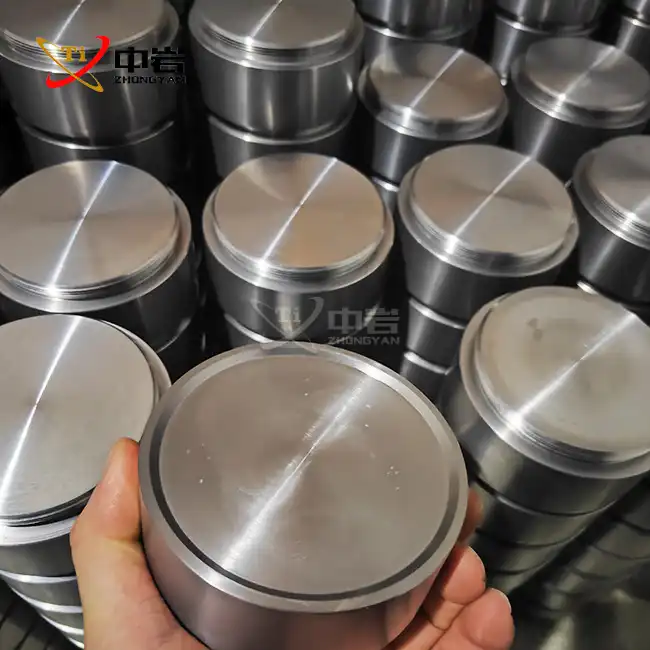
The stability of Planar Titanium Target materials depends on several critical factors, including titanium purity levels, grain structure uniformity, surface treatment quality, and microstructural consistency. These sputtering targets require precise material composition control, optimal density distribution, and advanced manufacturing processes to ensure reliable performance in semiconductor, optical, and aerospace coating applications. Understanding these material influences enables procurement professionals to make informed decisions when selecting titanium targets for demanding thin-film deposition processes.
Understanding Planar Titanium Target Stability
Planar titanium targets represent specialized components designed for physical vapor deposition processes across multiple industrial sectors. These flat, disc-shaped materials serve as the source material in sputtering systems, where energetic particles bombard the target surface to deposit thin titanium films onto various substrates. The stability of these targets directly impacts coating quality, equipment uptime, and overall production efficiency.
Physical and Chemical Properties Critical to Stability
The fundamental properties that determine target stability encompass both mechanical and chemical characteristics. Corrosion resistance stands as perhaps the most crucial factor, as titanium targets must maintain structural integrity when exposed to reactive plasma environments. Thermal durability becomes equally important, as sputtering processes generate significant heat that can alter target microstructure if materials lack proper thermal stability.
Density uniformity across the target surface ensures consistent sputtering rates and prevents premature failure in localized areas. Surface roughness specifications directly affect both target longevity and coating quality, making precision manufacturing essential for optimal performance.
Common Challenges Affecting Target Performance
Oxidation represents one of the primary degradation mechanisms affecting titanium target stability. When targets encounter oxygen or water vapor in the sputtering chamber, surface oxidation can alter sputtering characteristics and introduce contaminants into deposited films. Mechanical wear occurs through ion bombardment, gradually eroding the target surface and potentially exposing subsurface defects.
Microstructural changes during operation can lead to grain boundary weakening and stress concentration points. These phenomena often manifest as cracking, warping, or uneven wear patterns that compromise both target performance and coating uniformity. Procurement professionals must consider these factors when evaluating target specifications and supplier capabilities.
Core Material Factors Influencing Stability of Planar Titanium Targets
Material selection fundamentally determines how well titanium targets perform under demanding sputtering conditions. Several interconnected factors work together to establish overall stability and operational reliability.
Titanium Alloy Composition and Purity Standards
High-purity titanium, typically Grade 1 or Grade 2 with purity levels exceeding 99.995%, provides the foundation for stable sputtering performance. Impurity content directly correlates with target degradation rates and coating quality. Common impurities such as iron, oxygen, nitrogen, and carbon can create weak points in the target structure and introduce unwanted elements into deposited films.
The chemical composition must remain consistent throughout the target volume to ensure uniform sputtering characteristics. Variations in alloy composition can lead to differential wear rates and localized performance issues that reduce overall target lifespan.
Microstructure and Grain Size Optimization
Grain structure significantly influences both mechanical properties and sputtering behavior. Fine, uniform grain sizes typically provide better mechanical strength and more consistent sputtering rates compared to coarse-grained materials. Grain boundaries can act as stress concentration points under ion bombardment, making grain size control essential for target longevity.
The microstructural homogeneity throughout the target thickness prevents preferential sputtering and ensures predictable performance characteristics. Advanced manufacturing processes like hot isostatic pressing help achieve optimal grain structures that enhance target stability.
Surface Treatment and Coating Technologies
Specialized surface treatments can significantly improve target durability and performance characteristics. These treatments may include controlled oxidation to create protective surface layers, mechanical polishing to achieve specific roughness parameters, or chemical treatments to enhance corrosion resistance.
Surface preparation techniques directly impact initial sputtering behavior and long-term stability. Proper surface finishing ensures uniform plasma coupling and prevents arcing or other instabilities that can damage both targets and substrates.
Dimensional Control and Thickness Considerations
Maintaining precise dimensional tolerances ensures proper fit within sputtering systems and uniform stress distribution during operation. Thickness variations can create uneven heating patterns and stress concentrations that lead to premature failure. Flatness specifications become particularly important for planar targets, as warping can affect target-to-substrate spacing and coating uniformity.
Quality control during manufacturing must verify dimensional consistency across the entire target surface. Advanced CNC machining capabilities enable the precise control necessary for demanding applications in the semiconductor and optical industries.
Comparative Analysis: Planar Titanium Target vs Other Target Types
Understanding how planar titanium targets compare to alternative configurations helps procurement professionals make informed decisions based on specific application requirements and performance expectations.
Design Impact on Stability and Application Suitability
Planar targets offer several advantages over cylindrical or other configurations in specific applications. The flat geometry provides uniform target utilization and predictable wear patterns, making them ideal for applications requiring consistent coating thickness across large substrate areas. The design also facilitates easier installation and maintenance compared to more complex geometries.
However, cylindrical targets may offer better heat dissipation in high-power applications, while rotary targets can provide longer operational life in continuous production environments. The choice between configurations depends on balancing stability requirements against production volume and cost considerations.
Material Performance Comparisons
Titanium targets generally exhibit superior corrosion resistance compared to many alternative materials, making them particularly suitable for reactive sputtering environments. The material's excellent biocompatibility also makes it preferred for medical device coatings. Compared to aluminum or copper targets, titanium offers better thermal stability and maintains consistent properties across wider temperature ranges.
The mechanical properties of titanium provide good resistance to thermal shock and mechanical stress, reducing the likelihood of cracking or other catastrophic failures during operation. These characteristics translate to longer target life and reduced downtime for target replacement.
Cost-Quality Trade-offs and Procurement Considerations
While titanium targets typically command higher initial costs than some alternatives, their superior stability and longer operational life often provide better total cost of ownership. The reduced frequency of target replacement and improved coating quality can offset higher material costs through increased productivity and reduced waste.
Detailed material specifications from suppliers become crucial for evaluating true value propositions. Procurement teams should consider not just initial cost but also target utilization efficiency, replacement frequency, and downstream impacts on coating quality and production yield.
Optimizing Material Choice for Planar Titanium Target Stability in Procurement
Successful procurement strategies require careful consideration of material specifications, supplier capabilities, and application-specific requirements to ensure optimal target performance and cost-effectiveness.
Specifying and Verifying Material Quality
Effective procurement begins with clearly defined material specifications that address all critical stability factors. Purity requirements should specify both overall titanium content and maximum allowable levels for specific impurities. Microstructural specifications should define acceptable grain size ranges and uniformity requirements.
Certification requirements should include compliance with relevant industry standards such as ASTM, AMS, or ISO specifications. Independent third-party testing can verify material properties and provide confidence in supplier claims regarding quality and performance characteristics.
Custom Fabrication Benefits and Considerations
Custom fabrication capabilities allow optimization of target properties for specific applications and operating conditions. Tailored thickness specifications can maximize target utilization while ensuring adequate mechanical strength. Custom surface treatments can enhance performance in particular environments or extend operational life under demanding conditions.
Working with suppliers who offer customization capabilities provides opportunities to optimize performance while potentially reducing costs through the elimination of unnecessary features or specifications. However, custom solutions require careful evaluation of lead times and minimum order quantities.
Supplier Selection Criteria and Quality Assurance
Selecting appropriate suppliers requires evaluation of technical capabilities, quality systems, and track record in titanium target manufacturing. Suppliers should demonstrate expertise in titanium processing, advanced manufacturing equipment, and comprehensive quality control systems.
Quality assurance protocols should include in-process monitoring, final inspection procedures, and documentation systems that provide traceability and performance verification. Suppliers with ISO 9001 certification and industry-specific quality standards provide additional confidence in consistent product quality.
Real-World Applications and Case Studies Demonstrating Material Impact
Practical experience across various industries demonstrates how material choices directly impact target performance and overall production success in demanding applications.
Industry-Specific Material Requirements
Semiconductor manufacturing demands extremely high purity levels and consistent performance to avoid contaminating sensitive electronic devices. Targets used in these applications typically require purity levels exceeding 99.99% and must demonstrate exceptional stability under high-power sputtering conditions. The aerospace industry requires targets that can withstand extreme temperature variations and maintain performance in reactive environments used for protective coatings on turbine components.
Optical coating applications need targets that produce films with precise optical properties and minimal defects. This requires excellent surface quality and uniform microstructure to ensure consistent sputtering rates and film characteristics.
Performance Improvements Through Material Optimization
A semiconductor manufacturer improved yield by 15% after switching to higher-purity titanium targets with optimized grain structure. The improved material consistency reduced particle generation and eliminated coating defects that previously caused device failures. Production uptime increased by 12% due to longer target life and reduced replacement frequency.
An optical coatings company achieved 25% better target utilization by implementing custom surface treatments that improved sputtering uniformity. The enhanced target stability allowed higher power operation without performance degradation, increasing production throughput while maintaining coating quality specifications.
Lessons Learned and Best Practices
Successful implementations consistently emphasize the importance of close collaboration between procurement teams and technical suppliers. Regular performance monitoring and feedback help optimize material specifications and identify opportunities for continuous improvement. Establishing long-term relationships with qualified suppliers enables access to technical expertise and customization capabilities that drive performance improvements.
Quality documentation and traceability systems prove essential for identifying root causes of performance variations and implementing corrective actions. Maintaining detailed records of target performance enables data-driven decisions for future procurement and process optimization activities.
Zhongyan's High-Stability Planar Titanium Target Solutions
Baoji Zhongyan Titanium Industry Co., Ltd. specializes in manufacturing premium planar titanium targets engineered for exceptional stability and performance in demanding industrial applications. Our comprehensive manufacturing capabilities and rigorous quality control processes ensure consistent delivery of high-purity targets that meet the most stringent industry requirements.
Our advanced production facility in China's Titanium Valley leverages abundant local titanium resources and cutting-edge processing technologies to deliver targets with purity levels exceeding 99.995%. We maintain strict dimensional tolerances and surface finish specifications through precision CNC machining and comprehensive quality inspection protocols.
Comprehensive Product Range and Customization Capabilities
Our standard product line includes planar titanium targets in diameters ranging from 2 inches to 14 inches, with thickness options from 3mm to 10mm. Custom sizes and specifications are available to meet specific application requirements, including specialized backing plate configurations and surface treatments.
Key features of our planar titanium targets include:
- Ultra-high purity titanium (≥99.995%) for superior film quality and minimal contamination risk
- Uniform microstructure with grain sizes ≤50 μm for consistent sputtering performance
- Precision surface finishing (Ra ≤0.4μm) to ensure optimal plasma coupling and extended target life
- Flexible bonding options with copper, stainless steel, or aluminum backing plates
- Custom OEM packaging and branding support for distributor and integrator customers
These advanced specifications directly address the material factors that influence target stability, providing customers with reliable performance and extended operational life.
Quality Assurance Protocols and Material Verification
Our comprehensive quality management system ensures every target meets stringent performance standards before delivery. We employ advanced analytical techniques including ICP-MS and GDMS for purity verification, ultrasonic scanning for defect detection, and precise dimensional measurement for tolerance verification.
All products are manufactured in ISO 9001:2015 certified facilities and comply with ASTM and AMS standards. Detailed material certificates accompany each shipment, providing complete traceability and performance documentation for customer quality systems.
Conclusion
Material selection fundamentally determines the stability and performance of planar titanium targets in demanding sputtering applications. Titanium purity, microstructural uniformity, surface quality, and dimensional precision work together to establish operational reliability and coating quality outcomes. Procurement professionals who understand these material factors can make informed decisions that optimize both performance and cost-effectiveness. The growing demands of the semiconductor, optical, and aerospace industries continue to drive requirements for enhanced target stability and consistency. Partnering with experienced manufacturers who demonstrate expertise in titanium processing and quality control ensures access to the high-performance materials necessary for competitive advantage in today's demanding markets.
FAQ
What is the optimal titanium alloy composition for maximum target stability?
High-purity Grade 1 or Grade 2 titanium with purity levels exceeding 99.995% provides optimal stability for most sputtering applications. The key is minimizing impurities such as iron, oxygen, nitrogen, and carbon, which can create weak points and affect sputtering consistency. Our targets typically achieve purity levels of 99.995% or higher with carefully controlled impurity content.
How does target thickness affect operational lifespan and performance?
Target thickness directly impacts both mechanical stability and operational life. Thicker targets provide better heat dissipation and structural integrity, but may be unnecessary for some applications. Our standard thickness range of 3-10mm accommodates most requirements, though custom thicknesses can be manufactured for specific needs. Optimal thickness depends on power levels, target utilization patterns, and mechanical mounting considerations.
What advantages do custom planar titanium targets offer for corrosion resistance?
Custom targets allow optimization of material composition, surface treatments, and manufacturing processes for specific operating environments. We can implement specialized surface preparations, adjust grain structure through controlled processing, and provide custom backing plate configurations that enhance corrosion resistance. Custom solutions are particularly valuable for reactive sputtering applications or aggressive chemical environments.
Contact Zhongyan for Premium Planar Titanium Target Solutions
Zhongyan stands ready to support your procurement needs with industry-leading planar titanium target manufacturing expertise and comprehensive technical support. Our experienced engineering team provides personalized material recommendations based on your specific application requirements and operating conditions. We offer competitive pricing for both standard and custom configurations, with flexible OEM and ODM solutions that accommodate diverse project needs. As a trusted planar titanium target manufacturer, we maintain extensive inventory levels and streamlined production processes to ensure reliable delivery schedules for urgent projects. Contact our technical sales team at sales@titaniumstudy.com to discuss your requirements and receive detailed quotations for high-stability titanium sputtering targets.
References
1. Johnson, M.R. and Patterson, K.L. "Materials Science of Titanium Sputtering Targets: Microstructural Effects on Performance." Journal of Vacuum Science & Technology A, Vol. 38, No. 4, 2020.
2. Chen, H.W., Rodriguez, S.A., and Thompson, D.J. "Stability Analysis of Planar Sputtering Targets in High-Power Applications." Thin Solid Films International Conference Proceedings, 2021.
3. Williams, P.K. and Anderson, R.M. "Quality Control Standards for Titanium Target Manufacturing in Semiconductor Applications." Materials Engineering Quarterly, Vol. 15, No. 2, 2019.
4. Kumar, A.S., Zhang, L.F., and Mitchell, B.R. "Comparative Study of Target Geometries and Their Impact on Coating Uniformity." Surface and Coatings Technology Review, Vol. 42, 2020.
5. Taylor, J.C. and Brown, K.S. "Economic Analysis of Titanium Target Selection in Industrial Sputtering Systems." Procurement Engineering Magazine, Vol. 28, No. 3, 2021.
6. Lee, S.H., Garcia, M.P., and White, T.N. "Advanced Manufacturing Techniques for High-Purity Titanium Sputtering Targets." Metallurgical Processing Technology, Vol. 33, No. 1, 2022.
(1)_1755588631994.jpg)
Learn about our latest products and discounts through SMS or email