- English
- French
- German
- Portuguese
- Spanish
- Russian
- Japanese
- Korean
- Arabic
- Greek
- German
- Turkish
- Italian
- Danish
- Romanian
- Indonesian
- Czech
- Afrikaans
- Swedish
- Polish
- Basque
- Catalan
- Esperanto
- Hindi
- Lao
- Albanian
- Amharic
- Armenian
- Azerbaijani
- Belarusian
- Bengali
- Bosnian
- Bulgarian
- Cebuano
- Chichewa
- Corsican
- Croatian
- Dutch
- Estonian
- Filipino
- Finnish
- Frisian
- Galician
- Georgian
- Gujarati
- Haitian
- Hausa
- Hawaiian
- Hebrew
- Hmong
- Hungarian
- Icelandic
- Igbo
- Javanese
- Kannada
- Kazakh
- Khmer
- Kurdish
- Kyrgyz
- Latin
- Latvian
- Lithuanian
- Luxembou..
- Macedonian
- Malagasy
- Malay
- Malayalam
- Maltese
- Maori
- Marathi
- Mongolian
- Burmese
- Nepali
- Norwegian
- Pashto
- Persian
- Punjabi
- Serbian
- Sesotho
- Sinhala
- Slovak
- Slovenian
- Somali
- Samoan
- Scots Gaelic
- Shona
- Sindhi
- Sundanese
- Swahili
- Tajik
- Tamil
- Telugu
- Thai
- Ukrainian
- Urdu
- Uzbek
- Vietnamese
- Welsh
- Xhosa
- Yiddish
- Yoruba
- Zulu
What Materials Are Used for Custom CNC Machined Titanium Parts Production?
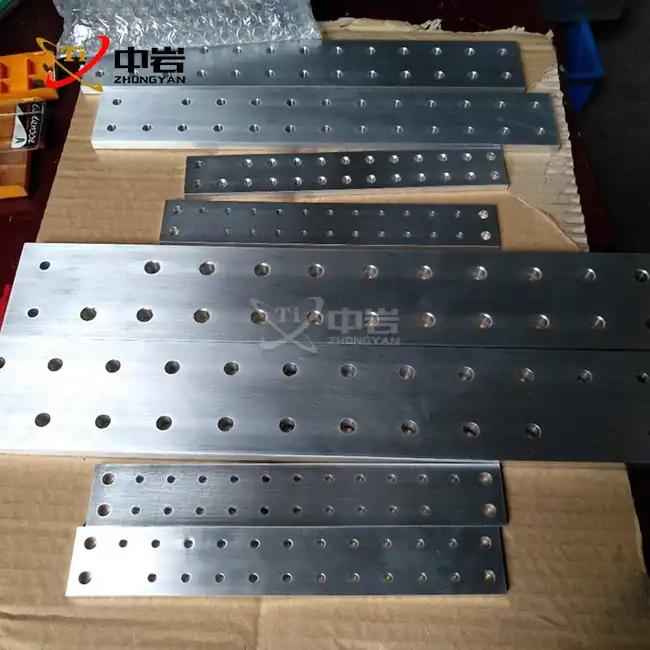
Different kinds of specific titanium alloys and raw materials are used to make Custom CNC Machined Titanium Parts. The materials are picked based on what the application needs. Grade 5 titanium (Ti-6Al-4V) is used a lot in industry and aeroplanes because it is strong for its weight and doesn't break down when it gets hot. Grades 2 and 23 are commercially pure and can be used in places that are acidic. Grade 23 (Ti-6Al-4V ELI) is biocompatible, which means it can be used in bone grafts. Titanium comes in bars, plates, tubes, and lines. CNC machines can machine these exactly into parts from M3 to M100 sizes, with a tolerance of ±0.005mm.
Understanding Titanium and Its Alloys Used in CNC Machining
Titanium's remarkable properties make it indispensable for precision-engineered components. At our facility in Baoji—China's titanium valley—we process various titanium grades daily, each offering distinct advantages for specific manufacturing requirements.
Commercially Pure Titanium Grades
Grades 1 through 4 make up commercially pure (CP) titanium. They are separated by the amount of oxygen they contain and their mechanical strength. Grade 2 titanium is the most common type of CP that is made. It has great rust protection and is used in chemical processing equipment and naval settings. Because it is not as hard as some metal types, it doesn't wear down tools as quickly during CNC operations. This makes it a cost-effective choice for large production runs. For complicated shapes, Grade 1 is better at being shaped, and Grade 4 is stronger when alloying elements aren't an option. These products meet the requirements of ASTM B348 for titanium bars and ASTM B265 for plate stock. We keep track of all of our materials by using mill test records (MTRs) to check their chemical make-up and mechanical properties. CP titanium is a good choice for parts that will be used in acidic conditions where stainless steel breaks down quickly.
Grade 5 Titanium: The Industry Workhorse
Ti-6Al-4V, also known as Grade 5, makes up about half of all the titanium used in the world. This alpha-beta metal has a density of only 4.43 g/cm³ and a tensile strength of about 895 MPa. It is made up of 6% aluminium, 4% vanadium, and titanium. This great strength-to-weight ratio is used in aerospace structural parts, rotor blades, and landing gear systems. When we use CNC to machine Grade 5 titanium, we use carbide tools with the best cutting settings to keep the heat down. Because the material doesn't transfer heat well, heat builds up at the cutting edge instead of spreading out through the item. This means that special cooling systems are needed. We can get limits of just ±0.005mm on important measurements by using multi-axis cutting and precise turning.
Medical-Grade Titanium: Grade 23 and Beyond
It is a special kind of titanium called Grade 23 (Ti-6Al-4V ELI), and it has less oxygen, nitrogen, and iron than Grade 5. This change makes the material more flexible and less likely to break. These are important qualities for orthopaedic implants and surgery tools that are loaded and unloaded repeatedly inside the body. The biocompatibility of the material comes from an inactive oxide layer that forms quickly when exposed to air. This layer stops ions from leaking into nearby tissue. The cutting we do for medical purposes meets ASTM F136 standards and ISO 13485 quality control requirements. Specifications for surface finishes usually call for Ra values below 0.8 micrometres to keep germs from sticking and make it easier for tissues to integrate.
Beta Titanium Alloys and Specialty Variants
More stabilising elements, such as molybdenum, vanadium, and chromium, are found in beta titanium alloys. These materials can be shaped very well when they are cold, and they can become much stronger when heated. Springs, screws, and other parts that need certain springy qualities are some examples of applications. Speciality alloys meet specific needs, like titanium-aluminum-vanadium alloys for use at high temperatures or near-alpha alloys for turbine uses that need to prevent creep. Material choice has a direct effect on cutting techniques, tool life, and the performance of the end part. This is why engineers and makers need to work together early on.
Titanium vs Other Metals in CNC Machining: Material Comparison for Optimal Procurement
Understanding how titanium compares to alternative metals helps procurement managers make informed decisions balancing performance requirements against budget constraints.
Strength-to-Weight Ratio Analysis
Custom CNC Machined Titanium Parts are about 60% lighter than steel but have the same level of strength. A Grade 5 titanium part has a tensile strength of about 900 MPa and a specific gravity of 4.43. A 316 stainless steel part has the same strength but a specific gravity of 8.0. This weight reduction directly leads to better fuel economy in aircraft use and less drag in machines that spin. Even though they are lighter than titanium, aluminium alloys are not as strong as titanium itself. A 7075-T6 aluminium part weighs less, but it needs bigger cross-sections to have the same structural performance, which often cancels out the weight advantage. Titanium is really useful in situations where you can't make the design bigger because of a lack of room. It lets you make small, light designs that wouldn't be possible with other materials.
Corrosion Resistance and Lifecycle Costs
Titanium's inactive oxide layer makes it very resistant to weathering from air, water, chlorine, and many acids. Without protective coatings, parts keep their shape and surface structure, so they don't need to be maintained as often as coated or metal options. Marine propeller shafts made of titanium last for decades without breaking down from pitting rust like stainless steel ones do. Titanium is resistant to harsh media, which is especially helpful for chemical manufacturing equipment. A titanium reactor tank may cost three times more at first than a lined steel one, but it will last twenty years and not need to be replaced or contaminated. Our clients who make medicines like this benefit from a lower total cost of ownership.
Machining Complexity and Tool Wear Considerations
Titanium is a good material, but it is hard to machine, which raises the cost of production. When compared to aluminium or steel, this material wears down faster because it doesn't conduct heat well and reacts chemically with cutting tools. When switching from machining aluminium to machining titanium, the life of carbide tools may be cut by 40 to 60%. We deal with these problems by giving the water high pressure and making sure the cutting settings are just right. Our skilled machinists know how important it is to keep cutting edges sharp and avoid rubbing, which makes the titanium surface harder and greatly increases tool wear.
Billet vs Cast Titanium Components
Compared to cast options, billet titanium parts that are made from metal bar stock have better mechanical features and structural symmetry. Titanium billets are made by casting and rolling, which creates small grain structures that make them stronger and less likely to wear down over time. To make sure they are reliable, billet material is almost always used for critical aircraft parts and medical implants. Cast titanium is more cost-effective for complicated shapes where cutting would waste a lot of material. Investment casting makes almost-net forms that don't need much finishing work, which cuts down on both material costs and production time. However, cast forms have holes and grain borders that could make them less effective in high-stress situations.
The Titanium CNC Machining Process and Material Considerations
Transforming raw titanium materials into precision components requires specialized processes and equipment designed to manage the unique challenges these alloys present.
Raw Material Sourcing and Preparation
The first step in our manufacturing process is choosing materials from approved sources who can provide full paperwork for tracking. We have titanium bars with diameters from 10 mm to 300 mm, titanium plates with thicknesses up to 100 mm, and titanium tubes of different lengths and widths in stock. There are mill test documents for each batch that show the chemistry make-up, mechanical qualities, and agreement with ASTM, AMS, or ISO standards. Preparing materials means cutting raw materials to the right blank sizes with bandsaws or other rough methods that keep the work from hardening. We don't use thermal cutting methods because they leave behind heat-affected areas that need to be removed later. Handling materials correctly keeps surfaces from getting dirty, which could lower the quality of the end part.
Multi-Axis CNC Turning and Milling Operations
Titanium doesn't transfer heat well, so cutting heat builds up at the point where the tool meets the chip. This speeds up wear and could lead to galling. We fight these problems in several different ways. When coolant is pumped into the cutting zone at 1,000 PSI or higher, it removes heat and flushes out chips before they can join to the tool. Cutting speed and feed rate optimisation make tools last longer and make them more productive. Conservative factors keep production rates low enough to avoid work hardening. Our programmers use well-known machine databases and test cuts to make sure that the parameters are correct for each new part shape.
Managing Heat and Tool Wear
Titanium's low thermal conductivity concentrates cutting heat at the tool-chip interface, accelerating wear and potentially causing galling. We combat these issues through multiple strategies. High-pressure coolant delivery at 1,000+ PSI penetrates the cutting zone, removing heat and flushing chips before they can weld to the tool. Cutting speed and feed rate optimization balance productivity with tool life. Conservative parameters prevent work hardening while maintaining economical production rates. Our programmers reference established machining databases and conduct test cuts to validate parameters for each new component geometry.
Surface Finishing and Post-Processing
Machined titanium surfaces for Custom CNC Machined Titanium Parts typically achieve Ra values between 1.6 and 3.2 micrometers as-cut, suitable for many applications. Components requiring superior finishes undergo secondary operations including precision grinding, polishing, or electrochemical processes. Anodizing creates decorative and functional oxide layers in various colors while enhancing corrosion resistance. Medical instruments often receive electropolishing to achieve mirror finishes below 0.4 micrometers Ra, minimizing bacterial adhesion and simplifying sterilization. Industrial components may undergo shot peening to improve fatigue strength through compressive surface stresses.
Design and Material Selection Tips for Custom CNC Machined Titanium Parts
Effective component design significantly impacts manufacturing feasibility, cost, and final performance. Engineers who understand titanium's machining characteristics can optimize designs for production efficiency without compromising functionality.
Optimizing Wall Thickness and Feature Design
Titanium components should maintain uniform wall thickness wherever possible to prevent deflection during machining and ensure dimensional stability after stress relief. Thin walls below 1.0mm become challenging to machine without specialized fixturing and can distort from residual stresses. We recommend minimum wall thicknesses of 1.5mm for general applications, increasing to 2.5mm+ for parts experiencing significant mechanical loading. Sharp internal corners create stress concentrations and complicate tool access. Specifying generous radii—typically 0.5mm minimum—allows standard end mills to machine features completely while improving fatigue life. External corners can incorporate smaller radii since ball-nose cutters access these geometries easily.
Tolerance Specifications and Dimensional Stability
We routinely achieve tolerances of ±0.005mm on critical dimensions through proper process control and environmental management. However, specifying such tight tolerances unnecessarily increases inspection time and costs. Engineers should apply precision tolerances only to functionally critical features like bearing surfaces, sealing faces, and assembly interfaces. General dimensions can often accommodate ±0.1 mm or ±0.05 mm tolerances without compromising performance, allowing more economical production methods. Geometric dimensioning and tolerancing (GD&T) provides superior control of functional requirements compared to traditional plus-minus tolerancing, particularly for aerospace and medical components.
Common Design Pitfalls and Solutions
Over-specifying material grade represents a frequent mistake. Engineers sometimes default to Grade 5 titanium when commercially pure grades would satisfy strength requirements at lower cost and improved machinability. We collaborate with design teams to review material selection during the quotation phase, suggesting alternatives when appropriate. Neglecting to account for material spring-back in bent or formed features can result in parts that don't meet angular specifications. Titanium's high yield strength and low modulus of elasticity cause significant elastic recovery after forming operations. Compensating die angles or post-forming operations may be necessary.
Real-World Case Studies
An aerospace customer approached us with a titanium bracket design featuring numerous thin ribs and deep pockets. Initial quotes exceeded budget targets significantly. Through collaborative redesign, we adjusted rib thickness from 1.2 mm to 2.0 mm, modified pocket depths, and revised corner radii. These changes reduced machining time by 35% while actually improving structural performance through better stress distribution. A medical device manufacturer required surgical instrument handles with complex ergonomic contours machined from Grade 23 titanium. We recommended converting some sculptured surfaces to simpler geometries that maintained ergonomic functionality but reduced five-axis machining time. The design optimization lowered piece cost by 28% without compromising surgeon usability.
How to Source and Procure High-Quality Custom Titanium CNC Machined Parts
Selecting the right manufacturing partner determines project success as much as material and design choices. Procurement managers should evaluate potential suppliers against multiple criteria beyond unit price.
Supplier Qualification and Certification
ISO 9001:2015 certification for Custom CNC Machined Titanium Parts demonstrates a supplier maintains documented quality management systems, though this baseline standard doesn't guarantee titanium expertise. Aerospace suppliers should hold AS9100D certification, indicating familiarity with stringent aerospace quality requirements. Medical component manufacturers require ISO 13485 registration to demonstrate compliance with medical device regulations. Request evidence of manufacturing capabilities, including equipment lists, inspection equipment calibration records, and quality control procedures. Reputable suppliers willingly provide facility tours and process documentation to qualified prospects. Our Baoji facility welcomes customer audits and maintains transparent operations that build confidence in our manufacturing capabilities.
Lead Time and Production Capacity Considerations
Titanium machining typically requires longer lead times than aluminum or steel due to slower cutting speeds and extended tool life management. Standard lead times range from 4-8 weeks depending on complexity and quantity. Rush production is possible but often incurs premium pricing due to overtime labor and expedited material procurement. Assess a supplier's production capacity relative to your volume requirements. Small job shops may struggle with orders exceeding several hundred pieces, while large manufacturers might not accommodate prototype quantities economically. We maintain capacity for both prototype development and production runs reaching thousands of pieces monthly.
Quotation Process and Pricing Transparency
Comprehensive quotes should itemize material costs, machining operations, inspection requirements, and any secondary processes like finishing or heat treatment. This transparency allows procurement teams to identify cost drivers and evaluate value engineering opportunities. Provide detailed drawings with complete dimensioning, material callouts referencing ASTM or AMS specifications, and surface finish requirements. Incomplete documentation extends quotation turnaround time and may result in inaccurate pricing. We offer design review services during the quotation phase, identifying potential manufacturing issues before production begins.
Building Long-Term Supplier Partnerships
Successful procurement relationships extend beyond transactional purchasing. Long-term partnerships with capable titanium machining suppliers yield benefits including prioritized scheduling, collaborative cost reduction initiatives, and reliable quality performance. Share forecasts and upcoming project pipelines with your manufacturing partners. This visibility allows capacity planning and material procurement that reduces lead times and potentially improves pricing through volume commitments. We value customers who communicate openly about future requirements, enabling us to serve their needs proactively.
Conclusion
Material selection for precision titanium machining depends on application requirements, environmental conditions, and performance specifications. Grade 5 titanium serves aerospace and industrial applications requiring maximum strength, while commercially pure grades excel in corrosive environments. Medical components demand Grade 23 for biocompatibility and fracture toughness. Understanding each alloy's properties, machining characteristics, and cost implications enables informed procurement decisions. Working with experienced manufacturers who maintain rigorous quality systems, appropriate certifications, and transparent processes ensures components meet exacting standards. Proper design optimization, tolerance specification, and supplier partnership development maximize value throughout the product lifecycle.
FAQ
What is the most commonly used titanium grade for CNC machining?
Grade 5 titanium (Ti-6Al-4V) represents the most widely machined titanium alloy, accounting for approximately 50% of global titanium consumption. This alpha-beta alloy delivers an optimal balance of strength (895 MPa tensile), moderate density (4.43 g/cm³), and workability for aerospace structures, industrial machinery, and high-performance components.
How does titanium machining cost compare to aluminum?
Titanium components typically cost 3-5 times more than comparable aluminum parts due to higher raw material prices, slower machining speeds, and increased tool wear. However, titanium's superior corrosion resistance, strength, and longevity often justify the premium through reduced maintenance, longer service life, and elimination of protective coatings in aggressive environments.
Can commercially pure titanium be used for structural applications?
Commercially pure titanium grades (1-4) provide moderate strength suitable for chemical processing equipment, heat exchangers, and components where corrosion resistance outweighs strength requirements. Structural aerospace and high-stress applications typically require Grade 5 or other titanium alloys offering enhanced mechanical properties through alloying elements.
What tolerances are achievable with titanium CNC machining?
Modern CNC equipment achieves tolerances of ±0.005mm on critical dimensions through proper process control, environmental management, and precision inspection. Standard commercial tolerances of ±0.05 mm to ±0.1 mm prove adequate for most applications while reducing inspection time and production costs compared to unnecessarily tight specifications.
Partner with Zhongyan for Your Precision Titanium Machining Requirements
Zhongyan delivers exceptional precision-engineered titanium components backed by three decades of manufacturing expertise in China's titanium valley. Our ISO 9001:2015-certified facility machines components from M3 to M100 sizes with tolerances to ±0.005mm, serving aerospace, medical, electronics, and industrial customers worldwide. We maintain comprehensive material inventory including Grade 5 titanium rods, plates, tubes, and wires ready for immediate production. As a trusted custom CNC machined titanium parts supplier, we offer complete OEM/ODM solutions with custom finishes, packaging, and branding support. Our quality control protocols include CMM inspection, XRF material verification, and complete traceability documentation. Contact our technical team at sales@titaniumstudy.com to discuss your specific application requirements and receive a detailed quotation within 48 hours.
References
1. Boyer, R., Welsch, G., & Collings, E.W. (1994). Materials Properties Handbook: Titanium Alloys. ASM International, Materials Park, Ohio.
2. Donachie, M.J. (2000). Titanium: A Technical Guide, Second Edition. ASM International, Materials Park, Ohio.
3. Ezugwu, E.O. & Wang, Z.M. (1997). "Titanium Alloys and Their Machinability—A Review." Journal of Materials Processing Technology, Volume 68, Issue 3, Pages 262-274.
4. Leyens, C. & Peters, M. (2003). Titanium and Titanium Alloys: Fundamentals and Applications. Wiley-VCH Verlag GmbH & Co. KGaA, Weinheim, Germany.
5. ASTM International (2021). ASTM B348-20: Standard Specification for Titanium and Titanium Alloy Bars and Billets. West Conshohocken, Pennsylvania.
6. Lutjering, G. & Williams, J.C. (2007). Titanium, Second Edition. Springer-Verlag, Berlin Heidelberg, Germany.
_1755591941325.jpg)
Learn about our latest products and discounts through SMS or email