- English
- French
- German
- Portuguese
- Spanish
- Russian
- Japanese
- Korean
- Arabic
- Greek
- German
- Turkish
- Italian
- Danish
- Romanian
- Indonesian
- Czech
- Afrikaans
- Swedish
- Polish
- Basque
- Catalan
- Esperanto
- Hindi
- Lao
- Albanian
- Amharic
- Armenian
- Azerbaijani
- Belarusian
- Bengali
- Bosnian
- Bulgarian
- Cebuano
- Chichewa
- Corsican
- Croatian
- Dutch
- Estonian
- Filipino
- Finnish
- Frisian
- Galician
- Georgian
- Gujarati
- Haitian
- Hausa
- Hawaiian
- Hebrew
- Hmong
- Hungarian
- Icelandic
- Igbo
- Javanese
- Kannada
- Kazakh
- Khmer
- Kurdish
- Kyrgyz
- Latin
- Latvian
- Lithuanian
- Luxembou..
- Macedonian
- Malagasy
- Malay
- Malayalam
- Maltese
- Maori
- Marathi
- Mongolian
- Burmese
- Nepali
- Norwegian
- Pashto
- Persian
- Punjabi
- Serbian
- Sesotho
- Sinhala
- Slovak
- Slovenian
- Somali
- Samoan
- Scots Gaelic
- Shona
- Sindhi
- Sundanese
- Swahili
- Tajik
- Tamil
- Telugu
- Thai
- Ukrainian
- Urdu
- Uzbek
- Vietnamese
- Welsh
- Xhosa
- Yiddish
- Yoruba
- Zulu
Custom Shaped Titanium Target: Tailored Solutions for Advanced Manufacturing
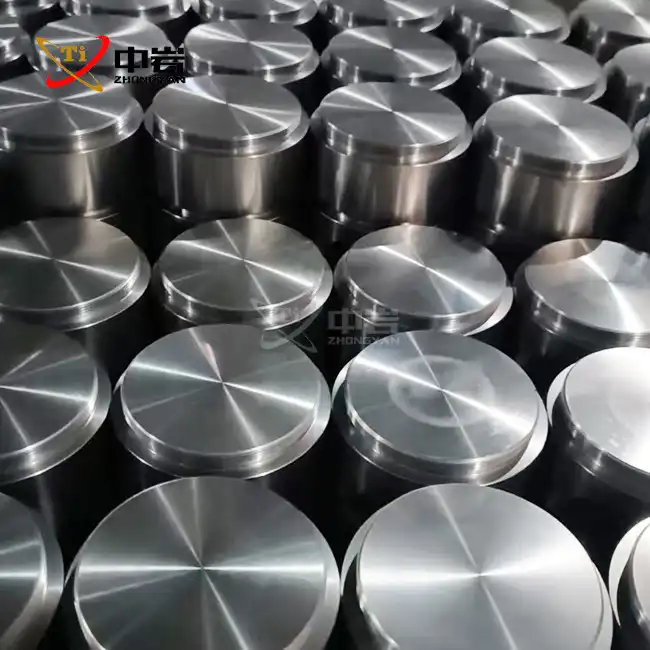
Custom Shaped Titanium Targets are the designed answer to complex sputtering problems when precise finishing tasks need more than off-the-shelf solutions. These high-purity titanium parts are made to non-standard shapes, such as tubes, conical, stepped, annular, and complex custom profiles, so they can fit into special vacuum deposition equipment that can't handle standard rectangular or circular targets. We make these precise targets at Baoji Zhongyan Titanium Industry Co., Ltd. with dimensional tolerances as tight as ±0.05mm. This lets your advanced manufacturing systems work with them without any problems, and it also makes the best use of materials and coatings in aerospace, semiconductor, medical device, and electronics production environments.
Understanding Custom Shaped Titanium Targets
What Makes These Targets Essential for Modern Manufacturing
In Physical Vapour Deposition (PVD) methods, titanium sputtering targets are used to deposit material. High-energy ions hit the target surface and eject atoms that then settle on substrates. Custom-shaped titanium targets are different from flat designs because they are made to fit specific geometry needs set by unique cathode assemblies, curved substrate setups, or specialised coating chambers. The substance itself—especially high-purity Grade 1 and Grade 2 titanium that meets ASTM B348 standards—is very resistant to rust, stable at temperatures up to 600°C, and strong enough to keep its shape during long sparking cycles. CNC turning, multi-axis CNC milling, and precision grinding are all used together at Zhongyan to make sure that the surface finishes are Ra ≤ 0.4μm. This level of accuracy has a direct effect on how well sputtering works; cleaner surfaces lower the number of arcing events and help the plasma spread out evenly. The steps in the production process include choosing the right material from approved titanium stock, computer-aided cutting to exact specs, heat treatment as needed to relieve stress, and using coordinate measuring machines to check the dimensions at multiple points. Every step of the manufacturing process is governed by ISO9001:2015 quality standards. This makes sure that the final products meet the strict needs of chip factories and aerospace coating plants.
Solving Critical Industry Pain Points
Target utilisation efficiency is always a problem in the aircraft and tech industries. Standard rectangular targets often have something called the "racecourse effect," which means that only 20–30% of the target material actually sputters. This means that a lot of material is wasted around the erosion zone. Custom shaping fixes this by adding material thickness in high-erosion places or making shapes that change the flow of plasma. Compared to standard targets, this engineering method increases operating lifetimes by 40–60%. This cuts down on material costs and production downtime needed to change targets. Another very important issue is thermal control. High-power sputtering creates a lot of heat, which can damage the target, separate it from the backing plates, or cause it to fail before it should. Custom shapes include the best cooling channel layouts and backing plate interface designs that help heat spread. Our targets are made so that their density is higher than 99.5% of their theoretical value. This means that there are no empty spaces inside that could catch gases or act as heat barriers. This structural stability makes sure that the performance stays the same even when the firing conditions are harsh, which is what high-throughput production lines need.
Advantages of Custom Shaped Titanium Targets for Advanced Manufacturing
Performance Benefits That Impact Your Bottom Line
When purchasing managers compare titanium to other sparking materials, they should see a number of clear benefits. Titanium targets are more resistant to chemical attack than copper or aluminium targets. This is especially useful in reactive sputtering settings with oxygen or nitrogen atmospheres. The material's inactive oxide layer keeps growing back, keeping the metal underneath from breaking down in a way that would make the coating less pure. This means that targets don't have to be replaced as often, and there is less chance of contamination in sensitive uses like coats for medical implants or treatments for eyeglasses.
Custom shaping of Custom Shaped Titanium Target leads to measured changes in the consistency of the coating on substrates with complicated shapes. Standard flat targets make shadows and changes in thickness when films are deposited on three-dimensional parts like turbine blades or orthopaedic implants. Engineered target shapes guide the flow of vapour at the best angles to work around these mathematical problems. Our aircraft customers say that coating thickness differences went from ±15% to ±5% after switching to custom-shaped targets. This directly improved the performance and output rates of the parts.
Material utilisation optimisation needs extra attention in places where a lot of things are made. When producing valuable or specialised titanium metals, the cost increases significantly. By putting more titanium where it's needed and less in places where it's not needed, custom targets that are made with smart material distribution reduce waste. A company that makes semiconductors and works with 200mm wafers recently reported that using our custom-designed targets cut the cost of target materials by 35% per year and improved the accuracy of deposition rates across their entire production fleet.
Durability and Reliability Under Demanding Conditions
Because of its natural qualities, high-purity titanium has a very long useful life. Titanium targets stay the same size during long sputtering sessions that would bend softer metals because they have a melting point of 1668°C and are very good at conducting heat. The low coefficient of thermal expansion of the material—about 8.6 × 10⁻⁋/°C—lowers stress at the surfaces between the target and backing plates. This lowers the chance of debonding failures that stop production and need expensive chamber venting to fix.
Corrosion protection makes targets last longer in tough production conditions. When makers of chemical processing equipment use reactive sputtering with acid precursors, they find that titanium targets last three to five times longer than stainless steel options. When the oxide passivation layer is broken, it instantly forms back together, keeping the coating pure for the whole time the target is working. This dependability is very important for keeping the process consistent and meeting strict quality standards in the pharmaceutical and medical device industries.
How to Choose the Right Custom Titanium Target for Your Needs
Material Grade Selection and Performance Characteristics
Engineers specifying sputtering targets must align material grade with intended application requirements. Grade 1 titanium offers maximum corrosion resistance and ductility with purity reaching 99.995%, ideal for medical and semiconductor applications where contamination control is paramount. Grade 2 titanium provides enhanced mechanical strength while maintaining excellent purity levels, suitable for aerospace and industrial coating applications requiring durability under thermal cycling. Our technical team at Zhongyan assists with grade selection based on your deposition parameters, substrate materials, and coating performance specifications.
Purity levels directly influence thin film properties. Trace impurities—particularly iron, oxygen, and carbon—can compromise electrical conductivity, optical transparency, or biocompatibility in deposited coatings. We maintain strict incoming material inspections using spectroscopic analysis to verify chemistry conformance with ASTM B348 and AMS specifications. This attention to material quality ensures your titanium targets deliver consistent sputtering yields and film properties across production batches, reducing process development time and improving manufacturing predictability.
Dimensional and Geometric Considerations
Target dimensions must accommodate your specific sputtering system configuration while optimizing material utilization. Critical specifications include overall diameter or length, thickness sufficient for desired operational life, flatness tolerances affecting target-cathode coupling, and surface finish influencing plasma stability. Our CNC machining capabilities handle dimensions from 50mm miniature targets for research applications up to 1000mm diameter targets for large-area coating systems, with thickness ranging from 3 mm to 100 mm depending on production volume requirements.
Complex geometries demand advanced manufacturing expertise. Tubular targets for cylindrical magnetron systems require precise concentricity and wall thickness uniformity. Segmented targets for large rectangular cathodes need careful edge preparation and dimensional matching. Conical or stepped profiles for specialized applications involve multi-axis machining with continuous verification. Zhongyan's engineering team provides design consultation to optimize target geometry for your equipment, considering factors like magnetic field distribution, cooling efficiency, and material utilization patterns observed in your specific sputtering configuration.
Supplier Evaluation and Certification Requirements
Selecting a reliable titanium target supplier impacts production continuity and product quality. Verification of manufacturing certifications assures consistent quality systems. ISO9001:2015 certification demonstrates structured quality management covering material traceability, process control, and inspection procedures. ASTM and AMS compliance confirms adherence to recognized material specifications. Request material certificates documenting chemistry analysis, mechanical properties, and dimensional inspection results for each target batch to maintain comprehensive quality records.
Production capacity and lead time management are crucial for avoiding supply disruptions. Evaluate supplier manufacturing capabilities relative to your volume requirements and delivery schedule expectations. Zhongyan's location in Baoji—China's Titanium Valley—provides access to extensive titanium raw material sources and specialized processing infrastructure, enabling us to handle both prototype quantities and high-volume production runs. Our production planning systems coordinate machining schedules with customer delivery requirements, with typical lead times ranging from four to eight weeks depending on target complexity and order volume.
Technical support capabilities differentiate suppliers in this specialized market. Access to experienced application engineers who understand sputtering physics and can recommend target designs optimized for your process represents significant value. We provide design consultation services analyzing your equipment specifications, deposition requirements, and production targets to engineer custom titanium targets delivering optimal performance. This collaborative approach reduces development iterations and accelerates time-to-production for new coating processes or equipment installations.
Comparing Custom Shaped Titanium Targets with Alternative Solutions
Material Performance Analysis
Custom Shaped Titanium Targets compete with copper, stainless steel, and various specialty alloys in sputtering applications. Each material presents distinct performance characteristics and cost considerations. Copper offers higher thermal conductivity and lower material costs, making it attractive for non-reactive sputtering and applications tolerating potential copper contamination. However, copper's susceptibility to oxidation limits utility in reactive atmospheres and compromises coating purity in sensitive applications. Titanium's superior oxidation resistance and chemical inertness justify premium pricing for medical, aerospace, and semiconductor applications where coating purity is non-negotiable.
Stainless steel targets provide intermediate performance at moderate costs, suitable for decorative coatings and some industrial applications. The material's magnetic properties complicate magnetron sputtering configurations, requiring specialized cathode designs. Stainless steel's multi-element composition introduces potential contamination from iron, chromium, and nickel, problematic for applications demanding high-purity coatings. Titanium's single-element composition and non-magnetic properties simplify magnetron integration and ensure coating purity, particularly valuable in optical coatings and electronic device manufacturing.
Geometry Options and Application Matching
Custom target shapes address diverse equipment configurations and coating requirements. Rectangular targets suit planar magnetron systems coating flat substrates like architectural glass or display panels. Our rectangular targets range from compact 100mm × 200mm sizes for laboratory systems to 400mm × 2000mm dimensions for architectural glass production lines. Precision machining ensures parallelism within 0.05mm/100mm, critical for maintaining uniform target-cathode spacing across large areas.
Cylindrical and tubular targets serve rotary magnetron systems coating cylindrical components or providing high-rate deposition for web coating applications. These geometries require precise concentricity—typically within 0.1mm total indicator reading—and consistent wall thickness to ensure uniform erosion patterns. Our turning and grinding capabilities produce cylindrical targets up to 800 mm in length with surface finish specifications meeting the demanding requirements of optical coating applications.
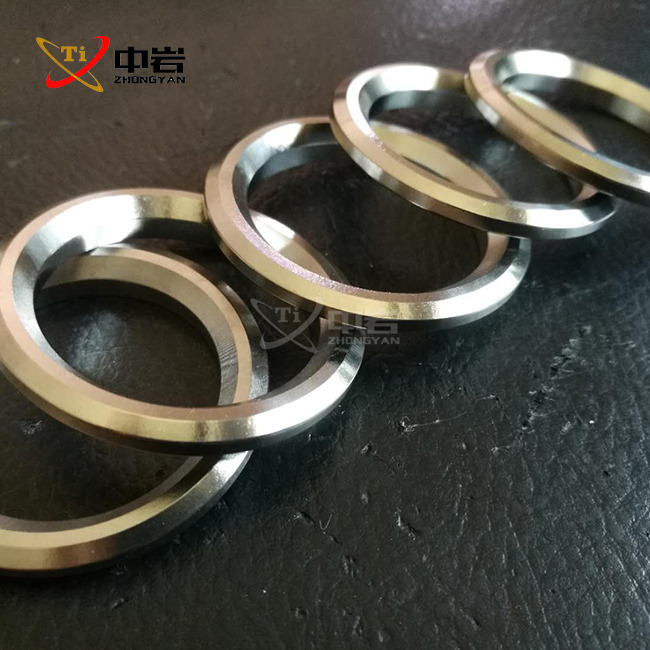
Annular and ring-shaped targets fit specialized magnetron configurations for coating complex geometries or achieving specific vapor flux distributions. These designs often incorporate stepped profiles or variable thickness sections, optimizing material utilization and plasma distribution. Engineering these complex geometries requires advanced CAD modeling, multi-axis CNC machining, and thorough dimensional verification. Zhongyan's technical team collaborates with equipment manufacturers and end users to develop custom profiles delivering optimal performance for unique coating challenges.
Procurement Process for Custom Shaped Titanium Targets
Technical Inquiry and Specification Development
The procurement journey begins with clear communication of your requirements. Providing equipment specifications—including cathode dimensions, magnetic configuration, cooling system design, and mounting interface details—enables our engineering team to recommend optimal target geometry. Sharing deposition parameters such as power density, reactive gas composition, and target-substrate distance helps us select appropriate material grade and predict operational lifespan. This collaborative specification development reduces design iterations and ensures delivered targets integrate seamlessly with your production systems.
Design consultation services add substantial value during specification development. Our applications engineers review your coating objectives, substrate materials, and film property requirements to optimize target design. We can recommend geometry modifications improving coating uniformity, suggest material grades enhancing film properties, or propose interface designs improving thermal management. This expertise stems from decades of experience manufacturing titanium targets for diverse industries and close relationships with sputtering equipment manufacturers. The consultation typically occurs via email exchanges, video conferences, or on-site visits for complex projects, ensuring thorough understanding before production begins.
Production Planning and Quality Assurance
Lead time management for Custom Shaped Titanium Target requires realistic scheduling aligned with manufacturing complexity. Simple rectangular targets with standard dimensions typically require four to six weeks from order confirmation to shipment. Complex geometries involving intricate machining, custom backing plate bonding, or specialized surface treatments may extend to eight to twelve weeks. Our production planning team provides detailed schedules outlining machining, inspection, and shipping milestones, enabling you to coordinate target arrival with maintenance windows or new equipment installations.
Quality control throughout manufacturing ensures delivered targets meet specifications. Incoming material inspection verifies titanium chemistry and mechanical properties against ASTM B348 requirements. In-process dimensional checks during machining confirm adherence to drawing tolerances. Final inspection includes comprehensive dimensional verification using coordinate measuring machines, surface finish measurement via profilometry, and visual examination for surface defects. We provide material certificates documenting chemistry analysis, mechanical test results, and dimensional inspection reports with each target shipment, supporting your quality documentation requirements and traceability needs.
Commercial Terms and Order Flexibility
Minimum order quantities vary with target complexity and size. Standard geometries may have lower MOQs, facilitating prototype orders or small production runs. Complex custom profiles requiring specialized fixturing or programming typically have higher MOQs distributing setup costs. Zhongyan offers flexible order terms accommodating diverse customer situations, from research institutions requiring single prototype targets to high-volume manufacturers placing blanket orders for annual requirements. Volume pricing structures reward larger commitments while maintaining accessibility for smaller customers developing new processes.
Payment terms and shipping logistics follow standard B2B practices with accommodation for established customers. We accept various payment methods including wire transfer, letter of credit, and payment terms for qualified accounts. International shipping via air freight or ocean transport depends on urgency and order size. Packaging employs protective materials preventing damage during transit while maintaining cleanliness essential for vacuum applications. Custom packaging solutions address special requirements like cleanroom compatibility or specific labeling for your receiving procedures.
Conclusion
Titanium sputtering targets engineered to custom geometries represent essential components for advanced manufacturing processes demanding precision, reliability, and performance. The combination of titanium's material properties—exceptional purity, corrosion resistance, and thermal stability—with precision CNC machining to exact specifications delivers sputtering targets optimized for your specific equipment and coating requirements. As semiconductor devices shrink, aerospace components demand more sophisticated coatings, and medical implants require enhanced biocompatibility, the role of custom-shaped titanium targets becomes increasingly critical. Partnering with an experienced manufacturer offering comprehensive technical support, verified quality systems, and flexible production capabilities ensures your coating operations achieve optimal efficiency, product quality, and competitive advantage in demanding global markets.
FAQ
What determines the optimal thickness for custom titanium sputtering targets?
Target thickness balances operational lifespan against material costs and thermal management. Thicker targets provide longer service life, particularly valuable for high-volume production environments where frequent target changes disrupt manufacturing schedules. However, excessive thickness increases thermal resistance between the erosion surface and cooling backing plate, potentially causing overheating. We typically recommend thickness based on your anticipated sputtering hours, power density, and replacement interval preferences, generally ranging from 6mm for short-run applications to 25mm for extended high-power operations.
How does purity level affect coating quality in titanium sputtering?
Purity directly impacts deposited film properties and contamination control. Grade 1 titanium with 99.995% purity minimizes trace element incorporation into thin films, essential for semiconductor devices where parts-per-million contamination levels affect electrical performance. Medical device coatings benefit from high purity, reducing biological response risks. Industrial applications with less stringent purity requirements may utilize Grade 2 titanium, offering cost advantages while maintaining excellent general performance. Our team helps match purity grade to your specific application requirements and quality standards.
Can existing target designs be modified for different sputtering equipment?
Adapting target geometries across different equipment platforms is common when manufacturers operate multiple coating systems. Our engineering team reviews existing target designs and new equipment specifications to develop compatible modifications. This might involve adjusting overall dimensions, modifying mounting interface features, or altering profile geometry to accommodate different magnetic configurations. Providing detailed drawings of both original targets and new equipment enables accurate adaptation, often completed within the standard design consultation phase before production begins.
Partner With Zhongyan for Precision-Engineered Titanium Sputtering Solutions
Zhongyan stands as your trusted Custom Shaped Titanium Target manufacturer, combining advanced CNC machining capabilities with deep expertise in titanium metallurgy and sputtering applications. Located in Baoji's Titanium Valley, we leverage China's premier titanium resources and processing infrastructure to deliver targets meeting ASTM, AMS, and ISO specifications for aerospace, semiconductor, medical, and industrial applications. Our engineering team provides comprehensive design consultation, optimizing target geometry for your specific equipment and coating requirements. Every target undergoes rigorous quality control, ensuring dimensional accuracy within ±0.05mm tolerances, surface finishes of Ra ≤ 0.4μm, and material purity up to 99.995%. Contact our specialists at sales@titaniumstudy.com to discuss your project requirements and receive detailed technical recommendations with competitive quotations for custom-shaped titanium targets engineered precisely for your manufacturing needs.
References
1. ASM International Handbook Committee. "Titanium: Properties and Processing for Sputtering Target Applications." ASM Handbook Volume 2: Properties and Selection of Nonferrous Alloys and Special-Purpose Materials, 2019.
2. Mattox, Donald M. "Target Materials and Target Construction for Physical Vapor Deposition." Handbook of Physical Vapor Deposition (PVD) Processing, William Andrew Publishing, 2010.
3. Westwood, W. D. "Magnetron Sputtering Target Utilization and Design Considerations." Sputtering Target Materials Technology, Institute of Materials Processing, 2018.
4. ASTM International. "Standard Specification for Titanium and Titanium Alloy Bars and Billets (ASTM B348)." ASTM Standards for Nonferrous Metals and Alloys, 2021 Edition.
5. Semiconductor Equipment and Materials International (SEMI). "Specifications for Sputtering Targets in Semiconductor Manufacturing." SEMI Standards and Safety Guidelines Volume 14, 2020.
6. Chapman, Brian N. "Custom Target Design for Advanced Thin Film Deposition Systems." Journal of Vacuum Science & Technology A: Materials Science in Vacuum Systems, Volume 28, 2017.
(1)_1755588522797.jpg)
_1755652433231.jpg)
Learn about our latest products and discounts through SMS or email