- English
- French
- German
- Portuguese
- Spanish
- Russian
- Japanese
- Korean
- Arabic
- Greek
- German
- Turkish
- Italian
- Danish
- Romanian
- Indonesian
- Czech
- Afrikaans
- Swedish
- Polish
- Basque
- Catalan
- Esperanto
- Hindi
- Lao
- Albanian
- Amharic
- Armenian
- Azerbaijani
- Belarusian
- Bengali
- Bosnian
- Bulgarian
- Cebuano
- Chichewa
- Corsican
- Croatian
- Dutch
- Estonian
- Filipino
- Finnish
- Frisian
- Galician
- Georgian
- Gujarati
- Haitian
- Hausa
- Hawaiian
- Hebrew
- Hmong
- Hungarian
- Icelandic
- Igbo
- Javanese
- Kannada
- Kazakh
- Khmer
- Kurdish
- Kyrgyz
- Latin
- Latvian
- Lithuanian
- Luxembou..
- Macedonian
- Malagasy
- Malay
- Malayalam
- Maltese
- Maori
- Marathi
- Mongolian
- Burmese
- Nepali
- Norwegian
- Pashto
- Persian
- Punjabi
- Serbian
- Sesotho
- Sinhala
- Slovak
- Slovenian
- Somali
- Samoan
- Scots Gaelic
- Shona
- Sindhi
- Sundanese
- Swahili
- Tajik
- Tamil
- Telugu
- Thai
- Ukrainian
- Urdu
- Uzbek
- Vietnamese
- Welsh
- Xhosa
- Yiddish
- Yoruba
- Zulu
What Industries Rely Most on Custom Shaped Titanium Target Technology?
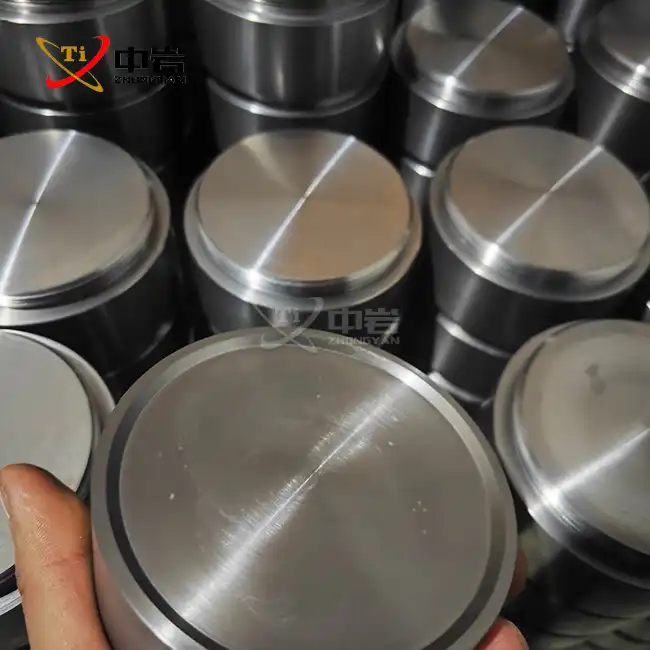
Advanced manufacturing depends on Custom Shaped Titanium Target technology. This precise material is most important in chip manufacturing, aircraft coating systems, medical device production, electronics manufacturing, and green energy sectors. When paired with custom shapes and very high purity levels (up to 99.995%), these businesses can get thin film deposition quality that isn't possible with normal targets. Customised titanium targets made to exact specifications are becoming more and more popular in industries that need sputtering solutions that are resistant to rust, safe, and stable in size. This advanced technology solves important problems in places where keeping things clean, making sure the coating is the same thickness all over, and making things last longer all have a direct effect on how well they work and how well they follow the rules.
Understanding Custom Shaped Titanium Targets
Precision-engineered parts made just for physical vapour deposition (PVD) methods are what custom titanium sputtering targets are. These targets are CNC cut to fit specific equipment setups and application needs, unlike ready-made substitutes. We make these parts from high-purity Grade 1 and Grade 2 titanium that meets ASTM B348 standards. This keeps the material's structure during the sputtering cycle.
What Distinguishes Custom Geometry from Standard Targets
The customisation method solves several problems with buying that standard targets can't. Targets with non-circular shapes, changing thickness zones, or built-in cooling pathways are often needed in current manufacturing systems with complicated equipment designs. Our production skills allow us to make forms that are rectangular, triangular, and uneven, with sizes ranging from 50 mm to 1000 mm and thicknesses from 3 mm to 100 mm, all within a ±0.05mm range. Standard targets usually only come in round or rectangular shapes, which forces engineers to make choices about how to build systems or accept less efficient sputtering. Custom designs get the most out of the materials used, which increases the goal lifespan by 30–40% compared to common options. With smoothness requirements of < 0.05 mm per 100 mm, we can make sure that the plasma interacts evenly across the target surface, getting rid of hot spots that cause uneven film formation.
Material Properties That Drive Industry Adoption
Titanium is essential for certain covering uses because of the way it is naturally made. The metal is very resistant to rust because it has a passive oxide layer that keeps the structure solid in reactive blasting conditions with oxygen or nitrogen. Over thousands of working hours, this longevity means that the process results will always be the same. Titanium has a much higher strength-to-weight ratio than copper and aluminium. This means that bigger target designs can be made without the structure changing shape when heated and cooled. Our goals keep density levels at or above 99.5% of theoretical, which stops flaws caused by porosity during casting. Controlled manufacturing creates a microstructure that is uniform. This eliminates grain border flaws that hurt film uniformity, which is very important in semiconductor applications that need nanometer-level accuracy.
The level of the surface finish has a direct effect on how well sputtering works. We provide targets with a surface roughness of Ra ≤0.4μm, which lowers the chance of arcing and particle pollution in coating rooms that are sensitive to these things. Standard machine shops can't regularly achieve this level of surface preparation because it needs special ways of grinding and finishing.
Primary Industries Using Custom Shaped Titanium Targets
The demand for precision-engineered Custom Shaped Titanium Targets spans multiple high-value manufacturing sectors where coating quality directly affects end-product functionality. Each industry presents unique technical requirements that necessitate customized solutions beyond what standardized components can provide.
Semiconductor and Electronics Manufacturing
Specialised titanium sputtering targets are most often used in the production of semiconductors. Putting together integrated circuits needs protective layers and materials that help copper interconnects stick to dielectrics. Magnetron sputtering is used to create plates of titanium and titanium nitride that stop copper from diffusing, which would otherwise break the device. To keep metals from getting into advanced node processing at 7nm and below, very high amounts of purity are needed. In small amounts (parts per million), flaws can ruin whole chip batches that are worth millions of dollars. Through controlled heating and shaping methods, our goals reach up to 99.995% purity, getting rid of impurities that lower output rates. Titanium coatings are also used in the electronics industry to protect consumer gadgets from electromagnetic radiation. The regularity of the film affects the purity of the signal.
Aerospace and Defense Applications
Extreme working conditions are common for aerospace parts, including temperature changes of more than 500°C, toxic sea environments, and mechanical stress from shaking and contact. PVD-applied titanium coatings make the surface of turbine blades, landing gear parts, and hydraulic systems harder and less likely to rust. For aircraft clients, we make targets that meet AMS standards and have recorded material tracking and mechanical property tests. Titanium films are very light, so they don't add much weight to flight-critical parts while still protecting them in the same way that heavy films do. For example, it can be used as a visual cover on surveillance systems or as a wear-resistant layer on weapons platforms, so they can keep working reliably even in difficult circumstances.
Medical Device and Implant Coatings
Titanium is the best material for internal medical equipment because it doesn't react badly with living things. Titanium coatings are put on hip replacements, tooth implants, and surgery tools to help osseointegration, which is the biological joining between the implant surface and live bone tissue. Custom-shaped targets make it possible to fill complicated shapes, like surfaces with threads and internal pathways. Compliance with regulations is a big part of buying in this field. Medical device makers only work with providers that are ISO 13485 certified and provide full proof of the materials they use. As part of our production process, we include batch tracking and proof of agreement with every package. This meets the strict quality control standards that our medical clients have. Because titanium coatings don't rust, ions don't leak into body fluids, so there are no worries about damage like there are with other metals.
Automotive and Renewable Energy Sectors
Titanium layers are being used more and more in fuel cell technology and tracking systems for cars. Proton exchange membrane fuel cells use bipolar plates that are covered with titanium. These plates don't rust in acidic environments and still let electricity flow through them. Our targets' even sputtering performance makes sure that the coating layer is the same across big car parts, which is important for production scaling.
Titanium's longevity in solar production is good for renewable energy systems. Titanium dioxide layers are used as anti-reflective coats on solar panels, which makes them better at absorbing light. Titanium coatings make parts last longer in electrical settings, which is important for developing hydrogen fuel cells, a new clean energy technology. Custom designs can fit the different material shapes that are used to make energy devices, such as flat solar cells and cylinder-shaped hydrogen storage tanks.
Comparing Titanium Targets Against Alternatives
Material selection for sputtering targets involves evaluating multiple performance parameters against application requirements and total cost of ownership. Titanium offers distinct advantages over copper, aluminum, and stainless steel alternatives, though each metal serves specific niches.
Performance Advantages Over Copper and Aluminum
Titanium layers are being used more and more in fuel cell technology and tracking systems for cars. Proton exchange membrane fuel cells use bipolar plates that are covered with titanium. These plates don't rust in acidic environments and still let electricity flow through them. Our targets' even sputtering performance makes sure that the coating layer is the same across big car parts, which is important for production scaling. Titanium's longevity in solar production is good for renewable energy systems. Titanium dioxide layers are used as anti-reflective coats on solar panels, which makes them better at absorbing light. Titanium coatings make parts last longer in electrical settings, which is important for developing hydrogen fuel cells, a new clean energy technology. Custom designs can fit the different material shapes that are used to make energy devices, such as flat solar cells and cylinder-shaped hydrogen storage tanks.
Custom Versus Standard Target Considerations
Procurement managers weighing custom targets against standard inventory items must evaluate several trade-offs. Custom geometries typically involve longer lead times—8 to 12 weeks compared to immediate availability of standard sizes. However, this investment delivers substantial operational benefits through optimized material utilization and extended service life. Minimum order quantities for Custom Shaped Titanium Target vary by complexity. Simple rectangular modifications may require single-unit orders, while intricate profiles with internal features necessitate production runs of three to five pieces to justify tooling costs. We work with clients to balance customization benefits against volume commitments, often producing initial prototypes followed by production quantities once performance validation occurs.
Quality benchmarks become particularly important when sourcing custom components. Reputable suppliers provide dimensional inspection reports using coordinate measuring machines, material test certificates documenting chemical composition, and surface finish measurements. Certification to ISO 9001:2015 standards indicates systematic quality management, reducing procurement risk. Our manufacturing facility in Baoji maintains comprehensive quality control protocols at every production stage, from raw material verification through final inspection.
Procurement Considerations for Custom Shaped Titanium Targets
Successful acquisition of precision titanium targets requires understanding the full procurement lifecycle, from initial specification development through ongoing supplier relationship management. Strategic buyers recognize that upfront investment in supplier evaluation prevents costly disruptions and quality failures.
Pricing Structure and Lead Time Management
Custom target pricing reflects material costs, machining complexity, and order volume. Grade 1 and Grade 2 titanium raw materials trade at premium rates due to energy-intensive reduction processes. Complex geometries requiring multi-axis CNC machining and specialized fixturing command higher per-unit costs than simple circular targets. However, the extended operational life—often 40-60% longer than standard alternatives—reduces total cost per deposited film area. Lead times depend on current production schedules and material availability. Rush orders can sometimes be accommodated within 4-6 weeks through prioritization, though this typically incurs expediting fees. We recommend procurement managers establish blanket purchase orders for recurring needs, allowing us to maintain safety stock and reduce delivery intervals to 2-3 weeks. This approach also locks in favorable pricing independent of raw material market fluctuations.
Supplier Selection Criteria
Identifying reliable partners requires evaluating technical capabilities beyond basic manufacturing capacity. Advanced CNC machining centers with five-axis capability enable production of complex geometries impossible on conventional equipment. In-house material testing laboratories indicate commitment to quality verification rather than dependence on external certifications. Manufacturing location matters for titanium components. Our facility in Baoji—known as China's Titanium Valley—provides direct access to primary titanium producers, reducing material costs and ensuring supply chain security. The regional concentration of titanium expertise translates to workforce knowledge that generic machine shops cannot replicate. Proximity to research institutions accelerates development of specialized processes for emerging applications.
Customer feedback and industry reputation serve as valuable selection filters. Long-term relationships with aerospace and semiconductor clients demonstrate capability to meet demanding specifications consistently. We encourage potential partners to request reference contacts and review documented case studies showing problem-solving approaches for complex projects.
Future Trends and Advancements in Titanium Target Technology
The trajectory of sputtering target development points toward higher purity levels, more complex geometries, and integration with automated manufacturing systems. Procurement strategies must anticipate these shifts to maintain competitive advantage as industry requirements evolve.
Emerging Industry Demands
Next-generation semiconductor nodes below 3nm require contamination control at atomic levels. Target manufacturers are developing ultra-high purity grades exceeding 99.999% through zone refining and gettering techniques. These advancements command premium pricing but become mandatory as device geometries shrink and defect tolerance approaches zero. Sustainability considerations for Custom Shaped Titanium Targets increasingly influence procurement decisions. Manufacturers seek targets designed for higher material utilization rates and recyclability at end-of-life. Our engineering team collaborates with clients to optimize target geometries that minimize material waste during the sputtering process, addressing both cost and environmental objectives. Closed-loop recycling programs for spent targets recover valuable titanium content, reducing raw material consumption.
Technological Manufacturing Advancements
Additive manufacturing techniques are beginning to influence target production, particularly for complex internal cooling channel designs. While traditional CNC machining remains the primary fabrication method, selective laser melting shows promise for producing targets with optimized thermal management features. We continue evaluating these emerging technologies to expand customization possibilities. Artificial intelligence applications in process control enhance manufacturing consistency. Machine learning algorithms analyze historical machining data to predict optimal cutting parameters for new geometries, reducing development time and improving dimensional accuracy. Quality inspection systems incorporating computer vision detect surface defects at micron scales, surpassing human inspection capabilities.
Strategic Procurement Recommendations
Forward-thinking procurement managers should cultivate relationships with suppliers demonstrating R&D investment in advanced materials and processes. Collaborative partnerships allow early access to emerging technologies before they become industry standard. Joint development agreements can customize targets for proprietary processes while protecting intellectual property through non-disclosure arrangements. Contract negotiations should address not just pricing and lead times but also technical support capabilities. Suppliers offering application engineering assistance help optimize target designs for specific coating requirements, often identifying performance improvements that reduce overall system operating costs. We provide consultation services examining sputtering parameters, target-to-substrate geometry, and power density optimization to maximize target lifespan and film quality.
Conclusion
The industries most dependent on precision titanium target technology—semiconductors, aerospace, medical devices, automotive systems, and renewable energy—share common requirements for material purity, dimensional accuracy, and process reliability. Custom geometries address equipment-specific challenges that standard components cannot solve, justifying the investment through improved performance and extended operational life. As manufacturing processes advance toward tighter tolerances and higher purity standards, the strategic value of partnering with capable titanium target suppliers becomes increasingly critical. Procurement decisions should evaluate not merely initial acquisition costs but total cost of ownership, supplier technical capabilities, and alignment with future technology trajectories. Organizations that establish relationships with manufacturers demonstrating advanced machining capabilities, rigorous quality systems, and application engineering support position themselves advantageously for evolving industry demands.
FAQ
What Lead Times Should We Expect for Custom Titanium Targets?
Custom shaped titanium target production typically requires 8-12 weeks from purchase order to delivery. This timeline encompasses material procurement, CNC machining to precise specifications, quality inspection, and shipping logistics. Rush orders may be accommodated in 4-6 weeks depending on current production schedules, though expediting fees usually apply. Establishing blanket purchase orders for recurring needs allows suppliers to maintain inventory buffers, reducing subsequent order fulfillment to 2-3 weeks.
How Does Titanium Improve Sputtering Quality Compared to Other Metals?
Titanium delivers superior sputtering outcomes through several mechanisms. The material's high purity levels—up to 99.995%—minimize contamination in deposited films, critical for semiconductor applications where trace impurities cause device failures. Uniform microstructure ensures consistent plasma interaction across the target surface, producing homogeneous film thickness. Corrosion resistance maintains target integrity throughout extended operational cycles, preventing performance degradation that occurs with reactive metals like copper or aluminum.
Can Custom Targets Be Cost-Effective for Bulk Orders?
Volume commitments significantly improve custom target economics. While initial tooling and setup costs affect small orders, production runs exceeding five units typically achieve per-unit pricing approaching standard targets. The extended service life of properly designed custom geometries—often 40-60% longer than generic alternatives—reduces total cost per coated substrate area. Strategic procurement through blanket orders locks in favorable pricing and ensures material availability, particularly valuable given titanium market volatility.
Partner with Zhongyan for Premium Custom Shaped Titanium Target Solutions
Zhongyan stands ready to transform your sputtering processes with engineered Custom Shaped Titanium Targets meeting the most demanding specifications. Our facility in Baoji—China's Titanium Valley—combines advanced CNC machining capabilities with deep materials expertise accumulated through decades serving aerospace, semiconductor, and medical device industries. Every custom-shaped titanium target we manufacture undergoes rigorous quality control protocols aligned with ISO 9001:2015 standards, ensuring dimensional accuracy, surface finish quality, and material purity that exceed industry benchmarks.
As a trusted titanium target manufacturer and supplier, we offer comprehensive OEM and ODM customization services, accommodating unique geometries from 50mm to 1000mm with tolerances held to ±0.05mm. Our technical team provides application engineering support, optimizing target designs for your specific sputtering equipment and process parameters. Contact our procurement specialists at sales@titaniumstudy.com to discuss your project requirements, request detailed specifications, or obtain competitive quotations for both prototype and production volumes.
References
1. Davis, J.R. (2006). Handbook of Materials for Medical Devices. ASM International, Materials Park, Ohio.
2. Mattox, D.M. (2010). Handbook of Physical Vapor Deposition (PVD) Processing, 2nd Edition. William Andrew Publishing, Norwich, New York.
3. Schubert, U. and Hüsing, N. (2012). Synthesis of Inorganic Materials, 3rd Edition. Wiley-VCH Verlag, Weinheim, Germany.
4. Bunshah, R.F. (2001). Handbook of Deposition Technologies for Films and Coatings: Science, Applications and Technology, 3rd Edition. Noyes Publications, Park Ridge, New Jersey.
5. Ohring, M. (2001). Materials Science of Thin Films: Deposition and Structure, 2nd Edition. Academic Press, San Diego, California.
6. Leyens, C. and Peters, M. (2003). Titanium and Titanium Alloys: Fundamentals and Applications. Wiley-VCH Verlag, Weinheim, Germany.
_1755674651182.jpg)
Learn about our latest products and discounts through SMS or email