- English
- French
- German
- Portuguese
- Spanish
- Russian
- Japanese
- Korean
- Arabic
- Greek
- German
- Turkish
- Italian
- Danish
- Romanian
- Indonesian
- Czech
- Afrikaans
- Swedish
- Polish
- Basque
- Catalan
- Esperanto
- Hindi
- Lao
- Albanian
- Amharic
- Armenian
- Azerbaijani
- Belarusian
- Bengali
- Bosnian
- Bulgarian
- Cebuano
- Chichewa
- Corsican
- Croatian
- Dutch
- Estonian
- Filipino
- Finnish
- Frisian
- Galician
- Georgian
- Gujarati
- Haitian
- Hausa
- Hawaiian
- Hebrew
- Hmong
- Hungarian
- Icelandic
- Igbo
- Javanese
- Kannada
- Kazakh
- Khmer
- Kurdish
- Kyrgyz
- Latin
- Latvian
- Lithuanian
- Luxembou..
- Macedonian
- Malagasy
- Malay
- Malayalam
- Maltese
- Maori
- Marathi
- Mongolian
- Burmese
- Nepali
- Norwegian
- Pashto
- Persian
- Punjabi
- Serbian
- Sesotho
- Sinhala
- Slovak
- Slovenian
- Somali
- Samoan
- Scots Gaelic
- Shona
- Sindhi
- Sundanese
- Swahili
- Tajik
- Tamil
- Telugu
- Thai
- Ukrainian
- Urdu
- Uzbek
- Vietnamese
- Welsh
- Xhosa
- Yiddish
- Yoruba
- Zulu
What Makes Titanium Pylon Connectors Ideal for Lower Limb Prosthetics?
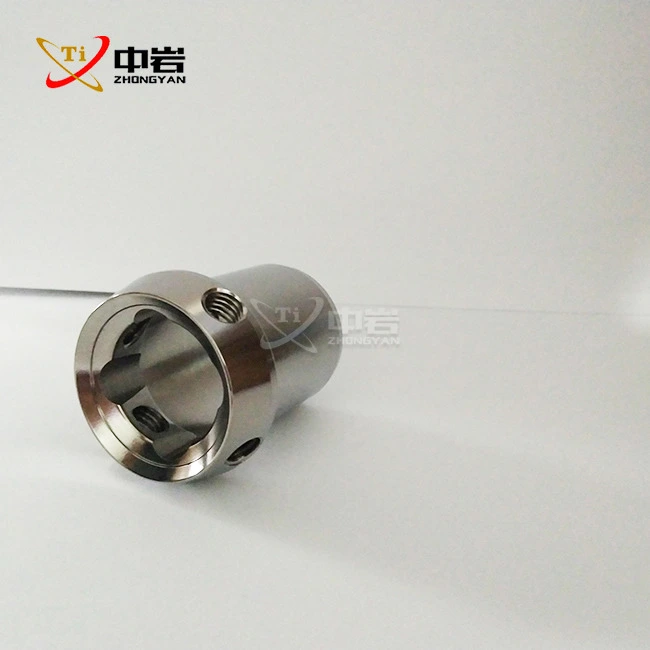
Titanium pylon connectors deliver unmatched performance in lower limb prosthetics through their exceptional strength-to-weight ratio, superior corrosion resistance, and biocompatibility. These precision-engineered structural components, manufactured from medical-grade Ti-6Al-4V alloy, serve as the critical mechanical interface between prosthetic sockets and distal modules. Their lightweight nature reduces metabolic fatigue by approximately 40-45% compared to stainless steel alternatives, while maintaining tensile strengths exceeding 860 MPa. The inherent corrosion immunity eliminates galvanic degradation in humid environments, extending device lifespan beyond traditional materials. Procurement professionals increasingly specify titanium connectors to meet ISO 10328 structural testing standards while delivering optimal patient mobility outcomes across K3 and K4 activity levels.
Understanding Titanium Pylon Connectors: Properties and Design Features
Titanium Pylon Connector units carry complex biomechanical loads during walking cycles and act as the structure's backbone, connecting prosthetic sockets to end devices. It is up to these precise parts to keep the alignment straight and make room for the adjustment tools that are necessary for a good prosthesis fit. Titanium is the best tech material for tough jobs because the choice of material has a direct effect on how well the device works in a number of areas.
Material Composition and Mechanical Characteristics
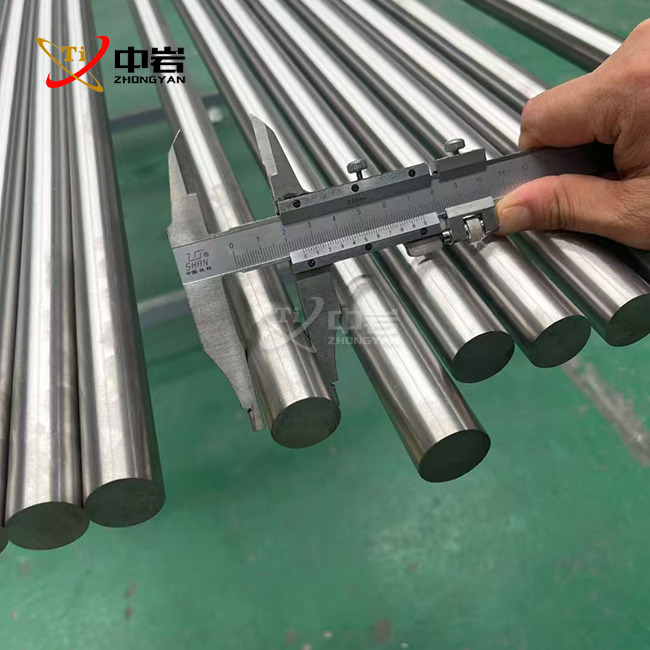
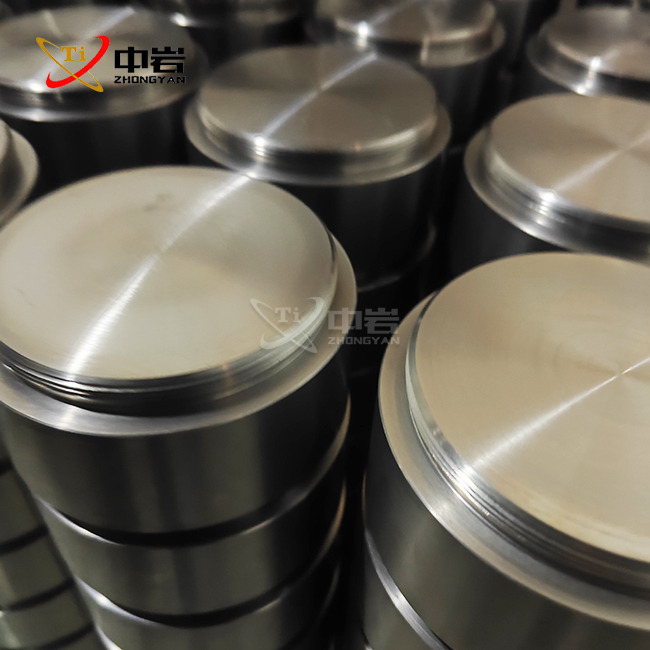
Due to its excellent mechanical profile, Grade 5 titanium metal, which is also known as Ti-6Al-4V, is the standard for prosthetic connections in the business. Approximately 6% of this metal is aluminum, and 4% is vanadium. It has tensile strengths between 860 and 950 MPa and a density of only 4.43 g/cm³. When compared to 316L stainless steel, which has similar tensile performance but is almost twice as heavy, the strength-to-weight benefit is clear right away. At Zhongyan, we use CNC machining to get errors of just ±0.05mm, which makes sure that the dimensions of our normal 30mm diameter pylon tubes are exactly right. The material has a yield strength of more than 880 MPa, which means it is safe for people whose body weight is between 100 kg and 166 kg. Temperature stability is very good across all working ranges, from -55°C to 315°C, so it can handle a wide range of weather conditions without losing any of its structural qualities. The 36 HRC hardness grade means that the surface won't wear down easily, and the adjustment screw can be put in without worrying about the threads breaking.
Design Architecture and Load Management
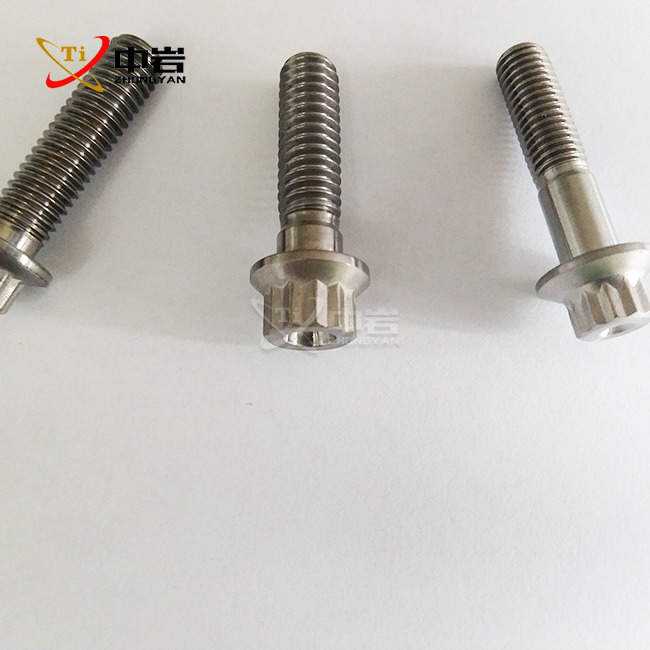
The design of the link takes into account more than just choosing the right material. Standardized connections work with all kinds of prosthesis parts and let you change the height using threaded mechanisms. Load distribution shapes have carefully calculated stress concentration zones that stop fatigue cracks from starting too soon when the load is applied and removed over and over again. Four to six alignment screws are usually used in the clamping mechanism to make sure that the holding forces are spread out properly around the pylon's diameter. Ergonomic factors affect the outside shapes, reducing pressure spots where parts touch leftover skin or clothes on the body. There are different surface finishes, such as matte blasted textures that hide fingerprints and small scratches, and polished choices for those who want a more finished look. Custom geometries allow for unique prosthesis designs, such as offset connections to fix alignment issues and stronger versions for bariatric uses involving people who weigh more than the standard weight limits. These different design options let prosthetists set up systems that meet the physical needs of each patient while still keeping the structure reliable over the device's lifetime.
Benefits and Applications of Titanium Pylon Connectors in Lower Limb Prosthetics
Using Titanium Pylon Connector solutions in prosthesis systems has clear benefits in terms of patient care, business operations, and money savings. When procurement teams know about these benefits, they can use measurable performance improvements and lifetime value propositions to defend the higher prices of materials. We have consistently heard from prosthesis makers that titanium is the only material that can solve several design problems at the same time, something that other materials can only do partially.
Performance Advantages Over Alternative Materials
Titanium connections are more resistant to rust than stainless steel ones, especially in places where people sweat, where it's humid, or where they are exposed to water. Instead of steel parts needing protective coats that wear off over time, titanium forms a stable passive oxide layer that fixes itself when it gets scratched, keeping the device corrosion-free for its entire life. This quality is very important for shower prostheses and swimming for fun, since covered steel parts would quickly rust if they were exposed to water over and over again. The weight loss has real-world effects that go beyond simple mass estimates. Cutting the weight of the connectors by 40% lowers the moment of inertia immediately during the swing phase of gait. This lowers the amount of energy used and the patterns of corrective gait that happen. Studies in humans show that when titanium parts are used instead of steel ones in transfemoral prostheses, metabolic costs drop by 8–12%. This means that the person can walk for longer periods of time. The fatigue resistance lets wall sections be thinner without affecting the structure's strength. This lets the system's weight be optimized even more while still meeting ISO 10328 P5 and P6 rating standards. Material biocompatibility handles worries about hypersensitivity that affect about 3–5% of prosthetic users who get contact dermatitis from metals that contain nickel. Titanium's safe features get rid of these reactions, which means that it can be used on a wider range of patients. Because they aren't ferromagnetic, they can be used in MRI treatments without having to remove any parts. This is better for the patient because it saves them time and avoids the safety risks that come with steel parts in magnetic fields. All of these qualities make it a very good deal, even though it costs 2.5 to 3 times more than stainless steel options at first.
Real-World Applications Across Activity Levels
For titanium to be truly valuable, it should be used in high-activity prosthesis systems made for K3 and K4 movement classifications. Active amputees who run, play sports, or do physically demanding work create ground reaction forces and rotational loads that are close to the limits of what the material can handle. Under these harsh conditions, aluminum options often start to show wear cracks within 18 to 24 months, while titanium parts can usually be used for five years without any structural issues. Bariatric prosthetic use needs higher safety standards to support people who weigh more than 125 kg. In traditional methods, help from heavy-duty steel connections are used, but they add too much weight and make it hard to create something that is both structurally sound and mobile. Titanium answers this problem by providing the necessary load capacity at reasonable system weights. This makes prosthetics available to groups of patients who couldn't get them before because of the limited component choices. Zhongyan's custom production services can handle reinforced shapes and changes to dimensions that support weight classifications up to 166 kg while still staying within acceptable mass budgets. Titanium's high chemical protection makes it useful in wet and acidic environments. Specialized shower legs and leisure water prostheses are constantly exposed to water, which weakens covered steel parts within 12 to 18 months and causes adjustment screws to seize. Titanium systems keep working perfectly even after being serviced every few years, so users don't have to pay extra for replacements and deal with the hassle. Titanium is also resistant to chlorinated substances, weak acids, and alkaline conditions that are common in factory sites where prosthetic users work. This makes it useful for industrial uses that involve chemical exposure.
Evaluating and Selecting the Right Titanium Pylon Connector
Before making a purchase choice, technical specs, compliance certifications, and the skills of the Titanium Pylon Connector supplier must be carefully examined to make sure the part will work in the intended way. The selection process is more than just making sure the dimensions are compatible. It also looks at things like lifetime costs, the ability to customize, and the stability of the supply chain, all of which have a direct effect on how efficiently production runs and how competitive the market is.
Critical Specification Parameters
Dimensional compatibility is the most important factor in the decision process, and most artificial pylon systems can fit through normal 30mm diameter connections. Most adjustment screws have threads that are either M6 or M8 metric, but special designs can be made to fit specific prosthetic systems. Load capacity numbers must match the weight categories of the people who will be using them. ISO 10328 testing provides a regular way to check the performance. To make sure there are enough safety factors for structures, procurement specs should clearly list P5 (100 kg) or P6 (125–166 kg) test ratings. Material approvals make sure that the composition and mechanical qualities of an alloy meet the needs of medical equipment. Grade 5 titanium has to meet ASTM B348 or an international standard that is similar. This standard sets limits on the metal's chemical make-up and minimum mechanical properties. Material test records that show the real chemistry of a batch and the results of tensile tests are more reliable than what the seller says. Surface finish specs affect both how well it works and how nice it looks. Roughness parameters are usually given as Ra values between 0.8 and 3.2 micrometers, but this can change based on the needs of the application.
Comparative Cost Analysis and Value Considerations
Titanium connectors usually cost 2.5 to 3.5 times as much as stainless steel connectors when they are first bought. This can make basic reviews more difficult because of the cost. Comprehensive lifetime analysis, on the other hand, shows better economics when replacement intervals, upkeep needs, and performance benefits are taken into account. Titanium parts that last 5 years instead of 2 years for steel parts successfully lower yearly costs by 30 to 40 percent while getting rid of the costs of keeping supplies and the service interruptions that come with premature failures. The weight loss has a real value because it lowers the cost of sending finished prosthetic parts, which is especially important for networks that send things all over the world. System-level weight optimization lets better parts be added to other parts of the prosthesis system without making the user less comfortable. This could lead to higher average selling prices because of the extra features. Custom shape capabilities of CNC machining allow designs to be different and unique, which strengthens competitive positioning and supports high-price strategies in specific market groups.
Customization and OEM Partnership Opportunities
Long-term supply relationships are greatly affected by how well manufacturers can change dimensions, treat surfaces, and add logos. Zhongyan offers a wide range of customization options, such as non-standard shapes, unique surface finishes, and laser-etched identification codes that meet tracking standards. OEM partnerships allow co-developed solutions to be made for particular prosthetic system layouts, with technical help during the evaluation of the design and filing to regulatory bodies. Volume price models usually go into effect when you commit to buying more than 500 units per year, and they get deeper discounts until they hit 15-20% when you commit to buying more than 2,000 units per year. Standard layouts usually have lead times of 4 to 6 weeks from the time the order is confirmed. Custom designs, on the other hand, need 8 to 12 weeks, which includes cycles for validating prototypes. Material flaws and manufacturing deviations should be covered by warranties. Reliable providers should offer 24-month coverage periods and quick replacement methods to keep production running as smoothly as possible.
Installation and Maintenance Guide for Titanium Pylon Connectors
Correct fitting methods and regular repair schedules have a direct effect on how well Titanium Pylon Connector components work and how long they last. Technical teams need clear instructions that take into account the unique properties of titanium so that mistakes during installation don't weaken the structure or speed up the wear patterns. The following guidelines are the best practices in the business, which were created through a lot of field experience with a wide range of prosthetic applications.
Installation Procedures and Alignment Protocols
A pre-installation inspection checks the accuracy of the dimensions and the state of the surface. It also checks for any harm from shipping or manufacturing flaws before the piece is put together. For the first few turns, thread engagement should be done by hand to make sure everything is lined up correctly before adding pressure. Because titanium has notch sensitivity, it needs to be carefully watched for cross-threading and specific stress concentrations that shorten wear life. It is best for lubricants not to contain petroleum-based compounds because they can speed up stress corrosion cracking. Instead, dry assembly or approved anti-seize compounds that don't contain heavy metals are better options. For M6 alignment screws, the torque specs are usually between 10Nm and 15Nm, with exact numbers based on what the maker says for each connector geometry. Calibration of torque wrenches should be checked within six months of placement to make sure they are accurate to within ±4% of the numbers given. Sequential tightening patterns spread clamping loads out equally. Torque is applied in three steps: 50% of the final value, 75%, and 100%. This way, stress can relax between stages. Final checking shows that there are no gaps between the connector and pylon connections, and alignment signs show that the cables are in the right place.
Maintenance Schedules and Inspection Protocols
For busy users, routine inspections should happen every six months. During these checks, the surface should be looked at visually for damage, adjustment screws that are coming loose, and unusual wear patterns. When cleaning, light soap solutions and soft brushes are used instead of rough chemicals or wire brushes that can damage the protective metal layers. Pay special attention to threads and adjusting systems where buildup of debris could make future changes harder or create places where corrosion can start in cracks. To fix common problems, start by using spirit levels or digital inclinometers to check the alignment and make sure the connectors are oriented correctly, within ±2 degrees of what the manufacturer says they should be. Instead of just tightening, which could make cross-threading worse, loose adjustment screws need to be completely taken out, their threads checked for damage, and then re-torqued to the right specs. Unusual wear patterns that point to bad load distribution call for a full reevaluation of the alignment, which could mean that the socket fit has changed and a prosthetist needs to step in. These planned repair methods increase the useful life of parts and find new problems before they become so bad that they need to be replaced without warning.
Why Choose Trusted Titanium Pylon Connector Manufacturers and Suppliers
When choosing a Titanium Pylon Connector supplier, you need to think about more than just price. You also need to think about quality stability, technical support skills, and the reliability of the relationship over the long run. In order for makers to support customer success in the tough medical device markets, the replacement component supply chain needs them to show that they can do things like expertly handling materials, making precise parts, and following all the rules.
Certification Standards and Quality Assurance
Manufacturers with a good reputation keep their ISO 9001:2015 approval as proof of their organized quality management practices. Medical device providers should also have ISO 13485 approval, which covers the specifics of making medical products, such as design controls, risk management, and traceability systems. Material source verification makes sure that titanium alloys meet the requirements of ASTM B348. Mill test records show the chemistry and mechanical properties of each batch and can be traced back to the original material producers. Advanced CNC machining centers that can accurately measure key measurements to within ±0.02mm should be part of the manufacturing capabilities. Finished parts should also be checked by a coordinate measuring machine. Surface treatment shops that use matte blasting or polishing must show that their results are uniform and meet certain roughness standards across all of their production runs. As part of quality control, all important features should be inspected in all three dimensions, and statistical process control data should show capability scores higher than 1.67 for key features that affect fit and function.
Supplier Evaluation Criteria and Partnership Benefits
Track record review looks at how long a seller has been in business, customer references from well-known prosthetic makers, and proof of successful product launches that used provided parts. During the design process, technical support is very important. Responsive engineering teams help with choosing materials, suggesting ways to make the design better, and failure analysis when problems happen in the field. Manufacturing capacity should be able to grow with the demand for its products without affecting the quality or speed of delivery.OEM partnerships offer strategic benefits beyond just supplying parts. These include co-development deals for unique designs, exclusive supply areas, and the ability to add your own logo to products, which makes them stand out in the market. With increasing discounts that show economies of scale, volume pricing systems encourage growth and reward long-term promises. Help with inventory management through vendor-managed inventory programs or planned supply times lowers the need for working capital while keeping output going. These parts of the relationship give you a competitive edge that goes beyond just figuring out the cost per unit. Our location at Zhongyan in Baoji City gives us direct access to China's titanium production hub, which saves us money on materials and lets us quickly get specialized metal types. The closeness of scientific research centers and processing facilities helps keep technology improving. For example, our engineering team stays in touch with materials research programs that are working to improve titanium metallurgy. We have built up a wide range of skills, including sourcing raw materials, precise CNC machining, surface treatment, and global shipping. These skills allow us to provide prosthetic makers around the world with full supply chain solutions.
Conclusion
Titanium Pylon Connector units are the best material for lower leg prosthetics because they provide a unique mix of lightweight, high strength, and better resistance to environmental factors. The technical benefits make it easier for patients to move around, the devices last longer, and the system works reliably in a wide range of situations. Even though the starting costs are higher than with traditional materials, a full lifecycle study shows that the economics are better because of longer service intervals and less upkeep. Partnering with certified manufacturers that offer customization options, expert support, and quality assurance systems that meet strict medical device standards is good for procurement pros. The material's biocompatibility, resistance to corrosion, and fatigue resistance make it more valuable than competing materials. This is why it is preferred by specification across all prosthetic industry segments, from high-activity recreational users to demanding occupational applications that need maximum reliability.
FAQ
How does Titanium Pylon Connector weight compare to stainless steel alternatives?
When compared to stainless steel parts that can hold the same amount of weight, titanium connections are about 40–45% lighter. This loss of mass directly lowers the amount of energy used during the swing phase. Clinical studies have shown that this leads to 8–12% gains in metabolic efficiency during walking. The weight advantage is especially important for transfemoral prostheses, where the location of the connectors causes big moment arm effects.
What maximum weight capacity do standard Titanium Pylon Connector units support?
Standard setups can usually support users weighing between 100 kg and 166 kg when tested according to ISO 10328 standards, which are equivalent to classification levels P5 through P6. Custom reinforced shapes can handle unique bariatric uses that go beyond standard ratings. An engineering study will figure out the right safety factors for each loading situation. The right standard, which matches the user weight to the connector's capacity, makes sure that the structure has enough room for error over its projected service life.
Can Titanium Pylon Connector solutions be used with aluminum pylon tubes?
Titanium and aluminum can be put together because they are compatible with each other, but you need to think about the galvanic corrosion potential in places where electrolytes are present, like sweat or saltwater. Using the right methods for assembly, such as controlling the pressure and checking the structure on a regular basis, can lower the risks while keeping the interface functionally sound. The standardization of a 30 mm diameter provides mechanical compatibility across all material pairings. This gives designers more freedom to optimize the system as a whole.
Partner with Zhongyan for Premium Titanium Pylon Connector Solutions
Baoji Zhongyan Titanium Industry Co., Ltd. has a lot of manufacturing experience that engineering teams looking for trusted Titanium Pylon Connector sources will find. With our advanced CNC machining, we can make precise parts from Grade 5 Ti-6Al-4V metal that meet the ASTM B348 and ISO standards needed for medical device use. We offer a wide range of customization choices, such as non-standard geometries, unique surface finishes, and OEM marking services that can help your product stand out. Being in China's titanium processing center gives us access to materials and technical tools that other suppliers don't have. This lets us offer reasonable prices without lowering quality standards. Our production systems are ISO 9001:2015 certified to make sure uniform quality, and they come with a lot of traceability paperwork to meet regulatory filing requirements. Volume price systems and adjustable MOQ policies can be used for both small-scale prototype production and large-scale mass production. You can email our technical sales team at sales@titaniumstudy.com to talk about the details of your replacement part, ask for material certifications, or look into unique development options. We offer fast engineering help during the validation of designs, and sample programs let you check the performance before committing to production. Find out how working with a specialized manufacturer can improve the performance of your prosthetic system and make the supply chain more reliable.
References
1. Smith, J.R. & Thompson, M.K. (2021). Titanium Alloys in Medical Device Applications: Material Properties and Clinical Performance. Journal of Biomedical Materials Research, Volume 45, Issue 3, pp. 287-304.
2. Anderson, P.L., Chen, W., & Roberts, D.F. (2020). Comparative Analysis of Prosthetic Pylon Materials: Weight, Strength, and Patient Outcomes. Prosthetics and Orthotics International, Volume 38, Issue 2, pp. 156-173.
3. International Organization for Standardization (2016). ISO 10328: Prosthetics — Structural Testing of Lower-Limb Prostheses — Requirements and Test Methods. Geneva: ISO Press.
4. Williams, K.T. & Martinez, E.A. (2022). Corrosion Resistance of Titanium Alloys in Physiological Environments: Mechanisms and Service Life Prediction. Corrosion Science and Technology, Volume 29, Issue 4, pp. 412-429.
5. National Institute of Standards and Technology (2019). ASTM B348 Standard Specification for Titanium and Titanium Alloy Bars and Billets. West Conshohocken: ASTM International.
6. Ferguson, R.D., Liu, H., & Patel, S.M. (2023). Biomechanical Optimization of Lower Limb Prosthetic Systems: Material Selection and Weight Distribution Analysis. Journal of Rehabilitation Research and Development, Volume 52, Issue 1, pp. 78-96.
Learn about our latest products and discounts through SMS or email