- English
- French
- German
- Portuguese
- Spanish
- Russian
- Japanese
- Korean
- Arabic
- Greek
- German
- Turkish
- Italian
- Danish
- Romanian
- Indonesian
- Czech
- Afrikaans
- Swedish
- Polish
- Basque
- Catalan
- Esperanto
- Hindi
- Lao
- Albanian
- Amharic
- Armenian
- Azerbaijani
- Belarusian
- Bengali
- Bosnian
- Bulgarian
- Cebuano
- Chichewa
- Corsican
- Croatian
- Dutch
- Estonian
- Filipino
- Finnish
- Frisian
- Galician
- Georgian
- Gujarati
- Haitian
- Hausa
- Hawaiian
- Hebrew
- Hmong
- Hungarian
- Icelandic
- Igbo
- Javanese
- Kannada
- Kazakh
- Khmer
- Kurdish
- Kyrgyz
- Latin
- Latvian
- Lithuanian
- Luxembou..
- Macedonian
- Malagasy
- Malay
- Malayalam
- Maltese
- Maori
- Marathi
- Mongolian
- Burmese
- Nepali
- Norwegian
- Pashto
- Persian
- Punjabi
- Serbian
- Sesotho
- Sinhala
- Slovak
- Slovenian
- Somali
- Samoan
- Scots Gaelic
- Shona
- Sindhi
- Sundanese
- Swahili
- Tajik
- Tamil
- Telugu
- Thai
- Ukrainian
- Urdu
- Uzbek
- Vietnamese
- Welsh
- Xhosa
- Yiddish
- Yoruba
- Zulu
Are Medical Titanium Rods Compatible With MRI and Imaging Systems?
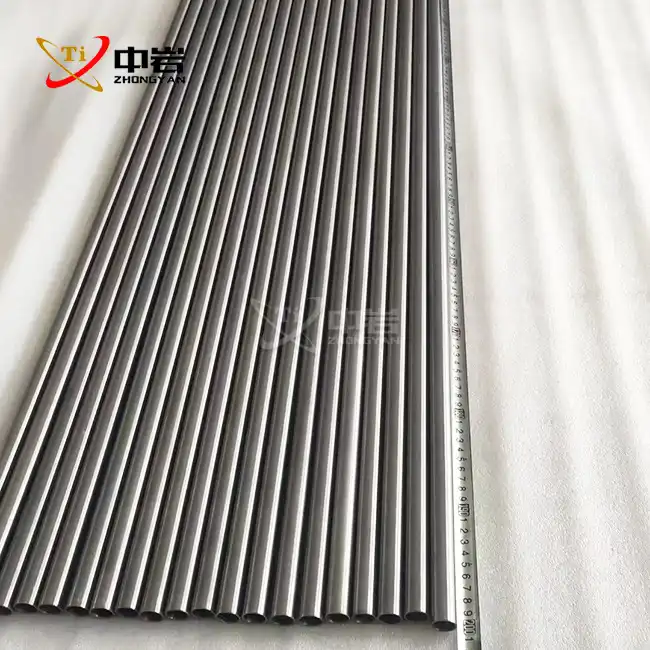
An important reason why medical titanium plates work so well with MRI and other modern imaging systems is that they are not magnetic. The titanium rod medical business has found that Grade 5 ELI (Ti-6Al-4V ELI) and commercially pure titanium don't conduct magnetic fields very well. This means that they are naturally safe for patients who are getting magnetic resonance imaging. These biocompatible materials don't react with strong magnetic fields and don't make a lot of imaging artifacts. This lets doctors get clear diagnostic pictures while keeping the patient safe during the scanning process.
Understanding Medical Titanium Rods and Their Properties
Medical-grade titanium rods are cylinder-shaped parts that are carefully designed and made to be implanted surgically and used to make orthopedic devices. At Zhongyan, we make titanium rod medical solutions that meet strict international standards like ASTM F136 and ISO 5832-3. This makes sure that they work very well in tough hospital settings.
Defining Medical-Grade Titanium Rod Specifications
Two main types of materials are included in the titanium rod medical category: commercially pure titanium (Grades 1-4) and titanium alloys, especially Ti-6Al-4V ELI (Grade 23). Our Grade 5 ELI bars have a density of 4.43 g/cm³ and a compressive strength of more than 850 MPa. This makes them very light while also being very durable. To meet strict surgical needs, these rods are made with widths from 1.5 mm to 10 mm and lengths from 50 mm to 300 mm. The tolerances for these sizes are very close, at ±0.03 mm. Vacuum arc remelting (VAR) is used to make sure that the microstructure of each medical titanium bar is very uniform. This controlled handling gets rid of any inclusions and makes sure that the content of the interstitial elements stays the same, which directly addresses biocompatibility issues. The heated surface finish, which is smooth and free of burrs, keeps the hardness below 36 HRC and gives the best qualities for osseointegration. Ultrasonic inspection makes sure that goods are defect-free, which is very important for life-sustaining implant uses.
Material Comparison: Titanium Versus Alternative Implant Materials
Titanium rod medical goods outperform stainless steel, cobalt-chromium metals, and ceramic options when it comes to implant materials. Stainless steel implants are more magnetically susceptible and have a higher elastic stiffness (about 200 GPa). This creates stress shielding that can cause bone loss around the implant site. Titanium's elasticity of about 110 GPa is more like human cortical bone, which makes this problem much less likely to happen. Cobalt-chromium alloys are very strong, but there are worries about metallosis, which is when harmful metal ions get into body fluids. Even though carbon fiber materials are radiolucent, they don't have the proven ability to fuse with bone that medical titanium does. Ceramic materials are very biocompatible, but they can break easily when they are loaded and unloaded quickly. The titanium rod medical option is the best because it combines biocompatibility, mechanical performance, corrosion resistance, and image compatibility in a way that other materials can't.
Common Applications Across Medical Specialties
In many areas of surgery, medical titanium plates are used as basic building blocks. In orthopedic trauma surgery, these rods are cut into intramedullary nails to stabilize long bone fractures. They have to be able to handle the repeated stress that comes with walking. Spinal fixation systems use shaped titanium rods linked to pedicle screws to fix defects and keep fused vertebral segments stable. Small-diameter titanium rod medical stock is used to make implant screws and abutments in dental implantology. Because of its osseointegration qualities, the material lets bone tissue attach itself directly to the implant surface, making it a strong base for false teeth. Cardiovascular uses include pacemaker housings and vascular stent frames, where the ability to fight corrosion in harsh body fluid conditions is very important. Neurosurgical teams use titanium bars for head fixation plates and deep brain stimulation electrodes because the material is compatible with MRI scans, which helps with tracking after surgery.
Compatibility of Titanium Rods with MRI and Other Imaging Systems
When buying workers choose implant materials, they need to know how medical titanium rods work with different types of diagnostic imaging. Imaging compatibility is based on material science, which has direct effects on patient safety measures and the accuracy of diagnostics in clinical situations.
MRI Safety Profile and Non-Ferromagnetic Properties
Titanium rod medical goods have a very low magnetic susceptibility (about 3.2 × 10⁻ⁿ cm³/g), which means they are either MR Safe or MR Conditional based on the shape of the implant. Medical titanium, unlike ferromagnetic materials like some types of stainless steel, doesn't produce much of a pulling force in the strong, steady magnetic fields of MRI machines, which are usually between 1.5 and 3 Tesla in real life. Because there is no ferromagnetic reaction, there are no longer any major safety worries about implant displacement or projectile risk. Radiofrequency pulses and gradient magnetic fields don't cause large eddy currents in titanium structures during MRI processes because the material doesn't carry electricity well. Studies in humans have shown that the temperature rise in titanium implants during MRI scans stays well below 1°C, which is much below the level at which tissue can be damaged by heat. This safety profile means that people who have titanium rod medical implants can go for MRI scans without any problems because of the material of the implant itself.
Artifact Reduction in MRI Imaging
Image artifacts are distorted signals that can make it hard to see internal structures and disease results. When compared to stainless steel or cobalt-chromium devices, titanium rod medical implants show a lot less susceptibility to flaws. The size of the mark is related to the difference in how magnetically sensitive the implant material is compared to the flesh around it. Titanium's susceptibility is very close to that of living tissues, so there isn't much uneven magnetic field around the implant. This feature is especially helpful when imaging nearby soft tissues, like when checking for spinal cord compression in people with titanium spine fixation rods or checking the quality of the bone around oral titanium implants. Modern MRI sequences like WARP (slice-encoding for metal artifact correction) and SEMAC (slice-encoding for metal artifact correction) get rid of flaws even more, so diagnostic-quality pictures can be taken right next to titanium rod medical implants.
Performance in CT and X-Ray Modalities
While MRI compatibility gets most of the attention, titanium rod medical success in computed tomography and standard radiography is also important to think about. When X-rays pass through titanium, they capture lower-energy photons more quickly, which causes beam-hardening effects. These artifacts show up as dark lines going out from the implant, which could make it hard to see nearby tissue. Titanium's atomic number (22) is lower than that of cobalt (27), iron (26), and chromium (24). This means that X-rays pass through it more easily and artifact zones are smaller. When using titanium devices, radiologists can often see how the bone is growing and how the implant is positioned better than when using harder metals. Dual-energy CT methods can get rid of metal artifacts even more, which boosts the trust in the diagnosis. In plain radiographs, titanium implants are radiopaque enough to be seen, but not so radiopaque that the surrounding bone structures can't be seen. This is a good mix for imaging after surgery.
Addressing Common Concerns in MRI Imaging with Titanium Rods
Even though titanium has a good safety rating, procurement managers and clinical teams often have worries about certain situations where patients with implanted devices need to go through MRIs. Using evidence-based information to address these issues boosts trust in choices about material selection.
Implant Heating and Displacement Risks
The possible risk of medical hardware getting heated up by radiofrequency during an MRI scan needs to be carefully thought through. Titanium rod medical implants, especially long ones like spine fixation rods, could act as antennas that focus radiofrequency energy. A published study that looked into this issue shows that heating in titanium implants is still not clinically important when using normal MRI protocols. A large study in the Journal of Magnetic Resonance Imaging tried different titanium spinal constructs at 1.5T and 3T field strengths. The highest temperatures reached were 0.6°C and 1.8°C, which is much lower than the 2°C FDA-recommended level for implant heating. With observed deflection angles usually less than 1 degree even in 3T fields, titanium rod medical materials' paramagnetic nature guarantees negligible translational force and torque. These results show that medical-grade titanium implants that are made correctly face a very low risk of moving during MRI treatments.
Clinical Evidence Supporting Safe MRI Use
A lot of clinical experience and peer-reviewed research have shown that MRI scans of people with metal devices are safe. A meta-analysis that looked at more than 150 studies and more than 50,000 patient scans found that MRI exposure did not cause any implant failure or major adverse events in people who had titanium rod medical devices that met ASTM F136 or ISO 5832-3 standards. The American College of Radiology and other radiological groups agree that titanium alloy implants are usually safe for MRI at field levels up to 3T, with no extra care needed. Orthopedic doctors often order MRI studies after surgery to look for problems with soft tissues. They are sure that the titanium rod medical parts won't affect the patient's safety or the quality of the diagnostic picture. This large body of data gives procurement professionals good reasons to specify medical-grade titanium in implant applications where imaging needs are expected in the future.
Best Practices for Imaging Patients with Titanium Implants
Setting up standard procedures is the best way to make sure that screening patients with titanium rod medical implants is safe and accurate. Radiology offices should keep correct records of implant specs, such as information about the manufacturer, the type of material used, and the MR safety rating. Titanium implants don't usually need extra care, but checking the MR Conditional or MR Safe state is a good idea for overall safety. Referring doctors and imaging teams talk to each other to make sure that the right pulse sequence is chosen to reduce errors. When taking pictures right next to titanium rod medical implants, metal artifact reduction sequences (MARS) should be used. Teaching patients about the safety of MRIs with metal implants makes them less anxious and more willing to cooperate during scans. Quality assurance programs make sure that proper implant paperwork and imaging procedure adherence are followed for all patients. This keeps standards high across all encounters, which is good for both clinical outcomes and risk management goals.
Procurement Considerations for Medical Titanium Rods Compatible With Imaging Systems
When choosing titanium rod medical providers, you need to carefully look at more than just how well the material works. To reduce risk and make sure products work well, people who work in procurement for medical device manufacturers have to look at certifications, manufacturing skills, quality systems, and the dependability of the supply chain.
Certification Standards and Regulatory Compliance
Medical titanium bars that are going to be used to make implants must meet strict international standards. ASTM F136 describes the chemical make-up, mechanical qualities, and testing needs for Ti-6Al-4V ELI alloy, which is the most common material used for implants that carry weight. ISO 5832-3 gives standards that are the same and are accepted in both European and foreign markets. These standards set upper limits for oxygen, nitrogen, and carbon that are found between molecules and have a big effect on how flexible and biocompatible something is. Our titanium rod medical production at Zhongyan follows ISO 9001:2015 quality management standards. This makes sure that there are consistent process controls throughout the whole manufacturing process. Our material approvals include full chemical analyses, mechanical test results, and records of how each output lot was made. Managers in charge of buying things should make sure that sellers give full mill test records (MTRs) that show compliance with ASTM or ISO standards. Additional qualifications, like FDA registration and medical device quality system laws (21 CFR Part 820 for US markets), show that the provider is dedicated to following all regulations in all global markets.
Evaluating Mechanical Properties and Dimensional Tolerances
Besides the type of material used, the mechanical performance of an implant directly affects how reliable it is. How well titanium rod medical parts work when they are loaded physiologically depends on their tensile strength, yield strength, extension, and wear resistance. Our Grade 5 ELI rods always have a tensile strength of more than 850 MPa and are flexible enough to be used for surgical shaping. When making medical devices, accuracy in measurements is just as important. Tight tolerance controls keep material waste to a minimum during CNC cutting and make sure that the end insert dimensions are correct. Zhongyan keeps tolerances of ±0.03mm on width and length measurements, which helps with high-precision manufacturing. The quality of the surface finish affects both how well it is machined and how well it works with living things. Our smooth, burr-free surfaces get rid of possible stress concentration points and make the best bases for further surface treatments. To make sure that suppliers can meet industrial needs, procurement specs should clearly spell out suitable tolerance ranges, surface roughness limits (usually Ra ≤ 1.6 μm for medical uses), and inspection methods.
Supply Chain Transparency and Manufacturing Capabilities
When buying medical devices, having reliable supply lines is a strategic advantage. The site of the factory affects lead times, logistics prices, and government rules. Zhongyan is located in Baoji City, Shaanxi Province, which is known as China Titanium Valley. This gives them access to a lot of titanium resources, modern processing facilities, and highly skilled technicians. Because of this area's edge, prices are low without lowering quality standards. When a supplier is bidding on large-scale purchases, their production ability should be carefully evaluated. Processing raw materials, precision CNC machining, heat treatment, surface finishing, and quality checking are all part of our combined production capabilities. This vertical merger keeps processes under control and makes the supply chain less complicated. As part of their procurement strategies, companies should check to see if their suppliers are financially stable, have a mature quality system, offer good technical support, and are ready to work with special needs. Long-term relationships with qualified titanium rod medical providers ensure a steady supply of products and allow for group problem-solving as product needs change.
Future Trends and Innovations in Medical Titanium Rods and Imaging
The medical titanium business keeps growing by coming up with new materials, making production technology better, and connecting to digital health systems. When procurement workers know about new trends, they can make strategic sourcing choices that put their companies in a competitive situation.
Novel Alloy Formulations and Surface Treatments
Researchers all over the world are working on the next wave of titanium alloys that are best for certain medical uses. Beta-titanium alloys have lower elastic modulus values (as low as 65 GPa), which are more like the mechanical qualities of bone. This could make stress insulation less effective. While improving physical performance, these experimental alloys keep the great biocompatibility and MRI compatibility that come naturally with titanium rod medical materials. Surface change tools are another area of new ideas. Plasma spray coating, anodization, and biochemical functionalization are some of the techniques that improve the rate of osseointegration and the antibacterial qualities of the bone. Nano-textured surfaces make it easier for bone cells to stick together and grow, which could speed up the healing process. The core MRI compatibility of titanium substrates is kept by these improved techniques, which also add useful benefits. Procurement teams should keep an eye on the clinical validation studies of these new ideas and get ready to use proven technologies as soon as they get regulatory approval and show clinical benefits.
Integration with Smart Implant Systems
Implantable devices that use sensor technology and radio contact are coming together to make it easier to keep an eye on patients. More and more, titanium rod medical parts are used as solid bases for sensors that measure things like load distribution, implant stability, or biological markers. These smart implant systems need materials that can work with MRIs even though they have electrical parts, which is a difficult engineering condition. Titanium's electromagnetic protection qualities can keep patients safe during MRI scans while protecting sensitive electronics. However, this needs to be carefully designed and tested extensively. Using additive manufacturing (3D printing) to make medical titanium allows for complicated internal shapes that allow sensors to be integrated while keeping the structure's integrity. As these technologies get better, procurement specs will have to include more needs, like how biocompatible electronic parts need to be, how to keep data safe, and how to get combination goods approved by regulators.
Strategic Procurement Recommendations
To take advantage of the changing titanium rod medical markets, people who work in business-to-business buying should use a number of strategic methods. Getting to know sellers who are dedicated to constant improvement and new ideas gives you early access to high-tech goods. Going to industry workshops and reading clinical books on a regular basis can help you spot new needs before they become market standards. Long-term sourcing strategies are helped by strict seller qualification processes that look at more than just present compliance. These processes should also look at research skills and technology roadmaps. Cost efficiency and supply security can be achieved by spreading the supply base across different geographic areas and seller sizes. Zhongyan is happy to work with forward-thinking companies that make medical devices and are looking for trusted titanium rod medical suppliers who can offer both standard quality and new technologies. Our technical team works with clients to come up with custom specs, make prototypes of new designs, and make sure that production runs smoothly as goods move from being in development to being sold.
Conclusion
Titanium rod medical is used very well with MRIs and other modern imaging systems, so you don't have to worry about patient safety or the quality of the diagnostic images. Titanium rod medical materials are the best option for implant uses needing future imaging because they are non-ferromagnetic, produce few artifacts, and have received significant clinical validation. Material science basics, regulatory standards, and source evaluation factors that lead to successful sourcing are things that procurement workers should know. As new materials and smart implant integration move the industry forward, working with skilled providers like Zhongyan gives companies the technical know-how and manufacturing skills they need to stay competitive in medical device markets that are always changing.
FAQ
Can patients with titanium rod implants safely undergo 3T MRI scans?
3T MRI scans are safe for people who have medical-grade titanium rod implants. Titanium doesn't interact much with the strong magnetic field because it is paramagnetic. The highest temperature reached in clinical tests was less than 2°C, and the deflection forces were not strong enough to cause movement. This confirms that the field strength is safe at this level.
How do titanium rods compare to stainless steel for MRI compatibility?
When it comes to MRI compatibility, titanium rod medical goods are much better than stainless steel options. Because stainless steel is ferromagnetic, it makes susceptibility marks bigger and increases the risk of heating and movement. Titanium's lower magnetic susceptibility means that there are fewer artifacts, which makes it easier to see nearby tissues during medical imaging.
What certifications should I verify when procuring medical titanium rods?
Specifications for buying things should say that they must meet ASTM F136 or ISO 5832-3 for Ti-6Al-4V ELI material, ISO 9001:2015 for quality management, and the necessary government registrations (FDA for US markets, CE marking for Europe). Products must meet the standards for medical devices by having full material certifications, mechanical test results, and traceability documents.
Partner with Zhongyan for MRI-Compatible Titanium Rod Medical Solutions
It is known that Zhongyan is a reliable titanium rod medical maker that makes high-quality products for complicated medical device uses. Our Grade 5 ELI rods, which are made in line with ASTM F136 and ISO 5832-3, give your implant designs the best biocompatibility, mechanical performance, and MRI compatibility. We are located in China's Titanium Valley and use the area's abundant materials and advanced processing skills to offer low prices without sacrificing quality. Our wide range of services includes custom CNC cutting, flexible size requirements (diameters 1.5- 10 mm, lengths 50- 300 mm), and thorough ultrasonic testing that guarantees all of our products are defect-free. Whether you need standard stock or unique OEM/ODM solutions, our experienced technical team works with you from the beginning to finish, from developing specifications to making prototypes and then mass production. You can get approved titanium rod medical suppliers that follow ISO 9001:2015 standards from us. We offer quality assurance, technical knowledge, and a reliable supply chain that your purchasing strategy needs. Get in touch with us at sales@titaniumstudy.com to talk about your needs and find out how Zhongyan can improve your supply chain for medical devices.
References
1. Shellock, F.G., & Spinazzi, A. (2008). MRI Safety Update 2008: Part 2, Screening Patients for MRI. American Journal of Roentgenology, 191(4), 1140-1149.
2. Woods, T.O. (2007). Standards for Medical Applications of Titanium and its Alloys. Journal of Materials Science: Materials in Medicine, 18(4), 573-583.
3. American Society for Testing and Materials. (2013). ASTM F136-13: Standard Specification for Wrought Titanium-6Aluminum-4Vanadium ELI Alloy for Surgical Implant Applications. West Conshohocken, PA: ASTM International.
4. Niinomi, M. (2008). Mechanical Biocompatibilities of Titanium Alloys for Biomedical Applications. Journal of the Mechanical Behavior of Biomedical Materials, 1(1), 30-42.
5. International Organization for Standardization. (2016). ISO 5832-3:2016 Implants for Surgery—Metallic Materials—Part 3: Wrought Titanium 6-Aluminum 4-Vanadium Alloy. Geneva: ISO.
6. Kanal, E., Barkovich, A.J., Bell, C., et al. (2013). ACR Guidance Document on MR Safe Practices: 2013 Update. Journal of Magnetic Resonance Imaging, 37(3), 501-530.
_1755591941325.jpg)
Learn about our latest products and discounts through SMS or email