- English
- French
- German
- Portuguese
- Spanish
- Russian
- Japanese
- Korean
- Arabic
- Greek
- German
- Turkish
- Italian
- Danish
- Romanian
- Indonesian
- Czech
- Afrikaans
- Swedish
- Polish
- Basque
- Catalan
- Esperanto
- Hindi
- Lao
- Albanian
- Amharic
- Armenian
- Azerbaijani
- Belarusian
- Bengali
- Bosnian
- Bulgarian
- Cebuano
- Chichewa
- Corsican
- Croatian
- Dutch
- Estonian
- Filipino
- Finnish
- Frisian
- Galician
- Georgian
- Gujarati
- Haitian
- Hausa
- Hawaiian
- Hebrew
- Hmong
- Hungarian
- Icelandic
- Igbo
- Javanese
- Kannada
- Kazakh
- Khmer
- Kurdish
- Kyrgyz
- Latin
- Latvian
- Lithuanian
- Luxembou..
- Macedonian
- Malagasy
- Malay
- Malayalam
- Maltese
- Maori
- Marathi
- Mongolian
- Burmese
- Nepali
- Norwegian
- Pashto
- Persian
- Punjabi
- Serbian
- Sesotho
- Sinhala
- Slovak
- Slovenian
- Somali
- Samoan
- Scots Gaelic
- Shona
- Sindhi
- Sundanese
- Swahili
- Tajik
- Tamil
- Telugu
- Thai
- Ukrainian
- Urdu
- Uzbek
- Vietnamese
- Welsh
- Xhosa
- Yiddish
- Yoruba
- Zulu
What Makes GR5 Titanium Foil Corrosion-Resistant?
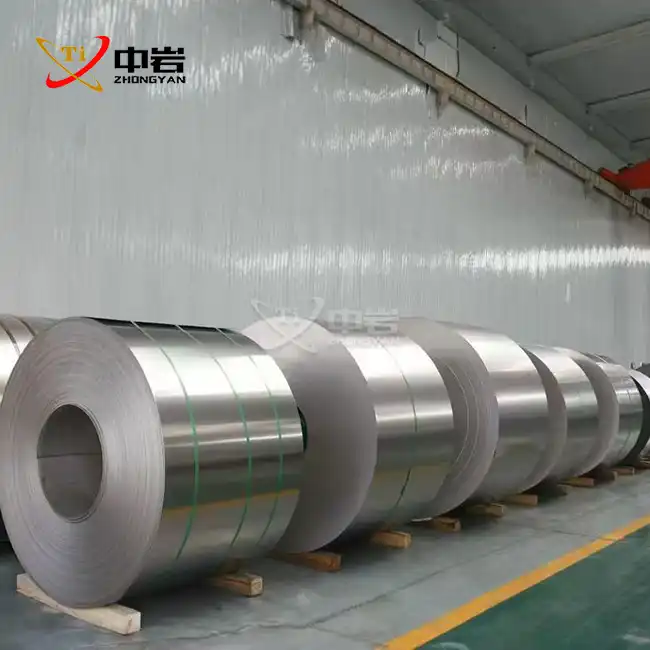
GR5 titanium foil has a Ti-6Al-4V alloy makeup that makes it very resistant to rust. The 6% aluminum and 4% vanadium work together to make a strong, self-healing titanium oxide passive layer. When this protected barrier gets broken, it heals itself automatically, keeping you safe from harsh environments. Advanced rolling and annealing processes create a microstructure that is tightly controlled. This microstructure removes the chance of localized corrosion while keeping high mechanical qualities. Unlike most materials, gr5 titanium foil has both great corrosion resistance and amazing strength-to-weight ratios. This makes it an essential tool for use in aircraft, medicine, and chemical processing, where failure of the material is not an option.
Understanding GR5 Titanium Foil and Its Composition
The carefully designed Ti-6Al-4V metal that makes up GR5 titanium foil is the key to its outstanding performance. About 6% of this alpha-beta titanium mixture is aluminum, 4% is vanadium, and 90% is titanium. This makes it stronger and more resistant to corrosion than pure titanium types.
The Role of Aluminum in Corrosion Protection
As the main alpha-phase stabilizer in the metal, aluminum makes the material much more resistant to erosion. It is this element that helps make a thick, stick-together oxide layer that protects against acidic attacks. The addition of aluminum also makes the alloy stronger while keeping its great flexibility for use in foil processes.
Vanadium's Contribution to Environmental Resistance
Vanadium is a beta-phase stabilizer that makes the metal stronger and less likely to break down in the environment. This element makes the material better at resisting stress corrosion cracks and working well in places where salt is present. The careful balance of vanadium makes sure that the microstructure stays stable at all temperatures.
Manufacturing Excellence in Foil Production
At Zhongyan, we make things by carefully rolling and annealing them in cycles that make the substructure as resistant to rust as possible. The foil goes through several rolling passes with annealing processes in between to get to the right thickness while keeping the grain structure regular. This precise processing makes sure that every sheet of gr5 titanium foil meets the requirements of ASTM B265 and has the same mechanical qualities across all of its thickness range.
Why Is Corrosion Resistance Critical for GR5 Titanium Foil?
Resistance to corrosion is a basic need for GR5 titanium foil used in many fields, as the purity of the material has a direct effect on safety, performance, and prices. Foil materials are especially sensitive to environmental threats because they are very thin. This means they need better protection.
Environmental Challenges in Critical Applications
Extreme changes in temperature, air wetness, and harsh chemicals from fuel systems and hydraulic fluids are all things that aerospace parts have to deal with. The biochemical world of the human body is very complicated. Chloride ions and different enzymes can damage materials that aren't strong enough to handle them. Chemical processing equipment works in very acidic environments that can break down normal metals very quickly. These harsh settings need materials that can maintain their structural stability for a long time. Gr5 titanium foil solves these problems because it is naturally resistant to a number of types of corrosion, such as uniform corrosion, pitting corrosion, crevice corrosion, and stress corrosion cracking.
Comparative Performance Analysis
When GR5 is compared to other materials, it shows better durability and dependability. Even though stainless steel foils are cheaper at first, they can pit and crack under stress in marine and medicinal settings because of chlorine. Aluminum foils aren't strong enough for structural uses, and they don't work well in alkaline environments.
Economic Impact of Corrosion Failures
When materials fail in important uses, the costs are catastrophic and go far beyond the cost of repair. Failures of aerospace parts can stop whole ships, and corrosion in medical devices can put patients at risk and lead to large-scale recalls. While providing long-term value through longer component lifecycles, gr5 titanium foil's better corrosion resistance provides protection against these expensive situations.
Mechanisms Behind GR5 Titanium Foil's Corrosion Resistance
The really high corrosion resistance of GR5 titanium foil comes from many different defenses that work together to give full safety against external threats. Knowing about these processes helps engineers choose the best materials and create applications for long-term use.
Self-Healing Oxide Layer Formation
A titanium dioxide (TiO₂) passive film forms on the surface on its own, which is the main way it protects itself. This oxide layer forms instantly when exposed to oxygen-rich surroundings and has amazing abilities to heal itself. When chemicals or physical damage remove parts of the oxide layer, the titanium below quickly reoxidizes to protect itself again. This oxide film is very stable over a wide range of pH levels and temperature changes. The film's thickness is usually between 2 and 10 nanometers in natural settings. It works well as a shield, stays clear, and keeps the surface looking good.
Microstructural Optimization Through Processing
The advanced production methods used to make gr5 titanium foil create the best microstructures that make it more resistant to rust. Controlled thermomechanical processing smooths out the grain structure and gets rid of places where localized rust could start. The even spread of alpha and beta stages makes the microstructure stable and resistant to preferred attack.
Surface Treatment Enhancements
Specialized surface processes can make gr5 titanium foil even more resistant to corrosion in harsh settings. Anodization methods make oxide layers that are stronger, last longer, and protect better. Chemical etching can change the surface texture to make it easier for oxides to stick and spread out evenly.
By changing the surface in these ways, engineers can make the material work better in certain situations while keeping the benefits of the Ti-6Al-4V metal system.
Practical Benefits of Using GR5 Titanium Foil in Corrosive Applications
When GR5 titanium foil is used in acidic settings, it provides real benefits that make it worth choosing over other materials. These advantages manifest across multiple performance dimensions, creating value for manufacturers and end users alike.
Extended Service Life Performance
Applications in the real world show that gr5 titanium foil is very durable in harsh conditions. This material has been used to make aerospace heat shields for decades without needing to be replaced. Other materials, on the other hand, need to be maintained or replaced more often. This longer service life directly leads to lower operating costs and higher system efficiency. Biocompatibility and life in the human body are very high for medical implant parts made from GR5 foil. The material's ability to fight protein adsorption and bacterial growth helps patients do better and lowers the number of surgeries that need to be redone.
Weight Reduction and Performance Enhancement
Because gr5 titanium foil has a very high strength-to-weight ratio, it can save a lot of weight compared to other materials. For aircraft uses, this trait is especially useful because every gram of weight loss saves fuel and increases the payload capacity. Because the material isn't very dense, builders can make smaller, lighter parts that don't lose their strength.
Here are some of the main ways that GR5 titanium foil performs better than other materials:
• Superior strength retention: Keeps mechanical qualities even at very low temperatures (-400°C)
• Exceptional fatigue resistance: Can handle millions of stress cycles without cracking.
• Outstanding formability: Allows for complicated shapes while keeping protection properties
• Non-magnetic properties: It's not magnetic, so it doesn't mess up sensitive electrical systems.
• Chemical inertness: Acids, bases, and organic liquids can't break it down.
These performance traits help engineers make systems that work better and last longer, while also lowering the costs of operations and upkeep. The different qualities of GR5 titanium foil make it possible to come up with new ideas that would not be possible with regular materials.
Lifecycle Cost Optimization
Although gr5 titanium foil costs more at first than other materials, a full lifetime study shows that it is much more cost-effective in the long run. Due to longer service life, less maintenance needs, and higher dependability, the component saves a lot of money over its working lifetime. Due to its great formability and weldability, the material makes manufacturing more efficient. It is possible to make complex parts with little waste while still meeting standards for tight tolerances and surface quality.
How to Choose and Procure High-Quality GR5 Titanium Foil
To get high-quality GR5 titanium foil, you need to carefully look at suppliers, specs, and quality control methods. Knowing the important factors that affect how well a material works lets you make smart buying decisions that guarantee the success of your project.
Essential Quality Certifications and Standards
Internationally accepted standards, such as ASTM B265, AMS 4911, and ISO 5832-3, must be met by premium grade titanium foil. These rules spell out the maximum and minimum amounts of chemicals, mechanical qualities, and testing needed to make sure that materials always work the same way. The suppliers should show approved mill test records that show they meet all the standards that apply. Certification of a supplier's quality management system according to ISO 9001 standards shows that the seller is dedicated to maintaining quality and making improvements all the time. For aerospace uses, extra approvals like AS9100 may be needed, and for medical uses, ISO 13485 compliance is usually enough.
Supplier Evaluation Criteria
There are a few things you should really think about when choosing a gr5 titanium foil seller. An evaluation of a company's manufacturing capabilities should look at its technical know-how, output tools, and quality control systems. Suppliers that have been in the titanium machining business for a long time and have a lot of experience usually give more reliable results than newcomers to the market. Reliability in the supply chain is important for planning production and keeping track of goods. Suppliers should show that they can consistently get raw materials, make enough products, and send them on time. Being close to major titanium production hubs often means having easy access to high-quality raw materials and expert support.
Technical Support and Customization Capabilities
For complex uses, custom solutions that go beyond standard product options are often needed. Suppliers should have the technical know-how to give advice on the best thickness, surface processes, and processing factors for each application. This joint method makes sure that the best materials are chosen while keeping costs and development time to a minimum. The worth of custom cutting, packing, and shipping services goes up because they cut down on the need for handling and the cost of keeping inventory. When suppliers offer full expert support throughout the lifetime of a product, they add value by helping with troubleshooting and application improvement.
Conclusion
GR5 titanium foil represents the pinnacle of corrosion-resistant materials, combining exceptional protective characteristics with outstanding mechanical properties. Its Ti-6Al-4V composition creates a self-healing oxide barrier that provides reliable protection against diverse corrosive environments while maintaining structural integrity. The material's proven performance in aerospace, medical, and chemical processing applications demonstrates its value for critical applications where failure is not acceptable. Understanding the mechanisms behind its corrosion resistance enables engineers to optimize designs and maximize component lifecycles, creating substantial value despite higher initial material costs.
FAQ
What thickness ranges are available for GR5 titanium foil?
Gr5 titanium foil comes in a range of thicknesses, from 0.025mm to 0.5mm. For certain uses, special widths can also be made. Because the alloy hardens over time, thinner gauges need special working methods. On the other hand, thicker parts are better for demanding uses because they can handle more weight.
How does foil thickness affect corrosion resistance performance?
By increasing the amount of the material and making the oxide layer more stable, thicker foil parts make it more resistant to corrosion. But because the protective oxide layer forms so quickly, even very thin grade 5 titanium foil still has great defensive properties. Choosing the right thickness relies on the needs of the product and the weather.
Can GR5 titanium foil be welded without compromising corrosion resistance?
Yes, gr5 titanium foil can be welded if the right steps and methods are used. By keeping the material from getting contaminated during the welding process, TIG welding in neutral atmospheres protects its resistance to rust. In serious situations, a heat treatment after welding might be needed to improve the grain and bring back full rust resistance.
What advantages does GR5 offer over aluminum foil in corrosive environments?
Gr5 titanium foil is stronger, more resistant to corrosion, and can handle higher temperatures than metal options. Galvanic rust and alkaline attack can happen to aluminum foil, but GR5 stays stable over a wide pH and temperature range. Because they are stronger, smaller shapes can still do the same job when it comes to structure.
What surface treatments are recommended for extremely corrosive environments?
Anodization techniques can make the protective oxide layer thicker and last longer in harsh settings. For certain toxic exposures, special coatings can be used, and the surface must be carefully prepared for the covering to stick well. The inherent corrosion resistance of Gr5 titanium foil often eliminates the need for additional treatments in most applications.
Partner with Zhongyan for Premium GR5 Titanium Foil Solutions
Zhongyan stands as your trusted Gr5 titanium foil manufacturer, delivering ASTM B265-compliant materials with precision thickness control and customizable specifications. Our state-of-the-art facility in China's Titanium Valley combines advanced processing technology with rigorous quality management systems to ensure consistent, high-performance products. We offer comprehensive OEM cutting and packaging services, smooth surface finishes, and complete technical support throughout your project lifecycle. Contact our expert team at sales@titaniumstudy.com to discuss your specific requirements and experience the Zhongyan difference in titanium greatness.
References
1. Lutjering, G., & Williams, J.C. "Titanium Alloy Microstructures and Properties." Engineering Materials and Processes, 2nd Edition, Springer-Verlag, 2007.
2. Schutz, R.W., & Watkins, H.B. "Recent Developments in Titanium Alloy Application in the Energy Industry." Materials Science and Engineering A, Vol. 243, 1998.
3. Donachie, M.J. "Titanium: A Technical Guide, 2nd Edition." ASM International Materials Park, Ohio, 2000.
4. Boyer, R., Welsch, G., & Collings, E.W. "Materials Properties Handbook: Titanium Alloys." ASM International, Materials Park, Ohio, 1994.
5. Peters, M., Kumpfert, J., Ward, C.H., & Leyens, C. "Titanium Alloys for Aerospace Applications." Advanced Engineering Materials, Vol. 5, No. 6, 2003.
6. Rack, H.J., & Qazi, J.I. "Titanium Alloys for Biomedical Applications." Materials Science and Engineering C, Vol. 26, No. 8, 2006.
Learn about our latest products and discounts through SMS or email