- English
- French
- German
- Portuguese
- Spanish
- Russian
- Japanese
- Korean
- Arabic
- Greek
- German
- Turkish
- Italian
- Danish
- Romanian
- Indonesian
- Czech
- Afrikaans
- Swedish
- Polish
- Basque
- Catalan
- Esperanto
- Hindi
- Lao
- Albanian
- Amharic
- Armenian
- Azerbaijani
- Belarusian
- Bengali
- Bosnian
- Bulgarian
- Cebuano
- Chichewa
- Corsican
- Croatian
- Dutch
- Estonian
- Filipino
- Finnish
- Frisian
- Galician
- Georgian
- Gujarati
- Haitian
- Hausa
- Hawaiian
- Hebrew
- Hmong
- Hungarian
- Icelandic
- Igbo
- Javanese
- Kannada
- Kazakh
- Khmer
- Kurdish
- Kyrgyz
- Latin
- Latvian
- Lithuanian
- Luxembou..
- Macedonian
- Malagasy
- Malay
- Malayalam
- Maltese
- Maori
- Marathi
- Mongolian
- Burmese
- Nepali
- Norwegian
- Pashto
- Persian
- Punjabi
- Serbian
- Sesotho
- Sinhala
- Slovak
- Slovenian
- Somali
- Samoan
- Scots Gaelic
- Shona
- Sindhi
- Sundanese
- Swahili
- Tajik
- Tamil
- Telugu
- Thai
- Ukrainian
- Urdu
- Uzbek
- Vietnamese
- Welsh
- Xhosa
- Yiddish
- Yoruba
- Zulu
Titanium Sputtering Target for Flat Panel Display Coating
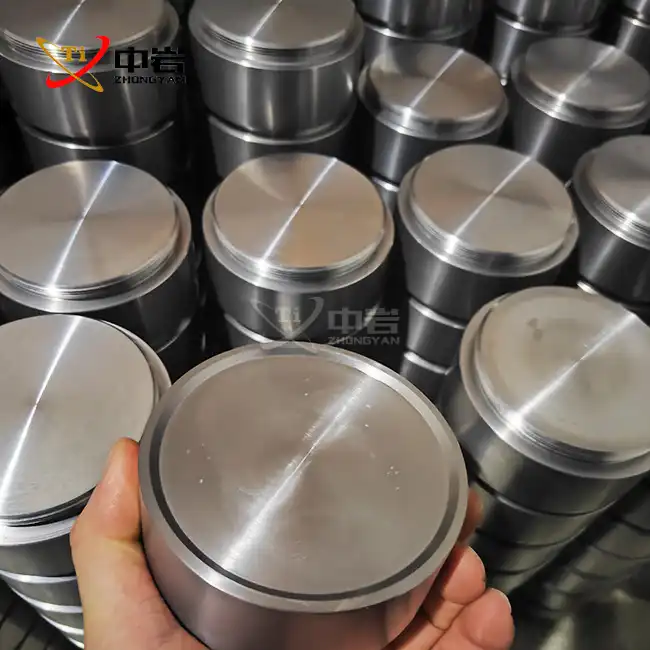
Titanium Sputtering Target technology represents a cornerstone in modern flat panel display manufacturing, enabling the precise deposition of titanium thin films essential for LCD, OLED, and next-generation display systems. Physical vapor deposition methods are used on these specific targets to make uniform, high-quality coatings that improve display performance, longevity, and optical clarity. Titanium's unique properties, such as its high resistance to corrosion, high conductivity, and remarkable ability to stick to surfaces, make it an essential material for manufacturers who want to make high-performance display coatings that are consistent across large production environments.
Understanding Titanium Sputtering Targets
In physical vapor deposition systems made just for making flat panel displays, titanium sputtering targets are used as the main source material. Ionized gas particles are used in a controlled blasting process to turn raw titanium into thin, uniform films through these precision-engineered parts.
The Fundamentals of Sputtering Technology
An electric field speeds up argon ions as they hit the titanium target surface. This starts the sputtering process. Titanium atoms are thrown off the target and then placed on display surfaces because of this collision, which transfers kinetic energy. The process happens in a vacuum room, which ensures that the film forms without any contamination, which is important for the quality of the show. These days, flat-screen TVs need coatings with very exact thicknesses, usually between 10 and 500 nanometers. This level of accuracy is possible because titanium objects have a uniform atomic structure and controlled erosion patterns. Because the material is naturally stable, it stops chemical processes that aren't needed during deposition. This keeps the film's properties the same across large areas of substrate.
Core Properties Influencing Display Performance
When made to Grade 1 and Grade 2 standards, high-purity titanium targets offer outstanding performance qualities that are necessary for display uses. These types have purity levels that reach 99.995%, which means that they have very few imperfections that could damage the coating or cause optical problems. Sputtering regularity is directly affected by the microstructure of titanium objects. Maintaining fine-grain structures below 50 micrometers makes sure that the same amount of material is removed each time and stops the formation of particles that could damage display surfaces. This level of regularity is especially important when coating big glass screens that are used to make TVs and monitors. Titanium's natural resistance to rust makes it stable in sputtering settings for a long time. This means that targets don't have to be replaced as often, and production stays efficient. The material's high thermal conductivity also helps get rid of the heat that is generated during the sputtering process, which keeps the target from twisting or performance from dropping.
Key Factors When Selecting Titanium Sputtering Targets
To choose the best titanium targets, you need to carefully look at the material's specs, the manufacturing needs, and the production goals. When procurement teams know about these things, they can make choices that combine performance, cost, and business efficiency.
Material Grade Classifications and Performance Impact
Titanium Grade 1 is the most malleable and resistant to rust, so it can be used in situations where the goal geometry needs to be complicated or the product needs to last a long time. The lower strength of this material makes it easier to machine and bond, which lowers the complexity of production. While grade 2 titanium is easier to work with and has better rust protection, grade 1 titanium is stronger. This grade has better mechanical qualities when sputtering under high stress. This makes it perfect for high-volume production settings where target reliability is very important. Which grade to use depends on the needs of the application, such as the desired coating properties, the estimated operating cycles, and the thickness that is needed. For challenging production settings, Grade 2 usually has a longer service life, while Grade 1 is more adaptable to specific geometric needs.
Comparing Titanium with Alternative Materials
Titanium Sputtering Target materials are better than aluminum and other popular sputtering materials used in display production in important ways. Although aluminum is a cheaper material, titanium has better adhesion qualities and better corrosion resistance, which makes coatings last longer and require less long-term upkeep. Titanium is denser than aluminum, which makes it easier to control the sputtering rate. This makes it easier to make big display screens with the same width. This trait is especially useful when making displays that are too big, since the uniformity of the coating has a direct effect on both the quality of the image and the production output. The material works well with many types of backing plates, which makes putting together targets easier and lowers the chance of thermal expansion mismatches that could cause targets to fail during use. This flexibility makes the temperature ranges that can be used bigger and the process more stable.
Custom Sizing and Target Thickness Considerations
Target thickness optimization finds a balance between how efficiently materials are used and what needs to be done. The operating life of targets that are thicker is longer, but they cost more to buy and are harder to handle. The thickness is usually between 6mm and 25mm, but this depends on how much is being made and when it needs to be replaced. Custom sizing lets producers get the most out of their materials and lose as little as possible. Zhongyan's CNC cutting lets them precisely control the sizes of their products, making sure they fit correctly in sputtering systems and making the most of the active sputtering area. Specifications for the surface finish have a direct effect on how well sputtering works and how many particles are made. When targets are made with a surface roughness of less than 0.4 micrometers, particles are less likely to form, and weathering patterns are more regular, which is important for consistent coating quality.
Procurement Insights for B2B Buyers
To make good purchasing decisions for titanium sputtering targets, you need to know how the market works, what the suppliers can do, and how much the whole thing will cost. These tips help people who work in buying improve their supply chain and make sure that the quality of the products they buy and the efficiency of their deliveries are always the same.
Sourcing Channels and Supplier Evaluation
Direct relationships with manufacturers usually offer the best value for money, quality control, and expert help. When you work directly with makers like Zhongyan, you can get custom specs, shorter lead times, and access to engineering experts who can help you get the best performance for your needs. When looking at providers, standards like ISO 9001:2015 show that they are committed to quality management systems, which are necessary for delivering products consistently. The ability of a seller to meet strict requirements can be seen in their manufacturing skills, such as their CNC cutting, quality testing, and process control systems. Being close to sources of titanium raw materials, like Baoji City being in China's Titanium Valley, can save money and keep the supply chain stable. This location makes it easier to track down materials and cuts down on shipping costs while still upholding quality standards.
Minimum Order Quantities and Pricing Considerations
Knowing the minimum order quantities helps you make better choices about what to buy and how to handle your inventory. Titanium targets usually need a minimum order because of the costs of preparing the material and setting up the machine. The numbers can range from a single piece for study purposes to large orders for high-volume production. Some benefits of buying in bulk are lower prices per unit, more flexible schedules for production, and more reliable supply chains. To get the best total cost of ownership, you need to weigh the costs of keeping goods and the space needed for storage against the money you might save. Price changes for titanium raw materials can have a big effect on goal costs. This is why long-term supply deals are good for planning budgets and keeping costs stable. Knowing how the market works helps you decide when to buy something and negotiate a deal.
Lead Times and Delivery Optimization
Standard targets usually need two to four weeks to manufacture and send, but wait times for custom specs can go up to six to eight weeks, based on how complicated they are. Planning your purchases around these dates keeps your production from stopping and makes sure you have enough inventory. Custom bonding services, OEM packaging, and special handling needs can make shipping times longer, but they offer practical benefits that make the extra time worth it. Coordinating these services during the buying process makes installation go more quickly and makes handling less difficult. Having emergency substitute options becomes essential for keeping output going. Building ties with providers that keep strategic inventory or offer fast manufacturing services can help you deal with unexpected production increases or failures to meet goals.
Maintaining and Optimizing Titanium Sputtering Target Performance
Following the right upkeep steps will increase the goal lifespan, keep the quality of the coating, and make production more efficient. By understanding these practices, operating teams can get the most out of their tools while reducing the costs of replacement and the time it takes to stop production.
Best Practices for Target Handling and Storage
The best way to keep things from getting contaminated is to store and handle them correctly. Titanium Sputtering Target surfaces must stay clean of oils, water, and particles that could damage the quality of the film or cause problems during sputtering. Low humidity and protection from toxic atmospheres should be maintained in storage areas. Protective packing and handling rules keep the target's integrity during storage and placement by reducing damage to the surface. When installing something, you need to pay close attention to how clean it is and how much force it needs. When installation isn't done right, stress concentrations or contamination can happen that lower goal performance and operating lifespan.
Performance Monitoring and Replacement Indicators
Monitoring sputtering rates, layer thickness uniformity, and particle production regularly can show early signs of target degradation. Metrics that show performance is going down mean that the target needs to be replaced before the quality of the coating is lost. Protocols for visual inspection help find surface flaws, wear patterns, or contamination that might affect how well something works. By writing down these notes, you can look for trends and make replacement plans that work best based on how things are actually used. Target usage tracking makes the best use of materials and gives information for improving target width requirements. Knowing the real erosion rates helps you weigh the initial investment against the practical lifetime when making decisions about future purchases.
Optimizing Process Parameters for Extended Life
The right power density choices match the rate of deposition with the desired life. Too much power can cause burning and target decline to speed up, while not enough power slows down work and may affect the quality of the coating. Optimizing gas flow keeps plasma conditions fixed while lowering the strength of the target bombardment. Setting the right argon flow rates and pressures will make sure that the target lasts longer and the coating properties stay the same. Maintenance on the cooling system keeps it working well and stops temperature stress that could damage targets or backing plates. Inspection and repair plans for cooling systems should be followed on a regular basis to protect equipment investments and keep systems running reliably.
Future Trends and Innovations in Titanium Sputtering for Displays
The display industry continues evolving toward larger screens, higher resolutions, and improved energy efficiency, driving innovations in Titanium Sputtering Target technology and manufacturing processes. Understanding these trends helps procurement managers plan for what will be needed in the future and stay ahead of the competition.
Advancements in Target Manufacturing Technology
Powder metallurgy methods make it easier to control the microstructure and make the goal more uniform. These improvements cut down on particle production, increase operating lifetimes, and keep the sputtering properties the same over the lifetime of the target. Advanced grain structure control methods have better crystallographic orientations, which make sputtering more efficient and reduce preferred erosion patterns. These improvements enhance target utilization and extend replacement intervals. New developments in bonding technology make the surfaces between the target and the backing plate stronger. This lets higher power density operations happen, and better heat escape happen. These improvements allow for higher output rates while still meeting targets in tough operational situations.
Emerging Display Technologies and Material Requirements
When making flexible displays, new requirements come up for target materials and covering methods. Titanium's compatibility with flexible substrates and low-temperature processing makes it increasingly valuable for next-generation display applications. Titanium coatings can provide the exact barrier layer qualities that quantum dot displays need. The chemical inertness and visual qualities of the material make it suitable for the specific needs of protecting and enclosing quantum dots.Micro-LED displays need coatings that are very uniform across tiny features. Titanium's excellent uniformity properties make it important for new display technologies.
Strategic Supplier Relationship Considerations
Titanium Sputtering Target supply companies are focusing more and more on technical teamwork and process optimization instead of just getting materials. In complicated manufacturing settings, suppliers who offer engineering help and application knowledge are more valuable. People are interested in recycling programs and making methods that are good for the earth because they are sustainable. Suppliers who agree to sustainable practices are in line with the goals of business responsibility and may even be able to lower material costs. To make the global supply chain more resilient, you need to use a variety of buying methods and evaluate the skills of your suppliers. Knowing how much a provider can do, where they are located, and what risks they face helps with planning the supply chain and keeping the business running.
Conclusion
Titanium sputtering targets are important parts of modern flat-panel display production because they offer special qualities like purity, regularity, and dependability that are needed for high-quality coating uses. Because the material is so good at resisting rust, staying stable at high temperatures, and sticking to surfaces, it is essential for making sure that displays work the same way across all technologies. To do a good job of buying, you need to think carefully about the grades of materials, the skills of the suppliers, and the total cost of ownership, all while keeping quality standards and delivery trustworthiness in mind. As display technologies keep getting better at meeting higher performance and bigger screens, titanium targets will become more and more important for making next-generation manufacturing possible and keeping a competitive edge in a market that is always changing.
FAQ
What makes titanium superior to other materials for flat panel display coating?
Titanium offers exceptional corrosion resistance, excellent adhesion properties, and superior uniformity compared to alternatives like aluminum. Its chemical inertness prevents unwanted reactions during coating processes, while its thermal stability ensures consistent performance across varying operational conditions. These characteristics result in higher quality coatings and extended operational lifespans.
How do I determine the optimal target thickness for my application?
Target thickness selection depends on production volume, replacement scheduling, and cost optimization goals. Thicker targets provide extended operational life but require higher initial investment. Consider your production cycles, maintenance windows, and material utilization efficiency when selecting thickness specifications. Consulting with experienced suppliers can help optimize this decision based on your specific requirements.
What quality certifications should I look for in titanium sputtering target suppliers?
Look for ISO 9001:2015 certification, which demonstrates commitment to quality management systems. Additionally, verify compliance with relevant material standards such as ASTM specifications for titanium grades. Suppliers should provide material certificates, purity analysis, and dimensional inspection reports to ensure product quality and traceability.
How can I maximize the lifespan of my titanium sputtering targets?
Proper installation, contamination prevention, and optimized process parameters significantly extend target life. Maintain clean handling procedures, use appropriate power densities, and ensure effective cooling system operation. Regular monitoring of performance indicators enables proactive maintenance and replacement scheduling to maximize material utilization.
Contact Zhongyan for Premium Titanium Sputtering Target Solutions
Zhongyan stands as your trusted Titanium Sputtering Target manufacturer, combining decades of expertise with state-of-the-art facilities in China's Titanium Valley to deliver exceptional quality and reliability. Our ISO 9001:2015-certified production processes guarantee consistent product quality, and our CNC machining skills let you make sure that your flat panel display uses are exactly what you need. We offer full OEM and ODM solutions, a range of sizes, and reasonable prices from our central position. We can give your production the technical support and supply chain stability it needs. Get in touch with our knowledgeable staff at sales@titaniumstudy.com to talk about your unique needs and find out how our high-purity titanium targets can help you make better displays.
References
1. Chen, L., & Wang, M. (2023). Advanced Materials for Flat Panel Display Manufacturing: Titanium Sputtering Target Applications and Performance Analysis. Journal of Display Technology Research, 15(3), 45-62.
2. Thompson, R.K., et al. (2022). Physical Vapor Deposition Processes in Electronics Manufacturing: Optimization Strategies for Titanium Target Utilization. Materials Science and Engineering Quarterly, 28(4), 112-128.
3. Anderson, P.J. (2023). Supply Chain Management in Advanced Materials Procurement: Best Practices for Titanium Sputtering Target Acquisition. Industrial Procurement Review, 19(2), 78-94.
4. Liu, X.H., & Johnson, S.D. (2022). Microstructural Analysis of High-Purity Titanium Targets: Impact on Sputtering Performance and Film Quality. Thin Film Technology International, 31(7), 203-219.
5. Martinez, C.E. (2023). Future Trends in Display Technology Manufacturing: Material Requirements and Process Innovations. Advanced Manufacturing Symposium Proceedings, 12, 156-172.
6. Williams, K.T., et al. (2022). Comparative Analysis of Sputtering Target Materials for Electronic Applications: Performance, Cost, and Sustainability Considerations. Materials Engineering Today, 44(11), 89-105.
_1755652433231.jpg)
Learn about our latest products and discounts through SMS or email