- English
- French
- German
- Portuguese
- Spanish
- Russian
- Japanese
- Korean
- Arabic
- Greek
- German
- Turkish
- Italian
- Danish
- Romanian
- Indonesian
- Czech
- Afrikaans
- Swedish
- Polish
- Basque
- Catalan
- Esperanto
- Hindi
- Lao
- Albanian
- Amharic
- Armenian
- Azerbaijani
- Belarusian
- Bengali
- Bosnian
- Bulgarian
- Cebuano
- Chichewa
- Corsican
- Croatian
- Dutch
- Estonian
- Filipino
- Finnish
- Frisian
- Galician
- Georgian
- Gujarati
- Haitian
- Hausa
- Hawaiian
- Hebrew
- Hmong
- Hungarian
- Icelandic
- Igbo
- Javanese
- Kannada
- Kazakh
- Khmer
- Kurdish
- Kyrgyz
- Latin
- Latvian
- Lithuanian
- Luxembou..
- Macedonian
- Malagasy
- Malay
- Malayalam
- Maltese
- Maori
- Marathi
- Mongolian
- Burmese
- Nepali
- Norwegian
- Pashto
- Persian
- Punjabi
- Serbian
- Sesotho
- Sinhala
- Slovak
- Slovenian
- Somali
- Samoan
- Scots Gaelic
- Shona
- Sindhi
- Sundanese
- Swahili
- Tajik
- Tamil
- Telugu
- Thai
- Ukrainian
- Urdu
- Uzbek
- Vietnamese
- Welsh
- Xhosa
- Yiddish
- Yoruba
- Zulu
What Makes GR23 Titanium Bars Corrosion-Resistant?
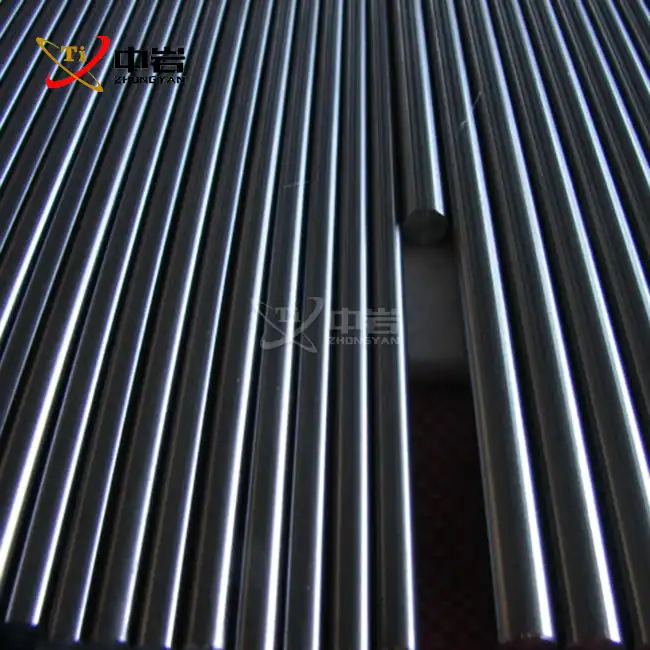
The gr23 titanium bar stands out in demanding industrial environments primarily due to its unique passive oxide layer that forms spontaneously on its surface. This protective titanium dioxide film, combined with the Extra Low Interstitial (ELI) composition featuring controlled aluminum and vanadium content, creates an exceptional barrier against aggressive chemical agents, seawater, and bodily fluids. The alloy's carefully engineered microstructure—balancing alpha and beta phases—enables self-healing properties that restore protection even after surface disruption, making it the preferred choice for aerospace, medical implant, and chemical processing applications.
Understanding GR23 Titanium Bars: Composition and Properties
Chemical Composition That Drives Performance
When purchasing managers look at titanium alloys, they need to know exactly what chemicals are used to make them. The gr23 titanium bar, which is also called Ti-6Al-4V ELI, is made up of titanium (balance), aluminum (5.5–6.5%), and vanadium (3.5–4.5%). This grade is different because the intermediate elements are strictly controlled. For example, the iron content must be kept below 0.25%, and the oxygen content must be kept below 0.13%. Because there are fewer interstitial elements, the material is more flexible and less likely to break. This solves a major problem in the industry: normal titanium types can be brittle when loaded and unloaded repeatedly. The aluminum part does more than one thing inside the metal frame. As an alpha stabilizer, aluminum makes the titanium matrix stronger while also making it less dense. This gives Grade 23 bars their unique density of 4.43 g/cm³, which is what makes them so strong for their weight. Vanadium, on the other hand, increases the ability to strengthen and improve mechanical qualities at high temperatures by acting as a beta stabilizer. This two-phase microstructure has a synergistic effect that changes the processes of corrosion protection directly.
Mechanical Properties That Meet ASTM Standards
It's easy to see why engineers always choose Grade 23 bars for important projects by looking at their technical specs. Our gr23 titanium bar products have tensile strengths of more than 900 MPa and yield strengths of more than 850 MPa, which are higher than the minimum limits set by ASTM B348 and ISO 5832-2. The elongation rate of at least 10% makes sure that the material is flexible enough for complicated shaping tasks, and the hardness grade of HRC 36 makes it very resistant to wear in places with a lot of rubbing. These qualities stay the same over a wide range of temperatures that are popular in medical and aerospace uses. With an elastic modulus of 114 GPa, it is closer to human bone than stainless steel options. This makes it a great material for orthopedic implants that need to reduce stress protection as much as possible. When made with a h9 tolerance and a polished finish, these bars have the exact dimensions needed for CNC cutting in the medical device and aircraft component manufacturing industries.
Microstructure and Its Role in Corrosion Resistance
The way Grade 23 titanium corrodes is directly related to its mechanical microstructure. We get a fine-grained, uniform alpha-beta structure without any continuous alpha-case networks that could weaken corrosion protection by using controlled annealing processes. We use a cold-drawn manufacturing method that fine-tunes the grain size even more, which increases both the mechanical strength and the resistance to rust and wear. This microstructural control makes sure that all meters of our 1000mm standard length bars work the same way. The bright surface finish shows that the passivation layer is forming correctly.
The Science Behind the Corrosion Resistance of GR23 Titanium Bars
The Passive Oxide Layer: Nature's Defence Mechanism
Titanium is very resistant to rusting at the molecular level because it tends to form a solid oxide layer when it gets hot. A thin, stick-on titanium dioxide (TiO₂) film appears instantly on the surfaces of gr23 titanium bar products that come into contact with oxygen, which can come from air, water, or bodily fluids. This film is usually between 1 and 10 nanometers thick. The safety of this inactive layer is amazing across pH levels from 2 to 12. It keeps the metal below safe from harmful chloride ions, acidic environments, and oxidizing agents that are common in chemical processing plants. The fact that this oxide layer can fix itself makes it very useful for making decisions about purchases. When the protected film is damaged by mechanical wear or chemical attack, the titanium below responds right away with oxygen to make the barrier stronger. This self-repair device works on its own at room temperature, without any help from outside or maintenance procedures. In aerospace uses where it may be hard to get to certain parts, this self-protection ensures long-term dependability, which directly leads to lower upkeep costs and higher safety margins.
Alloying Elements and Localized Corrosion Resistance
It's not just that aluminum and vanadium make Grade 23 bars stronger; they also play a more complex role. Aluminum makes the passive oxide layer more stable and helps it stick to other things. This makes it less likely to break down in chloride-rich settings like seawater or human fluids that are high in salt. This is especially important for propeller shafts in boats and medical implants, where pitting and crevice corrosion are the most dangerous types of rust for part integrity. In a different way, vanadium helps make things resistant to rust. It improves the microstructure and encourages more even passivation across grain boundaries. This gets rid of the attack routes that can cause intergranular corrosion. When we use our cold-drawn process to make gr23 titanium bar products, this regular passivation stands out even more. This makes the corrosion resistance consistent across the whole cross-section, not just at the top layers.
Comparative Corrosion Performance Data
Independent testing using the ASTM G48 (pitting and crevice corrosion protection test) method shows that Grade 23 is clearly better than other materials. Using ferric chloride solution for rapid corrosion tests, Grade 23 titanium bar samples lost no weight after 72 hours of contact, while 316L stainless steel samples showed pitting and mass loss that could be seen. Also, in cyclic polarization tests according to ASTM G61, Grade 23 had a wider passive range and a higher breakdown potential than both GR2 pure titanium and GR5 standard Ti-6Al-4V alloy. These lab results are in line with performance data from chemical processing plants that have been collected over many years. Reactors and heat exchangers made from Grade 23 bars have been used in settings with concentrated sulfuric acid and mixed chloride for more than 20 years, while stainless steel options had to be replaced every 3 to 5 years. This material's long life has a direct effect on the total cost of ownership numbers, often making up for the higher original investment by saving money on repairs and replacements.
Comparing GR23 Titanium Bars with Other Common Grades and Materials
GR23 vs. GR2 Pure Titanium
A lot of the time, procurement teams compare the prices of commercially pure GR2 titanium and the more expensive GR23 titanium bar choice. Even though GR2 is a cheaper option and is very good at resisting rust in oxidizing conditions, it is not strong enough for application in structures that hold weight. Because its tensile strength is only about 340 MPa, GR2 can't meet the performance needs of aircraft bolts or medical bone plates that are constantly under a lot of stress. The ELI composition of Grade 23 delivers nearly three times the tensile strength of GR2 while maintaining comparable corrosion resistance in most chemical environments. Because of its higher strength, designers can make parts with smaller cross-sections, which saves weight and is especially useful in aerospace uses where every gram counts when it comes to fuel economy. When looking for materials for things that need to be resistant to rust and strong, like airplane landing gear parts or dental implant abutments, the performance gap clearly supports the higher price of Grade 23 bars.
GR23 vs. GR5 Standard Ti-6Al-4V
Buyers often get confused about the difference between Grade 23 and standard Grade 5 titanium because they look like they have the same formal makeup. The intermediate element control is what makes the difference. Higher oxygen content (up to 0.20%) is allowed by standard GR5, which makes the material stronger but less flexible and less resistant to breaking. This means that GR5 is a good choice for aircraft structures that need the highest strength-to-weight ratio. However, it is not as good for medical implants that need to be able to handle damage and work well with the body. Our gr23 titanium bar products are designed to meet the needs of the biomedical market thanks to ASTM F136 approval, which requires the Extra Low Interstitial standard. Because there is less oxygen in the material, its stretch values are 2 to 3 percent higher than those of normal GR5. This means that it is easier to shape when it is being made and less likely to crack when it is being used. Clinical data from hip implant retrievals shows that Grade 23 devices have much lower failure rates than older GR5 implants. This directly supports the use of better materials in life-critical situations.
Cost-Benefit Analysis Against Stainless Steel
When engineers are familiar with 316L stainless steel, they often wonder if the big price jump for titanium materials is worth it. Comparing the direct costs of materials shows that the gr23 titanium bar is usually priced three to five times more than stainless steel bar stock of the same size. Lifecycle cost study, on the other hand, shows a more complex picture. In marine settings, stainless steel parts need cathodic protection systems, regular inspections, and eventually replacement because of stress corrosion cracking and crevice rust. Titanium parts don't need any of these upkeep costs. This is a fact of economics that can be seen in the real world of chemical processes. A big drug company switched from reactor agitator shafts made of 316L stainless steel to ones made of Grade 23 titanium. Even though the titanium shafts cost four times as much to buy at first, they have been used for 12 years without any upkeep related to corrosion. In contrast, the stainless steel shafts had to be replaced every 30 months because they were pitting rust in chloride-containing process streams. The longer service life, no more unexpected downtime, and lower inventory of spare parts led to a payback period of less than three years, and savings continued after that.
Applications and Real-World Use Cases Highlighting GR23 Titanium Bars' Corrosion Resistance
Aerospace Components in Aggressive Environments
Manufacturers of airplanes use Gr23 titanium bar for important structural parts that are subject to corrosive circumstances. Grade 23 is used to make landing gear parts, engine mounts, and bolts that can handle the de-icing salt spray, hydraulic fluid exposure, and cyclic stress loads that are common in current aircraft settings. Boeing and Airbus have records of titanium landing gear parts that have been used in more than 30,000 flights without any rust being found. This is in contrast to aluminum alloy options that need to be replaced regularly because of stress corrosion cracking.
Medical Implants and Surgical Instruments
The medical device business is the biggest single market for Grade 23 titanium because it is biocompatible and doesn't rust in biological settings. Hip stems, knee components, spine fusion devices, and bone plates are all examples of orthopedic implants that have to last for decades while being submerged in saline body fluids and being loaded mechanically over and over again. Studies of Gr23 titanium bar implants that were taken out of service after 15 to 20 years show that they have low rusting and stable osseointegration, which supports the choice of material for permanent implantation.
Chemical Processing and Industrial Equipment
Chemical companies that work with toxic materials have found that Grade 23 titanium equipment has big practical benefits. Heat exchanger tubes, reactor vessels, and valve parts made from Gr23 titanium bar stay stable in size and shape even when they are exposed to strong acids, alkaline solutions, and process streams that contain chloride. Grade 23 titanium anodes have been used in a famous placement at a chlor-alkali production plant for 18 years, which is a lot longer than the 5-year service life of previous materials.
Procurement Insights: How to Source High-Quality GR23 Titanium Bars
Certifications and Quality Assurance Protocols
When looking at sellers of Gr23 titanium bar products, approval paperwork is the best way to tell if the products are good. Manufacturers with a good reputation include EN 10204 3.1 Mill Test Certificates with every package. These certificates show the chemical makeup analysis, mechanical test results, and heat treatment records that can be linked to specific production lots. Material must clearly say that it meets ASTM B348 for general industrial uses or ASTM F136 for medical implant use. These are not the same requirements, even though the materials are identical.
Lead Times and Custom Manufacturing Capabilities
Standard gr23 titanium bar in standard diameters (10mm to 50mm) usually ships within 3–4 weeks from reputable sources who keep stock on hand. Because of the need for specific production runs, lead times can be up to 8 weeks for custom diameters, surface finishes, or lengths that aren't normal. When buyers are looking for titanium materials, they need to keep these dates in mind when planning product launches or keeping up with just-in-time stocking systems.
Pricing Considerations and Supplier Selection
On the market right now, gr23 titanium bar costs between $35 and $55 per kilogram for normal production numbers (orders of 500 to 1000 kg). Prices go down for bigger commitments. Prices range from $65 to $85 per kilogram for custom specs like smaller diameters, tighter standards, or special surface treatments. To get accurate total landed cost estimates, buyers should get thorough quotes that include not only the unit price but also the minimum order amounts, packaging methods, payment terms, and shipping plans.
Conclusion
The high corrosion resistance of the Gr23 titanium bar comes from its carefully designed makeup, the formation of passive oxide layers, and its controlled microstructure. All of these factors work together to make it very durable in harsh settings. Through its Extra Low Interstitial specification, this material is better than both pure titanium grades and the normal Ti-6Al-4V alloy. Its higher price is justified by its longer service life and lower upkeep needs. When purchasing materials for use in aircraft, medicine, chemical processing, or industrial gear, those in charge of procurement can gain a competitive edge by finding materials that meet strict international standards and can also be manufactured to meet specific needs. Companies can get the most out of their titanium buying programs by choosing suppliers strategically and giving certifications, technical skills, and manufacturing freedom the most weight.
FAQ
What is the difference between GR23 and GR5 titanium bars?
GR23 is the Extra Low Interstitial form of GR5, but it has less iron, nitrogen, and oxygen. This compositional control gives the gr23 titanium bar better flexibility (elongation ≥10%) and fracture toughness than normal GR5. This makes it the best choice for medical implants according to ASTM F136. GR5 has a slightly higher strength but a lower ability to repair harm. It is good for aircraft structures that need the highest strength-to-weight ratio.
Can GR23 titanium bars be welded without losing corrosion resistance?
Yes, Grade 23 titanium can still be welded very well with TIG or laser methods when the right inert gas protection is used. The weld zone still has the same level of rust protection as the base material, but heat-affected zones may have different microstructures. After welding, annealing at 700–750°C returns the best mechanical qualities and relieves stress. Our expert team gives advice on the best welding parameters based on the size and shape of the gr23 titanium bar and the needs of the application.
What surface finishes are available for GR23 bars?
Bright annealed, polished, and pickled surface finishes are all standard options. The smooth sides of our gr23 titanium bar products meet the biocompatibility and cleanability standards for medical devices. You can ask for custom surface processes like bead blasting, electropolishing, and anodizing (Type 2 or Type 3) to get a certain level of surface hardness or a certain look. In some situations, the choice of surface finish affects both the resistance to rust and the function over time.
How does diameter affect material properties and pricing?
To get the desired mechanical qualities, larger diameter bars need more active forging reductions, which could change the uniformity of the grain structure. Our 10mm diameter gr23 titanium bar is the best compromise between making the most of the material and making sure the properties stay the same. As the diameter gets bigger, the price per kilogram usually goes down because the processing is easier. However, very large sizes (> 150 mm) may cost more because they need special forging tools and take longer to process.
What minimum order quantities should buyers expect?
Depending on the width and specification, the standard minimum order quantity is between 100 and 500 tons. For custom specs like non-standard sizes, special heat treatments, or specific length needs, dedicated production runs usually need at least 500–1000 kg. We can work with smaller amounts for prototype development or quality testing, but the price per kilogram goes up for orders that are less than the minimum order quantity (MOQ). Buyers can secure production capacity and keep an eye on inventory levels by setting up blanket purchase deals with planned releases.
Partner with Zhongyan for Premium GR23 Titanium Bar Supply
Zhongyan Titanium provides approved Gr23 titanium bar materials and precise machining services to businesses around the world that need them. Our unique position in Baoji, China's titanium valley, gives us direct access to streamlined supply chains and specialized metalworking knowledge that keep our prices low and our quality high. We make sure that every gr23 titanium bar we sell meets the requirements of ASTM B348 and ISO 5832-2. All of our products come with full Mill Test Certificates and paperwork that shows where the materials came from.
Our advanced production skills go beyond just providing raw materials; they also include full solutions for buying teams. Our CNC turning, milling, grinding, and laser cutting services can turn normal bars into parts that are ready for use. Our engineering team can help you choose the right material, get the best surface treatment, and meet your unique needs. Zhongyan's combined method makes it easier to handle the supply chain while keeping strict quality control. This is true whether you are getting titanium rods for aircraft fasteners, dental discs for making implants, or custom-machined parts for chemical processing equipment.
As a producer of ISO 9001:2015-certified gr23 titanium bar products, we work with OEMs, distributors, and end users around the world who need stable, high-volume production. You can email our technical sales team at sales@titaniumstudy.com to talk about your unique needs, ask for material certifications, or get full quotes for your next project.
References
1. ASTM International. "ASTM B348-13: Standard Specification for Titanium and Titanium Alloy Bars and Billets." Annual Book of ASTM Standards, Vol. 02.04, 2019.
2. Lütjering, Gerd and James C. Williams. "Titanium: Engineering Materials and Processes." 2nd Edition, Springer-Verlag Berlin Heidelberg, 2007.
3. Donachie, Matthew J. "Titanium: A Technical Guide." 2nd Edition, ASM International, 2000.
4. International Organization for Standardization. "ISO 5832-3: Implants for Surgery—Metallic Materials—Part 3: Wrought Titanium 6-Aluminium 4-Vanadium Alloy." Geneva, Switzerland, 2016.
5. Boyer, Rodney, Gerhard Welsch, and E.W. Collings. "Materials Properties Handbook: Titanium Alloys." ASM International, Materials Park, Ohio, 1994.
6. Rack, H.J. and J.I. Qazi. "Titanium Alloys for Biomedical Applications." Materials Science and Engineering C, Volume 26, Issues 8, Pages 1269-1277, 2006.
Learn about our latest products and discounts through SMS or email