- English
- French
- German
- Portuguese
- Spanish
- Russian
- Japanese
- Korean
- Arabic
- Greek
- German
- Turkish
- Italian
- Danish
- Romanian
- Indonesian
- Czech
- Afrikaans
- Swedish
- Polish
- Basque
- Catalan
- Esperanto
- Hindi
- Lao
- Albanian
- Amharic
- Armenian
- Azerbaijani
- Belarusian
- Bengali
- Bosnian
- Bulgarian
- Cebuano
- Chichewa
- Corsican
- Croatian
- Dutch
- Estonian
- Filipino
- Finnish
- Frisian
- Galician
- Georgian
- Gujarati
- Haitian
- Hausa
- Hawaiian
- Hebrew
- Hmong
- Hungarian
- Icelandic
- Igbo
- Javanese
- Kannada
- Kazakh
- Khmer
- Kurdish
- Kyrgyz
- Latin
- Latvian
- Lithuanian
- Luxembou..
- Macedonian
- Malagasy
- Malay
- Malayalam
- Maltese
- Maori
- Marathi
- Mongolian
- Burmese
- Nepali
- Norwegian
- Pashto
- Persian
- Punjabi
- Serbian
- Sesotho
- Sinhala
- Slovak
- Slovenian
- Somali
- Samoan
- Scots Gaelic
- Shona
- Sindhi
- Sundanese
- Swahili
- Tajik
- Tamil
- Telugu
- Thai
- Ukrainian
- Urdu
- Uzbek
- Vietnamese
- Welsh
- Xhosa
- Yiddish
- Yoruba
- Zulu
What Is Titanium Grade 2 Plate Used For?
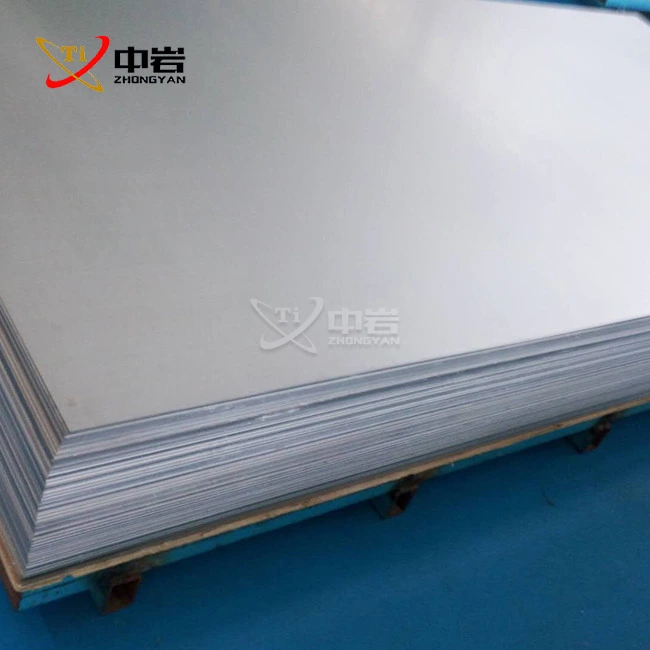
Most of the time, titanium gr 2 plate is used in places where things need to be strong, light, and immune to rust. This grade of commercially pure titanium is used in the airplane, marine engineering, medical products, and power generation businesses. This material is very important for heat exchangers, pressure tanks, structural parts, and biomedical implants because it doesn't respond badly to harsh conditions and can be shaped and welded. Other materials, like stainless steel, don't work well enough in these situations.
Understanding Titanium Grade 2 Plate: Properties and Composition
Titanium Grade 2 is the most popular type of pure titanium that you can find. It has an alpha-phase structure and interstitial elements that are carefully managed. The amount of titanium (.99.2%) is very high, and the amounts of iron (0.30%), oxygen (0.25%), carbon (0.08%), nitrogen (0.03%), and hydrogen (0.015%) are very low. This mix gives the stuff a mass of 4.51 g/cm³, which is about 55% less than steel but still strong.
Mechanical Properties and Performance Characteristics
Grade 2 titanium is called the "workhorse" of the business because it is very strong mechanically. Its tensile strength is at least 345 MPa (50 ksi) and its yield strength is at least 275 MPa (40 ksi). This means it can hold enough weight while still being very flexible and only stretching 20%. The material is 105 GPa, which means it is much more flexible than steel. This makes it great for uses that need both strength and shapeability.
Chemical Resistance and Environmental Performance
When grade 2 titanium comes in contact with water or air, it makes a thick film of titanium dioxide (TiO2). The metal won't rust because of this coat. This layer doesn't do anything, so it guards against metals chlorides, organic acids, and wet chlorine. Austenitic stainless steels often break in these situations because of cracks and pits that form from stress corrosion. It stays protected even when it comes in touch with salt, brine solutions, and acids that break down metals. That is, it can last 10–20 times longer than other metals.
Key Applications of Titanium Grade 2 Plate Across Industries
Because it has certain properties that help engineers solve problems, titanium gr 2 plate is useful in a lot of different fields. These uses help people who buy things figure out the best ways to use items and explain their choices.
Chemical Processing and Petrochemical Industries
In chemical plants, grade 2 titanium plates are often used to make heat exchangers, reactor tanks, and pipe systems that deal with dangerous materials. It doesn't need to be changed as often as other materials do because it can handle acids, chlorides, and high-temperature acidic conditions. Titanium doesn't break down when it comes into contact with hydrogen sulfide and can handle changes in temperature. A petroleum company will find this useful.
Marine and Offshore Applications
Tin can be used to save weight and doesn't rust in salt water, so it's used in naval building. In rough seas, Grade 2 plates last a very long time and are used to make ship hulls, engine shafts, and parts of offshore bases. Since the cloth doesn't get dirty, it needs less care. It can carry more and use less fuel because it is strong compared to its weight.
Aerospace and Defense Sector
Because it is light and doesn't melt at high temperatures, titanium gr 2 plate is used in aerospace for structure parts, engine parts, and airplane parts. It doesn't lose its features at high temperatures and doesn't wear out easily. And because of this, it's a good choice for important flying systems where less weight directly means better performance and lower running costs.
Medical and Biomedical Applications
Because it works well with living things, grade 2 titanium is used for medical implants, surgery tools, and parts of medical gadgets. Since it is safe and doesn't respond badly with human body, it doesn't have any negative effects on living things. It also makes medical images clear because it is radiolucent. Titanium is a good element for oral uses because it stays stable in biological settings for a long time and can fuse with bone.
Titanium Grade 2 Plate Compared to Other Materials
If you know how Grade 2 titanium compares to other materials, you can buy it wisely based on your needs for efficiency and the costs over time. The comparison looks at how well the materials work, how resistant they are to rust, and how much they cost.
Comparison with Other Titanium Grades
Titanium Grade 2 is the best of the four grades because it has the most of all the good traits. It's stronger than Grade 1, but it's still very simple to form. But Grade 2 (Ti-6Al-4V) is not as strong generally as Grade 5 (Ti-6Al-4V). It is easier to cold form and join. Grade 2 is great for uses that need a lot of manufacturing and not a lot of power because of where it is located.
Performance Against Stainless Steel and Aluminum
316L stainless steel doesn't protect against rust as well as titanium gr 2 plate. This is especially true in places with salt, which can pit and crack stainless steel. At first, it costs more than stainless steel, but mostly the longer life and less maintenance make it worth it. Not only does titanium not rust, but it also works better at high temperatures than aluminum. However, it costs more to make.
Economic Considerations and Lifecycle Value
When you figure out how much titanium Grade 2 costs, you should look at more than just the price of the material itself. Lifecycle economics works well when repair gaps are cut down, service life is improved, and major problems are avoided. Titanium is very stable and lasts a long time, which is helpful in fields where downtime costs a lot.
How to Source and Purchase Titanium Grade 2 Plate Efficiently
You need to know what the seller can do, what certifications they need, and how quality control works in order to buy good titanium plates. Working with authorized manufacturers will ensure that the qualities of the materials are the same and that delivery times are reliable.
Supplier Selection and Certification Requirements
Providers should have approvals from ASTM B265, ASME SB265, and AMS 4902. This is something that buying managers need to make sure of. These rules make sure that the materials' make-up, how they work, and how they are checked for quality meet the goals of the business. To make sure the products are real and always work the same way, providers should be audited to see if they can test, keep track of, and use quality control methods.
Customization Capabilities and Order Considerations
These days, shapes, surface finishes, and mechanical properties often need to be changed from what is required by standard. Providers who offer exact cutting, controlled thickness limits, and special surface processes make the goods more valuable. Packing needs, lead times, and minimum order amounts should all fit with your project plans and the way you keep track of your stock.
Quality Assurance and Material Traceability
As part of full material approval packages, there should be records of chemical studies, mechanical test results, and measurement inspections. Traceability paperwork that links finished plates to where the raw materials came from makes sure that standards are met in the medical and airplane industries. When a third party tries the item, you can be more sure of its qualities and how well it works.
Why Choose Titanium Grade 2 Plate? Benefits and Decision-Making Guide
When to use titanium gr 2 plate depends on how well it can fix certain technical issues and last for a long time. Getting a full picture of the benefits helps explain the choice of materials and makes the project more likely to succeed.
Performance Advantages and Technical Benefits
It is very hard to rust, very strong for its weight, easy to form, and very simple to weld. Grade 2 titanium has many benefits. All of these features work together to allow designs that would not be possible with normal materials. They also make the system lighter and less likely to need repairs. It can be used in many different types of businesses since it doesn't melt at low temperatures and isn't magnetic.
Long-Term Value Proposition
Titanium gr 2 plate not only makes things work better right away, but it also saves you money in the long run because it lasts longer and needs less upkeep. The material lasts longer naturally and doesn't break down due to rust. This lowers the total cost of ownership and makes things run more easily.
Risk Mitigation and Supply Chain Considerations
Because titanium is stable and always works the same way, there are fewer technical risks that come with material failure. Materials are easy to get at prices that most people can afford thanks to well-established supply lines and a large number of skilled sellers. It's in line with government rules and environmental goals that the material can be recovered and doesn't hurt the land.
Conclusion
The best material for a job is titanium gr 2 plate because it doesn't rust, is light, strong, and reliable over time. The fact that it has worked well in the chemical processing, airplane, military, and medical fields shows how useful and adaptable it is. So that they can make decisions that get the best results at the lowest cost, procurement workers need to know what the material is made of, how it can be used, and where to get it. Because it is technically useful and lasts a long time, grade 2 titanium is used in important situations where regular materials can't meet performance standards.
FAQ
What industries benefit most from titanium Grade 2 plates?
The businesses that use grade 2 titanium plates the most are those that work with chemicals, make airplanes and marine engineering, make medical devices, and make electricity. These fields need materials that will last a long time and keep working well even in harsh situations like high temperatures, dangerous environments, and big machinery.
How does pricing compare between different titanium grades?
Grade 2 titanium typically costs more than Grade 1 titanium because it is stronger, but it is still less expensive than Grade 5 metals. The price is based on how well the material works, how easy it is to get, and how it can be handled. You can save money and get things done faster if you buy in bulk and get along well with your providers.
What quality certifications should buyers seek when purchasing titanium plates?
Buyers should look for approvals from ASTM B265, ASME SB265, and AMS 4902 at the very least. You can be even more sure of the quality of the manufacturing and process control if you have extra certificates like ISO 9001 for quality management and AS9100 for airplane standards. To make sure that industry standards are met, test papers and information that shows how the materials were made are used.
Partner with Zhongyan for Premium Titanium Grade 2 Plates
Zhongyan, located in China's Titanium Valley, specializes in manufacturing titanium gr 2 plate with exceptional quality and precision. Our ASTM B265 compliant plates offer customizable dimensions, superior corrosion resistance, and reliable performance for demanding industrial applications. As a trusted titanium gr 2 plate manufacturer, we provide comprehensive solutions including precision cutting, custom surface finishes, and OEM packing services. Our current ways of making things make sure that the quality is always the same and meets standards around the world for use in aerospace, medicine, and chemical processes. Our helpful staff can be reached at sales@titaniumstudy.com to talk about your specific needs and find out how our titanium solutions can help you finish your project faster and for less money.
References
1. Boyer, R. R. "An Overview on the Use of Titanium in the Aerospace Industry." Materials Science and Engineering: A, 2016.
2. Donachie, Matthew J. "Titanium: A Technical Guide, Second Edition." ASM International Materials Engineering, 2018.
3. American Society for Testing and Materials. "ASTM B265 Standard Specification for Titanium and Titanium Alloy Strip, Sheet, and Plate." ASTM International Standards, 2020.
4. Lutjering, Gerd and James C. Williams. "Titanium Engineering Materials and Processes." Springer Materials Science Engineering Series, 2019.
5. Froes, Francis H. "Titanium: Physical Metallurgy, Processing, and Applications." ASM International Handbook Committee, 2017.
6. Rack, H. J. and J. I. Qazi. "Titanium Alloys for Biomedical Applications." Materials Science and Engineering Reports, 2021.
Learn about our latest products and discounts through SMS or email