- English
- French
- German
- Portuguese
- Spanish
- Russian
- Japanese
- Korean
- Arabic
- Greek
- German
- Turkish
- Italian
- Danish
- Romanian
- Indonesian
- Czech
- Afrikaans
- Swedish
- Polish
- Basque
- Catalan
- Esperanto
- Hindi
- Lao
- Albanian
- Amharic
- Armenian
- Azerbaijani
- Belarusian
- Bengali
- Bosnian
- Bulgarian
- Cebuano
- Chichewa
- Corsican
- Croatian
- Dutch
- Estonian
- Filipino
- Finnish
- Frisian
- Galician
- Georgian
- Gujarati
- Haitian
- Hausa
- Hawaiian
- Hebrew
- Hmong
- Hungarian
- Icelandic
- Igbo
- Javanese
- Kannada
- Kazakh
- Khmer
- Kurdish
- Kyrgyz
- Latin
- Latvian
- Lithuanian
- Luxembou..
- Macedonian
- Malagasy
- Malay
- Malayalam
- Maltese
- Maori
- Marathi
- Mongolian
- Burmese
- Nepali
- Norwegian
- Pashto
- Persian
- Punjabi
- Serbian
- Sesotho
- Sinhala
- Slovak
- Slovenian
- Somali
- Samoan
- Scots Gaelic
- Shona
- Sindhi
- Sundanese
- Swahili
- Tajik
- Tamil
- Telugu
- Thai
- Ukrainian
- Urdu
- Uzbek
- Vietnamese
- Welsh
- Xhosa
- Yiddish
- Yoruba
- Zulu
What Is the Difference Between Standard and Custom Shaped Titanium Targets?
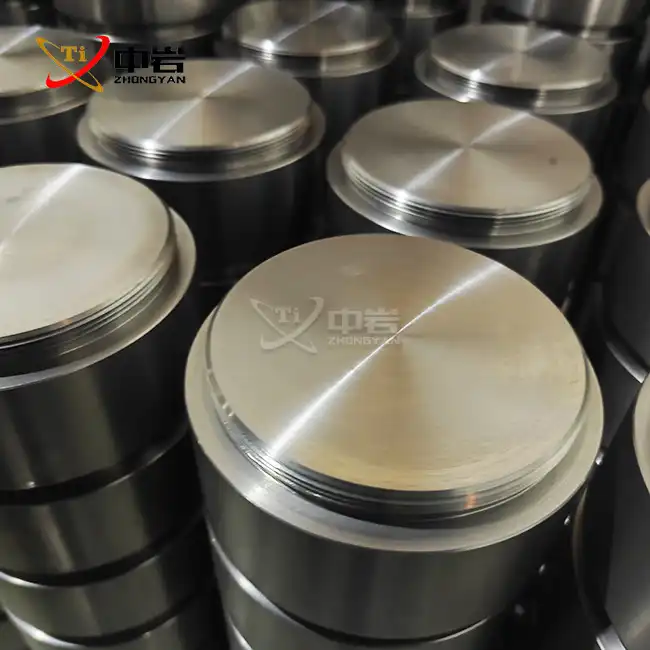
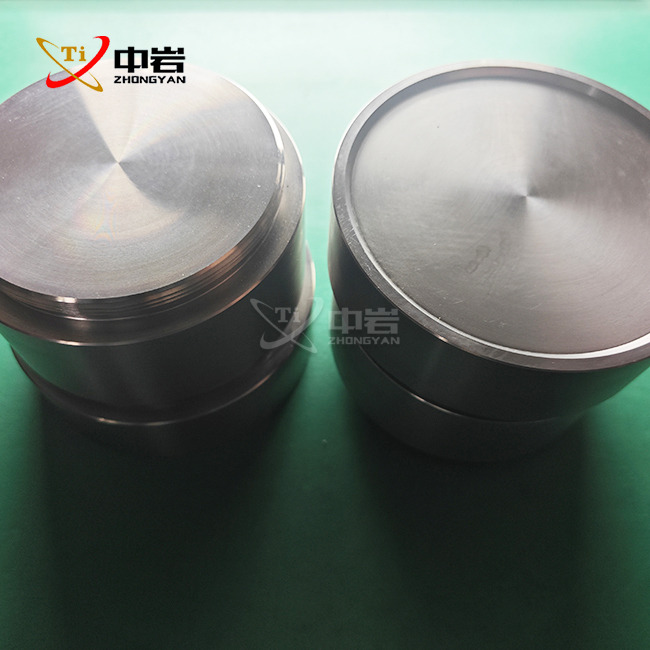
When engineers and procurement managers look at Custom Shaped Titanium Target for physical vapor deposition (PVD) uses, they need to know the difference between normal and Custom Shaped choices. For standard titanium targets to work with most magnetron sputtering systems, they are made with regular shapes like discs, plates, or tiles that are square or rectangular. A Custom Shaped Titanium Target, on the other hand, is carefully made with non-standard shapes like cylindrical, conical, ring-shaped, or stepped profiles to fit certain equipment setups, material shapes, or process needs. The main difference is that custom targets can be made to fit specific cathode assemblies, make the best use of materials, and improve the consistency of deposition in situations where off-the-shelf methods fail.
Understanding Titanium Targets: Standard vs Custom Shaped
Defining Standard Titanium Targets
In terms of PVD supplies, standard titanium targets are the most basic type. These targets are mass-produced in standard sizes, with widths ranging from 50mm to 600mm for circles and 200mm x 300mm for squares. High-purity Grade 1 and Grade 2 titanium that meets ASTM B348 standards is used in production according to set procedures. With batch processing and standard CNC machining methods, the production cycle is sped up. This means shorter wait times (usually one to two weeks) and lower costs per unit. Standard targets make sure that a lot of material is available through wholesalers. This means that they can be used for quick buying cycles in high-volume electronics manufacturing or general coating operations.
What Makes Custom Shaped Titanium Targets Different
Custom-shaped titanium targets are different from standard shapes because they are made to solve problems that are unique to each application. These precise parts are made by Baoji Zhongyan Titanium Industry Co., Ltd. using advanced multi-axis CNC machining and wire EDM techniques to get complex shapes, such as hollow cylinders for rotatable cathodes, dog-bone profiles to stop racetrack erosion, or concave surfaces for covering three-dimensional medical implants. With tolerances as small as ±0.05mm, these targets are made to exact specs, making sure that they fit perfectly with sputtering equipment. Engineers can choose purity levels of up to 99.995%, grain size control below 30µm, and custom crystalline shapes to get the most out of the sputtering process. This level of accuracy gets around problems with normal targets, like wasting material (only 30% of a flat target usually wears away evenly), and not working with high-tech casting systems.
Manufacturing Methods and Quality Controls
To make custom-shaped titanium targets, you have to be very careful with the process. The first step in production is choosing the raw materials. High-purity titanium bars or plates from China's Titanium Valley are chemically tested to make sure they have less than 500 ppm of oxygen and less than 200 ppm of iron contamination. CNC turning and milling operations make the goal shape, and laser cutting and grinding operations get the surface finish to the right level (Ra ≤ 0.4µm). Several rounds of heat treatment smooth out the microstructure, creating fine, evenly spaced grains that keep the rate of erosion steady during spitting. Coordinate measuring tools (CMM) are used to check the sizes of each Custom Shaped Titanium Target. Archimedes' method is used to check the density (≥99.5% theoretical density), and ultrasound testing is used to find any holes inside the target. Zhongyan's quality system is ISO9001:2015-certified, which means that all the way from certifying the raw materials to packing the finished products, they can be tracked. They also make sure that all ASTM, AMS, and OEM standards are met.
Performance and Material Properties Comparison
Chemical Purity and Microstructural Characteristics
The performance of a sparking object depends on how pure the material is. Standard targets usually use Grade 2 titanium, which is 99.5% pure and good for artistic coats and general thin-film uses. Custom Shaped Titanium Target versions come in purity grades up to 99.995% (4N5+) for semiconductor logic devices, where even small amounts of contaminants can damage the gate oxide or create paths for electricity to leak out. Differentiating performance even more is microstructural control. Standard targets may have random grain sizes between 50µm and 150µm, while custom CNC-machined targets have tightly controlled grain structures with average grain sizes of 20µm to 30µm and specific crystallographic orientations that increase sputter yield by 15-20%. This level of consistency cuts down on arcing that happens when grain boundaries aren't smooth, and it also makes high-power pulsed magnetron systems last longer.
Sputtering Efficiency and Material Utilization
Custom shapes directly fix the well-known racetrack effect that affects planar magnetron cathodes. Normal round targets wear away in an annular shape, leaving 60–70% of the titanium material unusable before the target needs to be replaced. Custom Shaped Titanium Targets incorporate thickened zones in high-erosion areas or employ tubular designs that rotate 360 degrees, achieving material utilization rates exceeding 80%. The research team at Zhongyan looks at magnetic field distributions to find the best target profiles. This makes the service life 40–50% longer than with normal setups. The improved utilization translates to fewer target changes, reduced downtime, and lower cost per deposited film area—critical factors for high-volume semiconductor fabs and optical coating operations where production continuity directly impacts profitability.
Thermal Management and Equipment Compatibility
Thermal conductivity and the ability to get rid of heat are what make handmade titanium targets stand out in tough situations. Standard targets use common base plate surfaces, which are usually made of copper or copper-chromium metals bound together with indium or elastomer layers. When the power density is less than 10 W/cm², these systems work fine. Custom-shaped titanium targets made for high-power uses have special cooling lines built in. The thermal expansion coefficients of the target and backing materials are matched using diffusion bonding methods. This solid-state joining makes atomic-level bonds that can withstand temperatures above 500°C without coming apart. The design is flexible enough to work with different types of equipment, like conical targets for oblique-angle deposition systems, hollow cathode configurations for ion-assisted coating, or segmented assemblies for large-area architectural glass lines. This means that standard targets can't fit or work well in these situations.
How to Choose Between Standard and Custom-Shaped Titanium Targets
Equipment Configuration and Process Requirements
Looking at your failing system design is the first step in choosing the right target type. Off-the-shelf targets can usually be used with standard planar magnetrons in research labs or test production lines without any changes. But complex machines, like collimated sputtering tools for semiconductor via filling, long-throw systems for MEMS manufacturing, or rotatable tube cathodes for continuous web coating, need their own shapes. Engineers need to look at the substrate's size, the distance from the source to the substrate, and the coating angles that need to be used. Custom Shaped Titanium Targets make sure that the plasma is spread out evenly and get rid of shading effects that make it harder for the film to stick and cover complex three-dimensional parts like medical implants or aircraft turbine blades.
Cost-Benefit Analysis and Budget Considerations
Customization needs are based on the qualities of the material that are needed for your purpose. Industrial-grade standard targets (99.5–99.7% purity) work well with hard coatings that protect and decorative uses. To make semiconductor devices, optical interference filters, and biological coatings, you need Custom Shaped Titanium Targets that are very pure and have controlled grain structures. The procurement team should check how sensitive the process is to contamination. If the process can handle oxygen levels around 1000 ppm, standard targets are enough. But if the specs call for below 300 ppm oxygen for diffusion barrier uses, then custom high-purity targets are needed. Microstructural needs, like a certain grain size for even erosion or a certain texture direction for better sputter yield, help to tailor the choice even more.Due to economies of scale in making, standard targets are usually 30–40% less expensive than unique targets when you buy them all at once. Total cost of ownership estimates, on the other hand, show a more complex picture. Custom-shaped titanium targets have a longer useful life (often 50–100% longer), less material waste, and fewer repair rounds. When production downtime costs more than $5,000 an hour, which happens a lot in chip manufacturing, the extra cost for unique targets is quickly paid for. By making bulk purchases with companies like Zhongyan, which is based in Baoji's Titanium Valley, the price gap is closed by taking advantage of the benefits of buying materials in the area. Purchasing managers should ask for thorough quotes that compare running costs per hour, taking into account the goal price, installation labor, vacuum break frequency, and changes in coating uniformity that lower the number of rework jobs.
Supplier Evaluation Criteria
Finding the right Custom Shaped Titanium Target maker is key to a successful long-term buying process. Check that providers have all the necessary quality standards, such as ISO9001:2015 for quality management, ASTM B348 compliance for titanium material requirements, and OEM qualifications specific to the customer. When looking at a company's manufacturing capabilities, it should have in-house metallurgical testing facilities (ICP-OES for purity analysis, optical microscopy for grain size verification), CNC machining precision (five-axis equipment for complex geometries), and bonding technologies (diffusion bonding for high-power applications vs. indium bonding for cost-effective projects). The combined production method at Zhongyan makes sure that quality is always the same and that everything can be tracked. Before agreeing to large orders, make sure you get material certificates, test reports, and samples. This is especially important when switching from standard to custom targets in production processes that are already in place.
Common Applications and Industry Use Cases
Standard Targets in Established Manufacturing
Standard titanium targets are most common in high-volume production settings where uniformity and quick access are more important than customizable benefits. Standard circle targets with a diameter of 200mm to 400mm are used in electronics manufacturing to put titanium binding layers under copper interconnects on printed circuit boards. Facilities that coat aerospace parts use 300mm x 400mm rectangle targets to put titanium layers on metal structures that don't rust. Manufacturers of medical devices use normal flat targets to coat surgical tools with titanium nitride. These uses have a lot in common, like making a lot of things, using established process parameters, and designing tools to fit standard goal sizes in the industry. Just-in-time inventory plans are supported by a reliable supply chain and quick replenishment rounds (one to two weeks). This keeps working capital from getting stuck in consumables.
Custom Targets for Advanced Applications
Custom Shaped Titanium Targets are used by certain businesses to solve specific technical problems. Semiconductor factories put titanium diffusion barriers in contact holes with high aspect ratios by using special ring-shaped targets that work best with collimated sputtering systems. This covers more than 80% of the bottom area in 10:1 aspect ratios. Custom tubular spinning targets are used for optical coatings on precision lenses. These keep the deposition rate uniformity within ±2% across 1-meter substrate lengths, which is very important for multi-layer anti-reflective stacks. Medical implant makers coat dentistry screws and hip replacements with plasma using special concave targets that fit the shape of the implants. This makes sure that the implants are exposed to plasma in all directions, which creates uniform biocompatible coatings that help the implants fuse with the bone. For defense purposes, special targets with their own shapes are used to put down radar-blocking coatings and IR signal control layers. Measurable results from these advanced applications show that specific target investments are worth making. When a semiconductor maker switched from normal planar targets to custom ring shapes that were best for their equipment's magnetic field distribution, the variation in resistance went down by 35%. Using special tubular targets with longer erosion zones, an optical coatings facility was able to increase production output by 60% and get rid of the need to change targets in the middle of shifts. Case studies from Zhongyan's clients show how properly designed custom targets can change the economics of the process in high-value situations where the quality of the coating directly affects the performance and yield of the product.
Pricing, Lead Time, and Supplier Landscape
Understanding Cost Drivers
The price difference between normal and custom-shaped titanium targets is caused by a number of factors. The main thing that changes the price is how complicated the design is. A simple hollow cylinder costs 20–30% more than the standard target price, while complicated stepped shapes with precise cooling lines can fetch 100–150% more. The costs of custom CNC code and specialty fixturing tools are spread out over the number of units that are made. Prototypes that are made of a single piece cost more per unit than orders of ten or more identical targets. Choosing the right material grade has a big effect on prices. For example, going from Grade 2 (99.5% purity) to ultra-high purity Grade 1 (99.995%) titanium raises the cost of the raw materials by 40–60%. Another factor is the choice of bonding technology. For example, elastomer bonding is less expensive than diffusion bonding, but in high-power situations, the better heat performance of diffusion bonding makes it worth the extra money. Suppliers who are open and honest, like Zhongyan, give detailed quotes that separate the prices of materials, machining, bonding, and inspection, which helps buyers make smart choices.
Lead Time Expectations and Expediting Options
Standard titanium targets kept in stock by distributors ship within one to two weeks, which helps with quick buying processes. Custom-shaped titanium targets take longer to make. The first orders usually take four to six weeks, which includes reviewing the design (three to five days), CNC programming and making the tools (one week), cutting and bonding (two weeks), and quality checking with paperwork (five to seven days). By cutting out the design and machining steps, wait times are cut to two to three weeks for repeat orders of unique shapes that have already been made. For urgent needs, Zhongyan's manufacturing capacity in Baoji's industrial center allows an accelerated schedule for extra fees (usually a 20–30% surcharge), and they can meet custom goals in as little as 10–14 days. Costs and lead times should be balanced in procurement strategies. For example, keeping a two-target inventory for important custom shapes stops production delays while allowing standard lead times for replenishment orders.
Navigating the Supplier Ecosystem
There are different types of people in the titanium sputtering target supply chain, and each has its own benefits. Factory-direct manufacturers, such as Baoji Zhongyan Titanium Industry Co., Ltd., offer the best prices on custom orders, free expert advice during the planning process, and the ability to track down all of the materials used. Because they are in China's Titanium Valley, they have easy access to raw materials and specialized processing equipment. This lets them offer reasonable prices without lowering the quality of their products. Regional wholesalers keep standard goal stocks on hand so that their products are always available, but they don't usually have the ability to make custom orders. Technical reps help with applications in a useful way, but they charge extra for marketing (15–25%) on top of the factory price. Strategic buying lets you find a balance between these two options: build relationships with factory-direct Custom Shaped Titanium Target makers for unique shapes, while keeping dealer accounts open in case of emergency standard target needs. Before you place your first order, ask for scientific datasheets that list the purity levels, grain size distributions, and bonding factors. Sample evaluation programs let you check that a seller can do what they say they can do. Zhongyan gives you characterized sample targets with full metallurgical reports, so you can test the process before committing to large production numbers.
Conclusion
The main difference between normal and Custom Shaped Titanium Targets is how well the target's properties match the needs of the application and the way the equipment is set up. Standard targets work best in places where a lot of things need to be made quickly and using well-known methods. They save money and are easy to get. Custom-shaped titanium targets are made to meet specific needs like complicated shapes, ultra-high purity, optimal material utilization, and compatibility with advanced deposition systems. They work better in tough situations, but they cost more at first. Total cost of ownership analysis should be part of purchasing choices. This includes looking at how long the product is supposed to last, how efficiently it uses materials, and how it can improve process quality, along with the purchase price. Partnering with experienced manufacturers like Zhongyan, who offer advanced CNC machining along with strict quality controls and material knowledge, guarantees reliable access to both standard and custom titanium targets that meet strict international standards and help keep production costs low.
FAQ
Are custom-shaped titanium targets compatible with all sputtering equipment?
Compatibility depends on how the cathode is designed and how much space is available. Custom-shaped titanium targets are made to fit particular equipment designs that can't handle standard shapes, like rotatable tube cathodes, conical magnetrons, or hollow cathode assemblies. Engineers have to show in great detail how the cathode is sized, how it cools, and how the magnetic field is set up. Zhongyan's technical team works with equipment makers to make sure that everything fits perfectly and that the plasma connection is perfect.
How do custom geometries impact sputtering efficiency?
When Custom Shaped Titanium Targets are made correctly, they greatly increase efficiency by making the best use of plasma spread and material utilization. Standard flat designs only use 30% of the material, but tubular spinning targets use 80% or more of it. Target life is increased by 50% when shaped features match erosion trends. Better consistency cuts down on coating rework, especially in semiconductor uses that need to control the thickness to within ±2%.
What are typical lead times for custom versus standard targets?
Within 7 to 14 days, standard targets from stock will be shipped. For planning, tooling, machining, and inspection of first special orders, it takes 4 to 6 weeks. Repeat sales are cut down to two to three weeks. Customers who need things quickly can get them faster (10–14 days), but the price will go up. Planning purchase cycles around these dates keeps output from being interrupted.
Partner with Zhongyan for Your Custom-Shaped Titanium Target Needs
Because we are strategically located in Baoji's Titanium Valley and have decades of experience in cutting, Zhongyan is a reliable company that makes Custom Shaped Titanium Targets. Our wide range of skills, including handling raw titanium rods, precise CNC machining, and diffusion bonding, ensures that our goals meet the strictest requirements in aircraft, semiconductors, and medical devices. We make high-purity Grade 1 and Grade 2 titanium targets with accuracy of ±0.05mm, purity levels of up to 99.995%, and unique shapes that work best with your tools. Certification to ISO9001:2015 and agreement with ASTM standards ensure that quality is the same for both OEM and ODM projects. Email our engineering team at sales@titaniumstudy.com to talk about the needs of your application, get detailed datasheets, or set up a sample review. No matter if you need standard inventory items or complicated custom geometries, Zhongyan can provide you with reliable performance, competitive pricing, and quick expert support.
References
1. Davis, J.R. (2006). Titanium: Physical Metallurgy, Processing, and Applications. ASM International, Materials Park, Ohio.
2. Mattox, D.M. (2010). Handbook of Physical Vapor Deposition (PVD) Processing (2nd ed.). William Andrew Publishing, Norwich, New York.
3. Ohring, M. (2002). Materials Science of Thin Films: Deposition and Structure (2nd ed.). Academic Press, San Diego, California.
4. Bunshah, R.F. (2001). Handbook of Hard Coatings: Deposition Technologies, Properties and Applications. Noyes Publications, Park Ridge, New Jersey.
5. ASTM International (2021). ASTM B348-21: Standard Specification for Titanium and Titanium Alloy Bars and Billets. West Conshohocken, Pennsylvania.
6. Seshan, K. (2002). Handbook of Thin Film Deposition Processes and Techniques: Principles, Methods, Equipment and Applications (2nd ed.). William Andrew Publishing, Norwich, New York.
Learn about our latest products and discounts through SMS or email