- English
- French
- German
- Portuguese
- Spanish
- Russian
- Japanese
- Korean
- Arabic
- Greek
- German
- Turkish
- Italian
- Danish
- Romanian
- Indonesian
- Czech
- Afrikaans
- Swedish
- Polish
- Basque
- Catalan
- Esperanto
- Hindi
- Lao
- Albanian
- Amharic
- Armenian
- Azerbaijani
- Belarusian
- Bengali
- Bosnian
- Bulgarian
- Cebuano
- Chichewa
- Corsican
- Croatian
- Dutch
- Estonian
- Filipino
- Finnish
- Frisian
- Galician
- Georgian
- Gujarati
- Haitian
- Hausa
- Hawaiian
- Hebrew
- Hmong
- Hungarian
- Icelandic
- Igbo
- Javanese
- Kannada
- Kazakh
- Khmer
- Kurdish
- Kyrgyz
- Latin
- Latvian
- Lithuanian
- Luxembou..
- Macedonian
- Malagasy
- Malay
- Malayalam
- Maltese
- Maori
- Marathi
- Mongolian
- Burmese
- Nepali
- Norwegian
- Pashto
- Persian
- Punjabi
- Serbian
- Sesotho
- Sinhala
- Slovak
- Slovenian
- Somali
- Samoan
- Scots Gaelic
- Shona
- Sindhi
- Sundanese
- Swahili
- Tajik
- Tamil
- Telugu
- Thai
- Ukrainian
- Urdu
- Uzbek
- Vietnamese
- Welsh
- Xhosa
- Yiddish
- Yoruba
- Zulu
Titanium Tube-to-Tube Connector vs Stainless Steel: Which Is Best?
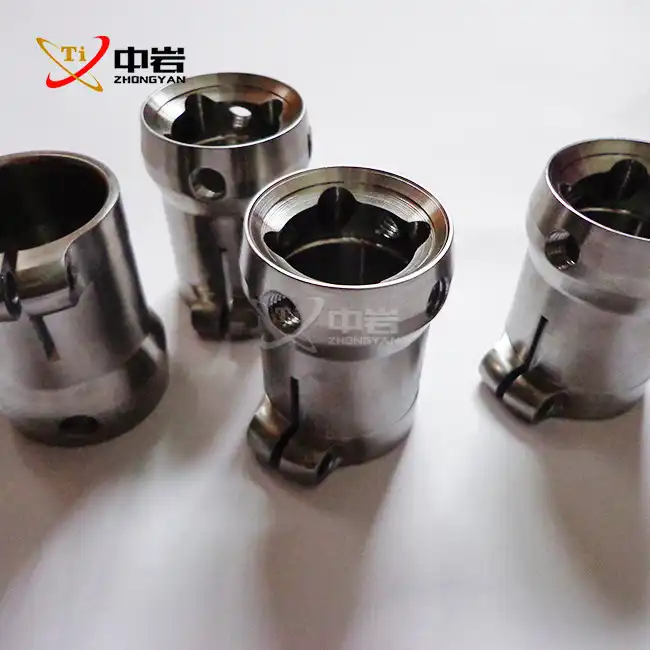
Out of titanium tube-to-tube links and stainless steel options, titanium is clearly the better choice for harsh industrial settings. Titanium tube-to-tube connectors have the best rust protection, highest strength-to-weight ratios, and longest service life. It is used a lot in aircraft, chemical processing, and medical fields. Cost-wise, stainless steel is better than titanium, but titanium's longevity cuts down on long-term upkeep costs and downtime, making it the best choice for engineers and procurement managers who value performance and dependability.
Understanding Titanium and Stainless Steel Tube-to-Tube Connectors
Material Properties and Design Fundamentals
Some tube-to-tube links don't leak when they connect two pipes in high-tech companies. That's the reason they're so good. This is because of the way their atoms are arranged and the properties that come from that. Links made of iron and steel are not at all the same. Steels in Grades 2 and 5 Ti6Al4V don't rust quickly because they have an iron layer that heals itself when it gets hurt. There are many places where chlorides, acids, and saltwater would quickly break down other materials. Ti is important because it can fix itself. Chrome doesn't rust because it is mostly found in types 304 and 316 stainless steel. This metal is useful, but if it stays in strong chemicals or the sea for a long time, the finish can come off. Steel is 8 g/cm³ thick, but this is only 4.5 g/cm³. Ti is lighter than stainless steel, which means it works less well and needs less fuel.
Common Connector Types and Threading Options
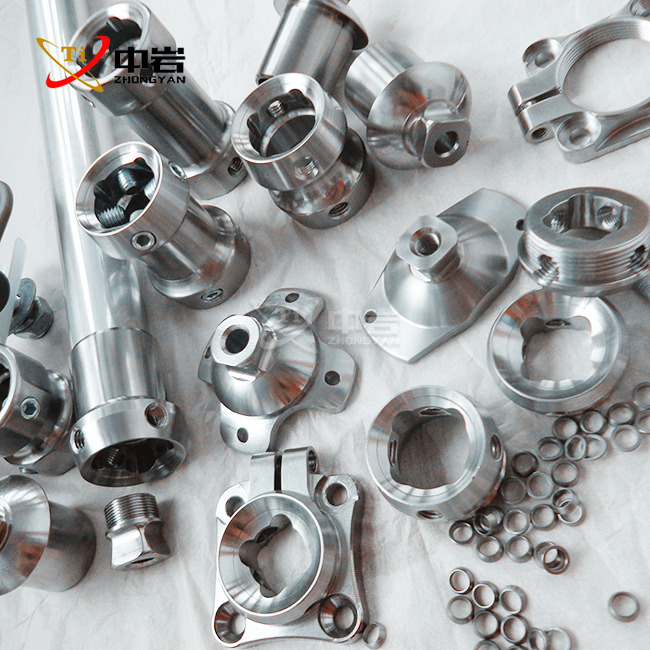
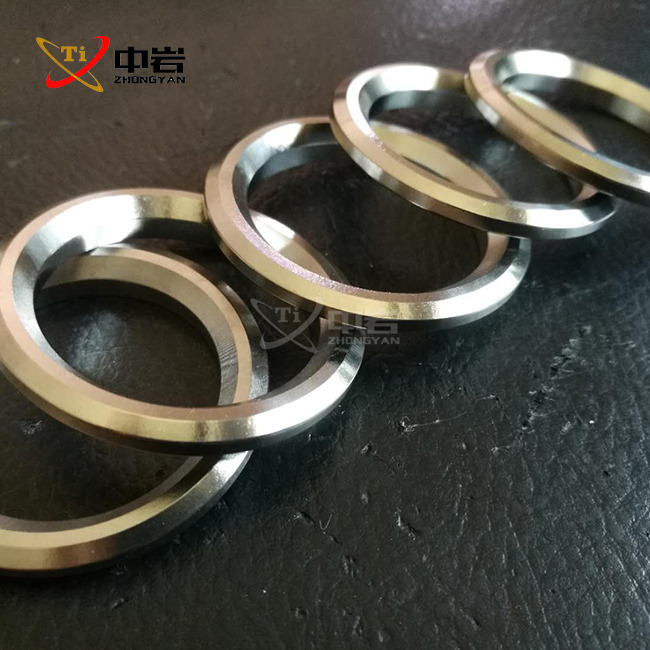
Threaded unions, compression fittings, soldered joints, and quick-connect types are just a few of the many types of connections made of TiN and stainless steel. NPT stands for "National Pipe Thread," and BSP stands for "British Standard Pipe." They can both be used in various settings and with various types of platforms. Different tools can be made to work perfectly with each other so that people from all over the world can work together. CNC cutting makes it possible for Baoji Zhongyan Titanium Industry Co., Ltd. to connect tubes of any size, from 1/4" to 2". We can also make sizes that aren't shown here for any job. We use state-of-the-art tools and keep a close eye on quality to make parts that meet ASTM, AMS, and ISO standards. Our factory is in China's Titanium Valley. Because we make things with great care, we make sure the threads are exactly 0.001" off. The seal won't come apart while it's being made or at any other time.
Key Performance Comparison: Titanium vs Stainless Steel
Corrosion Resistance and Environmental Durability
It was found by the National Association of Corrosion Engineers that titanium metals are strong in places where stainless steel breaks down quickly. For instance, titanium doesn't rust at all in places with a lot of chlorine, such as chemical processing and sea use. On the other hand, stainless steel links rust and break, which makes the joint less strong. This is a great idea for chemical plants that use liquids of hydrochloric acid, sulphuric acid, or sodium hypochlorite. The inactive oxide layer of titanium stays steady in pH ranges from 2 to 12. This makes the connections very useful. In other words, the joints work well and don't need to be coated or changed very often. Less upkeep needs to be done, and output stops less often because connections don't work.
Strength, Weight, and Temperature Performance
Titanium's high strength-to-weight ratio makes it very useful in aerospace and transportation applications. For example, Grade 5 titanium alloy connectors have a tensile strength of over 130 ksi while weighing about 45% less than similar stainless steel connectors. This weight reduction is especially useful in aircraft hydraulic systems and fuel delivery networks, where every ounce helps improve fuel efficiency and increase operational range. Temperature tolerance is another important performance factor. Titanium tube-to-tube connectors keep their structure stable across temperature ranges from -320°F to 1000°F (-196°C to 538°C), which makes them useful for both cryogenic processes in semiconductor manufacturing and high-temperature processes in aerospace propulsion systems. Stainless steel connectors, on the other hand, work reliably within narrower temperature ranges, usually from -100°F to 800°F, which is good for many industrial uses but not so good for extreme environments.
Titanium connectors that are precisely manufactured can withstand up to 10,000 PSI of pressure, depending on the size and grade chosen. This makes them useful for demanding uses in hydraulic systems, high-pressure chemical reactors, and offshore oil exploration equipment. The material's fatigue resistance ensures reliable performance under cyclic loading conditions and vibration exposure common in industrial machinery and aerospace systems.
Economic and Procurement Factors
Total Cost of Ownership Analysis
Most of the time, titanium tube fittings cost 300 to 500% more than stainless steel ones. You could also look at this by adding up all the costs. Titanium costs more, but it usually pays for itself because it lasts longer and needs less upkeep. You should get new stainless steel links every three years because the old ones rust. Pricey because it takes a long time and costs a lot of money to work on. There may also be safety problems. Titanium links that stay in place for 20 years or more don't need to be fixed. That means they don't need to be switched out or actions stopped as often. When a company makes a lot of things, every hour of lost time is worth $10,000 to $50,000. Tin is a good buy because of this.
Supply Chain Considerations and Lead Times
To get these parts, you won't have to wait long because they sell a lot of them. You can only buy Ti parts from businesses that make them. These companies let you pick between OEM and ODM. If you order very specific Ti parts, they may not get to you for four to eight weeks, based on how many you place and how strict the standards are. Before you buy something, look into the seller's history and make sure they have the right paperwork. Keep your ISO 9001:2015 approval up to date and show that your products meet ASTM B381, ASME BPE, and other flight standards like AMS if you want your titanium company to keep its good name. You don't have to worry about the quality of the parts while you watch them being made.
Getting a lot of orders from well-known Zhongyan nickel suppliers is the best way to do it. Because of how our business is set up, we start with raw materials, use CNC to cut them precisely, and then test the final goods. This helps the supply chain plan because it tells everyone when to ship and keeps the quality the same.
Application Scenarios and Decision-Making
Aerospace and Aviation Systems
When things get rough, people who work in flight need tube links that are strong, light, and steady. Titanium tubes are used to make connectors that are used in auto fuel systems, hydraulic lines, and weather control systems. When you lower the weight, you quickly get more volume and better gas mileage. The systems can be used for a long time without breaking because the material doesn't break when it's touched or heated and cooled many times. Attack planes, helicopters, and robot air vehicles that are ready for battle are made with it. How well the job goes depends on how well the parts work in war and other tough situations. Titanium is used for links in commercial planes for systems that have to work in harsh conditions and are near jet fuel, hydraulic fluids, and chemicals used to melt ice.
Chemical Processing and Industrial Manufacturing
When chemical plants use chemicals that eat away at stainless steel quickly, they need tube connectors that don't leak and don't break down easily. Titanium tube-to-tube connectors work great in systems that move chlorine, bromine, phosphoric acid, and other chemicals that eat away at stainless steel quickly. Getting rid of incidents caused by corrosion helps plants follow EPA and OSHA safety rules. Because they are light and don't rust, titanium connectors are useful in pneumatic systems, coolant delivery networks, and lubrication circuits for industrial machinery. This makes the machinery work better. Semiconductor manufacturing facilities use titanium connectors in ultra-pure water distribution systems and chemical delivery networks to help with wafer fabrication processes. These processes need to keep materials clean and free of contamination to make sure the quality of the final product.
Medical and Dental Applications
Titanium is biocompatible, which makes it the best material for tube connectors in medical devices and surgical equipment. Titanium connectors are used in dental implant production systems to make sure that the implants are safe and that the patients will have good long-term outcomes. The material is also compatible with steam sterilisation, ethylene oxide exposure, and gamma radiation, which helps healthcare facilities follow infection control rules.
Installation, Maintenance, and Best Practices
Installation Guidelines and Tooling Requirements
If you choose the right material for your tube connectors, they will work well and last a long time. Titanium tube-to-tube connectors need to be handled in a certain way to keep them from galling during assembly. This is because the material tends to cold weld under high-friction conditions, so you need to use anti-seize compounds made specifically for titanium applications and calibrated wrenches to apply torque in a controlled way. Thread engagement for pressure-rated connections should be between 4.5 and 6 complete threads, according to the manufacturer. If the torque is too low, the seal is weak, and water can leak in, and the connection could fail early. Installation technicians should be taught how to work with titanium fittings and how they are different from regular stainless steel fittings.
Setting up the surface is just as important as the weld itself. The joint area needs to be cleaned well to get rid of any oils, oxides, or other impurities that could hurt the quality of the weld. During welding, inert gas purging keeps oxygen from absorbing and keeps the joints strong and flexible.
Maintenance Protocols and Inspection Procedures
It's important to look for burn marks on the connector threads and discolouration in the joint areas that could be caused by chemicals or heat. They should also make sure that any lock wires or safety pins are still in the right place. Using the right methods to test for leaks, like bubble testing, pressure decay monitoring, or helium mass spectrometry, makes sure that the seal is still strong and the system works well. To clean titanium connectors, never use rough materials that could scratch the protective oxide layer. Instead, use mild alkaline cleaners or titanium-specific cleaning solutions that will get rid of dirt and grime without hurting the surface. Stainless steel wire brushes should also never touch titanium parts because iron contamination weakens the material's natural resistance to corrosion and causes corrosion to happen in specific places.
When planning preventative maintenance, it's important to take into account the working conditions and fluid properties. For instance, connectors that are in highly corrosive environments should be inspected every three months. In aerospace systems that work in controlled conditions, inspections may be done once a year or more often, depending on the conditions. Writing down inspection results, torque values, and any maintenance actions helps with quality management systems and makes it easier to look at trends for planned preventative maintenance.
Conclusion
When deciding between titanium tube-to-tube connectors and stainless steel alternatives, it's important to think about technical needs, operating environments, and long-term economic factors. Titanium performs better in corrosive environments, high-temperature applications, and weight-sensitive systems, where its superior properties justify its higher acquisition costs. Stainless steel, on the other hand, is still a practical choice for cost-conscious projects with moderate environmental exposure and adequate corrosion resistance requirements. Procurement professionals must consider total ownership costs, supplier capabilities, and compliance with industry standards to make decisions that maximise system reliability, operational safety, and budget efficiency. Knowing these material differences helps engineering teams choose the right connector solutions that improve equipment performance and lower lifecycle costs.
FAQ
What is the return on investment for titanium tube connectors compared to stainless steel?
Titanium tube-to-tube connectors have a longer service life than stainless steel, which only needs to be replaced every three to five years. In harsh chemical environments, titanium's 20+ year service life saves a lot of money compared to stainless steel's three to five year replacement cycle. Facilities that have a lot of connector failures and production interruptions usually see a return on investment in two to four years, even though titanium costs more at first. For projects with moderate corrosion exposure, stainless steel may be more cost-effective when total ownership costs are kept the same.
Can titanium and stainless steel connectors be used together in the same system?
When titanium and stainless steel parts are mixed in the same piping system, you need to be aware of the galvanic corrosion potential. When two different metals touch each other in electrolytes, galvanic cells form that speed up the corrosion of the more anodic material. Titanium is in the opposite position in the galvanic series to stainless steel, which means it could speed up the corrosion of stainless steel at junction points. To stop galvanic interaction, you can use non-conductive gaskets or coatings to separate the metals.
How do I verify supplier certification and quality for titanium connectors?
Reputable titanium suppliers provide comprehensive documentation including ISO 9001:2015 certification, material test reports confirming ASTM compliance, and mechanical property verification. Request certificates of conformance with each order, specifying material grade, heat treatment condition, and test results for tensile strength, yield strength, and chemical composition. Third-party inspection services can verify supplier claims and ensure delivered components meet project specifications. Establishing relationships with certified manufacturers offering OEM customization and rigorous quality control minimises procurement risks and ensures long-term supply chain reliability.
Partner with Zhongyan for Premium Titanium Tube-to-Tube Connector Solutions
Zhongyan specialises in manufacturing high-precision titanium tube-to-tube connectors engineered for the most demanding industrial applications. Our advanced CNC machining facilities in Baoji, China's Titanium Valley, combine cutting-edge technology with rigorous quality control to deliver components that exceed ASTM, AMS, and ISO standards. As a trusted titanium tube-to-tube connector manufacturer, we offer custom sizing, OEM/ODM solutions, and technical support to optimise your piping systems for maximum performance and longevity. Our Grade 5 titanium alloy connectors withstand extreme pressures up to 10,000 PSI while maintaining exceptional corrosion resistance and lightweight construction. Contact our procurement specialists at sales@titaniumstudy.com to discuss your project requirements, request detailed technical specifications, or obtain competitive quotes for volume orders. Experience the quality advantage that has made Zhongyan the preferred titanium tube-to-tube connector supplier for aerospace, chemical processing, and medical device manufacturers worldwide.
References
1. Davis, J.R. (2003). Titanium: A Technical Guide. ASM International, Materials Park, Ohio.
2. Boyer, R., Welsch, G., & Collings, E.W. (1994). Materials Properties Handbook: Titanium Alloys. ASM International.
3. Schutz, R.W. & Thomas, D.E. (1987). "Corrosion of Titanium and Titanium Alloys," Metals Handbook, Vol. 13, Corrosion, ASM International.
4. Peters, M., Kumpfert, J., Ward, C.H., & Leyens, C. (2003). "Titanium Alloys for Aerospace Applications," Advanced Engineering Materials, Volume 5, Issue 6.
5. National Association of Corrosion Engineers (2018). Corrosion Resistance of Titanium in Industrial Environments, NACE International Publication.
6. American Society for Testing and Materials (2019). ASTM B381-19: Standard Specification for Titanium and Titanium Alloy Forgings, ASTM International, West Conshohocken, Pennsylvania.
Learn about our latest products and discounts through SMS or email