- English
- French
- German
- Portuguese
- Spanish
- Russian
- Japanese
- Korean
- Arabic
- Greek
- German
- Turkish
- Italian
- Danish
- Romanian
- Indonesian
- Czech
- Afrikaans
- Swedish
- Polish
- Basque
- Catalan
- Esperanto
- Hindi
- Lao
- Albanian
- Amharic
- Armenian
- Azerbaijani
- Belarusian
- Bengali
- Bosnian
- Bulgarian
- Cebuano
- Chichewa
- Corsican
- Croatian
- Dutch
- Estonian
- Filipino
- Finnish
- Frisian
- Galician
- Georgian
- Gujarati
- Haitian
- Hausa
- Hawaiian
- Hebrew
- Hmong
- Hungarian
- Icelandic
- Igbo
- Javanese
- Kannada
- Kazakh
- Khmer
- Kurdish
- Kyrgyz
- Latin
- Latvian
- Lithuanian
- Luxembou..
- Macedonian
- Malagasy
- Malay
- Malayalam
- Maltese
- Maori
- Marathi
- Mongolian
- Burmese
- Nepali
- Norwegian
- Pashto
- Persian
- Punjabi
- Serbian
- Sesotho
- Sinhala
- Slovak
- Slovenian
- Somali
- Samoan
- Scots Gaelic
- Shona
- Sindhi
- Sundanese
- Swahili
- Tajik
- Tamil
- Telugu
- Thai
- Ukrainian
- Urdu
- Uzbek
- Vietnamese
- Welsh
- Xhosa
- Yiddish
- Yoruba
- Zulu
What Industries Commonly Use Titanium Tube-to-Tube Connectors Today?
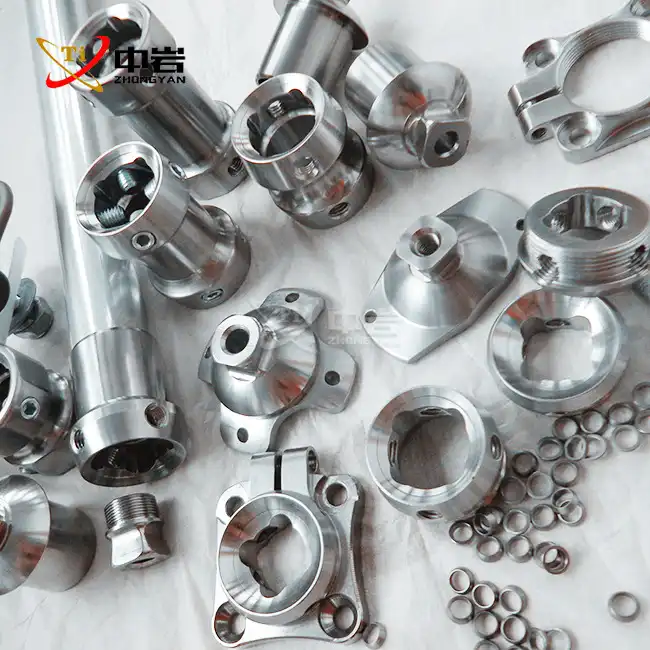
Titanium Tube-to-Tube Connectors are important parts in many industries today, such as aircraft, chemical processing, medical device making, marine engineering, and semiconductors. These precision-engineered valves connect titanium tube systems and offer the best corrosion resistance, strength-to-weight ratios, and dependability even in the harshest temperature and pressure conditions. Because of the way the material is made, they are essential in situations where failure is not a choice.
Introduction
We may not immediately think of titanium Tube-to-Tube Connectors as mission-critical fluid system components. These specialist pieces provide safety and efficiency in the world's hardest environments. Unlike stainless steel or aluminum, titanium tube connectors are light, strong, corrosion-resistant, and temperature-stable, changing operating dependability. When we work at Zhongyan in Baoji, China's Titanium Valley, we see how other companies employ these incredible products. In difficult environments, engineers and procurement managers must build connections that don't corrode, add weight, or need frequent maintenance. Global manufacturers need ASTM B381, AMS norms, and ISO certifications, which the Titanium tube adapter complies with. This tutorial discusses companies that utilize titanium tube fittings daily, why titanium is superior to other materials, and how to verify suppliers and standards.
Understanding Titanium Tube-to-Tube Connectors
What Makes These Connectors Different
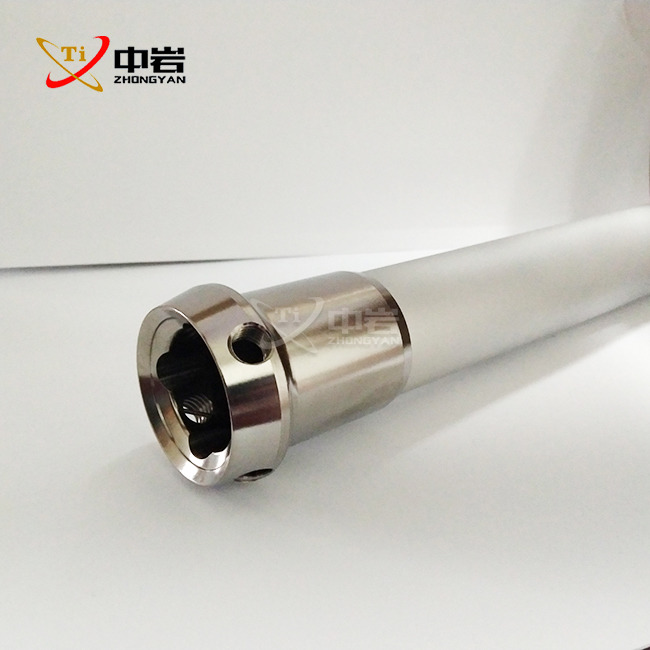
A precision-machined Titanium Tube-to-Tube Connector joins two titanium tubes without leaking. These parts usually feature double-ferrule compression, cone-and-thread, or flare fitting designs. Zhongyan mainly makes these connectors from Grade 2 economically pure titanium and Grade 5 Ti-6Al-4V alloy. Application demands determine material selection. These pieces overcome construction issues using standard materials. Titanium thread galling occurs during cold welding assembly when threads freeze. Silver-plated nuts or molybdenum disulfide coatings prevent this. We use CNC cutting to produce 32 Ra or superior surface finishes to maintain seal integrity during heat and vibration.
Core Material Properties That Drive Performance
Titanium generates a protective coating of titanium dioxide, making it resistant to rust where stainless steel would break down. This advantage has impacted chemical plant maintenance plans since moist chlorine and metallic chlorides easily pit 316L stainless fittings. Lighter than steel, the material has a density of 4.51 g/cm³ and tensile strengths approaching 895 MPa in Grade 5 alloy. Another advantage is that temperature doesn't affect it greatly. Titanium tube connectors retain their form from -250°C to 400°C for long durations. The material has a lower thermal expansion coefficient than steel, with 8.6 µm/m·K. Our connections need spring-loaded ferrules to accommodate expansion and maintain seal loads as temperature changes. In medical and industrial environments, titanium is biocompatible and won't leak. Titanium fittings are ideal for delicate electronics and military applications that need low magnetic fields.
Key Industries Utilizing Titanium Tube-to-Tube Connectors
Aerospace Applications Demand Weight and Reliability
The aircraft industry may be the toughest place for Titanium Tube-to-Tube Connectors to work. Hydraulic systems in airplanes move the landing gear and wing flaps. These systems need parts that can handle pressure spikes of more than 5,000 PSI while adding little weight to the whole plane. Every pound saved on connection weight directly translates to better gas mileage or more cargo space. Titanium tube adapters are used in commercial flight fuel systems to stop galvanic corrosion, which happens when metals that are not the same type touch aviation fuel that contains electrolytes and small amounts of water. We put the plugs we sell for these uses through a lot of tests to make sure they meet AMS standards. These standards require performance checks under shaking, thermal shock, and cyclic pressure loading that mimics decades of service life. Exploration in space pushes the limits of what titanium connectors can do. Satellite propulsion systems and life support systems on crewed spaceships use special titanium parts that are made to work in a vacuum and handle big changes in temperature when they are in the sun and when they are in the shade. Because the material doesn't give off much gas, it doesn't get on sensitive visual equipment or science tools.
Chemical Processing Plants Rely on Corrosion Immunity
Chemical businesses struggle with corrosion because it destroys pipe systems. Wet chlorine gas degrades stainless steel rapidly; chlor-alkali facilities have employed titanium Tube-to-Tube Connectors for decades. The oxide layer heals quickly if scratched, therefore it protects even if mechanically injured during operation. This helps petrochemical operations that handle sour crude oil with hydrogen sulfide since titanium naturally fulfills NACE MR0175/ISO 15156 sour service criteria. There are no big leak concerns in crucial process streams since titanium doesn't fail via sulfide stress splitting at ambient temperature like many alloy steels. Metal contamination is prohibited in semiconductor fabrication, and high-purity chemical synthesis requires a clean fluid supply. Particle-free and easy-to-clean electropolished titanium connectors with ASME BPE finishes are essential for pharmaceutical and microelectronics applications.
Medical and Dental Manufacturing Applications
Implantable devices and surgical equipment that need biocompatibility are increasingly using titanium Tube-to-Tube Connectors. These fittings provide patient safety and fulfill FDA material and ISO 10993 biocompatibility criteria in cardiovascular assist devices, orthopedic surgical equipment, and oral implant manufacturing systems. In medical situations, appropriateness matters. Ethylene oxide, gamma irradiation, and several autoclave cycles at 134°C do not damage titanium tube-to-tube connections or alter seal stability. This extends medical instrument life, lowering ownership costs and replacement frequency. Dental implants, notably titanium disc machining for CAD/CAM repairs, need accurate fluid delivery systems to transport coolant and cutting lubricants. These systems' connections must maintain flow rates and prevent metallic pieces from entering, which might impair product quality.
Marine Engineering and Offshore Platforms
Titanium is perfect for offshore oil platforms, desalination plants, and undersea systems since it doesn't rust or degrade in seawater. Titanium Tube-to-Tube Connectors eliminate seawater-exposed steel part corrosion and biofouling maintenance downtime. Desalination operations that treat millions of gallons of water daily use titanium connections to handle brine, which has significantly greater salt levels than saltwater. It may be used without the protective coatings that wear off on coated steel because it resists stress corrosion cracking and crevice corrosion. Naval applications exploit titanium's nonmagnetic and corrosion-resistant properties. Submarines and mine countermeasure ships employ titanium tube-to-tube hydraulic and pneumatic connections to minimize magnetic traces that might impair stealth or tracking equipment.
Automotive and Motorsport Performance
Fast automobiles, notably Formula 1 and endurance races, employ titanium tube fittings for turbocharger oil feeds, coolant systems, and brake fluid lines. They can withstand intense vibrations that would shatter or loosen other fittings and don't get harmed by hot exhaust parts. Titanium makes items lighter without compromising safety, so racing teams appreciate it. Titanium Tube-to-Tube Connectors for gasoline systems weigh a few pounds less than steel ones, but in racing, when lap times are determined by hundredths of a second, every gram matters. Link fatigue resistance makes them dependable in 24-hour high-stress races without halting.
Comparing Titanium Connectors with Other Materials
Titanium Versus Stainless Steel Trade-offs
When comparing specs and prices, procurement teams often look at Titanium Tube-to-Tube Connectors along with 316L stainless steel options. Even though stainless steel is cheaper to buy at first, titanium performs better in a number of ways that affect the total cost of ownership. The most important thing that sets them apart is their resistance to corrosion. There are chromium oxide inactive films in stainless steel that break down in chloride conditions. This causes pitting and crevice rust. Titanium's oxide layer stays steady over a wider pH range and chloride amounts, so it doesn't break down too soon and needs to be replaced, or the process has to be shut down. Titanium's strength-to-weight edge becomes very important in situations where weight is important. At about 56% of the mass, Grade 5 titanium has the same tensile strength as many stainless steel metals. This weight decrease is very big in big pipe systems with hundreds of connections, adding to the mass of the whole system. With titanium parts, maintenance intervals get a lot longer. Chemical plants say that titanium tube fittings last longer than twenty years in places where stainless steel ones had to be replaced every three to five years. The value offer is even better now that coating standards and testing costs are no longer needed, even though it costs more up front.
Titanium Compared to Aluminum Alternatives
Aluminum links are popular with businesses that want lightweight options that are cheaper than titanium. But when conditions are tough, the ability gap gets a lot bigger. Aluminum loses its strength quickly at high temperatures, so it can only be used in moderately hot places below 200°C. Titanium, on the other hand, stays strong at temperatures above 400°C. When parts are made of metal, worries about galvanic corrosion grow. When electrolytes are present, and aluminum tubing is connected to them, metal serves as a sacrificial anode and corrodes more quickly. Titanium has the same galvanic series nobility as stainless steel, which lowers the risk of rusting in systems with a mix of materials. Another important difference is shown by pressure scores. Most aluminum connections can only handle up to 3,000 PSI of working pressure. Our Grade 5 Titanium Tube-to-Tube Connectors, on the other hand, can safely handle pressures above 10,000 PSI, based on their size and design. In high-pressure situations, this feature gets rid of the need for bigger and heavier metal connections.
Technical Specifications and Installation of Titanium Connectors
Material Grades and Selection Criteria
Grade 2 commercially pure titanium is good for most general-purpose uses where good rust protection is needed without a lot of mechanical stress. This material is easy to shape and weld, which makes it perfect for making unique Titanium Tube-to-Tube Connector arrangements. Our production skills include sizes from 1/4" to 2" in diameter, and we can also make them to your exact specifications. When maximum strength and efficiency at high temperatures are needed, Grade 5 Ti-6Al-4V metal is what you need. This metal has about twice as much tensile strength as Grade 2, so it can handle higher pressure values and thinner wall sections when weight reduction is very important. With 6% aluminum and 4% vanadium, the metal improves its mechanical qualities while still being very resistant to corrosion. Pay close attention to thread specs to make sure they work together and avoid problems during assembly. We make fittings with NPT, BSP, and custom threading choices. As usual, we treat them to stop galling. If the main seal forms at the threads or through compression ferrules, you can choose between parallel and curved threads.
Pressure and Temperature Performance Parameters
These Titanium Tube-to-Tube Connectors can work at a wide range of temperatures, from -320°F for cold service with liquid gases to 1000°F continuously for high-temperature process streams. This temperature range is higher than most other materials, so you don't have to worry about thermal breakdown or creep, which can happen with polymer and some metal parts. Ratings for pressure depend on the size of the connection, the width of the wall, and the grade of titanium used. Fittings in our regular range are rated from 3,000 PSI for Grade 2 connectors with a bigger diameter to 10,000 PSI for Grade 5 assemblies with a small diameter. When the needs of the product call for it, custom high-pressure designs can achieve even higher ratings. Because titanium has a low amount of flexibility (103 GPa compared to 200 GPa for steel), it needs to be installed with extra care. This flexibility makes for great spring-back properties, but it needs to be properly hardened and torqued so that it stays gripped on the tubing without coming loose from vibrations.
Installation Best Practices and Customization Options
Cleaning up is the first step to a good operation. We suggest using isopropyl alcohol to clean the connecting surfaces and making sure the threads are free of dirt before putting them together. Putting molybdenum disulfide anti-seize powder on threads stops galling and lets you measure torque accurately while tightening. The torque requirements depend on the size and form of the coupler, but because titanium has a lower modulus, they are usually lower than the numbers used for similar steel fittings. Too much torque can damage the ferrule grip or bend the fitting body, while too little torque lets leaks happen when the pressure changes. We give you full advice on how to install the Titanium Tube-to-Tube Connector, and the torque values are backed up by leak testing. Customization options at Zhongyan let them meet specific application needs that normal catalog goods can't. Our CNC machines make complicated shapes, like multi-port manifolds, specific angles, and fastening features that are built right in. Through OEM relationships, we're able to create unique connector designs that are covered by non-disclosure agreements. This gives clients who are making new goods a competitive edge.
Procurement Insights for B2B Buyers
Matching Connector Specifications to Application Needs
A careful study of the application is the first step to successful procurement. Engineers should write down working pressures, which should include short-term spikes, temperature ranges with a regularity of changing, and the properties of the media, such as their pH, chloride content, and particle loading. This information guides the choice of material grade and Titanium Tube-to-Tube Connector layout to make sure there are enough safety gaps. The way a system vibrates affects the choice of connection design. Designs with strong mechanical locks that go beyond friction-based ferrule compression work better in situations where there is high-frequency shaking or mechanical shock. Based on the vibration requirements and mounting situations, our engineering team can suggest the best combinations. Flow needs affect how big an internal path should be and how to figure out the pressure drop. Connectors look like simple point links, but the way they are built affects how well the whole system works. We give you pressure drop data and flow factors to help you model the system and make sure that the right amount of fluid gets delivered without needing too much pumping.
Evaluating Supplier Capabilities and Certifications
Quality standards give you a basic idea of how well a Titanium Tube-to-Tube Connector can be made. Our ISO 9001:2015 certification shows that we handle quality in a planned way, and material certifications that can be traced back to the original mill test records confirm the chemical and mechanical properties. Industry-specific certifications, like AS9100 for aircraft uses, show that you know what the needs of the field are. For high-volume projects, manufacturing capability is very important. Because we are in Baoji, we have easy access to a lot of titanium feedstock and a lot of specialized processing skills in China's Titanium Valley. With CNC turning, milling, grinding, and EDM machining as production methods, we can handle orders ranging from a few prototypes to tens of thousands of pieces every month. When estimating lead times, you should take into account getting materials, machining, quality control, and sending goods internationally. Items from a standard list usually ship within two to four weeks. Custom designs, on the other hand, need more time for engineering and first article review. We keep a smart stock of popular sizes and grades to speed up delivery for urgent needs.
Understanding Pricing Dynamics and Order Quantities
Titanium material prices change based on supply and demand around the world. Commercially pure Grade 5 metal costs more than Grade 2 material. Complex CNC machining directly impacts the amount of work that needs to be done and the number of tools that need to be used. For example, complex shapes or tight standards raise the cost per piece. Setup costs are spread out over longer production runs, which is how volume pricing works. Minimum order amounts are based on economic batch sizes that combine the costs of setting up tools with the costs of keeping inventory. For standard Titanium Tube-to-Tube Connector products, the MOQ may be as low as 10 pieces, but for unique designs, the MOQ is usually 50 to 100 pieces so that the cost of programming and setting up the fixtures is worth it. Long-term contracts that promise a certain amount of traffic allow for better pricing and secure capacity allocation. Costs that go beyond the original buy price should be included in the total cost analysis. Titanium tube connections often explain their higher price compared to materials that need to be replaced more often because they last longer and require less upkeep. Avoiding downtime in important processes has a lot of secret value that should be figured out in buying calculations.
Conclusion
Titanium Tube-to-Tube Connectors are now necessary in many fields where rust resistance, weight reduction, and dependability are important. These precision-engineered fittings work better than regular materials in a wide range of applications, from high-pressure hydraulic systems in aircraft to chemical processing plants that work with harsh media. The choice to use titanium connections is an investment in the long-term success of operations. Even though titanium costs more up front than stainless steel or aluminum options, it ends up being cheaper in the long run because it lasts longer, needs less upkeep, and doesn't break down as often. If engineers and procurement workers know about these trade-offs, they can make smart choices that improve system stability while keeping costs low over its lifetime.
FAQ
Why are titanium tube-to-tube connectors preferred in aerospace applications?
Connectors for aerospace systems need to be as strong as possible while also being as light as possible. Titanium Tube-to-Tube Connectors have tensile strengths of about 895 MPa in Grade 5 alloy, but they are only half as dense as steel options. This measure of strength-to-weight directly leads to better fuel economy and more cargo space. The material doesn't rust, so it doesn't cause galvanic reactions in fuel systems. It can also handle the pressure spikes and vibrations that happen in airplane hydraulic systems.
Can titanium connectors handle highly corrosive chemical environments?
When used with harsh chemicals, Titanium Tube-to-Tube Connectors work great, while stainless steel breaks quickly. Titanium dioxide forms a protected layer on its own, which makes it very resistant to wet chlorine, metallic chlorides, and hypochlorites, which normally cause materials to split and crack from stress corrosion. This self-healing oxide reforms right away if it gets broken, keeping its safety for decades of use. Titanium naturally meets NACE MR0175 standards, which makes it perfect for use in sour service settings with hydrogen sulfide.
What factors influence lead times for custom titanium tube-to-tube connectors?
Lead times vary based on order complexity and volume. From our factory in Baoji, standard Titanium Tube-to-Tube Connector stock items usually ship within two to four weeks. Custom designs need more engineering time for approval of drawings, CNC programming, and review of the first product, which adds six to eight weeks to the schedule. Large orders may need to be delivered in stages while production capacity is used up. The amount of customization has a big effect on the schedule. Simple changes to dimensions take very little time, but complicated geometries or special surface treatments make processing take longer.
Get Custom Titanium Tube-to-Tube Connector Solutions from a Trusted Manufacturer
Zhongyan's factories are in Baoji, China's Titanium Valley, and they make precision-engineered Titanium Tube-to-Tube Connectors. We make unique solutions that meet ASTM B381 and ISO 9001:2015 standards. You can choose from Grade 2 and Grade 5 alloys, depending on your needs for pressure, temperature, and rust. With CNC machining, we can make connectors with diameters from 1/4" to 2" and unique threading. We can also give the surface a finish of up to 32 Ra and provide OEM package options for large-scale production needs. Get in touch with our engineering team at sales@titaniumstudy.com to talk about your needs and get full details on our titanium tube-to-tube connection options. We are a dependable company that guarantees quality and on-time delivery.
References
1. American Society for Testing and Materials. (2021). ASTM B381: Standard Specification for Titanium and Titanium Alloy Forgings. ASTM International.
2. Boyer, R., Welsch, G., & Collings, E.W. (2019). Materials Properties Handbook: Titanium Alloys. ASM International.
3. Lutjering, G. & Williams, J.C. (2020). Titanium: Engineering Materials and Processes. Springer-Verlag.
4. National Association of Corrosion Engineers. (2018). NACE MR0175/ISO 15156: Petroleum and Natural Gas Industries—Materials for Use in H2S-Containing Environments. NACE International.
5. Peters, M. & Leyens, C. (2022). Titanium and Titanium Alloys: Fundamentals and Applications. Wiley-VCH.
6. Schutz, R.W. & Watkins, H.B. (2017). Recent Developments in Titanium Alloy Application in the Energy Industry. JOM: Journal of the Minerals, Metals and Materials Society, Volume 69, Issue 3.
(1)_1755652858819.jpg)
(1)_1755587759206.jpg)
Learn about our latest products and discounts through SMS or email