- English
- French
- German
- Portuguese
- Spanish
- Russian
- Japanese
- Korean
- Arabic
- Greek
- German
- Turkish
- Italian
- Danish
- Romanian
- Indonesian
- Czech
- Afrikaans
- Swedish
- Polish
- Basque
- Catalan
- Esperanto
- Hindi
- Lao
- Albanian
- Amharic
- Armenian
- Azerbaijani
- Belarusian
- Bengali
- Bosnian
- Bulgarian
- Cebuano
- Chichewa
- Corsican
- Croatian
- Dutch
- Estonian
- Filipino
- Finnish
- Frisian
- Galician
- Georgian
- Gujarati
- Haitian
- Hausa
- Hawaiian
- Hebrew
- Hmong
- Hungarian
- Icelandic
- Igbo
- Javanese
- Kannada
- Kazakh
- Khmer
- Kurdish
- Kyrgyz
- Latin
- Latvian
- Lithuanian
- Luxembou..
- Macedonian
- Malagasy
- Malay
- Malayalam
- Maltese
- Maori
- Marathi
- Mongolian
- Burmese
- Nepali
- Norwegian
- Pashto
- Persian
- Punjabi
- Serbian
- Sesotho
- Sinhala
- Slovak
- Slovenian
- Somali
- Samoan
- Scots Gaelic
- Shona
- Sindhi
- Sundanese
- Swahili
- Tajik
- Tamil
- Telugu
- Thai
- Ukrainian
- Urdu
- Uzbek
- Vietnamese
- Welsh
- Xhosa
- Yiddish
- Yoruba
- Zulu
What Are the Key Mechanical Properties of GR2 Titanium Round Bar?
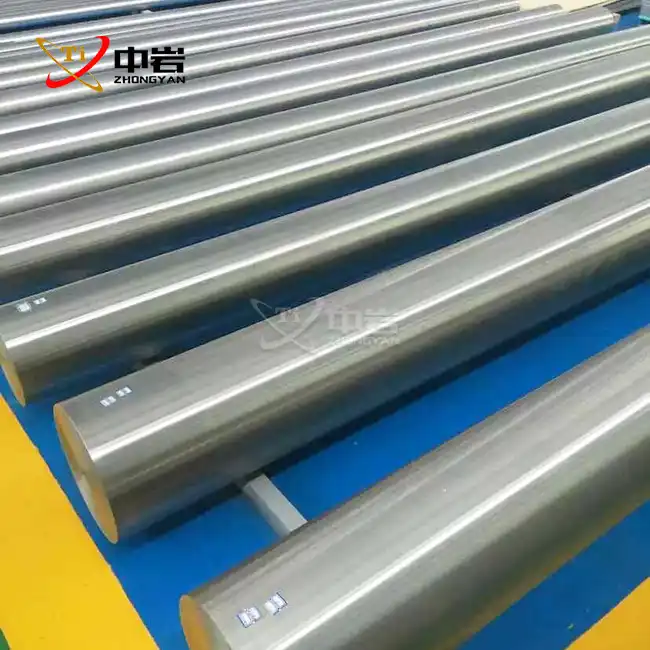
When engineers and procurement managers evaluate materials for critical applications, understanding the mechanical properties of Gr2 titanium round bar becomes paramount. Grade 2 commercially pure titanium delivers a minimum tensile strength of 344 MPa and yield strength of 275 MPa under standard ASTM B348 specifications, combined with elongation values exceeding 20%. This unique balance of moderate strength, exceptional ductility, and outstanding corrosion resistance makes it the preferred choice for industries demanding reliable performance in aggressive environments. The material's density of approximately 4.51 g/cm³ offers significant weight savings compared to steel while maintaining structural integrity across diverse operational conditions.
Understanding GR2 Titanium Round Bar: Composition and Production
Chemical Composition and Purity Standards
How effectively the gr2 titanium round bar works depends on its chemical composition. The impurities in this commercially pure titanium are carefully handled and make up over 99%. Steel is stronger without losing flexibility since its oxygen content is typically 0.18%–0.25%. Carbon, nitrogen, and hydrogen are low, while iron is sub 0.30%. Specific controls over the material's composition ensure that it fulfills ASTM B348 and ISO 5832-2 standards for industrial and medical products. Material tracking documentation is included with every Zhongyan batch. Procurement teams may examine chemical composition using approved mill test reports. This transparency overcomes supply chain issues for aerospace and medical device manufacturers who require safe materials.
Manufacturing Process and Quality Control
The final mechanical properties of Gr2 titanium round bar are greatly influenced by the manufacturing process. Vacuum arc remelting (VAR) removes impurities and assures block substructure uniformity. In a regulated environment, the metal melts without impurities that might damage its corrosion resistance or mechanical performance. After the initial melt, hot forging carefully deforms the material to smooth the grain structure and enhance mechanical qualities. The cold-drawn finishing procedure at Zhongyan produces a smooth, shining surface with exact dimensions (h9 grade) for precision cutting. Annealing reduces residual tensions and makes the material more flexible for tough construction.
Key Specifications and Dimensional Standards
Precision in measurements affects part performance and efficiency. Standard gr2 titanium round bar widths are 6mm to 250mm, although custom diameters are available. The 1000mm to 6000mm length range allows for a variety of cutting and assembling jobs. Purchases need weight calculations. With titanium's density of 4.51 g/cm³, a 10 mm bar weighs 0.35 kilogram per meter, whereas a 100 mm bar weighs 35 kg per meter. With these parameters, you can estimate cost and plan massive manufacturing runs. In addition to stocking typical sizes, Zhongyan provides speedy bespoke manufacture for non-standard sizes needed by R&D teams developing innovative products.
Core Mechanical Properties of GR2 Titanium Round Bar
Tensile and Yield Strength Characteristics
Tensile strength is the maximum force that an object can withstand before it breaks. Grade 2 economically pure titanium has a minimum tensile strength of 344 MPa, but the real strength is usually between 380 and 450 MPa, based on how it is processed. This amount of strength is higher than that of many aluminum alloys, but it has a much smaller density than alternatives made of stainless steel. For gr2 titanium round bar, the minimum yield strength, which is the stress level at which lasting distortion starts to happen, is usually 275 MPa. This feature controls the design process for load-bearing uses that need to keep their dimensions stable under stress. The relationship between yield strength and tensile strength shows how predictable a material is during forming operations. This is a very important thing for makers to think about when they are planning complicated CNC machining routines. When we make things at Zhongyan, we can use special cold-working methods to raise the tensile strength above 900 MPa for uses that need better performance. These advanced types keep titanium's basic corrosion resistance, which makes it valuable while also meeting the strict requirements for aircraft parts.
Ductility, Elongation, and Formability
Material elongation indicates how far it can stretch before breaking. The normal Gr2 titanium round bar may expand 20–25% over a 50 mm gauge length. This allows complex shaping operations, including deep drawing, bending, and tube development, without cracking or work hardening. A reduction in area, generally over 30% for Grade 2 titanium, indicates flexibility. This characteristic helps determine how effectively something operates under tensile tension or contact. With the correct strength and flexibility, designers may leverage a material's forms to conserve material and ensure safety. Formability goes beyond room-temperature performance. Hot-forming may be utilized for badly deformed titanium pieces because it becomes more flexible at high temperatures. However, atmospheric control maintains the surface clean throughout high-temperature processing. We've improved this at our Baoji factory over the decades.
Hardness Levels and Surface Properties
Hardness indicates wear resistance and machineability. Grade 2 titanium has 70–100 HRB (Rockwell B) or 140–200 HV. Though softer than martensitic stainless steels, its hardness resists galling, making it ideal for threaded bolts and sliding contact. Its appearance and performance depend on the surface polish. Our polished gr2 titanium round bar is ideal for low-friction and cleaning applications due to its surface roughness value below Ra 0.8 μm. Bright annealed surfaces remove oxide scale and shine, making them ideal for architectural and medical devices. Consider how work hardening impacts machine operations. Titanium's poor heat transmission causes cutting-edge heat to build up, speeding tool wear. Slower cutting rates and positive rake angles allow you to remove material fast without affecting surface quality.
Fatigue Resistance and Cyclic Loading Performance
Fatigue strength indicates a part's durability after repeated loading and unloading. Grade 2 titanium can only sustain entirely reversed loads due to its durability limitations being half its maximum tensile strength. Titanium is less dense than many aluminum alloys, yet its performance is comparable to heat-treated metal steels. Stress focus elements greatly impact exhausted lives. Crack initiation susceptibility depends on surface polish, notch form, and residual stress. Zhongyan's fine grinding and polishing remove surface flaws, making repeat-use items like spinning shafts and pressure tank connectors more durable. Study how the environment affects fatigued behavior. Gr2 titanium round bar has exceptionally good fatigue resistance in acidic situations, where steel would fail, hydrogen absorption may limit its fatigue life. Foreign and chemical tools last longer with the correct materials and environmental conditions.
Corrosion Resistance in Aggressive Environments
Natural titanium dioxide layer development provides great corrosion prevention. When damaged, its passive layer heals quickly, protecting it from pitting and crevice rust in chloride-rich areas where stainless steels fail. Grade 2 titanium components don't react with saltwater, moist chlorine, or hypochlorite solutions, which break down other materials fast. Unlike other corrosion-resistant metals, titanium doesn't react with oxidizing acids. Nitric acid concentrations up to 70% don't cause significant material loss at boiling temperatures; pricey exotic metals may be employed to make heat exchangers and reactor vessels. This absence of chemical activity extends shelf life and eliminates food and drug contamination. Galvanic corrosion affects material matching. Titanium is anodic to most structural metals since it is a noble galvanic metal. Steel or aluminum items electrically connected to titanium may corrode more quickly. Mixed with platinum, graphite, or noble metals, titanium doesn't alter. This allows engineers to create hybrid parts that combine the advantages of many materials. Zhongyan provides comprehensive application engineering assistance to address these design difficulties and choose the finest materials for complex systems.
Comparing GR2 Titanium Round Bar to Other Metals and Titanium Grades
Grade 2 versus Grade 5 Titanium Alloy
The most common titanium alloy is Grade 5 titanium (Ti-6Al-4V), which has tensile strengths of over 900 MPa thanks to its aluminum-vanadium alloying and heat treatment reaction. This extra strength is good for aircraft structures and high-performance sports equipment, but it means that Grade 2 can't be shaped as easily or fight corrosion as well. Buying Grade 5 usually costs 30–50% more than buying Grade 2, because it has more alloying elements and needs to be processed in a more complicated way. When making parts, the gr2 titanium round bar is better for welding. The single-phase alpha microstructure in Grade 2 can be welded without any post-weld heat treatment. However, the alpha-beta structure in Grade 5 might need thermal processing to get its qualities back to their best. This difference has a big effect on how much pressure tanks, piping systems, and structural frames cost to make and how long it takes to make them. Cryogenic uses show what's good about Grade 2. While Grade 5 stays tough enough at low temperatures, Grade 2 actually gets stronger at cryogenic temperatures without weakening. This makes it perfect for use in LNG systems, aircraft fuel systems, and superconducting magnet structures. Zhongyan regularly sends approved cold materials to some of the world's biggest energy infrastructure projects.
Titanium versus Stainless Steel Performance
Comparing titanium's strength to weight shows its technological advantages. Grade 2 titanium has double the strength/density ratio of 316 stainless steel. This allows lighter parts, which saves fuel in transportation and makes huge parts simpler to install and maintain. In seawater, titanium resists corrosion better. In typical saltwater, 316 stainless steel is robust, but pitting happens when temperatures increase or conditions remain the same. Titanium can withstand Arctic waters and tropical thermal discharge zones. Durability eliminates costly inspection and replacement. The increased material prices are justified by lifecycle cost analysis. When designing parts exposed to temperature variations, thermal expansion factors are important. Titanium's expansion rate (8.6 × 10⁻⁶/°C) is comparable to ceramics and glasses. This enables secure seals and joints in areas where stainless steel's greater expansion rate (17 × 10⁻⁶/°C) may cause leaks or mechanical failure. Ti is helpful for optical systems, semiconductor equipment, and precision instruments due to its dimensional stability.
Titanium versus Aluminum Alloy Applications
These lightweight construction materials operate well at high temperatures, making them unique. Aluminum metals lose power over 150°C, whereas Gr2 titanium round bar lasts until 315°C. This makes it suitable for heat exchanges, exhaust systems, and industrial processing equipment. With this temperature range, smaller forms may be made with less cooling. Comparing stiffness alters structural design. Titanium has 105 GPa elastic stiffness, making it more rigid than aluminum (70 GPa) for the same cross-section. This feature reduces precision equipment deflection, improves machinery vibration, and allows smaller pressure tanks, which offsets titanium's higher material cost by reducing weight. Biocompatibility criteria favor titanium in medicine. Grade 2 titanium is used for surgical implants, dental fixes, and artificial parts since it is tissue-compatible and bone-integrated. Some aluminum alloys aren't effective in medicine. Medical-grade materials are produced separately by Zhongyan. This tracks materials and meets FDA and ISO 13485 requirements, which device manufacturers need.
Procurement Considerations for GR2 Titanium Round Bar
Supplier Certification and Quality Assurance
Trustworthy providers must have ISO 9001:2015 quality control certification. However, cautious procurement teams should examine for additional business-critical licenses. AS9100 accreditation indicates an aerospace quality system, while ISO 13485 certification indicates medical device production. Zhongyan maintains several certifications to perform in demanding legal environments. Material traceability extends beyond mill test data. Documentation includes heat figures, independent lab studies to establish chemical composition, mechanical property testing, and non-destructive exams. This documentation is crucial for component failure investigations and regulatory checks. It protects manufacturers against lawsuits and indicates that they sought qualified suppliers. Supplier audit programs reveal a company's manufacturing capabilities. Site visits demonstrate modern manufacturing technology, quality control, and worker competence. Customers trust our Baoji plant to satisfy tough criteria since it's available to audits. Procurement staff may assess a supplier's competence by seeing vacuum melting, testing laboratories, and inventory management systems.
Custom Sizing and Bulk Order Strategies
Minimal order quantities reduce store expenses and provide the cheapest pricing. Standard diameter gr2 titanium round bar requires 100–500 kilograms of orders, whereas exotic sizes may need 1000 kg or more to meet manufacturing line expenditures. However, significant suppliers like Zhongyan are flexible with development quantities since what you see today might be utilized in production tomorrow. You must know how long materials will take to process and be accessible to create correct lead time plans. Stock sizes may be sent within days, but bespoke lengths, surface treatments, and property testing can take 4–8 weeks. Blanket purchase orders with scheduled releases secure supplies and maximize working capital. Cost and wait time are determined by tolerance. Standard h9 precision (±0.025mm for 10mm diameter) is sufficient for most tasks, but h7 fine grinding is more time-consuming and costly. Working with competent suppliers during planning helps you acquire the highest tolerance standards and minimize over-specification, which boosts costs without enhancing functionality. Our technical team at Zhongyan helps clients combine design objectives and manufacturing costs.
Price Factors and Cost Analysis
The price of raw materials depends on energy prices, titanium sponge availability, and global demand. Current prices indicate that titanium is a specialized material that costs more than metals. Lifetime cost analysis reveals strong economics when corrosion replacement costs, maintenance times, and component lifetimes are included. The pricing depends on processing difficulty. Hot-rolled mill-scale materials are cheaper than cold-drawn bars with precise specifications and polished ends. Annealing, particular testing, and small production quantities impactthe cost per kilogram. Transparent vendors detail expenses, helping buyers save. Pricing improves with volume promises. Due to decreased sales expenses and manufacturing efficiency, annual blanket orders for predicted consumption earn better rates. Zhongyan negotiates competitive costs and consistent supply with consumers. They do this because long-term relationships benefit everyone.
Practical Applications and Benefits of Using GR2 Titanium Round Bar
Aerospace Component Manufacturing
Titanium's resistance to rust and light weight make it useful for parts of aircraft hydraulic systems. Machined actuator rods, valve bodies, and fluid line fittings from gr2 titanium round bar remove corrosion concerns while lowering the empty weight of the airplane. This directly improves fuel economy and payload capacity. Because the material is compatible with hydraulic oils and fire-resistant phosphate esters, it will last for a long time without breaking down. Titanium's strength-to-weight ratio and resistance to galling make it a good choice for fastener uses in aircraft structures. Grade 2 material is used to make bolts, screws, and threaded inserts that keep their pressure when temperatures change and don't seize up during assembly and repair work. These qualities are especially useful for attaching composite structures, where the weight of metal fasteners causes big design problems. Titanium is used for engine gear parts like clamps, supports, and sensor housings because it can withstand high temperatures and harsh environments. Although stronger metals are needed for the main parts of an engine, Grade 2 is better for the smaller parts because it has a good mix of properties and can be machined easily. Leading aerospace machine shops buy precision blanks from Zhongyan. These blanks make it possible for CNC cutting and turning to make complex shapes quickly.
Medical and Dental Devices
Biocompatible titanium is used to produce surgical equipment since it doesn't react with bacteria. Retractors, forceps, and other surgical instruments constructed of Gr2 titanium round bar may be autoclaved repeatedly without deterioration. Its rigidity allows precise surgical manipulation, and its non-magnetic nature prevents MRI machine malfunctions. Dental implants may be titanium's most common medical usage. Grade 2 material has good osseointegration, so bone cells may connect to implants. Prosthetic supports and repair caps are made from precision-ground bars for appropriate fit and durability. Dental equipment producers may trust our medical-grade material's ASTM F67 quality. Titanium may be used for bone screws, spine bolts, and joint replacements since it mechanically matches bone. Its elastic modulus is closer to bone than stainless steel. Stress buffering effects that diminish implant stability over time are less frequent. Zhongyan separates manufacturing and testing facilities for medical equipment to comply with tight requirements.
Chemical Processing and Marine Engineering
Heat exchanger tube bundles and shell pieces in corrosive process streams employ grade 2 titanium. Seawater cooling systems, chlor-alkali plants, and fertilizer manufacturing facilities employ titanium because it resists chloride stress corrosion cracking. Small heat exchangers are conceivable because the material permits more corrosion and longer service durations without tube bundle replacement. Titanium resists wear and corrosion in high-velocity fluid use, making it excellent for pump shafting. Centrifugal pumps for abrasive slurries, cavitating liquids, and dangerous chemicals may last longer using gr2 titanium round bar shafts. In tough duty cycles, the material's fatigue resistance makes it dependable. Offshore platform bolts, piping systems, and structural elements are made of salt-resistant titanium. The materials cost more than carbon steel, but without cathodic protection systems, coating requirements, or corrosion tests, they have superior lifetime economics. Zhongyan certifies materials and provides technical assistance for parts in large energy construction projects worldwide.
Industrial Machinery and Automation Systems
Titanium's purity and stability are essential for precise semiconductor equipment parts. Gr2 titanium round bar is used to make parts of robot arms, wafer handling tools, and process chambers. The substance isn't magnetic, but precision positioning tools work well. Due to its resistance to corrosion in damp, chemically active circumstances, titanium is ideal for textile equipment parts. Loom parts, coloring equipment rollers, and finishing machine parts last longer and prevent metal contamination of treated textiles. The flat material surface protects fibers and improves product quality. Titanium instruments used in food and pharmaceuticals production can withstand numerous cleaning cycles. Agitators, valve stems, and vessel fittings made from Grade 2 bars can withstand severe cleaning agents and high-temperature sterilization without rusting or dirtying. Polished Zhongyan surfaces fulfill hygienic design requirements. Controlled sectors that must always be clean find validation simpler.
Conclusion
Gr2 titanium round bar is the best material for tough industrial uses because of its superior mechanical qualities, which include a minimum tensile strength of 344 MPa, excellent ductility (more than 20% extension), and unrivaled corrosion resistance. When engineers and procurement workers know about these properties, they can make choices that combine performance needs with cost concerns. The material has a history of being used successfully in aircraft, medicine, chemical processing, and the marine industry, showing that it is flexible and reliable even in the toughest circumstances. Whether you need to reduce weight, make something resistant to rust, or make it biocompatible, Grade 2 commercially pure titanium can help. It does this by making parts last longer, lowering upkeep costs, and making operations safer.
FAQ
What distinguishes Grade 2 from other commercially pure titanium grades?
The "workhorse" of available pure titanium is Grade 2, which has the best mix of strength and formability. Although Grade 1 is slightly more flexible than Grade 2, it is also weaker; Grades 3–4 are stronger but less flexible; and Grade 2 is in the middle and can be used in the widest range of situations. Its minimum tensile strength of 344 MPa is higher than Grade 1, and it can be welded and cold formed better than higher grades.
Is it possible to weld Gr2 titanium round bar without following any special steps?
Grade 2 titanium is easy to join together using TIG or plasma arc welding. Higher-strength metals need to be heated after the weld, but Grade 2's single-phase microstructure keeps its qualities even after the weld is complete. However, inert gas protection (argon or helium) is needed to keep oxygen and nitrogen from the air from contaminating weld zones and making them less strong. When you properly purge the weld root, you get parts that are flexible and resistant to rust that match the performance of the base material.
How does weather change the mechanical qualities of Grade 2 titanium?
The basic qualities of a material are those that are at room temperature. At freezing temperatures, the yield and tensile strengths go up by about 20% while the flexibility stays the same. When temperatures are raised to 315°C, they slowly weaken the material. At the highest working temperature, the qualities weaken by about 30%. After 430°C, rusting starts to happen, which limits the amount of time that something can be exposed to it without protection. When designing parts for thermal cycling uses, these temperature relationships need to be taken into account.
Partner with Zhongyan for Premium GR2 Titanium Round Bar Supply
When you need titanium material, Zhongyan can help. They can do a wide range of industrial tasks, including CNC machining, precision grinding, and special material processing. Our Baoji plant has both high-tech production tools and decades of experience working with titanium. This makes sure that every gr2 titanium round bar meets strict international standards like ASTM B348, ISO 5832-2, and customer-specific needs. As a reliable provider and maker, we can offer reasonable prices on both small sample orders and large production runs. We also offer full material tracking and quick technical support. You can email our team at sales@titaniumstudy.com to talk about your unique application needs, get material approvals, or get quotes for your next project that needs reliable, high-performance titanium materials.
References
1. Boyer, R., Welsch, G., & Collings, E.W. (1994). Materials Properties Handbook: Titanium Alloys. ASM International, Materials Park, Ohio.
2. Donachie, M.J. (2000). Titanium: A Technical Guide, 2nd Edition. ASM International, Materials Park, Ohio.
3. Lutjering, G. & Williams, J.C. (2007). Titanium, 2nd Edition. Springer-Verlag, Berlin Heidelberg.
4. ASTM International. (2021). ASTM B348-21: Standard Specification for Titanium and Titanium Alloy Bars and Billets. West Conshohocken, Pennsylvania.
5. Schutz, R.W. & Watkins, H.B. (1998). Recent developments in the application in the energy industry. Materials Science and Engineering A, 243(1-2), 305-315.
6. Peters, M., Kumpfert, J., Ward, C.H., & Leyens, C. (2003). Titanium Alloys for Aerospace Applications. Advanced Engineering Materials, 5(6), 419-427.
_1755674651182.jpg)
Learn about our latest products and discounts through SMS or email