- English
- French
- German
- Portuguese
- Spanish
- Russian
- Japanese
- Korean
- Arabic
- Greek
- German
- Turkish
- Italian
- Danish
- Romanian
- Indonesian
- Czech
- Afrikaans
- Swedish
- Polish
- Basque
- Catalan
- Esperanto
- Hindi
- Lao
- Albanian
- Amharic
- Armenian
- Azerbaijani
- Belarusian
- Bengali
- Bosnian
- Bulgarian
- Cebuano
- Chichewa
- Corsican
- Croatian
- Dutch
- Estonian
- Filipino
- Finnish
- Frisian
- Galician
- Georgian
- Gujarati
- Haitian
- Hausa
- Hawaiian
- Hebrew
- Hmong
- Hungarian
- Icelandic
- Igbo
- Javanese
- Kannada
- Kazakh
- Khmer
- Kurdish
- Kyrgyz
- Latin
- Latvian
- Lithuanian
- Luxembou..
- Macedonian
- Malagasy
- Malay
- Malayalam
- Maltese
- Maori
- Marathi
- Mongolian
- Burmese
- Nepali
- Norwegian
- Pashto
- Persian
- Punjabi
- Serbian
- Sesotho
- Sinhala
- Slovak
- Slovenian
- Somali
- Samoan
- Scots Gaelic
- Shona
- Sindhi
- Sundanese
- Swahili
- Tajik
- Tamil
- Telugu
- Thai
- Ukrainian
- Urdu
- Uzbek
- Vietnamese
- Welsh
- Xhosa
- Yiddish
- Yoruba
- Zulu
What Are the Key Benefits of Using Titanium Pyramid Adapter Components?
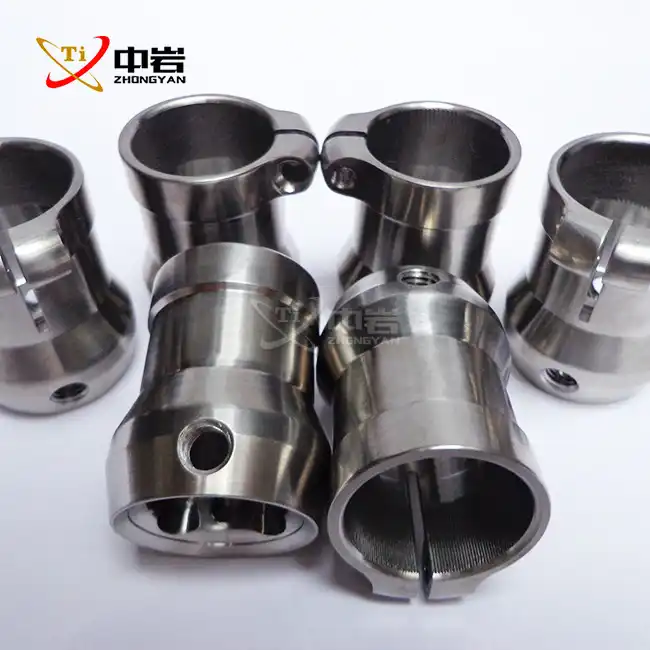
Titanium pyramid adapters are a big step forward in precision engineering for fields that need high longevity and performance in tough circumstances. These parts, which are made from Grade 5 titanium metal (Ti-6Al-4V), have the best strength-to-weight ratio that aluminium and steel can't beat. Titanium pyramid adapters are better at resisting rust, wear over time, and staying stable at high temperatures. They can be used in aircraft structural parts, medical replacement systems, or industrial gear. For procurement managers and engineering teams looking for solid interface solutions, these features directly lead to longer service lives, fewer repair gaps, and lower total costs of ownership.
Understanding Titanium Pyramid Adapters: Composition, Functionality, and Applications
What Makes Titanium Pyramid Adapters Unique?
Titanium pyramid adapters are precision-machined interface parts that are used to link flexible systems in a wide range of industrial settings. The pyramid shape, which has a standard curved interface, lets the angles be changed, and the different parts of the structure stay together securely. Medical-grade titanium alloys are different from other adapter materials because they have a tensile strength of over 895 MPa and a mass that is about 45% lower than stainless steel.
Core Functional Advantages
Across many businesses, the flexible pyramid form is very useful for many important tasks. In aircraft use, these adapters help keep engine mounts and structure frames from vibrating, which keeps sensitive electronics from being damaged by mechanical stress. Medical device makers use pyramid adapters in replacement systems so that orientation and spin can be changed without taking the whole system apart. When connecting reactor tanks that are exposed to harsh media, chemical processing plants count on their high resistance to rust. Pyramid connections are now universally standardised, so tools from different makers can work with each other. This makes purchasing easier for global supply chain managers.
Industry Applications and Use Cases
Aerospace engineering teams choose titanium spacers for landing gear parts because they reduce weight in a way that doesn't hurt the structure's strength. Medical prosthetists use these parts for trans-tibial and trans-femoral prostheses because they are biocompatible and lightweight, which makes it easier for patients to move around. Titanium pyramid adapters are better than aluminium ones for industrial machinery workers who work in saltwater because the naturally occurring oxide layer stops seawater corrosion that would otherwise put equipment safety at risk. They are used by companies that make electronics in sputtering target mounting systems, which need to be able to handle high temperatures and vacuums in order to make semiconductors.
Core Benefits of Titanium Pyramid Adapters for B2B Users
Superior Durability and Extended Service Life
Titanium metal fittings are very resistant to wear, so they will work well even after millions of load cycles. Testing by engineers has shown that titanium keeps its shape under repeated stress conditions that make aluminium parts work harder and then break suddenly. This edge in longevity is especially useful in aircraft applications where a broken part could have absolutely terrible results. Managers in charge of buying things know that investing more in titanium adapters at the start can save a lot of money in the long run because they don't need to be replaced as often and don't need to be shut down for repair.
Unmatched Corrosion Resistance
When looking at how well materials work in difficult conditions, titanium pyramid adapters do better than standard options in several ways:
- Chemical Resistance: Titanium surfaces naturally make a passive oxide film that protects them from most industrial chemicals, acids, and alkaline solutions that are common in processing areas.
- Marine Environment Performance: Companies that make offshore equipment choose titanium adapters because they don't rust or pit like steel and aluminium parts do when they're exposed to saltwater.
- High-Temperature Stability: Titanium keeps its mechanical qualities at high temperatures, while steel and aluminium quickly lose their strength.
- Galvanic Compatibility: When titanium is joined with metals that are not the same, it has a lower galvanic corrosion potential than aluminium, which speeds up the breakdown of the material.
Because of their rust resistance, these materials don't need protective coverings that are heavy, hard to make, and need to be reapplied often during their useful life. Managers of chemical processing plants like this benefit when they are choosing parts for reactors that will be used with acidic media.
Optimal Strength-to-Weight Ratio
The fact that titanium pyramid adapters are strong but not too heavy has real practical benefits. Aerospace engineers meet goals for mass reduction that improve the speed and fuel economy of aeroplanes without losing the safety margins needed for approval. Medical gadget companies make artificial systems that help amputees walk with less effort, which directly improves their quality of life. Designers of industrial equipment lower the moment of inertia in spinning units. This lets them speed up and control motion more precisely.
Enhanced Vibration Isolation Capabilities
Precision CNC cutting lets you keep the dimensions of two objects very close to each other so they fit together perfectly. This level of accuracy in production directly leads to better sound reduction. Titanium adapters are used in high-fidelity speaker systems because the material's acoustic qualities cut down on unwanted vibration that lowers sound quality. Operators of manufacturing equipment know that good vibration separation increases the life of bearings and boosts product quality by reducing tool chatter during precise cutting.
Titanium Pyramid Adapter vs. Alternatives: A Comparative Guide for Decision-Makers
Performance Comparison Across Material Options
When buying, workers look at adapter materials; knowing how they compare in terms of performance helps them make the best choices. In the beginning, aluminium fittings are less expensive, but they don't last long and can rust in tough settings. Stainless steel is good at resisting rust, but it's heavy, which makes the system less effective. Carbon fibre composites have great strength-to-weight ratios, but they have anisotropic qualities that make stress analysis harder and can cause them to delaminate when loaded over and over again.
Titanium pyramid adapters are at the top of the market because they are very light, last a long time, don't rust, and have consistent isotropic mechanical qualities. Titanium metals require specialised knowledge to work with, which explains why the material and machining costs are higher. However, lifetime research constantly shows that they have a lower total cost of ownership than options that need to be replaced more often.
Technical Specification Considerations
When choosing a material, it's important to make sure that the adapter specs match the working needs. Titanium adapters made from Grade 5 metal can usually support patients weighing between 100 kg and 166 kg in medical settings. The exact load rates are based on the physical form and ISO P-level approval. For aerospace uses, different types of titanium may be needed that work best at high temperatures. Managers in charge of buying things should make sure that sellers give them material certificates that show what the metal is made of, how it works, and that it meets ASTM and AMS standards.
Long-Term Value Proposition
Choosing titanium fittings relies on the needs of the product and a study of the total cost. Titanium adapters are a great way to save money in industries where broken parts could put people in danger or where the cost of new labour is higher than the cost of the materials. Corrosion protection that extends service times is useful in naval setups or manufacturing settings that use harsh chemicals. Applications where lowering weight improves efficiency or lowers energy use support the higher cost of titanium building.
Procurement Considerations for Titanium Pyramid Adapters in B2B Markets
Supplier Evaluation Criteria
Partnering with qualified manufacturers ensures product quality and supply chain reliability. Procurement managers should evaluate suppliers based on several critical factors. Manufacturing capability assessment includes verification of CNC machining equipment precision, quality control procedures, and production capacity to meet volume requirements. Certification documentation should demonstrate ISO 9001:2015 compliance along with material certifications tracing titanium alloy composition to mill test reports. Technical expertise evaluation considers engineering support capabilities for custom design assistance and application-specific optimisation.
Customisation and OEM Solutions
Standard pyramid adapter geometries accommodate many applications, but complex assemblies often require tailored solutions. Reputable suppliers offer OEM and ODM services enabling dimensional modifications, custom thread specifications, and specialised surface treatments. Engineering teams benefit from collaborative design relationships where manufacturers provide finite element analysis support to validate adapter performance under specific loading conditions. Custom packaging solutions protect components during international shipping and facilitate efficient inventory management for high-volume production environments.
Quality Assurance and Compliance
Manufacturing titanium adapters to precise specifications demands rigorous quality control throughout production processes. Effective suppliers implement inspection protocols at each manufacturing stage, from raw material receipt through final dimensional verification. Statistical process control methods identify trends before dimensional drift produces nonconforming parts. Third-party testing validates mechanical properties and corrosion resistance claims. Comprehensive documentation packages provide traceability linking finished components to source material certifications, satisfying regulatory requirements in aerospace and medical device industries.
Installation, Maintenance, and Longevity Tips for Titanium Pyramid Adapters
Proper Installation Procedures
Achieving optimal adapter performance requires adherence to installation best practices. Mating surfaces must be thoroughly cleaned to remove contaminants that could prevent full mechanical engagement or accelerate corrosion. Thread lubricants compatible with titanium should be applied to fasteners to prevent galling during tightening. Torque specifications typically range from 12 Nm to 15 Nm depending on adapter geometry, and calibrated torque wrenches ensure consistent clamping force. Thread-locking compounds like Loctite 242 prevent vibration-induced loosening during service.
Routine Maintenance Protocols
Titanium pyramid adapters require minimal maintenance compared to alternative materials, but periodic inspection ensures continued reliability. Visual examination every six months identifies potential issues such as thread wear, impact damage, or surface deformation. Cleaning procedures remove accumulated debris without damaging protective oxide layers. Torque verification confirms that fasteners maintain proper clamping force. Wear indicators include fretting marks at contact interfaces or dimensional changes detectable through precision measurement.
Troubleshooting Common Issues
Operational teams occasionally encounter adapter-related problems that proper diagnosis can resolve. Excessive vibration transmission may indicate inadequate torque on fasteners or contamination preventing full surface contact. Alignment difficulties often result from thread damage or dimensional inconsistencies in mating components. Cold welding between titanium fasteners and adapters can occur when insufficient lubrication combines with high clamping loads. These issues typically respond to corrective actions such as fastener replacement, surface preparation, or lubrication protocol adjustments.
Conclusion
Titanium pyramid adapters represent precision-engineered solutions that deliver measurable performance advantages across aerospace, medical, industrial, and chemical processing applications. The combination of exceptional strength-to-weight ratio, comprehensive corrosion resistance, and superior fatigue endurance justifies premium investment through extended service life and reduced maintenance requirements. Procurement professionals evaluating adapter materials should consider total lifecycle costs rather than initial purchase price alone, recognising that titanium components consistently demonstrate superior long-term value in demanding operational environments where reliability directly impacts equipment performance and safety.
FAQ
Why does titanium outperform aluminium in pyramid adapter applications?
Titanium provides significantly better fatigue resistance, enabling reliable performance through millions of load cycles where aluminium components would experience work-hardening and eventual failure. The corrosion resistance of titanium eliminates the protective coatings required for aluminium, reducing maintenance complexity. Although aluminium offers lower initial cost, the extended service life and reduced replacement frequency of titanium adapters deliver better total cost of ownership in most industrial applications.
Are titanium pyramid adapters compatible with diverse equipment types?
Most manufacturers follow universal industry standards for pyramid geometry and dimensional specifications, ensuring broad compatibility across equipment from different sources. The standard 30mm pylon diameter and four-hole mounting pattern accommodate typical interface requirements. Heavy-duty applications supporting loads exceeding 150kg may require reinforced adapter geometries with matched receiver clamps. Consulting with suppliers about specific compatibility requirements ensures optimal component selection for particular assembly configurations.
What warranty and support do suppliers provide?
Reputable manufacturers like Zhongyan back titanium pyramid adapters with comprehensive quality guarantees and technical support services. Material certifications document alloy composition and mechanical properties compliance with ASTM and AMS standards. Engineering assistance helps optimise adapter specifications for custom applications. Responsive customer service addresses installation questions and troubleshoots operational issues. Procurement managers should verify warranty terms and support availability when evaluating potential suppliers.
Partner with Zhongyan for Premium Titanium Pyramid Adapter Solutions
Zhongyan specialises in manufacturing custom titanium pyramid adapters that meet the stringent requirements of aerospace, medical, industrial, and chemical processing industries. Located in China's Titanium Valley, our advanced CNC machining capabilities produce components with exceptional dimensional precision from Grade 5 titanium alloy. Our strict quality control procedures ensure every adapter complies with ISO 9001:2015 standards and relevant international specifications, including ASTM and AMS requirements. We offer flexible OEM and ODM solutions accommodating various sizes, custom geometries, and specialised surface treatments tailored to your exact application needs. As an experienced titanium pyramid adapter manufacturer, we provide technical support throughout the procurement process, from initial specification review through production and delivery. Contact our engineering team at sales@titaniumstudy.com to discuss your requirements and discover how Zhongyan's titanium expertise delivers reliable, high-performance components that reduce your total cost of ownership.
References
1. American Society for Testing and Materials (ASTM). "Standard Specification for Titanium and Titanium Alloy Bars and Billets." ASTM B348, 2020.
2. Aerospace Material Specification (AMS). "Titanium Alloy, Bars, Wire, Forgings, Rings, and Drawn Shapes 6Al-4V Annealed." AMS 4928, 2019.
3. International Organisation for Standardisation (ISO). "Structural Testing of Lower-Limb Prostheses." ISO 10328, 2016.
4. Peters, M., Kumpfert, J., Ward, C.H., and Leyens, C. "Titanium Alloys for Aerospace Applications." Advanced Engineering Materials, Vol. 5, No. 6, 2003, pp. 419-427.
5. Donachie, Matthew J. "Titanium: A Technical Guide, 2nd Edition." ASM International, 2000.
6. Boyer, R., Welsch, G., and Collings, E.W. "Materials Properties Handbook: Titanium Alloys." ASM International, 1994.
_1755652433231.jpg)

Learn about our latest products and discounts through SMS or email