- English
- French
- German
- Portuguese
- Spanish
- Russian
- Japanese
- Korean
- Arabic
- Greek
- German
- Turkish
- Italian
- Danish
- Romanian
- Indonesian
- Czech
- Afrikaans
- Swedish
- Polish
- Basque
- Catalan
- Esperanto
- Hindi
- Lao
- Albanian
- Amharic
- Armenian
- Azerbaijani
- Belarusian
- Bengali
- Bosnian
- Bulgarian
- Cebuano
- Chichewa
- Corsican
- Croatian
- Dutch
- Estonian
- Filipino
- Finnish
- Frisian
- Galician
- Georgian
- Gujarati
- Haitian
- Hausa
- Hawaiian
- Hebrew
- Hmong
- Hungarian
- Icelandic
- Igbo
- Javanese
- Kannada
- Kazakh
- Khmer
- Kurdish
- Kyrgyz
- Latin
- Latvian
- Lithuanian
- Luxembou..
- Macedonian
- Malagasy
- Malay
- Malayalam
- Maltese
- Maori
- Marathi
- Mongolian
- Burmese
- Nepali
- Norwegian
- Pashto
- Persian
- Punjabi
- Serbian
- Sesotho
- Sinhala
- Slovak
- Slovenian
- Somali
- Samoan
- Scots Gaelic
- Shona
- Sindhi
- Sundanese
- Swahili
- Tajik
- Tamil
- Telugu
- Thai
- Ukrainian
- Urdu
- Uzbek
- Vietnamese
- Welsh
- Xhosa
- Yiddish
- Yoruba
- Zulu
Titanium Slip-On Flanges: Why Are They So Widely Used Today?
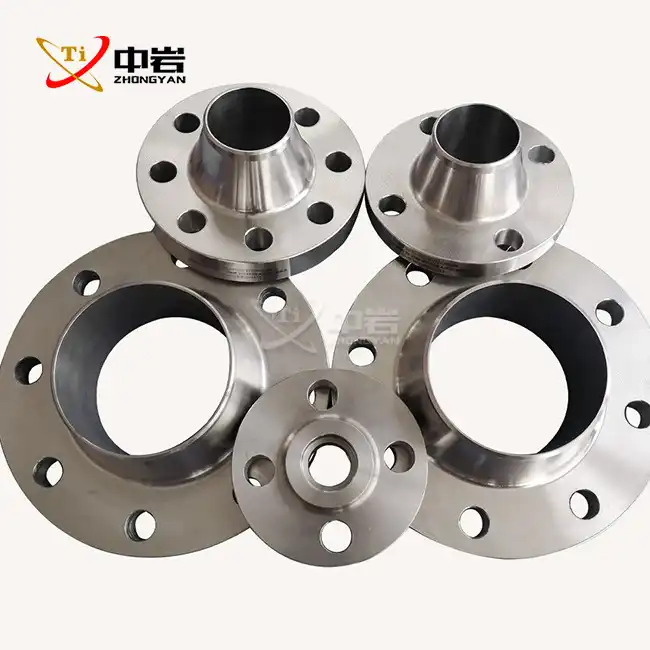
Titanium slip-on flanges are now essential piping components in critical industrial systems because they resist corrosion exceptionally well, have a remarkable strength-to-weight ratio, and perform reliably in harsh operating conditions. Industries ranging from offshore oil and gas to chemical processing now prioritise these flanges to reduce maintenance expenses, extend equipment lifespan, and eliminate corrosion-related failures that compromise safety and profitability. Their design simplifies installation while maintaining leak-proof integrity, making them the preferred choice for engineers and procurement teams managing complex piping infrastructure.
Understanding Titanium Slip-On Flanges?
What Makes the Design Unique
Titanium slip-on flanges feature a distinctive construction where the flange bore is slightly larger than the pipe's outer diameter, allowing the flange to slide onto the pipe end before welding. This design provides substantial advantages during field installation, particularly in environments where precise pipe cutting proves challenging. The dual fillet weld—one applied internally and another externally—creates a robust, leak-resistant seal that meets stringent pressure requirements. Unlike weld neck flanges that demand precise machining and alignment, slip-on configurations reduce installation time and labour costs while maintaining structural integrity.
Material Properties That Matter
We manufacture our slip-on flanges primarily from Titanium Grade 2 (ASTM B381), a commercially pure titanium alloy recognised for its superior corrosion resistance and excellent formability. This material exhibits a tensile strength ranging from 345 to 480 MPa while maintaining a density approximately 45% lighter than stainless steel. The exceptional resistance to chloride-induced stress corrosion cracking makes these flanges invaluable in marine and chemical processing applications. Grade 2 titanium withstands temperatures from -196°C to 315°C, providing operational flexibility across diverse industrial scenarios. Our manufacturing process ensures compliance with ASTM, AMS, and ISO standards, guaranteeing material traceability and consistent quality for procurement managers who require certification documentation.
Standard Specifications and Sizing
From 1" to 24" in diameter and 150# to 300# in pressure ratings that meet ANSI requirements, our product selection covers it all. The flange thickness can be adjusted from 10 to 30 mm to meet the pressure requirements and wall schedules of different types of pipes. Standard roughness values range from 32 to 63 Ra (μm), and we provide both matte and polished surface finishes. However, for certain uses, we can also accommodate unique finishing criteria. In terms of hardness, the flanges fall anywhere between 160 and 220 HV, which is ideal for both wear resistance and welding. Enabling smooth connection with current systems and meeting both imperial and metric measurement requirements, this standardised sizing matches with worldwide piping infrastructure.
Why are titanium slip-on flanges preferred in various industries?
Unmatched Corrosion Resistance in Aggressive Environments
Titanium flanges' exceptional resistance to corrosive media is the principal factor driving their extensive use. Seawater firewater systems on offshore oil and gas platforms are subject to microbial activity, oxygen, and seawater all the time, which causes carbon steel and even stainless steel components to corrode quickly. Unlike traditional materials, our titanium slip-on flanges create an oxide layer that repairs itself in an instant in the case of damage, protecting against pitting and crevice corrosion. In environments where even little corrosion may cause disastrous releases or contamination, these flanges are essential for chemical processing facilities that deal with bleach manufacturing lines, powerful oxidising acids, wet chlorine gas, and other similar substances.
Weight Reduction and Structural Benefits
Aerospace applications and offshore installations face stringent weight restrictions where every kilogram impacts fuel efficiency, load capacity, or installation logistics. Titanium flanges deliver the same mechanical strength as steel equivalents while reducing weight by nearly half, translating into lower transportation costs and simplified handling during construction. Desalination plants benefit from this weight advantage in large-diameter seawater intake systems, where hundreds of flanged connections would otherwise impose significant structural loads. The high strength-to-weight ratio also enables thinner wall designs without compromising pressure ratings, further optimising material usage and project economics.
Comparative Performance Analysis
When evaluated against stainless steel alternatives, titanium slip-on flanges demonstrate superior performance in chloride-rich environments where 316L stainless steel experiences localised corrosion and premature failure. Carbon steel flanges, despite lower initial costs, require expensive coatings and cathodic protection systems that increase the total cost of ownership while introducing maintenance liabilities. Aluminium flanges, though lightweight, lack the temperature resistance and mechanical strength necessary for high-pressure or elevated-temperature applications. Our experience with procurement managers across multiple industries confirms that titanium flanges consistently deliver lower lifecycle costs through extended service intervals, reduced downtime, and elimination of emergency replacement scenarios that disrupt production schedules.
Real-World Industrial Applications
Our titanium slip-on flanges have been an absolute game-changer in the following industries:
In subsea equipment, topside piping systems, and fire suppression networks, these flanges are widely used in offshore oil and gas activities. Their absolute reliability is demanded by the continual seawater exposure. When installing platforms, the slip-on design is especially helpful because field tolerances make precise pipe fitting difficult.
These parts are used in condenser systems, heat exchanger connections, reverse osmosis high-pressure pumps, and other desalination and power generation facilities. Even though traditional materials like copper-nickel alloys are quickly eroded and corroded by high-velocity brine flows, the flanges are resistant to this.
When dealing with caustic solutions, acidic chloride compounds, chlorine gas, and other aggressive media, chemical processing companies rely on titanium connections, especially in chlor-alkali operations. When exposed to oxidising environments, the flanges remain intact for months after other materials have failed.
Reduced aircraft mass and leak-free performance under vibration, heat cycling, and extreme altitude conditions are achieved by the use of titanium flanges in aerospace fuel systems and hydraulic assemblies.
The biocompatibility and simplicity of sterilisation of titanium make it an ideal material for use in the pharmaceutical and food processing sectors. Our polished-finish flanges are designed to exceed the most rigorous sanitary standards, ensuring that there is no chance of contamination or chemical leaching.
Titanium components have a higher initial cost, but industries with rigorous operational criteria are increasingly specifying them because of the large return on investment (ROI) they provide through improved dependability and decreased lifecycle expenses. These cases show why.
Installation and Maintenance Guide for Titanium Slip-On Flanges
Step-by-Step Installation Protocol
Before installing the pipe, make sure the ends are clean and clear of any debris that could affect the quality of the weld, such as oils or scale. The pipe end must be square and free of deformations and burrs. After putting the flange at the appropriate distance from the pipe end, slide it onto the pipe. Usually, there should be a one-eighth to one-quarter inch gap between the pipe end and the internal surface of the flange hub. Before finishing the entire fillet welds, tack weld the flange in two or four spots to ensure alignment. It is recommended to finish the external fillet weld before the inside weld in order to keep distortion to a minimum. We suggest using TIG welding with argon shielding and titanium filler wire that matches the grade of the base material. To keep the material's characteristics and avoid embrittlement, keep the interpass temperature below 150°C.
Common Installation Challenges and Solutions
When it comes to large-diameter applications or connecting to existing infrastructure, misalignment is the most common installation difficulty. Welding concentricity can be achieved with the use of alignment clamps and temporary spacers. Inadequate shielding gas coverage is a common cause of poor weld quality, as it allows air contaminants to cause brittle, discoloured welds. Purge gas systems and tail shields are used to protect the weld zone until it cools down below the oxidation temperature. When working in confined spaces, it might be difficult to access the inside of a weld, which is why the slip-on design is preferable to socket weld setups that require more room.
Maintenance Best Practices
Regular visual inspections should examine flange faces, bolt holes, and weld zones for signs of corrosion, mechanical damage, or leakage. The inherent corrosion resistance of titanium means surface preparation typically requires only periodic cleaning with mild detergent solutions; avoid chlorinated cleaning agents or abrasive methods that could damage the protective oxide layer. Gasket surfaces should remain flat and smooth without scoring or pitting. During shutdowns, we recommend checking bolt torque values and inspecting gaskets for compression set or degradation. Proper storage of spare flanges involves protecting machined surfaces from mechanical damage and avoiding contact with dissimilar metals that could cause galvanic corrosion during extended storage periods.
Making an Informed Procurement Decision
Design Comparison: Slip-On vs. Weld Neck vs. Threaded
Titanium slip-on flanges occupy a middle ground between economy and performance, offering easier installation than weld-neck designs while providing superior strength compared to threaded connections. Weld neck flanges excel in high-pressure, high-cycle fatigue applications due to their gradual stress transition and full-penetration butt weld, but they command premium pricing and require precise pipe preparation. Threaded flanges simplify installation by eliminating welding requirements, yet they introduce potential leak paths and stress concentration points unsuitable for critical services or cyclic loading. Our slip-on flanges prove ideal for low-to-medium pressure systems where installation flexibility and cost-effectiveness outweigh the incremental performance gains of weld-neck configurations. Procurement teams managing budget constraints while maintaining reliability standards consistently select slip-on designs for services operating below 600 psi.
Cost Analysis and Total Cost of Ownership
Many businesses are hesitant to purchase titanium flanges because of the steep initial cost difference compared to stainless steel flanges, which can reach 300% to 500%. After controlling for replacement frequency, maintenance intervals, and unscheduled downtime charges, a distinct picture emerges in the lifecycle cost analysis. In contrast to titanium components, which typically last for decades without deterioration, stainless steel flanges in chemical or marine operation may need replacement every three to five years. Inspection fees, protected steel coating maintenance, possible product contamination losses, and the hefty costs of emergency repairs that interrupt production must all be factored into the total cost of ownership calculation. The removal of maintenance interventions that involve platform shutdowns and specialised labour mobilisation has led our procurement partners in offshore applications to report payback periods under four years, even though the capital expenditures were higher.
Supplier Selection Criteria
There are many considerations beyond per-unit cost when picking a trustworthy producer of titanium slip-on flanges. As a matter of non-negotiable quality assurance, certification documents demonstrating compliance with ASTM B381 and material test reports confirming chemical composition and mechanical qualities must be provided. When projects have ambitious timetables or when strategic inventory levels need to be maintained, the reliability of lead times and production capacity is critical. When it comes to speciality sizes or bespoke specifications, minimum order quantities limit procurement flexibility. Our Titanium Valley location allows Baoji Zhongyan Titanium Industry Co., Ltd to maintain a sizable stockpile of raw materials. This allows us to accommodate both large-volume orders and smaller custom requirements with rapid delivery. Our extensive traceability systems and ISO 9001:2015 certification enable procurement managers to assure product authenticity and quality consistency.
Bulk Purchasing and Customisation Options
Components produced for large-scale projects are consistently manufactured to specification thanks to dedicated production runs and bulk pricing structures. When it comes to non-standard pressure ratings, specialised surface treatments, or unusual dimensional requirements, we have OEM and ODM solutions to meet your needs. Grade 5 (Ti-6Al-4V) is an example of a custom alloy that offers increased strength, while Grade 7 (Ti-6Al-4V) with palladium added offers exceptional corrosion resistance, thus expanding the range of possible applications. Optimising flange specifications to balance performance needs against budget restrictions while guaranteeing compatibility with current equipment is a collaborative effort between our technical team and engineering departments during the design phases.
Future Trends and Industry Outlook for Titanium Slip-On Flanges
Advancements in Alloy Development
Materials science research continues advancing titanium alloy formulations that improve performance while potentially reducing costs. Emerging beta titanium alloys offer increased strength and improved cold formability, though commercial adoption in industrial flanges remains limited by certification and long-term service validation requirements. Additive manufacturing techniques now enable production of complex titanium components, though flanges remain economically viable through conventional forging and machining processes due to their relatively simple geometry and material property requirements.
Digital Procurement and Supply Chain Evolution
Digital procurement platforms increasingly streamline specification communication, order tracking, and quality documentation exchange between buyers and suppliers. Blockchain-based material traceability systems enhance confidence in material authenticity and compliance verification, addressing concerns about counterfeit products entering critical infrastructure. Our company embraces these technological advancements, providing customers with real-time production status updates and digital access to certification packages that simplify compliance auditing.
Market Growth Drivers
Several industrial sectors show accelerating demand for high-performance titanium components. Green hydrogen production facilities require corrosion-resistant infrastructure for electrolysis systems and hydrogen handling equipment. Expanding desalination capacity in water-stressed regions drives consumption of titanium in seawater service. Aerospace manufacturers pursuing weight reduction initiatives specify titanium components across broader portions of aircraft and spacecraft systems. The offshore wind energy sector increasingly utilises titanium flanges in subsea cable connections and platform infrastructure exposed to marine environments. These growth vectors suggest sustained market expansion for specialised titanium products over the coming decade, with procurement strategies benefiting from establishing relationships with capable manufacturers positioned to scale production alongside market demand.
Conclusion
Titanium slip-on flanges deliver a compelling combination of corrosion immunity, installation convenience, and lifecycle cost advantages that explain their expanding industrial adoption. Their performance in aggressive chemical environments, seawater service, and weight-sensitive applications justifies premium material costs through reduced maintenance, extended service life, and enhanced system reliability. Understanding design characteristics, proper installation techniques, and procurement considerations empowers engineering teams to specify these components confidently for demanding applications. As industries continue prioritising safety, sustainability, and operational efficiency, titanium flanges represent a strategic investment in infrastructure durability and long-term performance optimisation.
FAQ
What distinguishes titanium slip-on flanges from weld-neck designs?
Slip-on flanges slide over the pipe exterior and require two fillet welds for attachment, whereas weld-neck flanges feature a tapered hub that aligns with pipe wall thickness and connects through a single full-penetration butt weld. Slip-on designs offer easier alignment and lower installation costs, making them suitable for low-to-medium pressure applications. Weld neck flanges provide superior strength and fatigue resistance, preferred for high-pressure or cyclic loading services.
How can I verify the certification and quality of titanium flanges?
Reputable suppliers provide material test reports (MTRs) documenting chemical composition, mechanical properties, and heat treatment records traceable to specific production batches. Look for ASTM B381 certification, dimensional inspection reports, and ISO 9001 quality system registration. Request samples for independent testing when specification compliance is critical to project success.
Are titanium flanges suitable for highly corrosive chemical environments?
Titanium demonstrates exceptional resistance to oxidising acids, chloride solutions, wet chlorine gas, and many organic chemicals. The material's passive oxide layer continuously regenerates, preventing corrosion propagation. Grade 2 titanium handles most industrial chemicals effectively, while Grade 7 with palladium addition provides enhanced performance in reducing acidic environments.
Partner with Zhongyan for Premium Titanium Slip-On Flanges
Zhongyan manufactures precision-engineered titanium slip-on flanges that meet the exacting standards of aerospace, chemical processing, offshore energy, and industrial machinery applications. Our location in China's Titanium Valley provides access to premium raw materials and advanced manufacturing infrastructure, enabling us to deliver components conforming to ASTM B381, AMS, and ISO specifications. We offer diameters from 1" to 24" with pressure ratings from ANSI 150# to 300#, available in polished or matte finishes to suit your application requirements. Our experienced technical team supports OEM and ODM customisation, ensuring optimal fit for complex projects. Contact our specialists at sales@titaniumstudy.com to discuss your requirements with a trusted titanium slip-on flange supplier committed to quality, reliability, and responsive service.
References
1. American Society for Testing and Materials. (2021). ASTM B381: Standard Specification for Titanium and Titanium Alloy Forgings. ASTM International.
2. Boyer, R., Welsch, G., & Collings, E.W. (2019). Materials Properties Handbook: Titanium Alloys. ASM International.
3. Schutz, R.W. & Watkins, H.B. (2018). "Recent Developments in Titanium Alloy Application in the Energy Industry." Journal of Materials Engineering and Performance, Vol. 27, pp. 1695-1704.
4. Lutjering, G. & Williams, J.C. (2020). Engineering Materials and Processes: Titanium. Springer-Verlag.
5. National Association of Corrosion Engineers. (2022). Corrosion Resistance of Titanium in Industrial Environments. NACE International Publication.
6. Peters, M. & Leyens, C. (2017). Titanium and Titanium Alloys: Fundamentals and Applications. Wiley-VCH.
Learn about our latest products and discounts through SMS or email