- English
- French
- German
- Portuguese
- Spanish
- Russian
- Japanese
- Korean
- Arabic
- Greek
- German
- Turkish
- Italian
- Danish
- Romanian
- Indonesian
- Czech
- Afrikaans
- Swedish
- Polish
- Basque
- Catalan
- Esperanto
- Hindi
- Lao
- Albanian
- Amharic
- Armenian
- Azerbaijani
- Belarusian
- Bengali
- Bosnian
- Bulgarian
- Cebuano
- Chichewa
- Corsican
- Croatian
- Dutch
- Estonian
- Filipino
- Finnish
- Frisian
- Galician
- Georgian
- Gujarati
- Haitian
- Hausa
- Hawaiian
- Hebrew
- Hmong
- Hungarian
- Icelandic
- Igbo
- Javanese
- Kannada
- Kazakh
- Khmer
- Kurdish
- Kyrgyz
- Latin
- Latvian
- Lithuanian
- Luxembou..
- Macedonian
- Malagasy
- Malay
- Malayalam
- Maltese
- Maori
- Marathi
- Mongolian
- Burmese
- Nepali
- Norwegian
- Pashto
- Persian
- Punjabi
- Serbian
- Sesotho
- Sinhala
- Slovak
- Slovenian
- Somali
- Samoan
- Scots Gaelic
- Shona
- Sindhi
- Sundanese
- Swahili
- Tajik
- Tamil
- Telugu
- Thai
- Ukrainian
- Urdu
- Uzbek
- Vietnamese
- Welsh
- Xhosa
- Yiddish
- Yoruba
- Zulu
What Are High Tolerance CNC Machined Parts Used For Today?
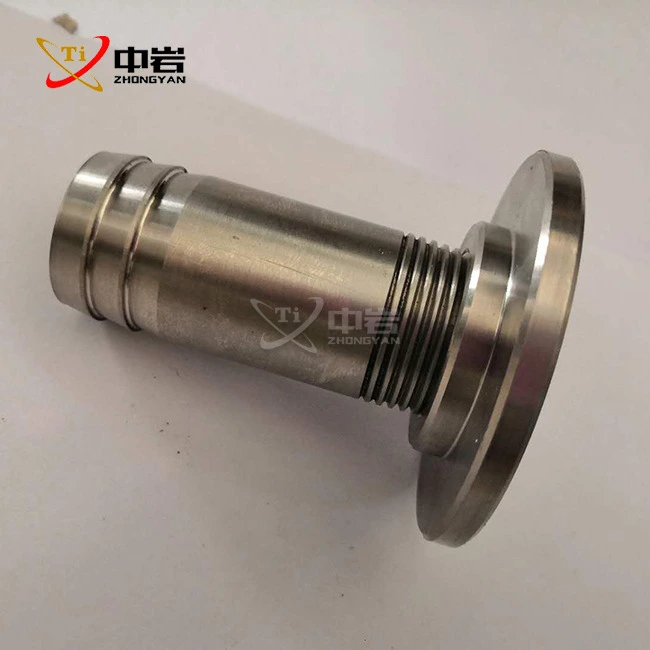
High-tolerance CNC-machined parts are precision-engineered components manufactured to exceptionally tight dimensional specifications, typically within ±0.001 mm to ±0.005 mm tolerances. Today, these parts serve critical roles in aerospace fuel control, medical surgical robotics, semiconductor manufacturing equipment, defence systems, and advanced electronics, where even microscopic deviations can compromise performance or safety. Unlike standard machining, producing these components demands advanced multi-axis CNC equipment, climate-controlled environments, and rigorous quality verification protocols to ensure geometric dimensioning and tolerancing (GD&T) compliance across every feature.
Understanding High Tolerance CNC Machined Parts
Defining Precision Manufacturing Standards
The distinction between standard machining and high-tolerance CNC-machined parts lies in the level of dimensional control achieved during production. Standard CNC operations typically hold tolerances around ±0.05mm to ±0.1mm, which suffices for many industrial applications. High-tolerance machining, however, operates at micron-level precision and consistently achieves dimensional accuracy within a few thousandths of a millimetre. This capability requires not only superior equipment but also environmental controls to reduce thermal expansion, vibration dampening systems, and real-time measurement feedback during the cutting process.
At Baoji Zhongyan Titanium, we leverage state-of-the-art 5-axis CNC equipment capable of maintaining these exacting standards throughout production runs. Our temperature-controlled manufacturing facility ensures that thermal variations—which can cause aluminium to expand approximately 22 micrometres per metre for every degree Celsius change—don't compromise dimensional integrity. This environmental discipline separates reliable precision suppliers from those who struggle with consistency.
Materials Engineered for Extreme Specifications
Material selection profoundly impacts both the achievability of tight tolerances and the functional performance of finished components. Aerospace-grade titanium alloys like Ti-6Al-4V exhibit exceptional strength-to-weight ratios and corrosion resistance, making them ideal for aircraft structural components and turbine blades. Medical-grade titanium (Ti-6Al-4V ELI) offers biocompatibility essential for surgical implants and dental prosthetics while maintaining the dimensional stability necessary for precise anatomical fit.
Beyond titanium, high-tolerance applications frequently utilise stress-relieved aluminium alloys (7075-T7351), austenitic stainless steels (316L), and speciality materials like Inconel for high-temperature environments. Each material presents unique machinability challenges—harder alloys increase tool wear and cycle times, while softer materials risk flexing during cutting, potentially compromising accuracy. We maintain extensive material expertise across titanium rods, titanium plates, titanium tubes, and titanium wires, allowing us to recommend optimal material grades that balance performance requirements with manufacturing feasibility.
International Standards and Quality Benchmarks
Compliance with international standards provides the framework for defining acceptable tolerance ranges and quality verification methods. ISO 2768 establishes general tolerance classes for linear and angular dimensions, while AS9100 specifies quality management requirements specific to aerospace manufacturing. ASTM and AMS specifications detail material properties, testing protocols, and traceability requirements that ensure consistency across supply chains.
These standards matter tremendously when sourcing components for regulated industries. A procurement manager specifying parts for medical devices needs assurance that suppliers understand FDA requirements for process validation and material certification. Similarly, aerospace applications demand complete traceability from raw material mill certifications through final inspection reports. Our manufacturing operations adhere to ISO9001:2015 standards, providing documented quality assurance that meets the expectations of global engineering teams and regulatory authorities.
Applications of High-Tolerance CNC-Machined Parts Today
Aerospace and Defense Critical Systems
Aerospace applications represent perhaps the most demanding environment for precision components. Turbine blade roots must maintain exact aerofoil profiles and attachment geometries to ensure proper gas flow dynamics and mechanical retention under extreme centrifugal forces. Fuel metering valves require tolerances tight enough to prevent leakage while controlling flow rates precisely across temperature ranges from -55°C at altitude to over 200°C near combustion chambers.
The consequences of dimensional deviation in these applications extend beyond performance degradation—they can result in catastrophic failure. A turbine blade with improper balance due to machining variations creates vibration that accelerates wear throughout the engine. A fuel control component with excessive clearances allows leakage that degrades efficiency and potentially creates fire hazards. Our titanium sputtering targets and custom titanium components meet these stringent requirements through a combination of material excellence and manufacturing precision, supporting aerospace manufacturers who accept nothing less than perfection.
Defence systems similarly depend on precision components for mission-critical reliability. Guidance system housings must maintain exact dimensional relationships to prevent sensor misalignment. Weapon system components require both dimensional accuracy and surface finish quality to ensure consistent mechanical function across extreme environmental conditions.
Medical Device Manufacturing and Surgical Instrumentation
Medical applications demand not only dimensional precision but also biocompatibility and surface finish quality that prevents bacterial colonisation. Surgical robotic end-effectors need tolerances of ±0.002 mm to prevent backlash that could reduce surgical accuracy in minimally invasive procedures. The stakes couldn't be higher—a cardiac surgeon manipulating instruments near the heart relies completely on the mechanical precision of robotic components to translate their movements with absolute fidelity.
Our titanium dental discs exemplify the intersection of material science and precision manufacturing in medical applications. These components must maintain exact thickness uniformity and surface flatness to ensure proper fit within dental milling machines. Any dimensional variation translates directly into prosthetic inaccuracy, potentially requiring remakes that delay patient care and increase costs. The corrosion resistance and biocompatibility of medical-grade titanium make it irreplaceable for permanent implants like hip prosthetics, spinal fusion devices, and dental implants where long-term stability within the human body is essential.
Surgical instrument manufacturing presents additional challenges. Instruments must withstand repeated sterilisation cycles without dimensional change while maintaining edge sharpness and mechanical function. The combination of material stability and manufacturing precision determines whether instruments remain reliable through hundreds of procedures or require premature replacement.
Electronics and Semiconductor Equipment
Semiconductor manufacturing equipment operates at extraordinary precision levels where even nanometre-scale contamination can ruin entire wafer batches. Vacuum chamber components must maintain absolute flatness and surface finish quality to achieve proper sealing without outgassing that would contaminate cleanroom environments. Electrostatic chucks that hold silicon wafers during processing require micron-level flatness across their entire surface to prevent wafer distortion during lithography steps.
Our titanium anodes serve electronics applications where corrosion resistance and dimensional stability prove essential for long-term performance. Heat sink components for power electronics demand not only precise mounting interfaces but also thermal interface flatness that ensures efficient heat transfer to cooling systems. As electronic devices continue to miniaturise and power densities increase, thermal management becomes increasingly critical, making precision machining of cooling components essential for product reliability.
The sputtering target manufacturing we specialise in represents particularly demanding precision work. These components must maintain exact dimensional relationships and surface conditions to ensure uniform thin-film deposition during semiconductor and optical coating processes. Any surface irregularity or dimensional variation translates into coating thickness variation that can render electronic devices or optical components unusable.
Industrial Machinery and Automation Equipment
Modern industrial automation depends on precision components that enable repeatable positioning and smooth mechanical motion. Linear bearing races require a surface finish and dimensional control that minimises friction while maintaining exact straightness over their entire length. Servo motor housings need precise bore concentricity to prevent rotor imbalance that would create vibration and premature bearing failure.
Chemical processing equipment presents the additional challenge of corrosion resistance combined with dimensional precision. Pump components handling aggressive chemicals must maintain tight clearances for efficient operation while resisting chemical attack that would degrade performance. The corrosion-resistant options we provide through titanium alloy selection address this dual requirement, enabling reliable long-term operation in harsh chemical environments where stainless steels would corrode unacceptably.
High-volume production machinery benefits tremendously from precision components that reduce downtime and maintenance. A packaging machine operating thousands of cycles daily depends on cam followers, guide rails, and mechanical linkages that maintain dimensional accuracy despite continuous wear. Using components manufactured to tight tolerances extends service intervals and improves product quality consistency.
High Tolerance CNC Machining vs. Other Precision Manufacturing Methods
Comparing Achievable Accuracy Across Manufacturing Processes
Different precision manufacturing methods excel in specific applications based on material, geometry, and required accuracy. Standard CNC machining economically produces components with tolerances around ±0.05mm, suitable for general industrial applications where functional fit matters more than absolute dimensional perfection. This approach works well for structural brackets, housings, and components where assembly methods accommodate normal manufacturing variation.
Precision grinding achieves extremely tight tolerances and superior surface finishes on hardened materials, making it ideal for bearing races, gauge blocks, and cutting tool geometries. Grinding can consistently hold tolerances within ±0.002 mm while producing surface finishes below Ra 0.2 µm. The limitation lies in geometry—grinding works best on cylindrical, flat, or simple contoured surfaces rather than complex three-dimensional forms.
Electrical Discharge Machining (EDM) excels at producing intricate cavities and features in hardened materials without mechanical cutting forces that might distort delicate geometries. EDM proves particularly valuable for tool and die manufacturing but operates significantly slower than CNC milling and leaves a characteristic surface texture that may require subsequent finishing.
Our CNC turning and CNC milling capabilities bridge the gap between geometric complexity and dimensional precision. Modern 5-axis machining centres can produce intricate three-dimensional geometries while maintaining tolerances comparable to grinding operations. The combination of rigid machine construction, precision ball screw drives, linear encoder feedback, and advanced toolpath programming enables us to achieve dimensional accuracy within ±0.001" (0.025 mm) on complex titanium components that would be impossible to produce through other methods.
Cost Considerations and Production Economics
Machine time, tooling, setup complexity, and quality verification determine component manufacturing cost. Standard machining techniques with loosened tolerances reduce these parameters, resulting in cheaper piece pricing for high-volume manufacture of less essential components. Tightening tolerances raises costs through slower feed rates to maintain dimensional control, more frequent tool changes to reduce wear-induced variation, longer setup time for exact workholding, and more inspection procedures.
The economic equation alters when overall system costs are included instead of component pricing. A precision bearing housing that costs three times more than a normal one may minimise assembly shimming, reduce vibration-related maintenance, and extend its service life, thereby cutting the total cost of ownership. Procurement experts increasingly realise that optimising component cost without addressing system-level effects increases project costs.
Our position in Baoji City, China's titanium production centre, saves logistics expenses and allows us to offer reasonable prices. Scale economies from our high-volume production make precision titanium components more affordable for global OEMs. Rapid prototyping and production scaling allow us to support projects from design validation to full-rate production without supply chain transitions that risk quality variance.
Production Flexibility and Lead Time Management
Different manufacturing methods demand different setups and production flexibility. EDM and precision grinding require custom electrodes or grinding wheels, which slows setup and costs small batches. Standard High Tolerance CNC-machined parts are flexible but may lose tolerances as tools wear.
CNC grinding and wire EDM machining complement primary milling and turning, optimising both quality and delivery speed. CNC milling and precision grinding of key diameters may be used to make a component with tight bore tolerances and complicated exterior features. While retaining realistic lead times, this process combination meets criteria unattainable with single-process manufacture.
Capacity planning, inventory management of common titanium material sizes, and production scheduling discipline keep our on-time delivery rate above 98%. Express delivery options allow procurement teams to meet urgent requirements when project timelines shorten, ensuring supplier performance won't derail project completion.
Challenges and Quality Assurance in High Tolerance CNC Machining
Technical Obstacles in Precision Manufacturing
The challenges of material behaviour during machining distinguish capable suppliers from inconsistent ones. Cutting thin-walled pieces or asymmetric geometries can distort raw material stock due to residual tensions. Stress-relieved material specifications help, but machining process design must accommodate movement by sequencing operations and adding stress-relief phases.
Tool deflection matters for micron-level accuracy. Cutting forces deflect tools from their designed route, depending on geometry, material hardness, cutting parameters, and extension length. Compensating for deflection needs complex programming that modifies toolpaths based on expected cutting forces and tooling strategies that maximise rigidity through shorter extensions and larger diameter tools when geometry allows.
Cutting generates heat beyond ambient temperature change. Chip removal removes heat, coolant controls temperature, and workpiece and machine structure thermal mass affect dimensional stability. In our climate-controlled manufacturing environment, cutting zone temperatures are managed by modern coolant supply systems to prevent thermal expansion during machining processes.
Advanced Metrology and Verification Protocols
Quality assurance for tight-tolerance components requires measurement equipment far more accurate than the tolerances being tested. Three-dimensional Coordinate Measuring Machines (CMMs) from Zeiss or Hexagon measure real position, profile tolerance, and concentricity to determine functional performance in complex geometries. These technologies measure with uncertainty below 2 micrometres across typical part sizes, ensuring dimensional verification doesn't introduce unacceptable mistakes.
Measurements from machine-mounted probing equipment allow real-time process control and prevent scrap. Our CNC equipment uses Renishaw probing technology to measure essential features after roughing and adjust finish pass offsets for tool wear or material variation before final cutting. Compared to post-process inspection-only procedures, this closed-loop approach greatly increases process capability.
Surface profilometry checks sealing surfaces, bearing journals, and optical components for finish quality. Contact stylus instruments or optical profilometers evaluate surface roughness parameters like Ra (average roughness) and Rz (maximum peak-to-valley height) to estimate friction, sealing, and appearance. Our manufacturing procedures produce Ra 0.2 µm to 0.8 µm surface finishes without secondary polishing, meeting demanding applications and managing costs.
Supplier Qualification and Partnership Criteria
Evaluating potential suppliers for precision component manufacturing requires looking beyond price quotations to assess genuine capability. Process capability indices (Cpk and Ppk) provide statistical evidence of manufacturing consistency, with values above 1.33 indicating processes statistically capable of meeting specifications with acceptable defect rates. Leading suppliers achieve Cpk values above 1.67, demonstrating margin for process variation while maintaining quality.
Certifications like AS9100 for aerospace or ISO13485 for medical devices indicate that suppliers understand industry-specific quality management requirements beyond general ISO9001 manufacturing standards. These certifications require documented procedures for configuration management, traceability, and risk management that protect customers from quality excursions.
Technical capability assessment should examine equipment sophistication, metrology infrastructure, and engineering support capabilities. Does the supplier operate modern multi-axis CNC equipment with environmental controls? Can they provide complete inspection documentation, including CMM reports and material certifications? Will their engineering team assist with design optimisation to improve manufacturability? Our dedicated engineering team provides design optimisation support that helps customers achieve their functional requirements while controlling manufacturing costs, representing a partnership approach that benefits both parties.
Procuring High Tolerance CNC Machined Parts: What You Need to Know?
Specifying Technical Requirements Effectively
Clear communication of dimensional requirements prevents costly misunderstandings that delay projects. Drawings should specify critical dimensions with appropriate GD&T callouts that define functional requirements rather than simply boxing every dimension with tight tolerances. Over-specifying tolerances increases manufacturing costs without improving functional performance—apply tight dimensional control only to features affecting fit, function, or interchangeability.
Material specifications should reference industry standards (ASTM and AMS) rather than vague descriptions, ensuring suppliers understand exactly what properties are required. When biocompatibility, corrosion resistance, or specific mechanical properties matter, call them out explicitly with applicable testing standards. We maintain an extensive inventory of titanium rods, titanium plates, titanium tubes, and titanium wires conforming to aerospace and medical specifications, enabling rapid project initiation without material procurement delays.
Surface finish requirements deserve equal attention to dimensional specifications. A bearing journal requiring Ra 0.4 µm finish performs differently than one specified at Ra 1.6 µm, affecting friction, wear rate, and lubrication requirements. Custom surface finishes and treatments like anodising, passivation, or specialized coatings should be specified with applicable standards and acceptance criteria to prevent ambiguity.
Understanding Pricing Factors and Order Economics
Component pricing reflects the cumulative impact of material costs, machine time, tooling consumption, setup complexity, and quality verification requirements. Exotic materials like titanium or Inconel cost more than aluminium or standard steels but often provide system-level value through weight savings, corrosion resistance, or biocompatibility that justifies premium pricing. Complex geometries requiring multiple setups or specialized tooling increase per-piece costs, particularly for small quantities where setup time dominates total production hours.
Order volume significantly affects unit pricing through setup cost amortisation. A component requiring four hours of setup and one hour of machining time might cost several hundred dollars as a single piece but drop below fifty dollars each in quantities of one hundred units. We offer both rapid prototyping for design validation and high-volume production capability that optimises costs across project phases—initial prototypes verify design intent, while production quantities benefit from process optimisation and volume economics.
Lead time expectations should align with project requirements and manufacturing realities. Standard components from stock titanium materials might ship within days, while custom OEM/ODM solutions requiring specialized material procurement, fixture design, and programme development typically require several weeks. Our fast turnaround capability balances quick response with uncompromising quality control, providing realistic schedules that we consistently meet.
Logistics and Supplier Relationship Management
International sourcing of precision components requires attention to packaging that protects dimensional integrity during transportation. Our custom-designed anti-static packaging prevents electrostatic discharge damage to sensitive components, while vacuum-sealed moisture barriers protect against corrosion during ocean freight. Shock-absorbing materials prevent impact damage, and traceable shipping with real-time updates provides visibility throughout the delivery process.
Long-term supplier relationships generate value beyond individual transactions. Suppliers familiar with your application requirements, quality expectations, and ordering patterns can proactively suggest improvements, maintain safety stock for critical components, and prioritise your urgent requirements when capacity constraints emerge. We view customer relationships as partnerships where mutual success drives continuous improvement—your feedback helps us refine processes while our manufacturing expertise supports your design and production objectives.
Contract manufacturing arrangements provide dedicated capacity for high-volume programmes, ensuring that production slots remain available when you need them. OEM packaging and branding supported through our manufacturing operations enable private label programmes where our components become seamlessly integrated into your product offerings. This flexible approach accommodates diverse business models from spot purchases through strategic supply agreements.
Conclusion
Precision manufacturing has evolved beyond simple dimensional control into a comprehensive discipline integrating material science, advanced machining technology, environmental management, and sophisticated metrology. Components manufactured to micron-level tolerances enable technological advances across aerospace, medical, electronics, and industrial sectors where performance demands continue escalating. Understanding the distinction between standard and high-tolerance CNC-machined parts manufacturing, recognising application-specific requirements, and selecting suppliers with genuine precision capability determine project success. The technical challenges inherent in producing these components require manufacturing partners who combine equipment sophistication with process discipline and quality culture. Effective procurement balances specification clarity with supplier capability assessment, ensuring that dimensional requirements align with functional needs while controlling costs appropriately.
FAQ
What tolerances can high-tolerance CNC machining realistically achieve?
Modern CNC equipment with proper environmental controls consistently achieves linear dimensional tolerances within ±0.001" (±0.025 mm), with some specialized applications reaching ±0.0005" on rigid materials. Geometric tolerances like concentricity and true position can similarly reach values below 0.002 mm when properly specified. Material selection affects achievable accuracy—rigid metals like titanium and steel hold tighter tolerances than flexible plastics that deflect during cutting.
How does material selection affect manufacturing cost?
Harder materials like Inconel or tool steel accelerate tool wear and require slower cutting speeds, increasing both tooling costs and machine time compared to aluminium or mild steel. Titanium offers excellent machinability relative to its strength but costs more than standard materials. Material cost represents only part of the equation—considering corrosion resistance, weight savings, and biocompatibility often justifies premium materials through improved product performance and lifecycle economics.
Why does temperature control matter during precision machining?
Thermal expansion affects dimensional accuracy significantly—aluminium expands approximately 22 micrometres per metre for every degree Celsius temperature change. A component measured as conforming on the machine tool might measure out-of-specification in a quality lab at a different temperature. Climate-controlled manufacturing environments maintaining 20°C ± 1°C ensure that thermal variation doesn't compromise dimensional integrity, which is particularly critical when achieving micron-level tolerances.
Partner with Zhongyan for Your Precision Component Requirements
Zhongyan Titanium has established itself as a trusted precision component supplier serving global aerospace, medical device, electronics, and industrial machinery manufacturers. Our manufacturing facility in Baoji City leverages China's titanium resources combined with advanced CNC equipment capable of achieving tolerances within ±0.001 inches across complex geometries. We manufacture components from multiple materials, including aerospace and medical-grade titanium alloys, delivering custom sizes with micron-level precision that meet your most demanding specifications. Rigorous quality control throughout production ensures compliance with ASTM, AMS, and ISO standards, while our engineering team provides design optimisation support that improves manufacturability. Contact our team at sales@titaniumstudy.com to discuss your high-tolerance CNC-machined parts requirements—we're ready to demonstrate why leading manufacturers trust Zhongyan as their precision-machining partner.
References
1. ASTM International. (2021). "Standard Specification for Titanium and Titanium Alloy Bars and Billets. "ASTM B348-21, West Conshohocken, PA.
2. American Society of Mechanical Engineers. (2018). "Dimensioning and Tolerancing: Engineering Drawing and Related Documentation Practices. "ASME Y14.5-2018, New York, NY.
3. SAE International. (2020). "Quality Management Systems – Requirements for Aviation, Space, and Defence Organisations." AS9100D Revision, Warrendale, PA.
4. Klocke, F. and König, W. (2018). "Fertigungsverfahren Band 1: Drehen, Fräsen, Bohren." Springer-Verlag, Berlin, Germany.
5. International Organization for Standardization. (2016). "Geometrical Product Specifications - General Tolerances for Linear and Angular Dimensions." ISO 2768-1:2016, Geneva, Switzerland.
6. Machinery's Handbook Editorial Staff. (2020). Machinery's Handbook, 31st Edition: A Reference Book for Mechanical Engineers, Designers, Manufacturing Engineers, Draftsmen, Toolmakers, and Machinists. "Industrial Press, New York, NY.
Learn about our latest products and discounts through SMS or email