- English
- French
- German
- Portuguese
- Spanish
- Russian
- Japanese
- Korean
- Arabic
- Greek
- German
- Turkish
- Italian
- Danish
- Romanian
- Indonesian
- Czech
- Afrikaans
- Swedish
- Polish
- Basque
- Catalan
- Esperanto
- Hindi
- Lao
- Albanian
- Amharic
- Armenian
- Azerbaijani
- Belarusian
- Bengali
- Bosnian
- Bulgarian
- Cebuano
- Chichewa
- Corsican
- Croatian
- Dutch
- Estonian
- Filipino
- Finnish
- Frisian
- Galician
- Georgian
- Gujarati
- Haitian
- Hausa
- Hawaiian
- Hebrew
- Hmong
- Hungarian
- Icelandic
- Igbo
- Javanese
- Kannada
- Kazakh
- Khmer
- Kurdish
- Kyrgyz
- Latin
- Latvian
- Lithuanian
- Luxembou..
- Macedonian
- Malagasy
- Malay
- Malayalam
- Maltese
- Maori
- Marathi
- Mongolian
- Burmese
- Nepali
- Norwegian
- Pashto
- Persian
- Punjabi
- Serbian
- Sesotho
- Sinhala
- Slovak
- Slovenian
- Somali
- Samoan
- Scots Gaelic
- Shona
- Sindhi
- Sundanese
- Swahili
- Tajik
- Tamil
- Telugu
- Thai
- Ukrainian
- Urdu
- Uzbek
- Vietnamese
- Welsh
- Xhosa
- Yiddish
- Yoruba
- Zulu
Can GR2 Titanium Round Bar Be Used in Marine Environments and Seawater?
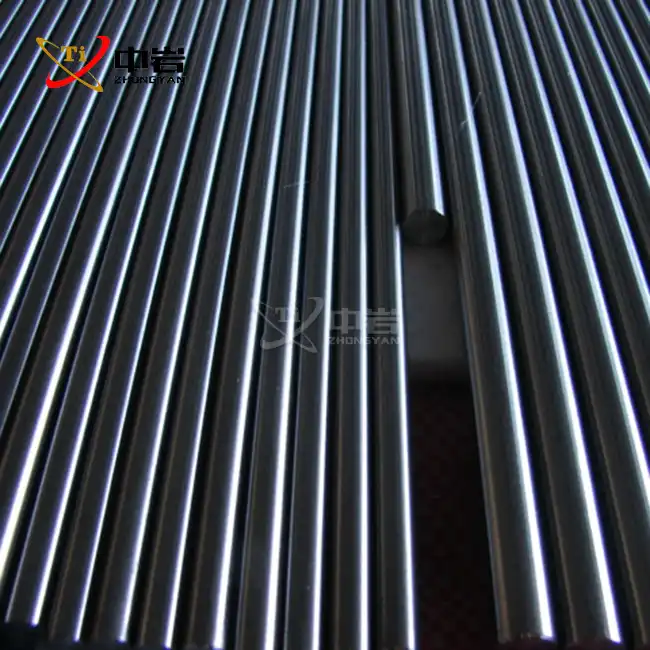
GR2 titanium round bar works really well in naval settings and when it's exposed to saltwater. This highly pure titanium material is very good at resisting rusting in tough ocean environments, saltwater, and chloride ions. Grade 2 titanium doesn't get pitted, corrode, or wear away like other metals do because it has a protected oxide layer that grows back on its own. It has been used to build ships, filtration systems, and underwater platforms, so you can be sure it will last. This makes it a good choice for tough naval uses where failure is not an option.
Understanding GR2 Titanium Round Bar and Its Properties
In industrial settings, grade 2 titanium is the most common grade of commercially pure titanium used. The material is mostly titanium (99.2% minimum), with small amounts of iron (0.30% max) and oxygen (0.25% max). This makes it easy to work with while also being strong, which engineers like.
Chemical Composition and Material Characteristics
The way Grade 2 titanium works in the sea environment is directly related to the chemicals that make it up. A high oxygen content makes the matrix stronger without making it less flexible, and a low iron content keeps the rust resistance at a high level. This mixture meets the requirements of ASTM B348. This makes sure that all output runs are the same. Our bars are made to meet ISO 5832-2 standards and are cold-drawn to get exact sizes with an H9 error level.
Mechanical Properties for Marine Applications
When choosing materials for settings with saltwater, mechanical strength is very important. When they are annealed, Grade 2 titanium round bars have a tensile strength of at least 900 MPa and a yield strength of at least 850 MPa. These numbers are higher than many types of stainless steel, but they still have great flexibility (elongation ≥ 10%). The hardest point of the material is HRC 36, which means it won't wear down in rough seas. With an elasticity value of 114 GPa, the bars stay the same size even when they are loaded and unloaded over and over again, which is common in sea buildings. Titanium is about 40% lighter than steel options because it has a mass of 4.43 g/cm³. A polished, bright, 10 mm diameter bar weighs about 2.5 kg per metre, which makes it easier to handle when installing it on ships and offshore bases. This weight benefit means that seafaring boats can use less fuel and platform designs can use less structural load.
Dimensional Specifications and Availability
Standard production includes different widths that can be used in naval settings. For bolts and structural links, 10mm is a typical size. Different lengths are available to meet the needs of any job, and standard 1000mm bars can be cut to any length. The cold-drawn production method makes sure that the dimensions are always correct, and the polished finishes make the surfaces smooth, which keeps them from getting dirty and makes them easier to clean in saltwater service.
Corrosion Resistance of GR2 Titanium Round Bar in Marine Environments
Marine environments present unique challenges that accelerate material degradation through multiple mechanisms. Saltwater contains chloride concentrations averaging 19,000 ppm, creating aggressive conditions that attack passive layers on most metals. Temperature fluctuations, biological activity, and mechanical stress compound these effects.
Why Corrosion Resistance Matters in Seawater
When materials like gr2 titanium round bar fail in marine settings, bad things happen. Corroded parts cause structural damage, put people's safety at risk, and require a lot of money to repair. Repairs to offshore sites can cost more than $500,000 per day, so choosing the right materials is an important economic choice that goes beyond the initial buy price. Traditional materials, like carbon steel, need protection layers that wear off over time, so they need to be maintained often. Even though stainless steel types are better than carbon steel, they can still rust in places with a lot of salt. Grade 316 stainless steel, which is often used in naval applications, pits and cracks after being in saltwater for a long time.
Superior Performance Against Seawater Corrosion
Grade 2 titanium creates a solid, adhering oxide layer (TiO₂) that heals itself right away if it gets broken, protecting it all the time. The pH of this passive film stays the same from 3 to 12, which is the full range of pH levels found in real seawater. Titanium oxide doesn't break down in salt settings like passive layers made of chromium on stainless steel do. Tests done in the lab show that Grade 2 titanium doesn't rust when it's exposed to moving seawater at room temperature. Studies that compare different types of steel show that 316L stainless steel rusts 20 to 50 times faster in the same settings. Even after anodising, aluminium alloys still suffer galvanic corrosion when mixed with different metals in salt water. Titanium, on the other hand, doesn't have this problem because it has a high electrical position.
Real-World Marine Applications and Case Studies
Titanium bars are being used more and more in shipbuilding for propeller shafts, pump parts, and heat exchanger tubes. After 15 years of continuous saltwater service, a big shipyard said that titanium propeller shaft installations had no breakdowns due to rust. Offshore oil platforms use Grade 2 titanium for structural parts and bolts in splash zones, which are areas where waves combine toxic forces. Desalination facilities create tough test conditions for materials to work well. Titanium round bars are made into valve parts and pipe fittings that are used in plants that process millions of gallons of oil every day. One Middle Eastern center said that titanium parts could be used for 25 years without any rust, while stainless steel parts had to be replaced every 5 to 7 years. These recorded results show that the material can be trusted for investing in important structures.
Comparing GR2 Titanium to Other Titanium Grades and Materials for Marine Use
Material selection involves balancing performance requirements against budget constraints. Understanding how different options compare helps procurement teams make evidence-based decisions rather than defaulting to familiar materials.
GR2 Versus GR5 Titanium for Marine Applications
Grade 5 titanium (Ti-6Al-4V) is an alpha-beta metal that is stronger than pure grades that are sold in stores. With a tensile strength of more than 1000 MPa, GR5 is ideal for situations where the structure needs to be as strong as possible. There are, however, some downsides to this ability. The aluminium and vanadium that are added to GR5 to make it stronger also make it slightly less resistant to rust than Grade 2, which is sold in stores. The price difference is big—GR5 titanium bars usually cost 30–50% more than Grade 2 bars. The metal is harder to work with and causes more tool wear when it is machined. Commercially pure Grade 2 has good mechanical qualities for most naval structure uses, so you don't have to pay extra for extra strength. It also has better rust protection and is easier to machine.
Titanium Versus Stainless Steel and Aluminum Alloys
Because it is easy to work with and doesn't cost much, stainless steel is still the most common material used in boats. Each kilogram of Grade 316L stainless steel costs about 70% less than a kilogram of Grade 2 titanium. A lifecycle study, on the other hand, shows a different economy. Titanium's long life means that it doesn't need to be replaced as often, doesn't need as much upkeep, and doesn't have to be shut down as often as rusted stainless steel parts do. When it comes to weight, titanium is by far the best choice. Marine buildings that use titanium bars instead of stainless steel lose 40% of their weight. This makes the vessels more efficient and lowers their running costs. Aluminium metals are about the same density as titanium, but they don't fight rust as well and needs to be maintained regularly because they break down in hard seas.
Selection Guidance Based on Project Requirements
Because it is easy to work with and doesn't cost much, stainless steel is still the most common material used in boats. Each kilogram of Grade 316L stainless steel costs about 70% less than a kilogram of Grade 2 titanium. Lifecycle study, on the other hand, shows a different economy. Titanium's long life means that it doesn't need to be replaced as often, doesn't need as much upkeep, and doesn't have to be shut down as often as rusted stainless steel parts do. When it comes to weight, titanium is by far the best choice. Marine buildings that use titanium bars instead of stainless steel lose 40% of their weight. This makes the vessels more efficient and lowers their running costs. Aluminium metals are about the same density as titanium, but they don't fight rust as well and needs to be maintained regularly because they break down in hard seas.
Procurement and Supply Chain Considerations for GR2 Titanium Round Bars
Successful marine projects depend on reliable material sourcing that meets quality standards and delivery schedules. Procurement strategies directly affect project timelines and budget outcomes.
Sourcing from Qualified Suppliers
When choosing a supplier, you need to check their production skills and safety certifications. China's "Titanium Valley," Baoji, has a unique mix of specialised production facilities and technical know-how that can't be found anywhere else in the world. Because Zhongyan is in this industrial region, it has easy access to raw materials and works with research institutions to improve titanium working technology. Certification paperwork for GR2 titanium round bar is very important when ordering titanium bars for naval use. Certification in ISO 9001:2015 shows that quality management is done in a planned way, and certifications for materials show that they meet ASTM B348 standards. Each production lot should come with testing results from a third party that prove its mechanical features and chemical makeup. This will give the projects that care about quality the tracking they need.
Customization Options and Technical Support
Standard bars can be used for many things, but marine projects often need bars in certain shapes. Cutting to the exact widths needed cuts down on waste and makes fitting easier. In addition to normal polished surfaces, there are other surface finishing choices that include specialised processes that improve certain performance qualities. With our CNC grinding services, we can turn raw bars into finished parts, cutting out the need for middlemen and guaranteeing accurate measurements. The ability to turn, mill, and grind handles complicated shapes that normal bars can't. Wire EDM cutting can make complicated shapes out of titanium without putting it under heat stress, which weakens its resistance to rust.
Market Pricing and Budget Forecasting
Titanium pricing reflects raw material availability, processing complexity, and market demand. Current market conditions show relatively stable pricing compared to historical volatility, supporting accurate budget forecasting. Volume purchasing provides economies of scale—projects requiring substantial quantities benefit from negotiated pricing structures. Comparing total cost of ownership rather than initial purchase price reveals titanium's value proposition. A titanium component costing three times its stainless steel equivalent that lasts four times longer delivers superior economic return. Eliminating maintenance interventions in difficult-to-access offshore locations generates savings exceeding initial material premiums.
Logistics and International Delivery
Global marine projects require reliable international shipping capabilities. Our logistics partnerships ensure proper packaging that protects surface finishes during transit. Consolidated shipments optimize freight costs for multiple components, while expedited options accommodate urgent project requirements. Lead times vary with order complexity and quantity. Standard diameter bars with polished finishes typically ship within 3-4 weeks, while custom machined components require 6-8 weeks depending on design complexity. Early engagement during project planning phases ensures material availability aligns with construction schedules.
Best Practices and Recommendations for Using GR2 Titanium Round Bars in Seawater
Material performance depends not only on inherent properties but also on proper handling, installation, and maintenance practices. Following established guidelines maximizes service life and ensures reliable operation.
Handling and Storage Protocols
Titanium's corrosion resistance doesn't eliminate the need for proper storage. Contamination from carbon steel particles embedded during handling can create localized corrosion sites. Dedicated titanium storage areas prevent cross-contamination, while protective wrapping maintains surface cleanliness until installation. Avoid dragging titanium bars across concrete or steel surfaces that could introduce contaminants. Use nylon or polyester slings during lifting rather than steel cables or chains. Storage racks should feature non-metallic contact surfaces—wooden or plastic supports prevent galvanic contact with dissimilar metals.
Machining and Assembly Considerations
Gr2 titanium round bar machining requires specific techniques differing from steel processing. Sharp cutting tools with appropriate geometry minimize work hardening and maintain dimensional tolerance. Conservative cutting speeds and adequate coolant prevent overheating that could affect material properties. Our experienced machining team understands these requirements, ensuring components meet specifications without compromising performance. During assembly, prevent galling by using anti-seize compounds on threaded connections. Titanium's tendency to cold-weld under high pressure necessitates this precaution. Torque specifications should account for titanium's different elastic properties compared to steel—overtightening damages threads and reduces joint integrity.
Installation Best Practices for Marine Environments
Avoid mixing titanium with less noble metals in direct contact within seawater circuits. When design requires dissimilar metal connections, isolate materials with non-conductive gaskets and sleeves to prevent galvanic corrosion of the less noble metal. Titanium's nobility means it won't corrode in such couples, but adjacent aluminum or steel components will degrade at accelerated rates. Weld preparation demands cleanliness—contamination during welding creates defects compromising corrosion resistance. Inert gas shielding (argon) protects both the weld pool and backside during joining. Post-weld inspection verifies complete penetration and absence of defects before placing components in service.
Monitoring and Maintenance Guidelines
Despite titanium's corrosion immunity, regular inspection protocols ensure early detection of mechanical damage or unusual service conditions. Visual examination identifies surface damage from impact or abrasion that could remove protective oxide layers—though these regenerate rapidly in oxygenated seawater. Biofouling accumulation, while not causing corrosion, can impede component function. Periodic cleaning maintains design performance without requiring harsh chemical treatments that might affect other system materials. Mechanical cleaning methods suit titanium's hardness without risk of surface damage.
Conclusion
Grade 2 titanium round bars deliver proven, reliable performance in demanding marine and seawater environments. The material's exceptional corrosion resistance, combined with adequate mechanical strength and low density, makes it the optimal choice for critical applications where material failure carries unacceptable consequences. Comparative analysis demonstrates superior lifecycle value despite higher initial costs versus stainless steel or aluminum alternatives. Procurement from qualified suppliers like Zhongyan ensures material quality, dimensional precision, and delivery reliability that complex marine projects require. Proper handling, installation, and minimal maintenance protocols maximize the already impressive service life this remarkable material provides.
FAQ
How long does GR2 titanium last in continuous seawater exposure?
Grade 2 titanium demonstrates exceptional longevity in seawater service. Field data from marine installations shows 25+ years of trouble-free operation without measurable corrosion. The stable oxide layer provides indefinite protection as long as mechanical damage doesn't remove bulk material. Unlike coatings that degrade over time, titanium's passive film regenerates continuously.
Is Grade 2 titanium cost-effective compared to marine-grade stainless steel?
Initial purchase costs favor stainless steel, but lifecycle analysis reveals titanium's superior value. Eliminating replacement cycles, reducing maintenance, and avoiding corrosion-related downtime offset the material premium. Projects with 15+ year horizons consistently show lower total ownership costs with titanium despite 2-3x higher initial material expense.
What differentiates Grade 2 from Grade 5 titanium for marine use?
Grade 2 represents commercially pure titanium with maximum corrosion resistance and excellent machinability. Grade 5 (Ti-6Al-4V) offers higher strength through alloying additions but costs more and machines less readily. Unless extreme mechanical loads require GR5's strength advantage, commercially pure Grade 2 provides optimal balance for most marine applications.
Partner with Zhongyan for Premium GR2 Titanium Round Bar Supply
Zhongyan stands as your trusted GR2 titanium round bar manufacturer, delivering precision-engineered materials that meet the exacting standards marine applications demand. Our Baoji facility leverages China's premier titanium processing hub to provide superior products combining ASTM B348 compliance with exceptional dimensional accuracy. We offer comprehensive solutions spanning raw material supply through custom CNC machined components, eliminating supply chain complexity while ensuring quality consistency.
Our technical team provides application engineering support, helping you specify optimal dimensions and finishes for your specific marine environment. Whether you need standard 10mm diameter bars with polished surfaces or custom-machined components with complex geometries, our advanced manufacturing capabilities deliver reliable solutions. Contact our team at sales@titaniumstudy.com for detailed technical specifications, material certifications, and competitive pricing tailored to your project requirements.
References
1. Boyer, R., Welsch, G., & Collings, E.W. (1994). Materials Properties Handbook: Titanium Alloys. ASM International, Materials Park, Ohio.
2. Cotton, J.B. (1967). "The Corrosion Resistance of Titanium in Marine Environments." Platinum Metals Review, Volume 11, Issue 2, pp. 50-56.
3. Schutz, R.W. & Thomas, D.E. (1987). "Corrosion of Titanium and Titanium Alloys." ASM Handbook, Volume 13: Corrosion, ASM International.
4. American Society for Testing and Materials (2020). ASTM B348-20: Standard Specification for Titanium and Titanium Alloy Bars and Billets. ASTM International, West Conshohocken, Pennsylvania.
5. International Organization for Standardization (2016). ISO 5832-2: Implants for Surgery—Metallic Materials—Part 2: Unalloyed Titanium. Geneva, Switzerland.
6. Pedeferri, P. (2018). Corrosion Science and Engineering. Engineering Materials Series, Springer International Publishing, Milan, Italy.
(1)_1755587348264.jpg)
_1755652968020.jpg)
Learn about our latest products and discounts through SMS or email