- English
- French
- German
- Portuguese
- Spanish
- Russian
- Japanese
- Korean
- Arabic
- Greek
- German
- Turkish
- Italian
- Danish
- Romanian
- Indonesian
- Czech
- Afrikaans
- Swedish
- Polish
- Basque
- Catalan
- Esperanto
- Hindi
- Lao
- Albanian
- Amharic
- Armenian
- Azerbaijani
- Belarusian
- Bengali
- Bosnian
- Bulgarian
- Cebuano
- Chichewa
- Corsican
- Croatian
- Dutch
- Estonian
- Filipino
- Finnish
- Frisian
- Galician
- Georgian
- Gujarati
- Haitian
- Hausa
- Hawaiian
- Hebrew
- Hmong
- Hungarian
- Icelandic
- Igbo
- Javanese
- Kannada
- Kazakh
- Khmer
- Kurdish
- Kyrgyz
- Latin
- Latvian
- Lithuanian
- Luxembou..
- Macedonian
- Malagasy
- Malay
- Malayalam
- Maltese
- Maori
- Marathi
- Mongolian
- Burmese
- Nepali
- Norwegian
- Pashto
- Persian
- Punjabi
- Serbian
- Sesotho
- Sinhala
- Slovak
- Slovenian
- Somali
- Samoan
- Scots Gaelic
- Shona
- Sindhi
- Sundanese
- Swahili
- Tajik
- Tamil
- Telugu
- Thai
- Ukrainian
- Urdu
- Uzbek
- Vietnamese
- Welsh
- Xhosa
- Yiddish
- Yoruba
- Zulu
Titanium Rod Medical OEM: Which Suppliers Offer Best Value?
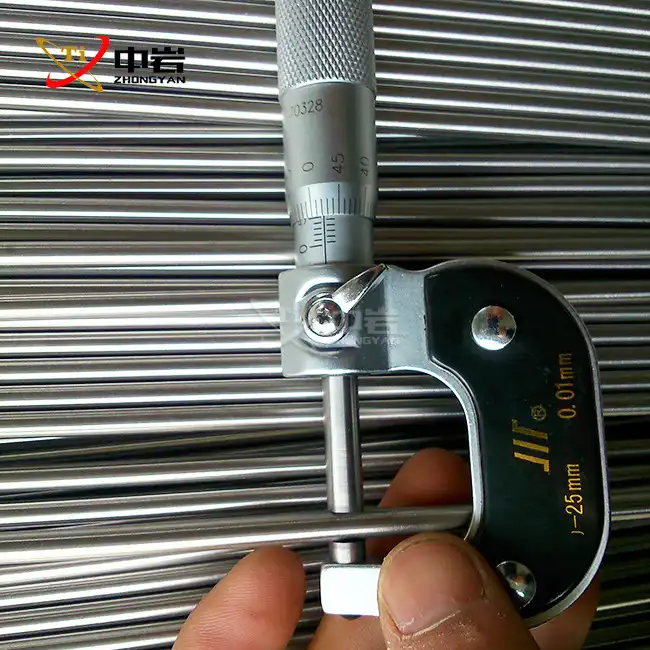
Value is more than just price per kilogram when looking for titanium rod medical OEM options. The best providers offer approved material quality—most notably Grade 23 ELI that meets ASTM F136 and ISO 5832-3 standards—along with the ability to customize products in a variety of ways, strict systems for tracking materials, and quick engineering support. Medical device companies that want to get the best deal should look for partners that offer reasonable pricing, full mill certificates, tight dimensional standards (h6/h7 for Swiss-style machining), and open minimum order amounts. Suppliers in China's Titanium Valley, like manufacturers in Baoji, are increasingly able to offer this value through advanced vacuum melting techniques, centerless grinding, and compliance infrastructure that meets international standards. They do all of this while keeping cost advantages that are important for both prototype development and large-scale production runs.
Understanding Medical Grade Titanium Rods for OEM Use
Medical-grade titanium rods are made from special raw materials that were made for biological uses, where patient safety and long-term implant performance are very important. In contrast to regular industrial titanium, these materials go through strict processing steps to get rid of impurities and make them biocompatible enough to come into direct contact with human flesh.
Key Standards Defining Medical Grade Specifications
Medical titanium rods have to meet standards that are known all over the world. These standards guide the metal's chemical makeup, its mechanical qualities, and how it is processed. ASTM F136 lays out the rules for the most common type of material used for load-bearing implants, Ti-6Al-4V ELI (Extra Low Interstitial). This standard limits the amount of oxygen to 0.13% and the amount of nitrogen to 0.05%, which is much lower than the standards used in flight. ISO 5832-3 gives standards that are the same and are accepted in both European and Asian markets.
Surface Treatments and Dimensional Tolerances
The state of the surface has a big impact on both how easy it is to machine and how well the end implant works. Pickled surfaces get rid of scale and other impurities that come from hot working, making a clean base for precise cutting. Centerless ground finishes keep tight limits on dimensions while getting surface roughness values below Ra 0.8µm. For Swiss-type CNC lathes used in titanium rod medical OEM applications, H6 or H7 accuracy grades keep too much material from being removed and shorten cycle times. Polished surfaces can be asked for on parts that need to be more resistant to rust, or that just look better. Passivation methods make the natural oxide layer stronger, which makes it less likely that rusting will happen in body fluids that are high in chloride.
Benefits Driving Medical Device Innovation
Medical-grade titanium bars have special properties that make it possible to make new devices that would not be possible with other materials. Titanium implants are lighter than stainless steel ones because they have a density of 4.43 g/cm³, which is about half that of stainless steel. This is especially helpful for spine instrumentation and craniofacial surgery, where reducing the amount of fat makes the patient feel better. The low elastic stiffness (about 110 GPa compared to 200 GPa for stainless steel) makes it more like natural bone, which lowers stress buffering that can cause bone loss around implants. Excellent fatigue resistance makes something reliable even after decades of metabolic stress. Because titanium isn't magnetic, people with titanium implants can easily go through MRI imaging without any artifacts getting in the way.
How to Evaluate and Choose the Best Titanium Rod Suppliers for Medical OEM
When looking for a titanium rod medical OEM partner, it's important to carefully consider a number of factors that affect both long-term value and risk reduction.
Essential Certifications and Quality Assurance Protocols
When a supplier gets ISO 13485 certification, it shows that they can regularly meet legal standards for medical devices and connected services. This standard for quality management systems is designed to meet the special needs of the medical field when it comes to tracking, managing risks, and making sure that things are correct. Suppliers should keep up-to-date licenses on hand so that customers can check them. Material certifications are just as important as system certificates. Each batch of products should come with mill test results that show the chemical makeup using spectroscopy, the mechanical qualities using tensile testing, and the microstructure using metallography. According to AMS 2631, ultrasonic testing can find problems inside that can't be seen from the outside. Validation by a third-party laboratory adds another level of assurance, which is especially useful when checking out new sources or products for important uses.
Regional Supplier Comparison Framework
Different suppliers in different areas offer different value packages because of the different cost structures, regulatory environments, and industry cultures in those areas.
Chinese Suppliers: Companies that make things in Baoji, which is known as China's Titanium Valley, benefit from a lot of specialized scientific knowledge, supply chains that work well together from making sponges to selling finished goods, and affordable prices. Modern facilities can now match the quality standards of Western countries while still saving 30 to 50 percent on costs. Companies like Zhongyan show that they can do a lot of different things, like vacuum freezing, precision cutting, and full approval paperwork. Communication and technical help in English have gotten a lot better, but coordinating with people in different time zones needs some planning. Depending on the difficulty of the specifications and the number of orders, lead times are usually between 6 and 10 weeks.
Customer Support and After-Sales Service Excellence
Technical response is what sets great partners apart from good sellers. When customers are choosing materials, engineering teams should be there to help them make decisions based on performance needs and cost concerns. Quick price turnaround—ideally within 48 hours for standard requirements—speeds up project schedules. Qualification risks are lower when sample programs let prototypes be tested before they are committed to production. Minimum order amounts that are flexible can be used for both small batches during the R&D phase and large volumes during production. Warranty policies that cover material flaws protect you financially, and written processes for handling complaints show that you are committed to always getting better. When production plans get squished out of the blue, suppliers who keep popular sizes in stock can handle emergency orders.
Procurement Considerations for Bulk Purchasing of Medical Titanium Rods
To strategically buy medical-grade titanium rods, you need to know the business factors that affect the total cost of the purchase and the dependability of the supply chain.
Minimum Order Quantities and Pricing Dynamics
Most titanium rod medical OEM providers set minimum order numbers that are based on the costs of making custom production runs. MOQs change a lot depending on the grade of the material, the width, and the finish on the surface. MOQs for common, widely pure titanium in standard sizes can be as low as 50 to 100 kilograms. On the other hand, MOQs for exotic alloys or tight-tolerance ground bars might be 200 to 500 kilograms. Knowing these limits helps buying teams get the best deals on order timing and numbers. At 500 kg, 1000 kg, and 2000 kg, volume price tiers usually kick in, with discounts running from 5 to 15% as numbers rise. The grade of the material has a big effect on the price.
Lead Time Management and Delivery Coordination
Expecting realistic wait times keeps production from stopping and avoids expensive processing fees. Standard specs from well-known sellers usually take 6 to 8 weeks from the time of the purchase order until the goods are delivered. Custom sizes, surface treatments, or lengths that aren't normal can add 10 to 14 weeks to the lead time. If the material isn't already being melted, vacuum melting efforts for certain temperatures may take a few extra weeks.
Custom Specification Ordering Process
Clear and full communication of requirements speeds up quoting and cuts down on revision processes. In technical sketches, the width should be shown with tolerances, as well as the length, straightness tolerances, and surface finish standards. Chemical makeup standards that use specific ASTM grades keep things clear. Tensile strength, yield strength, and extension minimums for mechanical properties make sure that the material can be used for its original purpose. For pilot projects, sample requests usually include 5–10 pieces so that cutting and mechanical testing can be done before committing to mass production. Progressive suppliers offer design advice and suggest different specs that keep performance the same while making it easier to make or lowering costs.
Logistics and Incoterms Selection
To keep the surfaces of medical titanium rods from getting damaged or contaminated during shipping, they need to be carefully packed. Most providers offer wooden crates packed with moisture barriers and desiccants to keep goods safe while they travel across the ocean. FOB (Free On Board) terms put the responsibility on the buyer after the port loads the goods. This works well for businesses that already work with a freight transportation company. Cost, Insurance, and Freight (CIF) terms move risk and duty to a later date.
Titanium Rods vs Alternatives: Why Medical Grade Titanium Leads the Market
Material choice has a big impact on how well implants work, how well patients do, and how long it takes for regulators to approve new products. Comparative research shows why medical-grade titanium rods are the most popular, even though they cost more to make than other options.
Biocompatibility and Corrosion Resistance Advantages
Titanium forms a steady passive layer of titanium dioxide (TiO₂) on its own, which makes it very resistant to corrosion in physiological settings with chlorides, proteins, and changing pH levels. This oxide layer heals itself right away if it gets scratched, keeping the implant safe for its whole life. Stainless steel options (316L) are good at resisting rust, but they aren't as good as titanium at osseointegration, which is when bone tissue directly bonds to implant surfaces. Cobalt-chromium metals are very strong, but some of their ingredients, like cobalt and nickel, can cause allergic reactions in sensitive people. Because medical titanium is safe and has been used in hospital settings for decades, it is biocompatible, which makes it easier for regulators to approve. The material always passes the biocompatibility tests required by ISO 10993, and there is a lot of written data to back up safety claims.
Mechanical Property Comparison
Medical-grade titanium rods, especially Grade 23 ELI, have tensile strengths of more than 860 MPa, which is enough for most load-bearing uses. They are also very flexible, with a minimum extension of 10 to 15 percent. This flexibility keeps the material from breaking easily when it's hit hard. The elastic modulus of about 110 GPa is closer to the elastic modulus of cortical bone (10–30 GPa) than it is to stainless steel (200 GPa).
Surface Treatment Enhancement Options
Advanced surface changes improve the performance of titanium implants even more than the qualities of the base material. Anodization makes controlled oxide layers with specific colours that make it easier to identify surgically and make the metal more resistant to rust. Plasma spraying uses hydroxyapatite or titanium coatings to speed up osseointegration. This is especially helpful for joint replacement parts that need to be fixed quickly. Using sandblasting and acid etching (SLA treatment) to make micro-rough surfaces helps bone cells stick to and grow. With these treatments, smooth titanium rod medical OEM stock is turned into parts that work best for their intended use. Passivation makes the natural oxide layer stronger by getting rid of any free iron that could start rusting. To use these specialized processes, you need to start with a base material that is very pure and meets strict chemical requirements.
Building Long-Term Partnerships with Certified Medical Titanium Rod OEM Suppliers
In the medical device industry, transactional buying ties don't get the most out of the value that can be gained through smart supplier agreements.
Certification Depth and Continuous Quality Verification
Systematic methods are needed for ongoing quality assurance after the initial approval check. Audits of source facilities once a year make sure that quality control systems and material handling rules are still being followed. These checks should look at where the raw materials come from, how they are melted, how they are formed, how they are tested, and how they keep records. Third-party inspection services offer independent confirmation, which is especially helpful when checking out providers from other countries. Seeing how statistical process control data changes over time shows how stable the process is and lets you know about possible quality drift before problems happen. Leading titanium rod medical OEM providers keep full tracking from the titanium sponge to the finished product.
Collaborative Engineering and Innovation Support
The best relationships with suppliers go beyond just fulfilling orders and turn into partnerships for joint growth. During the design process of a device, advanced suppliers' engineering teams offer their knowledge of materials by offering alloys, dimensional optimizations, or surface treatments that enhance performance or lower production costs. Joint development deals keep your intellectual property safe and let your sellers invest in custom solutions that are made to fit your needs.
Flexibility Across Product Lifecycle Stages
The growth of medical devices goes through different stages that need different supply plans. Small amounts with flexible specs help iterative design during the research and development (R&D) and prototype stages. During the clinical study phases, limited amounts of written material that meet final standards are needed. For a commercial start, output capacity needs to be able to grow.
Conclusion
In order to find the best titanium rod medical OEM providers, you need to look at more than just the unit price. Certifications of materials that meet ASTM F136 and ISO 5832-3 standards make sure that they are biocompatible and follow the rules. How well providers can meet the needs of a certain product depends on their manufacturing skills, such as their ability to vacuum melt, grind precisely, and make changes easily. Regional factors weigh the benefits of lower costs against the difficulties of operations and the ease of contact. Total acquisition cost is minimized by planning purchases around minimum order quantities, wait times, and bulk discounts. Long-term relationships with certified suppliers that offer technical support, consistent quality, and scalable capacity give businesses long-term benefits over their competitors. When companies are looking for reliable titanium rod medical OEM options, they should find providers who offer technical know-how, quick service, and detailed documentation that meets all regulatory requirements throughout the lifetime of the product.
FAQ
What exactly distinguishes medical-grade titanium from aerospace-grade material?
When compared to aircraft-grade 5, medical-grade titanium, especially Grade 23 (Ti-6Al-4V ELI), has fewer intermediate elements. The highest amount of oxygen is 0.13%, down from 0.20% in military versions, and the maximum amount of nitrogen is still below 0.05%. These lower interstitial amounts make the material much more flexible and less likely to break. These are important qualities for implants that are put through repeated loads in physiological settings. According to ISO 10993 standards, medical grades go through more tests to make sure they are biocompatible, and they have to keep tighter records of their traceability to back their FDA regulatory submissions.
How should I verify a supplier's medical titanium certifications?
Ask for copies of ISO 13485 certificates and check their validity on the websites of the certification bodies that issued them. Check the mill test results for the most recent production lots to make sure that the chemical makeup and mechanical qualities meet the standards. Ask for test reports from a third-party lab that show biocompatibility. Do audits of your suppliers to look at their quality control methods, how they handle materials, and how well they can test. Check with current users of the medical device to get feedback on how well the paperwork and certification are being kept up to date.
What lead times should I expect for custom-diameter medical titanium rods?
Standard sizes with a pickled finish usually take 6 to 8 weeks to deliver from the time the order is placed. Due to the special melting and shaping processes needed for custom sizes that suppliers don't keep in stock, lead times are extended to 10 to 12 weeks. For accurate grinding, centerless ground finishes take an extra two to three weeks. With higher prices, rush processing can cut plans by 20 to 30 percent, but in the end, acceleration is limited by the supply of materials. Planning purchases around realistic wait times keeps output from stopping.
Partner with Zhongyan for Superior Medical Grade Titanium Rod Solutions
Zhongyan has a lot of experience making medical-grade titanium rods that meet all the strict needs of biomedical uses. We use combined titanium processing powers that include vacuum arc remelting and precise centerless grinding. We are located in Baoji, China, which is known as the "Titanium Valley." Our Grade 23 ELI titanium rods meet the requirements of ASTM F136 and ISO 5832-3. They come with full mill certificates that show their chemical makeup (oxygen content is less than 0.13 percent and nitrogen content is less than 0.05 percent) and mechanical features. We offer customizable sizes starting at 2 mm in diameter and going up, flexible MOQs that can handle both test and production numbers, and surface finishes that are best for CNC machining, such as pickled and polished choices. Our ISO 9001:2015 certified operations guarantee stable quality, and our expert team is here to help you with engineering throughout the whole process of making your product. Get in touch with our team at sales@titaniumstudy.com to talk about your unique needs and find out how working with a specialized titanium rod medical OEM manufacturer can help you compete.
References
1. American Society for Testing and Materials. (2013). ASTM F136-13: Standard Specification for Wrought Titanium-6Aluminum-4Vanadium ELI Alloy for Surgical Implant Applications. West Conshohocken, PA: ASTM International.
2. International Organization for Standardization. (2016). ISO 5832-3: Implants for Surgery — Metallic Materials — Part 3: Wrought Titanium 6-Aluminum 4-Vanadium Alloy. Geneva: ISO.
3. Rack, H.J. & Qazi, J.I. (2006). Titanium alloys for biomedical applications. Materials Science and Engineering C, 26(8), 1269-1277.
4. Niinomi, M. (2008). Mechanical biocompatibilities of titanium alloys for biomedical applications. Journal of the Mechanical Behaviour of Biomedical Materials, 1(1), 30-42.
5. Liu, X., Chu, P.K., & Ding, C. (2004). Surface modification of titanium, titanium alloys, and related materials for biomedical applications. Materials Science and Engineering R: Reports, 47(3-4), 49-121.
6. Geetha, M., Singh, A.K., Asokamani, R., & Gogia, A.K. (2009). Ti-based biomaterials, the ultimate choice for orthopedic implants – A review. Progress in Materials Science, 54(3), 397-425.
(1)_1755588522797.jpg)
Learn about our latest products and discounts through SMS or email