- English
- French
- German
- Portuguese
- Spanish
- Russian
- Japanese
- Korean
- Arabic
- Greek
- German
- Turkish
- Italian
- Danish
- Romanian
- Indonesian
- Czech
- Afrikaans
- Swedish
- Polish
- Basque
- Catalan
- Esperanto
- Hindi
- Lao
- Albanian
- Amharic
- Armenian
- Azerbaijani
- Belarusian
- Bengali
- Bosnian
- Bulgarian
- Cebuano
- Chichewa
- Corsican
- Croatian
- Dutch
- Estonian
- Filipino
- Finnish
- Frisian
- Galician
- Georgian
- Gujarati
- Haitian
- Hausa
- Hawaiian
- Hebrew
- Hmong
- Hungarian
- Icelandic
- Igbo
- Javanese
- Kannada
- Kazakh
- Khmer
- Kurdish
- Kyrgyz
- Latin
- Latvian
- Lithuanian
- Luxembou..
- Macedonian
- Malagasy
- Malay
- Malayalam
- Maltese
- Maori
- Marathi
- Mongolian
- Burmese
- Nepali
- Norwegian
- Pashto
- Persian
- Punjabi
- Serbian
- Sesotho
- Sinhala
- Slovak
- Slovenian
- Somali
- Samoan
- Scots Gaelic
- Shona
- Sindhi
- Sundanese
- Swahili
- Tajik
- Tamil
- Telugu
- Thai
- Ukrainian
- Urdu
- Uzbek
- Vietnamese
- Welsh
- Xhosa
- Yiddish
- Yoruba
- Zulu
Titanium Rod Medical OEM: Which Grades Are Best for Surgery?
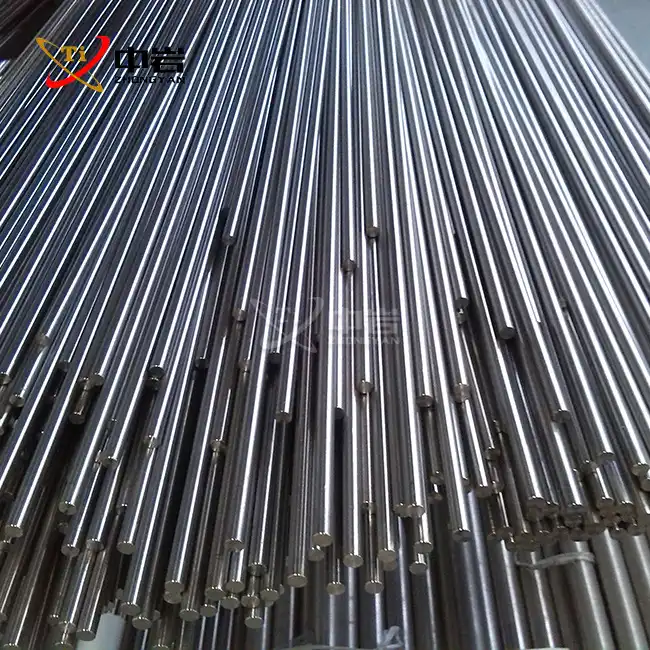
When selecting materials for surgical implants and medical devices, the choice of titanium grade directly impacts patient safety, device longevity, and regulatory compliance. Grade 23 titanium (Ti-6Al-4V ELI) stands out as the preferred option for most critical implant applications due to its exceptional balance of biocompatibility, mechanical strength, and fatigue resistance. This Extra Low Interstitial alloy features controlled oxygen levels (≤0.13%) and nitrogen content (≤0.05%), making it ideal for load-bearing implants like spinal rods and orthopedic fixation systems. For applications requiring softer, more ductile materials—such as dental abutments and certain craniofacial reconstructions—commercially pure titanium grades like Grade 2 or Grade 4 may be more suitable. Working with an experienced titanium rod medical OEM manufacturer ensures you receive materials that meet stringent ASTM F136 and ISO 5832-3 certifications, complete with full traceability documentation and mill certificates essential for FDA submissions and international regulatory approvals.
Understanding Titanium Rods for Medical OEM: Grades and Specifications
To choose the correct titanium type for surgical uses, you need to know a lot about how the features of the material affect how well it works in the body. When choosing materials for implants, medical device engineers and procurement managers have to think about a lot of things, such as how well they work with the body, how strong they are, how resistant they are to rust, and how easy they are to make.
The Core Grades: Grade 2 vs. Grade 5 vs. Grade 23
There are three main types of titanium rod medical OEM used by medical manufacturers, and each has its own benefits. Grade 2 titanium is commercially pure and has great resistance to rust and good shapeability. Because it isn't as strong as alloys, it can be used for non-load-bearing things like surgical marks and some dental parts. The material has an impressive tensile strength of about 345 MPa and great osseointegration qualities that help natural bone joining. The addition of aluminum and vanadium to Grade 5 titanium (Ti-6Al-4V) makes it much stronger, with a compressive strength of over 900 MPa. There are many uses for this versatile metal in both aircraft and industry. But because it has more intermediate content, it's not as good for important medical implants that need to be resistant to tiredness under repeated loading.
When it comes to medical uses, Grade 23 titanium is the next step up from Grade 5. This Extra Low Interstitial version has better ductility and crack toughness because it lowers interstitial elements like oxygen, nitrogen, and iron. It also keeps its high tensile strength above 860 MPa. Grade 23 is the best material for spinal fixation systems, intramedullary nails, and other load-bearing implants that are put through millions of stress cycles inside the body because the controlled chemistry keeps the material from weakening and increases its wear life.
Critical Specifications That Matter
Dimensional accuracy is what sets good products apart from great ones. For high-end medical device production, ISO tolerance grades of h6 or h7 are needed, especially for parts that are made on Swiss-style CNC automatic lathes. A common standard might call for a +0/-0.009mm tolerance on small diameters. This makes sure that the threads form correctly and that the press-fit surfaces are uniform, which keeps bacteria from getting into tooth implants. Both machinability and cellular reaction are directly affected by the surface finish. Centerless ground surfaces with Ra values below 0.8µm are ideal for precise cutting because they reduce tool wear. Pickled surfaces get rid of scale and other impurities that come from the making process, leaving a clean base for further processing. Polished finishes are used in specific situations where the surface needs to be as smooth as possible for aesthetic or practical reasons.
Microstructure, the invisible structure that decides how well something works mechanically, is controlled by heat treatment and annealing methods. We make sure that the alpha and beta phases are fine and balanced, and that there are no ongoing alpha networks that could cause wear cracks. The grain size usually meets ASTM 10 or lower standards, which is closely linked to better yield strength and fatigue resistance in tough surgical settings.
Regulatory Compliance: The Foundation of Trust
Compliance paperwork is a must for companies that make medical devices because they are closely watched by regulators. ASTM F136 specifies the chemical make-up and engineering features of Grade 23 titanium that is used to make medical implants. ISO 5832-3 makes these standards consistent across borders, which makes it easier to reach markets around the world. Registration with the FDA and following the rules in 21 CFR Part 820 for quality systems show that a manufacturing plant is ready to make medical devices. Each batch of material should come with full mill certificates that show the results of chemical analysis, mechanical tests, and be traceable back to the original vacuum arc remelted ingot. This chain of paperwork is very important for FDA 510(k) submissions and helps with post-market surveillance efforts in case there are any problems with the device.
Comparing Titanium Rods with Stainless Steel Rods in Medical Applications
One of the most important decisions in medical device creation is which material to use: titanium or stainless steel? This choice affects not only the original prices but also the long-term clinical outcomes and the quality of life of the patient. Knowing the differences in performance helps procurement teams make choices based on facts that are in line with device needs and market positioning.
Performance Characteristics: Where Titanium Excels
The strength-to-weight ratio of titanium metals changes the ways implants can be made in a basic way. Compared to stainless steel, which has a density of about 8.0 g/cm³, titanium rod medical OEM materials allow for smaller implants that make patients' lives easier without affecting the implants' structural integrity. An intramedullary nail made of Grade 23 titanium weighs almost half as much as one made of stainless steel but is just as strong. This means that the patient will be more comfortable and heal faster.
Procurement Considerations: Total Cost of Ownership
When it comes to raw materials, stainless steel has a big edge over premium goods because it costs 30 to 40 percent less. This difference in price makes buyers on a budget more likely to choose stainless steel specs. But more advanced buying research looks at costs over the whole life of the product, not just the purchase price.
Case Examples: Clinical Evidence
A comparison study of tibial intramedullary nails showed that titanium is better at withstanding fatigue in high-stress situations. At five years, revision rates for patients who received devices were 7% lower than those who received stainless steel options. This is because titanium is very resistant to fatigue crack spread under cyclic loading conditions that are common in weight-bearing long bones.
The Manufacturing Process of Titanium Rods for Medical OEM
Knowing how things are made helps people who buy things figure out what suppliers can do and predict quality differences that could affect how well the end product works. Making medical-grade titanium rods requires accuracy at every step, from melting the metal to checking it for quality.
From Sponge to Ingot: The Foundation of Quality
Titanium sponge is the first step in the process. It comes from the Kroll process, which lowers titanium tetrachloride with magnesium. For medical uses, we choose types of sponge that have few impurities, especially hydrogen, which can weaken the material. Vacuum arc remelting (VAR) turns this sponge into uniform bars that don't have any high-density inclusions or chemical segregation that might affect their mechanical features or ability to work with living things.
Hot Working and Precision Forming
Hot forging and extrusion of ingots happen at carefully controlled temperatures between 900°C and 1000°C. This breaks down the cast structure and creates a worked grain with better mechanical properties. We use precise extrusion methods to make bars with a near-net shape that don't need much cutting afterward. This cuts down on material waste while keeping tight control over the dimensions.
Quality Control and Certification
Each production lot goes through strict testing procedures that go above and beyond what is normally required in the industry. Using optical emission spectroscopy to do a chemical study makes sure that the compositional limits set by ASTM F136 are met, especially the Extra Low Interstitial labels for oxygen and nitrogen content. Mechanical testing shows that the tensile strength, yield strength, elongation, and decrease of area all meet the standards for the titanium rod medical OEM specification, with enough room for error.
Innovation and Customization Capabilities
Advanced providers offer customization choices that meet the needs of particular devices. Laser marking makes it possible to permanently identify parts and code lots right on the rod surfaces. This makes it easier to keep track of supplies and see where they came from as the device is put together. Custom dimensioning lets you meet specific design needs, whether you need to make small rods with a diameter of 2 mm for oral use or big forgings with a diameter of 10 mm for trauma implants.
Procurement Insights: How to Choose the Best Titanium Rod Medical OEM Supplier
Choosing a supplier is a strategic choice that affects the quality of the product, compliance with regulations, and the continuation of the business in the long run. To find partners who can meet the needs of medical device manufacturing, procurement workers need to look at more than just price quotes.
Credentials and Certifications: Non-Negotiable Requirements
ISO 13485 approval is only for quality control systems used by companies that make medical devices and the companies that supply them. This license shows that the company uses organized methods for design control, process validation, risk management, and corrective and preventative action. Every package must have paperwork that shows it meets ASTM F136 and ISO 5832-3 standards. Verify that providers have up-to-date copies of these standards and know how to meet their technical needs.
Manufacturing Capabilities and Capacity
A production capacity estimate makes sure that suppliers can meet both present demand and growth in the future without lowering the quality of their products. Find out how big the furnace is, how fast it works, and how many of the most popular sizes are in stock. A good titanium rod medical OEM provider keeps a smart stock of standard medical-grade materials. This way, they can quickly fill urgent orders without sacrificing quality for speed.
Commercial Terms and Supply Chain Dynamics
Different sellers have very different pricing plans. Some offer discounts for large orders, while others keep their prices the same no matter how many items are ordered. Look at the total cost of ownership, which includes shipping, payment terms, and any quality-related costs that might come up because of problems with the product. When quality issues or shipping delays cause production plans to be thrown off, the lowest price often ends up being the most expensive.
Partnership Considerations for Long-Term Success
Transactional providers are different from strategic partners because they offer technical help. Check to see how quickly the seller responds to technical questions, whether they are ready to suggest materials for specific uses, and whether they can fix processing problems. Zhongyan takes advantage of the fact that it is located in Baoji city, which is known as China's Titanium Valley, and has a lot of titanium supplies, processing skills, and access to research institutions.
Application Spotlight: Medical Uses of Titanium Rods in Surgery
Titanium rod medical OEM materials are used in many types of surgery, and each type needs a different set of material qualities and processing traits. Knowing what the application needs helps device makers choose the right grades and specs while also planning for possible legal paths.
Orthopedic Applications: The Largest Market Segment
A lot of Grade 23 titanium rods are used in spinal fixation systems. These rods are made into connection rods that connect pedicle screws at different levels of the spine. These devices must be able to handle millions of rounds of bending and extension over decades without fatigue failure. Titanium's low modulus lowers the amount of stress at the bone-implant contact, and its resistance to corrosion keeps its mechanical qualities fixed over time.
Dental and Maxillofacial Reconstruction
When making dental implant abutments out of titanium bars with a small width, very precise measurements are needed. Accurate threading down to the micron level makes sure that implant bodies fit properly and stops micromotion that could damage osseointegration or create bacterial pools. The surface must be clean. Any contamination from machine fluids or handling can stop the bone from joining and raise the risk of failure.
Cardiovascular and Specialized Surgical Instruments
Titanium is used in heart valve frames and pacemaker parts because it is biocompatible and doesn't rust in the harsh circulatory environment. For these uses, the purest grades with the fewest allergenic parts are needed. This means that Grade 2 economically pure titanium or Grade 23 ELI alloy are the best options.
Regulatory and Safety Requirements
Sterilization suitability changes the choice of materials and the design of devices. Titanium doesn't lose any of its properties when it's sterilized using traditional methods like steam autoclaving, ethylene oxide gas, or gamma irradiation. Manufacturers must make sure that the processes provide enough guarantee of sterility and that the material's properties stay the same after multiple cycles.
Conclusion
To choose the right titanium types for surgical uses, you have to think about how well they work mechanically, how well they work with living things, how well they meet legal requirements, and how they are made. Grade 23 titanium is the best choice for load-bearing implants that need to be very resistant to wear. Commercially pure grades are better for specific uses that need to be able to be shaped and work well with tissue. For successful product creation and market introduction, it's important to work with experienced suppliers who know what medical devices need, from precise tolerances to full paperwork. Because of the complicated manufacturing process, the large number of rules and regulations, and the need for long-term clinical performance, choosing a seller is a strategic choice that needs more than just comparing prices.
FAQ
Why is Grade 23 titanium preferred over Grade 2 for surgical implants?
Grade 23 titanium has a tensile strength of over 860 MPa, which is much higher than Grade 2's 345 MPa. This means it can be used for load-bearing devices like spine plates and intramedullary nails. The Extra Low Interstitial makeup controls the amount of oxygen and nitrogen in the material, which improves its ductility and fracture toughness. These are important qualities for devices that are loaded and unloaded many times over many years. Due to its lower strength, Grade 2 can only be used for non-structural parts. However, its better shapeability makes it useful for some tooth and mandibular devices.
How does titanium rod corrosion resistance extend medical device lifespan?
Titanium naturally creates a solid layer of titanium dioxide that protects very well against bodily fluids and the chloride that is in them. This resistance to corrosion keeps the structure solid for more than 30 years, so you don't have to worry about pitting or crevice rust that can happen with stainless steel options. The solid oxide layer also stops the release of metal ions that could cause inflammatory reactions. This improves biocompatibility over time and greatly lowers the number of surgeries that need to be redone.
What customization options are available for titanium rod medical OEM orders?
Zhongyan lets you make a lot of changes, like making the dimensions fit your device exactly, choosing the surface finish (from pickled to centerless ground (Ra <0.8µm)), and using special heat processes to improve the mechanical properties. We offer titanium rod medical OEM laser marking to permanently identify parts and code lots, custom packing that meets cleanroom standards, and inspection processes that go beyond standard ASTM testing. Our engineering team works together to choose the right materials and set the right processing settings for each medical device while still following all the rules.
Partner with Zhongyan for Superior Titanium Rod Medical OEM Solutions
Zhongyan makes biocompatible titanium rods that are precisely designed to meet the demanding needs of medical device manufacturers. Our Grade 23 ELI materials have an oxygen content of ≤0.13% and a nitrogen content of ≤0.05%. This gives them better wear resistance and ductility for important implant uses. Our goods are made using vacuum arc remelting and are fully certified by ASTM F136 and ISO 5832-3. They also come with full traceability paperwork and mill certificates to help you with your FDA submissions. We can make any size (from 2 mm to 150 mm) to your exact specs, and the surface can be centerless ground, pickled, or marked with a titanium rod or medical OEM laser for brand identification.
We are located in Baoji, which is known as China's Titanium Valley. Our industrial benefits are combined with modern CNC machining and quality systems that are ISO 9001:2015 certified. Our technical team helps you develop your product, from choosing the right materials to making sure the processing is as efficient as possible. They make sure that your needs are met by experts. We can handle flexible MOQs that fit the needs of your business, whether you need small numbers for a sample or large production runs. Get in touch with us at sales@titaniumstudy.com to talk about how Zhongyan can improve your medical device supply chain by providing reliable, high-quality solutions that meet international standards and help your clinical success.
References
1. American Society for Testing and Materials. (2013). Standard Specification for Wrought Titanium-6Aluminum-4Vanadium ELI (Extra Low Interstitial) Alloy for Surgical Implant Applications (UNS R56401). ASTM F136-13, West Conshohocken, PA.
2. International Organization for Standardization. (2016). Implants for Surgery — Metallic Materials — Part 3: Wrought Titanium 6-Aluminium 4-Vanadium Alloy. ISO 5832-3:2016, Geneva, Switzerland.
3. Niinomi, m. (2008). Mechanical biocompatibilities of titanium alloys for biomedical applications. Journal of the Mechanical Behavior of Biomedical Materials, 1(1), 30-42.
4. Geetha, M., Singh, A. K., Asokamani, R., & Gogia, A. K. (2009). Ti-based biomaterials, the ultimate choice for orthopaedic implants – A review. Progress in Materials Science, 54(3), 397-425.
5. Long, M., & Rack, H. J. (1998). Titanium alloys in total joint replacement—a materials science perspective. Biomaterials, 19(18), 1621-1639.
6. U.S. Food and Drug Administration. (2020). Use of International Standard ISO 10993-1, Biological Evaluation of Medical Devices - Part 1: Evaluation and Testing within a Risk Management Process. FDA Guidance Document, Center for Devices and Radiological Health, Silver Spring, MD.
_1755652624199.jpg)
_1755674651182.jpg)
Learn about our latest products and discounts through SMS or email